


Georgian Slanted Writing Desk
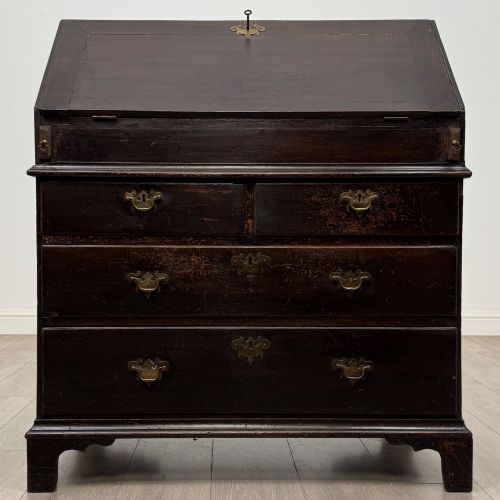
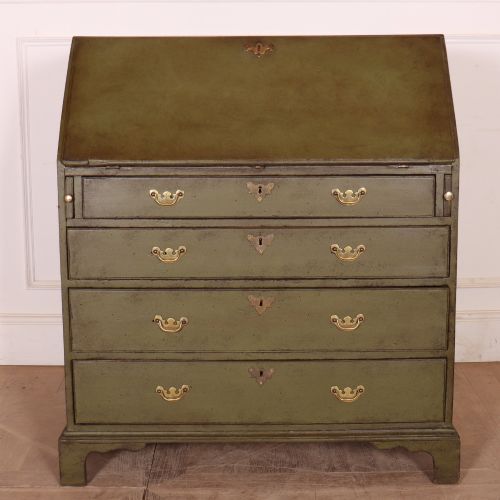
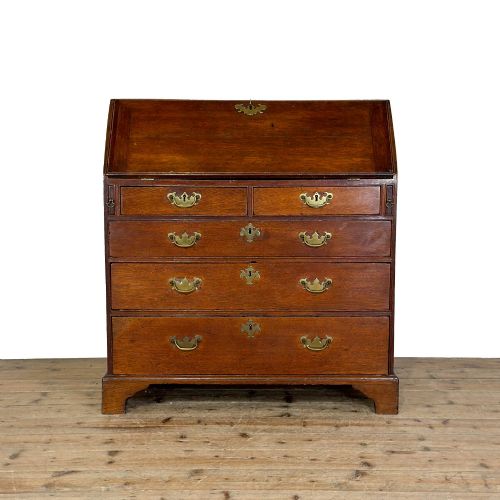
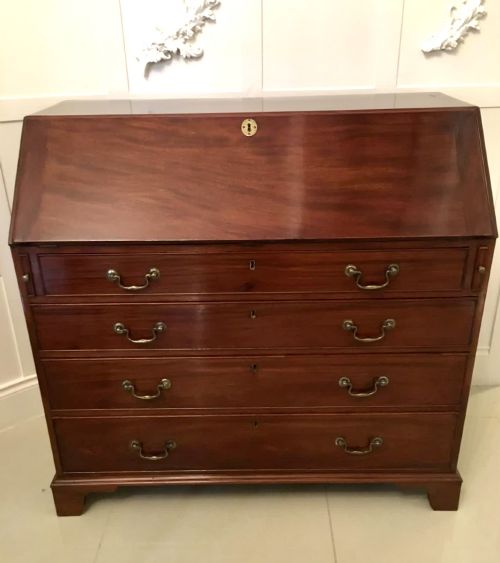
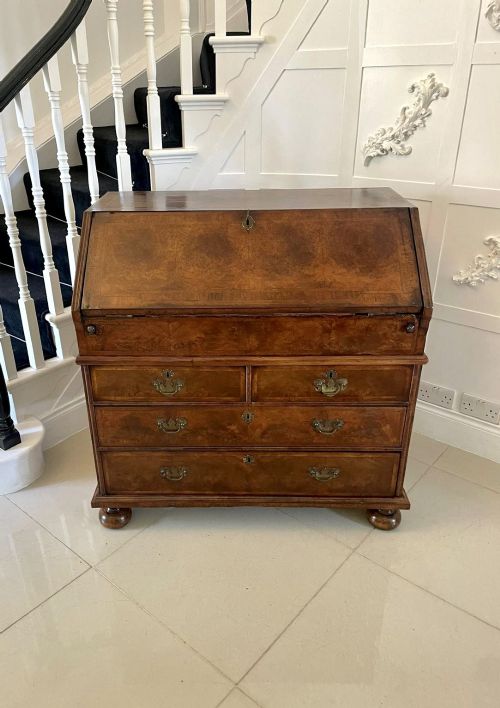
A georgian slanted writing desk is a practical domestic workspace with a hinged fall-front panel that conceals internal compartments.
Georgian Slanted Writing Desk
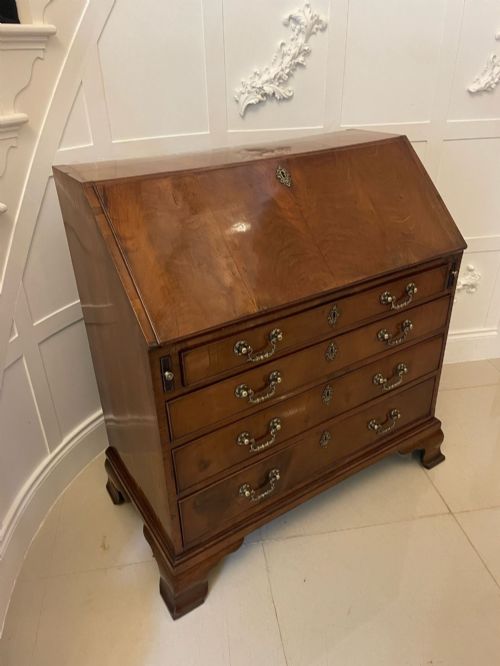
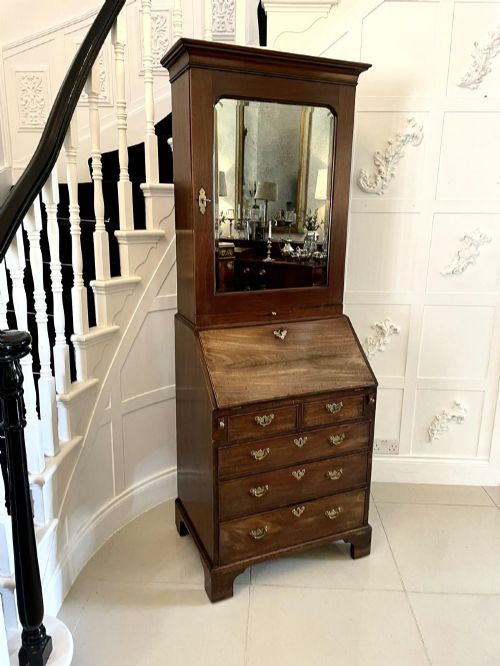
A georgian slanted writing desk principally takes the form of a bureau or a bureau bookcase originating from the seventeenth, eighteenth, and nineteenth centuries.
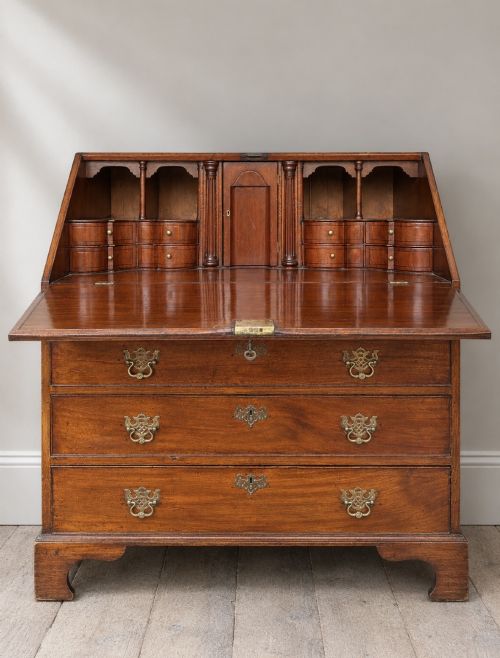
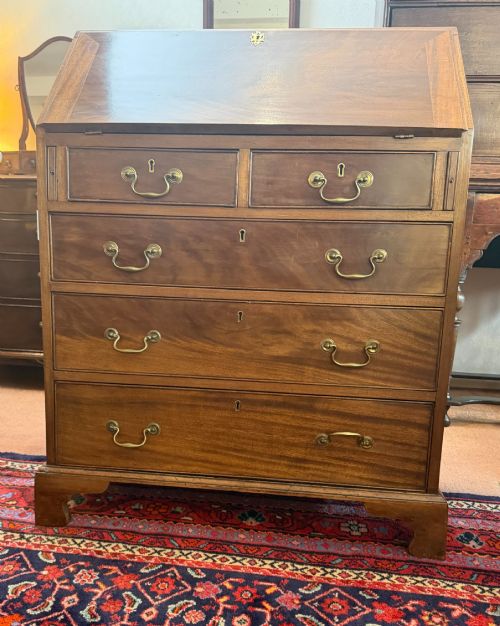
The most common form encountered here is the mahogany or walnut bureau, featuring a sloping fall-front that opens to reveal a stepped interior of small drawers and pigeonholes.
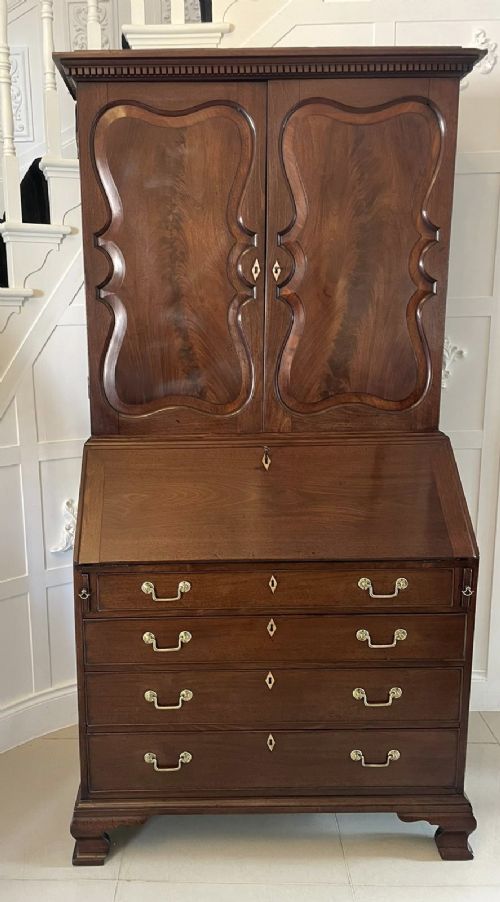
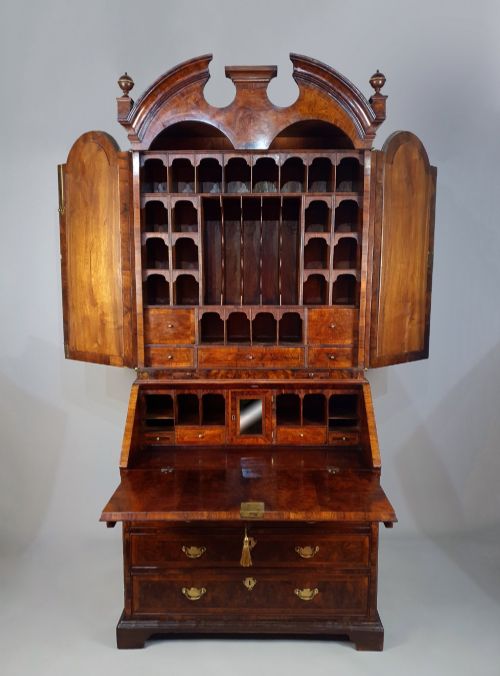
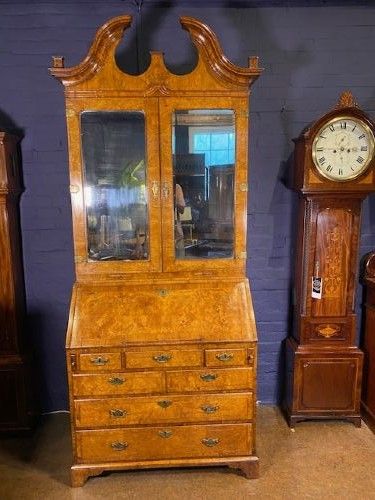
Pieces range from compact single-section desks to taller two-part bureau bookcases with glazed upper cabinets and candle slides.
Judging Quality
Quality rests upon the selection of timber, visible in the figuring of mahogany or burr walnut veneers.
Internal complexity and the refinement of the stepped cabinet work differentiate standard examples from finer commissions.
The integrity of the construction, stability of the fall-front hinges, and retention of original brass fittings determine the standing of each piece.
Listings include pieces spanning the seventeenth century through to the Edwardian period, constructed in oak, mahogany, walnut, and yew wood.
The Georgian Slanted Writing Desk Glossary
- Bureau
- A writing desk with a sloping hinged lid that covers a nest of small drawers and pigeonholes. This term forms the primary designation for these sloping writing surfaces.
- Fall-front
- The hinged panel that lowers to form a horizontal writing surface. It remains held at a right angle by internal ratchets or support arms when open.
- Fitted interior
- The arrangement of small drawers, secret compartments, and pigeonholes revealed when the fall-front is opened. Finer versions include stepped tiers and central cupboard doors.
- Bureau bookcase
- A two-part tall furniture form combining a lower writing desk with an upper glazed or panelled cabinet for books. These pieces often incorporate pull-out candle slides beneath the upper doors.
- Herringbone inlay
- A decorative banding of contrasting wood veneers laid in a V-shaped zig-zag pattern. This technique typically outlines drawer fronts and fall-front borders on walnut pieces.
Georgian Slanted Writing Desk: Frequently Asked Questions
How do I use a bureau desk?
Lower the sloping fall-front panel to access the internal writing surface and stationary compartments. The hinged lid rests securely on support lopers pulled out from the front framework.
Store papers and writing materials inside the pigeonholes and small internal drawers when the desk is closed.
How do I date an 18th-century bureau?
Examine the choice of primary timber, construction methods of the internal drawers, and exterior foot styles. Walnut and oak dominate earlier pieces, while mahogany becomes prevalent by the middle of the eighteenth century.
Bracket feet, dovetailing techniques, and secondary woods provide further clues to the manufacturing decade.
Where should I place a desk?
Position the desk against a stable interior wall away from direct sunlight and heat sources to protect timber veneers. Ensure adequate natural or artificial light falls across the open writing slope.
Allow sufficient clearance in front of the piece for a chair and for the fall-front lid to open fully.