





Georgian Silver Tea Vessel
These georgian silver tea vessel examples are the heavy sterling and plated pots that built the formal tea table, selected for genuine period heft and proportion.
Georgian Silver Tea Vessel
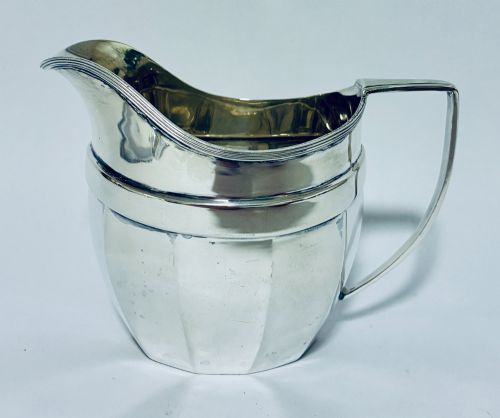
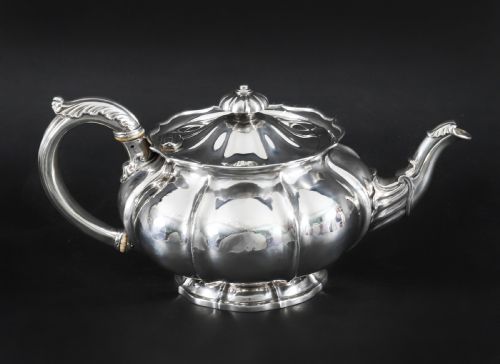
When you search for a georgian silver tea vessel, you are looking at holloware designed for brewing and serving tea and coffee in the eighteenth and nineteenth centuries. The pieces on this page span teapots, milk jugs, coffee pots, biscuit boxes, and complete tea and coffee services.
The version you are most likely to meet on this page is the sterling silver or Old Sheffield plated teapot, often dating from the reign of George III or the Regency period. These encompass regional English provincial pieces, Scottish bullet teapots, and London smithing.
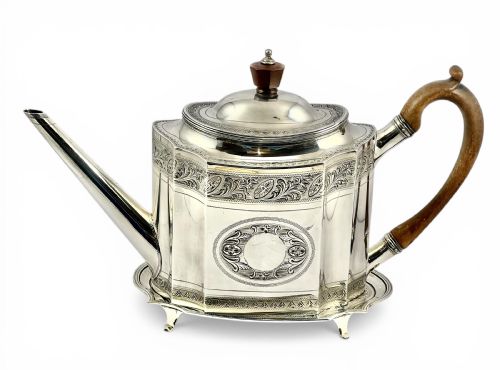
Makers utilised various supplementary materials alongside the metalwork, including wood, bone, and ebonised wood for insulating handles and finials. Alongside solid sterling, the selection includes copper-based silver plate from the Old Sheffield period.
How they were made
Silversmiths hammered and raised sterling silver from flat sheet metal to form the body of each vessel, often incorporating cast elements for spouts and handles. Scottish and provincial makers employed traditional techniques to shape bullet teapots and neo-classical forms.
Old Sheffield plated items were fused by heating copper and silver together into a composite sheet before forming the coffee pots and teapots. Insulating spacers made of bone or wood were fitted into handle sockets to protect the hand from heat.
Some nineteenth-century silversmiths added wooden or bone insulators to teapot handles so nobody burnt their fingers while pouring tea.
What varies in quality
Quality rests in the crispness of the chasing, the balance of the handle against the spout, and the integrity of the original maker marks. Pieces bearing the hand of notable workshops display superior weight and proportion in the cast mounts.
The preservation of the silver surface and the retention of original wooden or bone insulators dictate the standing of a piece. Old Sheffield plate varies according to how cleanly the copper core remains concealed beneath the silver layer.
Paul Storr·Robert Hennell I·Joseph Craddock
The Georgian Silver Tea Vessel Glossary
- Sterling Silver
- A silver alloy containing 92.5 percent pure silver by weight, used for the majority of the holloware on this page.
- Old Sheffield Plate
- An early fused plating method where a thin sheet of silver is fused to a heavier copper base.
- Bullet Teapot
- A globular or spherical teapot form popular in the eighteenth century, frequently seen in Scottish smithing.
- Silver-Gilt
- Silver that has been coated with a thin layer of gold on its interior or exterior surface.
- Ebonised Wood
- Wood that has been treated and stained to resemble dense, dark ebony, commonly used for teapot handles.
Georgian Silver Tea Vessel: Frequently Asked Questions
How do I identify a George III teapot?
Identification relies on examining the assay office marks, maker stamps, and stylistic cues such as neo-classical shapes or provincial engraving.
Makers working under George III often produced pieces stamped with specific date letters and town marks.
What is Old Sheffield plate?
Old Sheffield plate is an early nineteenth-century material created by fusing silver to a thick copper base before shaping.
This technique produced tea and coffee pots that offered the appearance of solid silver at a different cost.
Why do some teapots have wooden handles?
Teapots feature wooden, bone, or ebonised handles to prevent heat from transferring from the boiling water to the handler's hand.
These non-conductive insulators were pinned into the silver sockets during construction.