
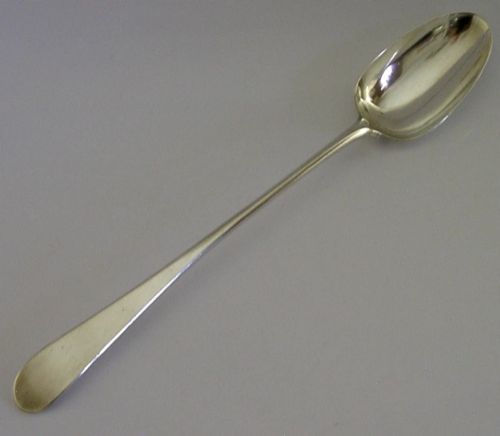
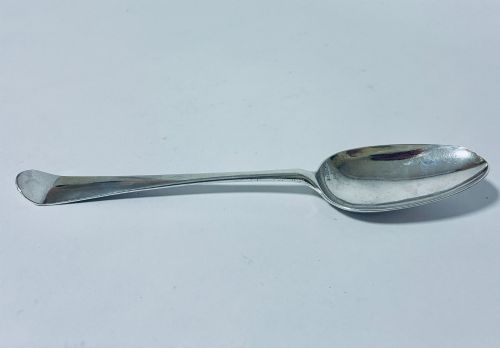
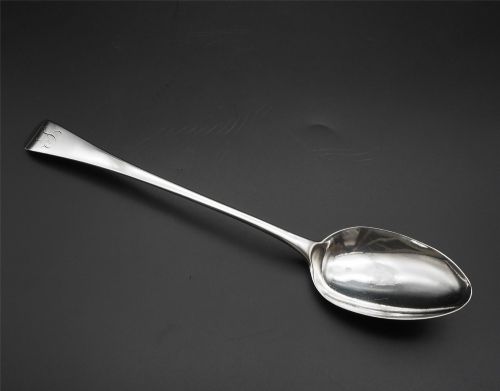
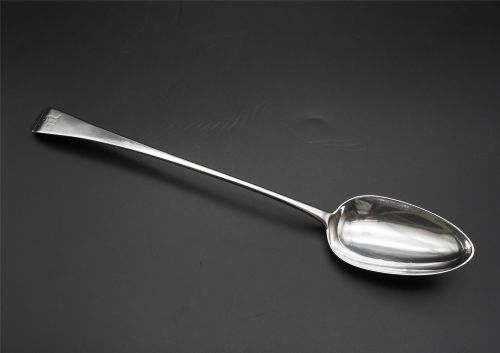
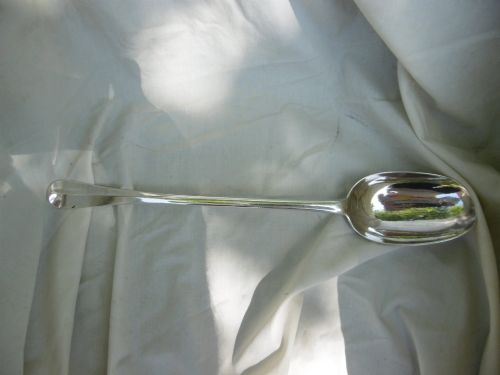


Georgian Silver Stuffing Spoon
A georgian silver stuffing spoon is a substantial serving implement crafted to portion out large joints at table.
Georgian Silver Stuffing Spoon
A georgian silver stuffing spoon is an extended piece of cutlery designed for serving meat and poultry during the eighteenth and early nineteenth centuries. These items appear in formats frequently described in the record as basting spoons or hash spoons.
Most examples found here date from the eighteenth century through to the early nineteenth century under the broader Georgian period. Makers working in London, Exeter, Newcastle, Dublin, and Scottish provincial centres produced these heavy utensils.
The forms encompass large single implements alongside matched pairs, measuring significantly longer than standard table cutlery. They provide the collector with functional dining silver originating from distinct regional assay offices.
How they were made
Silversmiths hammered sterling silver ingots into thick bars before rolling and shaping them into elongated stems and deep bowls. This method ensured the metal possessed the rigidity required for lifting heavy portions of meat.
Makers applied punches to stamp town marks, date letters, maker's marks, and the lion passant directly onto the reverse of the stem. Surviving specimens retain crisp hallmarks that identify their origin and year of manufacture.
The listings combine sterling silver serving implements from London, Dublin, Exeter, Newcastle, and Scottish provincial centres spanning the eighteenth century and the early nineteenth century.
What varies in quality
The gauge of the sterling silver dictates the heft and balance of the implement, distinguishing robust specimens from lighter alternatives. Weight and thickness reflect the initial cost and intended status of the dining service.
The clarity and completeness of the hallmarks stamped by the silversmith and the assay office influence desirability. Crisp punch marks on the reverse confirm the piece retains its original form without excessive thinning from polishing.
Andrew Archer·John Wilks·Robert Gordon·Alexander Henderson·Paul Storr
The Georgian Silver Stuffing Spoon Glossary
- Stuffing spoon
- A large serving implement used for portions of meat or dressing, often synonymous with a basting spoon. These pieces measure considerably longer than standard table spoons.
- Hash spoon
- An alternative historical term for a large serving spoon utilised for heavy dishes. The evidence shows these pieces appearing alongside basting and stuffing terminology.
- Hallmark
- The official stamp applied by an assay office to guarantee the fineness of the silver. These marks supply the date letter, town mark, and maker's mark.
- Sterling silver
- The standard alloy of silver utilised for quality British cutlery, containing high purity. This material provides the necessary durability for large serving implements.
- Assay office
- The statutory body responsible for testing precious metals and striking hallmarks upon them. Cities such as London, Dublin, Edinburgh, and Exeter maintained active offices during the period.
Georgian Silver Stuffing Spoon: Frequently Asked Questions
What is a stuffing spoon used for?
A georgian silver stuffing spoon served at large dining tables for portioning heavy joints of meat and associated dishes. Their extended length kept the hand safely away from hot food during service.
They function as substantial relatives of standard table cutlery, designed to handle heavier lifting tasks than ordinary spoons.
How do I identify a Georgian spoon?
Examination of the hallmarks stamped on the reverse of the stem reveals the specific assay office and the exact year of manufacture. Stylistic indicators like stem shape and bowl proportions further align the piece with the eighteenth or early nineteenth century.
Regional variations in provincial spoons from Scotland, Ireland, or English cities display distinctive maker's marks that date the item.
Can I use these spoons for dining?
These robust sterling silver implements remain entirely functional for modern dining and serving applications. Their solid construction makes them suitable for contemporary table use.
Careful hand washing preserves the historic surface and the crisp detail of the original hallmarks.
Why are some called basting spoons?
The terms basting spoon, hash spoon, and stuffing spoon were frequently used interchangeably by makers and owners to describe large serving implements. The specific terminology often depended on regional preference or the particular household inventory.
All three designations refer to the same category of oversized nineteenth and eighteenth century serving cutlery.