



Georgian Silver Serving Set
A georgian silver serving set brings proper eighteenth and nineteenth-century weight to the dining table.
Georgian Silver Serving Set
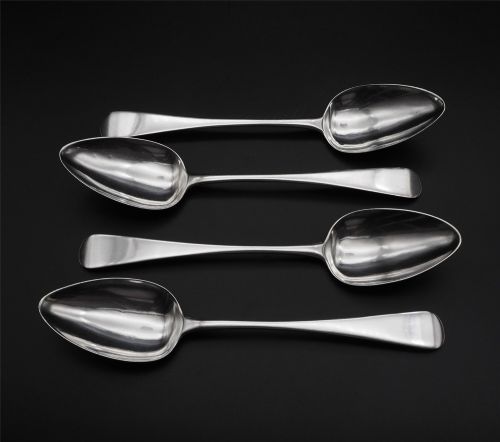
Most examples encountered here are matched or assembled sets of sterling silver spoons, frequently appearing in old english or kings pattern variations. Occasionally, specialised forms such as hookend basting spoons or supper sets involving porcelain and lazy susans emerge.
The materials span sterling silver alongside fitted presentation cases lined in silk, velvet, fabric, and leatherette, while silver plate and glass also appear in related utensils.
How they were made
Silversmiths hammered and shaped sterling silver into robust forms intended for heavy dining room use, often incorporating decorative berry embossing or intricate handle patterns. Many sets were originally retailed in fitted wooden cases lined with silk, velvet, or leatherette.
Specialised items like porcelain supper sets paired ceramic components with rotating mechanisms, while others utilised glass or silver plate elements alongside solid silver utensils.
Georgian Silver Serving Set Retail Price Guide 2026
Typical asking prices for georgian silver serving set among the pieces listed under this phrase on Sellingantiques today, from the lower quarter to the upper quarter. They describe what is for sale here now, not the wider market.
Supper sets from the era included rotating lazy susans so diners could reach their roast without asking.
What varies in quality
Quality rests upon the uniformity of the set and the crispness of the maker's hallmarks, with matched sets commanding distinct interest compared to assembled gatherings. The depth of chased berry work or the handling of traditional patterns like old english or kings dictates the fineness of the piece.
The survival of original fitted cases lined in velvet or silk adds a further layer of distinction, as does the presence of rarer variants such as Irish hookend basting spoons or integrated sifter components.
John Locker·Coalport
The Georgian Silver Serving Set Glossary
- Sterling silver
- A silver alloy containing 92.5 percent pure silver by mass, forming the primary metal standard for these serving pieces.
- Berry spoon
- A serving spoon featuring fruit and leaf chasing applied to the bowl at a later date, typically during the Victorian period.
- Basting spoon
- An elongated spoon designed for spooning juices over roasting meat, frequently found in matched pairs.
- Sifter
- A perforated spoon used for dusting sugar over food, often accompanying berry spoons within fitted presentation cases.
- Old english pattern
- A classic tapered spoon handle design with a downward-curving end popular throughout the eighteenth century.
Georgian Silver Serving Set: Frequently Asked Questions
What pieces make up a set?
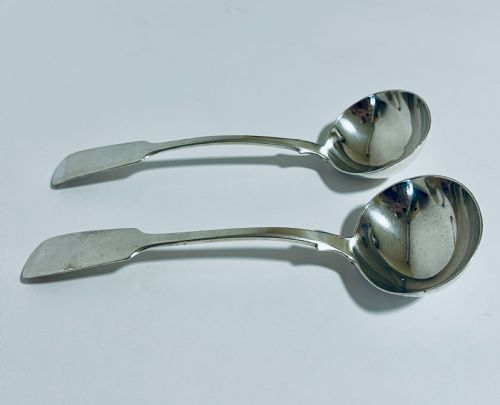
Sets typically comprise groups of matching tablespoons, serving spoons, or ladles intended for table service. Some configurations include specialised implements such as salad servers or sugar sifters.
Many of these are housed in original fitted cases lined with silk or velvet, keeping the collection together.
How do I date these items?
Dating relies on official hallmarks stamped into the silver, which indicate the assay office, year letter, and maker's mark. Stylistic clues such as old english or kings patterns also point toward the Georgian or Regency periods.
Archive records and contemporary styles help narrow the decade of manufacture when hallmarks are rubbed.
Are these items safe to use?
Solid silver serving utensils are robust and practical for modern dining when handled with appropriate care. Hand washing with mild soap preserves the finish and prevents damage to older metal.
Avoid abrasive cleaners that wear down the hallmarks and the chased details on berry spoons.
What is a berry spoon?
Berry spoons are large serving spoons decorated with embossed fruit and foliage designs across the bowl. These embellishments were frequently added to earlier spoons during the nineteenth century.
They appear both individually and paired within fitted presentation cases.