





Georgian Silver Fruit Spoons
Georgian silver fruit spoons are fine historic tableware pieces that bring period elegance to modern dining.
Georgian Silver Fruit Spoons
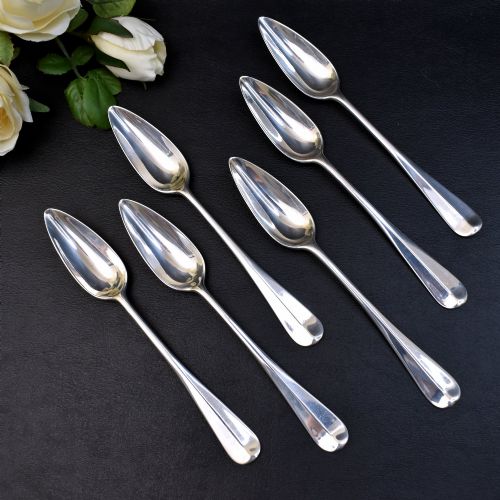
When you search for georgian silver fruit spoons, you look at items designed for serving or eating fruit at the dining table. These utensils take forms such as serving spoons, dessert spoons, and sugar sifters.
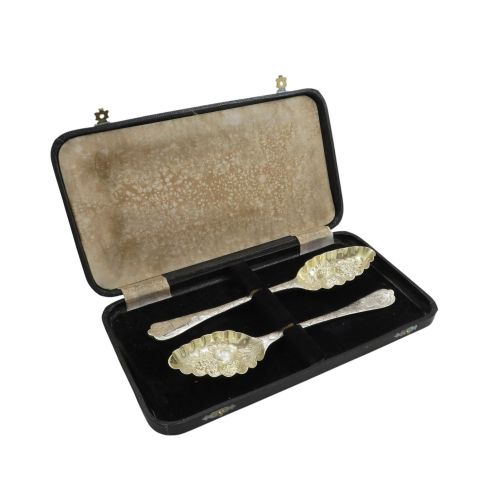
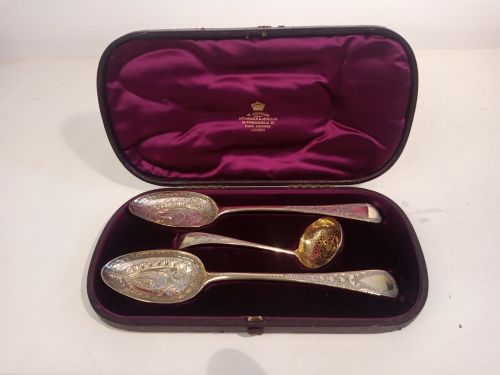
You meet various configurations on this page, including matched pairs and assembled sets housed in velvet or leatherette cases. The pieces span periods from the eighteenth century through the Georgian era, with occasional later nineteenth and twentieth-century examples.
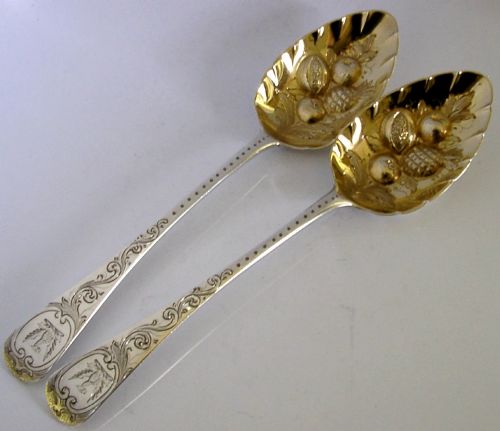
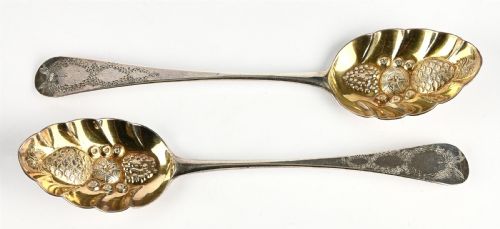
Makers working in London, Dublin, and Edinburgh produced these items in sterling silver, often enhancing them with silver-gilt or gold wash finishes. Many feature later decorative fruit and berry chasing upon the bowls.
How They Were Made
Silversmiths shaped sterling silver using traditional hammering and forging techniques to create the bowl and handle structures. Hallmarks were then struck directly into the metal to indicate the assay office, date, and maker.
Many examples received secondary chasing or engraving work, transforming plain bowls into berry spoons with embossed fruit details. Interior surfaces were frequently treated with a gold wash or gilt finish to contrast with the bright sterling silver exterior.
Georgian Silver Fruit Spoons Retail Price Guide 2026
Typical asking prices for georgian silver fruit spoons among the pieces listed under this phrase on Sellingantiques today, from the lower quarter to the upper quarter. They describe what is for sale here now, not the wider market.
Listings feature sterling silver items alongside velvet and leatherette cases, spanning the Georgian period and the eighteenth century.
What Varies in Quality
The crispness of the hallmarking and the depth of the chased decoration separate standard utensils from finer examples. Crisp fruit details on the bowl show superior silversmithing skill compared to worn or shallow embossing.
Completeness also dictates the standing of a set, particularly when items retain their original fitted cases lined with silk or velvet. Matching pairs and harmonious sets demonstrate higher original intent than assembled collections brought together later.
Hamilton & Inches·Peter & Anne Bateman·William Chawner II
The Georgian Silver Fruit Spoons Glossary
- Berry Spoon
- A spoon featuring embossed fruit and foliage decorations on the bowl. These decorative motifs were frequently added during the Victorian period to older Georgian blanks.
- Silver-Gilt
- Sterling silver that has been coated with a thin layer of gold. This technique protects the underlying metal and provides a rich two-tone appearance.
- Hallmark
- A series of official marks stamped on precious metals. These symbols verify the silver standard, the assay office, and the year of manufacture.
- Sugar Sifter
- A specialised spoon with a perforated bowl designed for dusting sugar over fruit or desserts. They often appear alongside fruit spoons in matched dining sets.
- Crest
- An engraved family heraldic symbol. Silversmiths often added these crests to personalize flatware for the original owner.
Georgian Silver Fruit Spoons: Frequently Asked Questions
Are these spoons for everyday dining?
These historic utensils suit special occasions rather than daily use, given their age and delicate silver construction. Many owners reserve them for serving desserts or fruit at formal gatherings.
Careful hand washing helps preserve the delicate gilt finishes and antique hallmarks found on these pieces.
How do I identify a true Georgian piece?
Examining the stamped hallmarks provides the most reliable method for dating silver flatware. Assay office marks and date letters correspond to specific years of production.
Stylistic elements like handle shape and engraving techniques also offer strong clues to the period of manufacture.
Why do some spoons have fruit on them?
Many eighteenth-century spoons were adapted later in the nineteenth century with embossed fruit and berry decorations. This decorative process updated plain serving spoons to match Victorian dining fashions.
Such pieces are commonly referred to as berry spoons in historical records.
Do these spoons come with cases?
Some listings feature original or period-fitted cases lined with velvet, silk, or leatherette. These protective boxes kept matched pairs and sets secure during storage.
Unboxed examples appear frequently as well, having been stored loose in drawer chests over the centuries.