
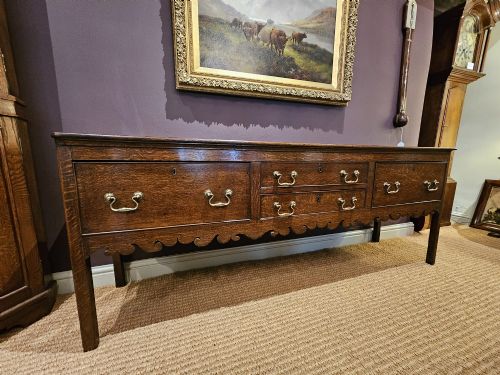
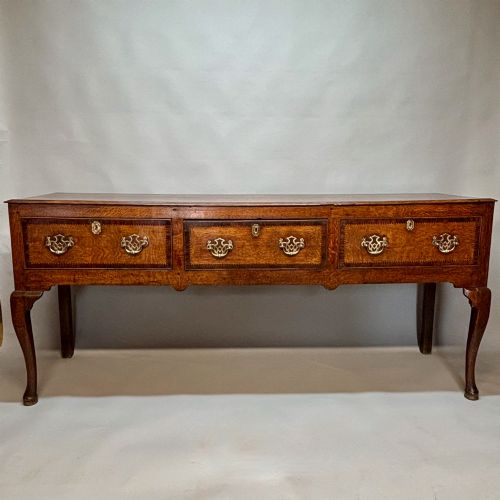
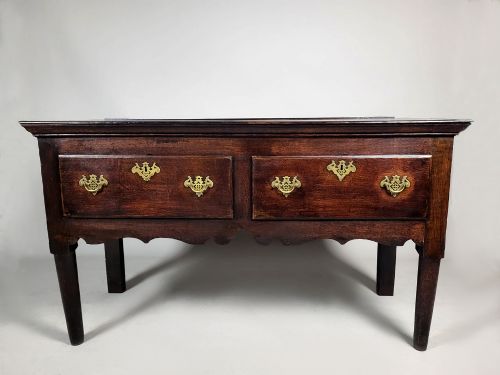
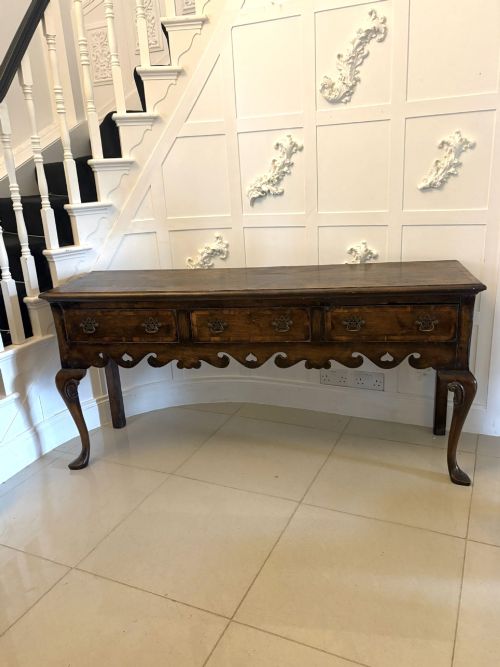

Georgian Sideboard Server
A georgian sideboard server organises dining rooms with understated dignity, offering deep drawers and capacious cupboards built for service.
Georgian Sideboard Server
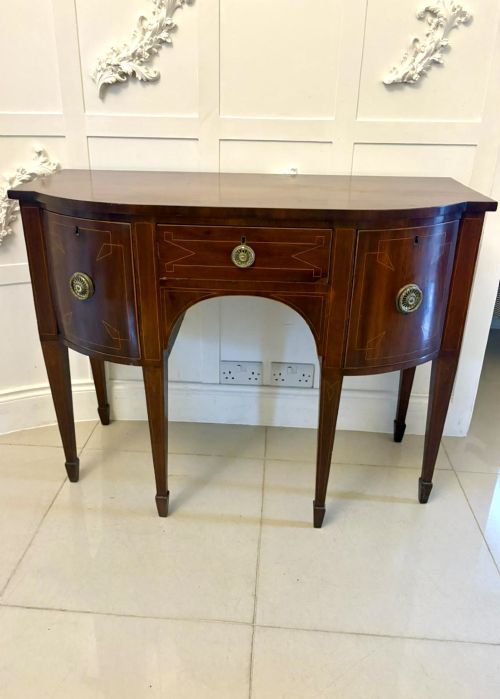
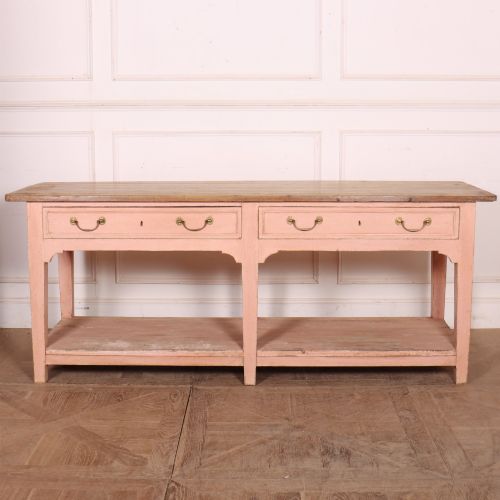
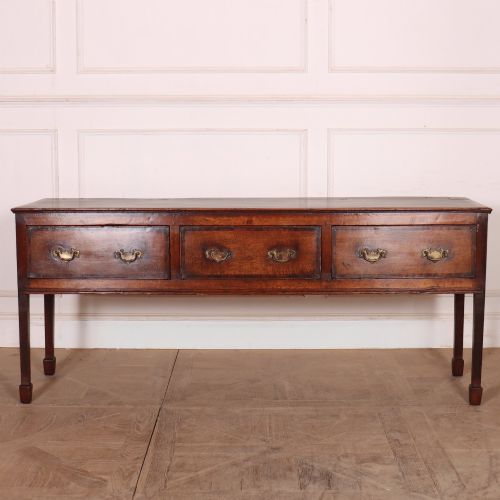
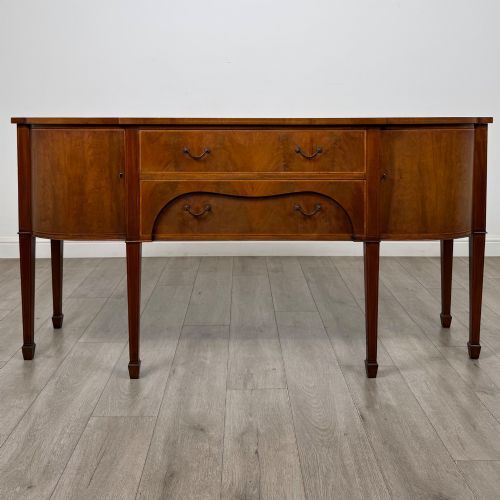
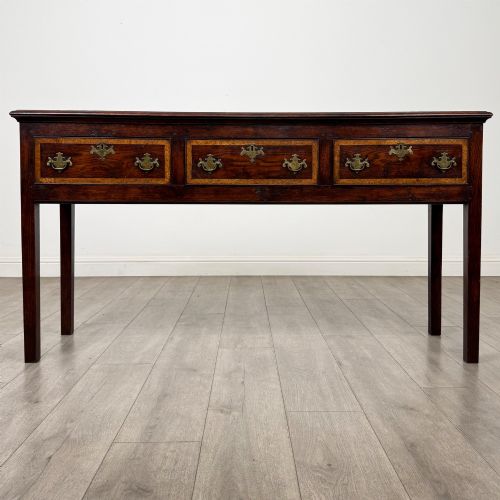
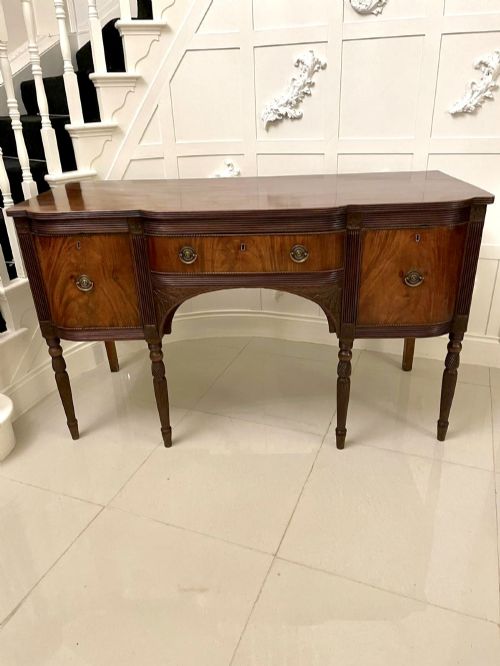
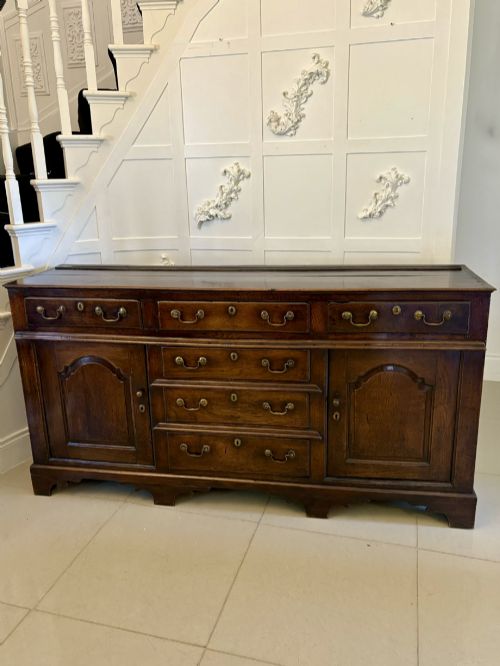
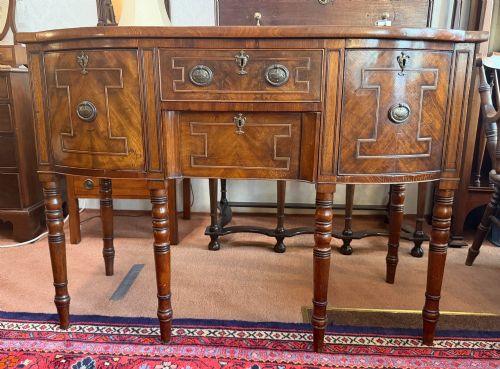
A georgian sideboard server is a substantial dining room furnishing designed for holding silver, linen, and serving dishes during meals. These pieces span formal mahogany breakfronts and serpentine fronts to robust oak and pine dresser bases originating from the eighteenth and nineteenth centuries.
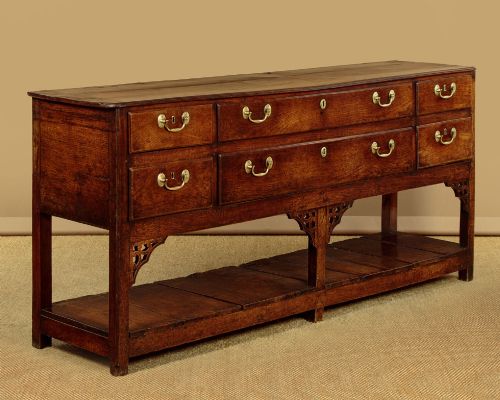
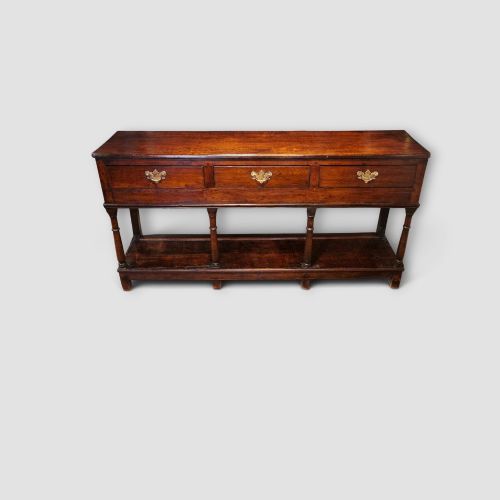
Buyers encountering this search phrase frequently find examples featuring bow fronts, flame mahogany veneers, and potboard lower shelves. The selection blends formal dining furniture with country house dresser bases utilised for storage and display.
Origins range across English, Welsh, and Irish workshops, showing influences from George III, Regency, and Sheraton periods alongside later Edwardian revivals. Selecting a piece involves weighing the formal elegance of inlaid mahogany against the rustic utility of early oak.
How They Were Made
Cabinet makers utilised dense timber frames, applying figured mahogany, flame mahogany veneer, and boxwood inlay to primary surfaces while employing oak and pine for secondary internal structures. Drawer linings and carcases display hand-cut dovetails alongside pegged joints in earlier country pieces.
Finishing touches include cast brass gallery rails, lion paw feet, and brass drop handles secured to solid timber doors. Surfaces received hand-rubbed wax finishes to accentuate the natural grain patterns of the wood.
Brass gallery rails and carved lion paw feet appear frequently on nineteenth-century servers.
What Varies in Quality
Quality rests upon the selection of timber veneers and the crispness of inlaid detailing, where matched flame mahogany and precise boxwood stringing elevate a piece above standard stock. Secondary woods and internal drawer construction reveal the underlying care taken by the original workshop.
Proportion and symmetry dictate aesthetic success, particularly in serpentine and breakfront forms where curved facades demand absolute precision from the carpenter. Original brass hardware, sturdy potboard stretchers, and untouched patination distinguish finer survivals from later alterations.
The Georgian Sideboard Server Glossary
- Potboard
- An open lower shelf fitted to a dresser base, traditionally used for storing ceramic pots and heavy kitchenware.
- Serpentine
- A front configuration curving outward in the centre and inward towards the ends, demanding advanced woodworking skill.
- Breakfront
- A cabinet front where the central section projects forward from the flanking cupboards or drawers.
- Boxwood
- A pale, dense wood utilised for contrasting stringing and geometric inlay work on dark mahogany surfaces.
- Gallery rail
- A raised brass rail fitted to the rear top surface of a server to prevent serving dishes from sliding off.
- Dresser base
- A low cabinetry unit featuring drawers and cupboards, forming the bottom half of a traditional kitchen or dining room dresser.
Georgian Sideboard Server: Frequently Asked Questions
What is the difference between a sideboard and a server?
A sideboard generally incorporates a combination of deep drawers and cupboards designed for general dining room storage. A server functions similarly but often presents a more open profile, historically tailored for presenting dishes before they reached the table.
In practical terms, the titles frequently overlap within antique listings, describing similar proportions and interior capacities regardless of the primary designation.
How do I place a sideboard in a modern dining room?
Position the piece against a principal wall where its length can anchor the room without obstructing pathways around the dining table. Ensure adequate clearance for drawers and cupboard doors to open fully during use.
Utilise the flat top surface for lamps, serving trays, or glassware, allowing the timber grain to serve as a natural focal point.
How can I tell an eighteenth-century piece from a later revival?
Examine the drawer construction for hand-cut dovetails and the timber surfaces for tool marks and oxidation consistent with age. Later Edwardian and Georgian style reproductions often employ machine-sawn elements and standardised internal fittings.
Timber choice also aids identification, as eighteenth-century makers relied on solid mahogany, oak, and pine before veneers became more uniformly thin in subsequent centuries.
How should I care for antique mahogany and oak?
Maintain the timber by applying a traditional beeswax polish sparingly and buffing with a soft cloth to preserve the surface sheen. Avoid placing wooden furniture near direct heat sources or in strong sunlight, which can dry out the wood and fade veneers.
Handle brass fittings gently and avoid using chemical cleaning agents that might strip the historic patination accumulated over generations.