





Georgian Shelf Clock
A georgian shelf clock brings mechanical precision and rich timber to a room, offering the quiet rhythm of an authentic period timepiece.
Georgian Shelf Clock
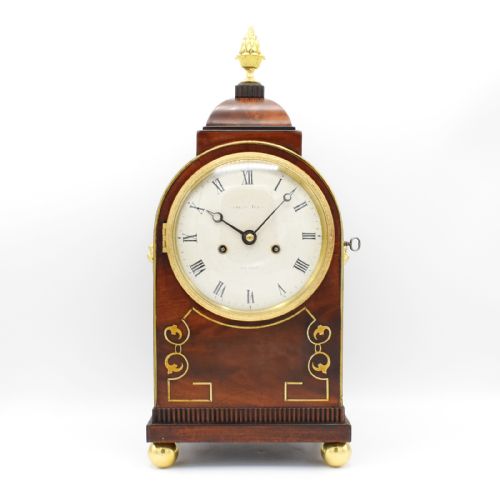
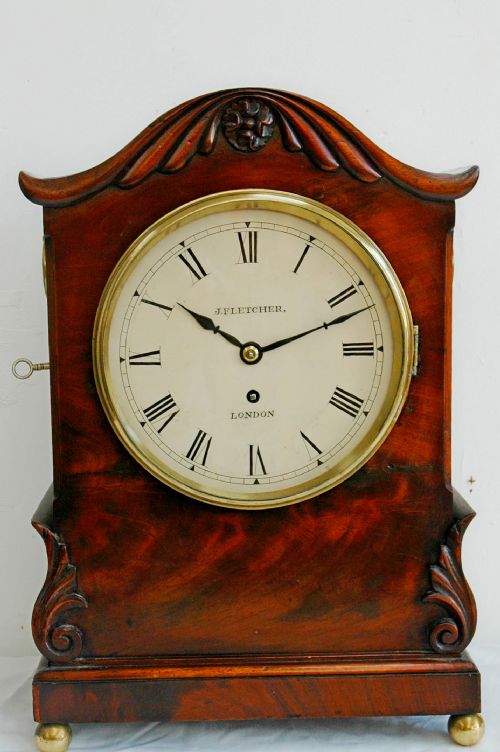
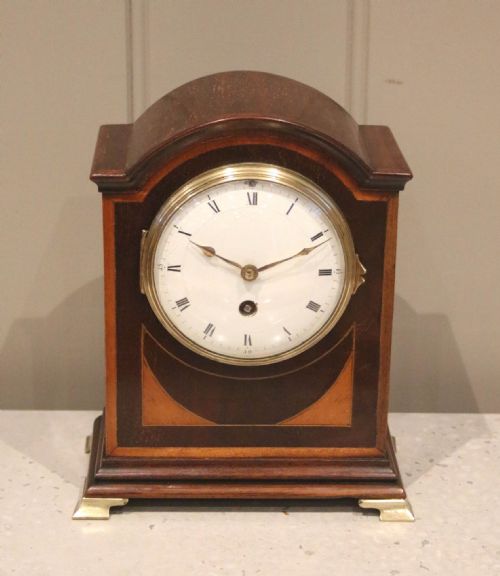
A georgian shelf clock encompasses table clocks, bracket clocks, and mantel clocks originating primarily from the Georgian, Regency, and later revival periods. Buyers searching this phrase encounter compact timepieces designed to sit securely on furniture rather than stand upon the floor.
The objects appearing here span traditional bracket clocks with arched wooden cases to library timepieces, carriage clock forms, and occasional wall shelf supports. Materials range from deeply figured mahogany and rosewood to gilt bronze and brass inlay, reflecting the shifting tastes of the eighteenth and nineteenth centuries.
Materials and construction
Cabinetmakers utilised rich timber veneers such as mahogany, rosewood, and pollard oak over solid framing, often incorporating satinwood stringing or delicate brass inlay. These cases house mechanical movements driven by single fusee chains or springs, regulating time through precise brass gear trains.
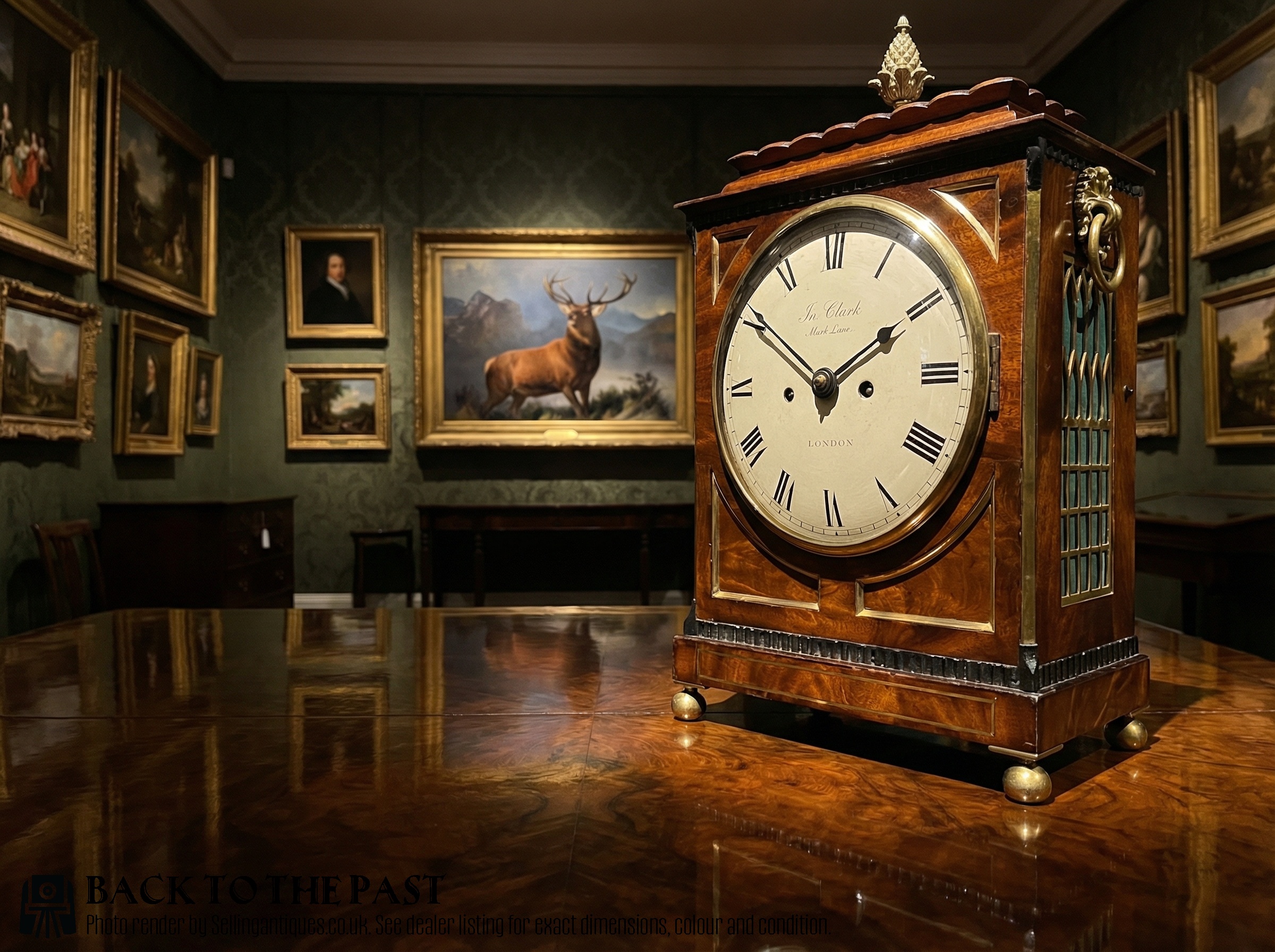
Dials display white enamel with dark painted numerals, protected behind hinged glass bezels and brass bezels. Metal mounts, cast gilt bronze, and ormolu details accent the woodwork, while pagoda tops and break arch forms define the architectural silhouettes.
Georgian Shelf Clock Retail Price Guide 2026
Typical asking prices for georgian shelf clock among the pieces listed under this phrase on Sellingantiques today, from the lower quarter to the upper quarter. They describe what is for sale here now, not the wider market.
Some miniature library timepieces were built small enough to travel inside a coach, keeping the traveller punctual across bumpy country roads.
Factors of quality
Excellence in a georgian shelf clock rests upon the crispness of the cabinetwork and the sophistication of the internal movement. Finely figured timber grains, meticulous brass marquetry, and original cast ormolu mounts elevate an example far above plain utility.
The reputation of the maker inscribed upon the dial or backplate holds significant weight, distinguishing standard workshop production from the work of recognised London and regional horologists. Preservation of the original dial finish, movement parts, and case patina completes the distinction.
Charles Pratt London·Seller of Reading·Barrett London·Pennington of Camberwell·William Hardy London·McCabe London·Desbois Wheeler·Bently Beck London
The Georgian Shelf Clock Glossary
- Fusee
- A conical pulley used in spring-driven clocks to maintain equal power as the mainspring unwinds. This mechanism ensures consistent force reaches the escapement for accurate timekeeping.
- Bracket clock
- A portable table clock originally designed to rest upon a wall bracket or a chest. These pieces often feature sturdy carrying handles and glazed side panels.
- Ormolu
- Gilt bronze ornamentation applied to clock cases for decorative contrast. The technique involves firing a mercury and gold amalgam onto bronze.
- Break arch
- A dial or case top shape featuring a central curved arch flanked by small horizontal shoulders. This architectural profile appears frequently on eighteenth and nineteenth-century clock faces.
- Timepiece
- A clock that indicates the time without striking the hours or quarters. These movements focus purely on the going train.
Georgian Shelf Clock: Frequently Asked Questions
Where should I place a clock?
These compact timepieces suit sturdy mantelpieces, bookcases, or dedicated wall brackets where they remain level and secure.
Keep them away from direct sunlight, draughts, and damp walls to protect the timber case and delicate internal brasswork.
How do I wind the movement?
Use the appropriate winding key gently on the dial arbor until you feel firm resistance, avoiding any over-winding.
Most single fusee and spring-driven models require winding at regular weekly or eight-day intervals to maintain steady operation.
How do I identify the period?
Examine the timber choice, dial style, and case architecture, comparing them against known design shifts from Georgian to Regency and Edwardian revivals.
Signatures on the dial or movement backplate often provide direct clues to the active working years of the maker.
Are these clocks still functional?
Many examples retain operational movements capable of keeping accurate time when properly set up and serviced by a professional horologist.
Mechanical clocks benefit from periodic cleaning and oiling to ensure the gear trains and escapements run without excessive wear.