

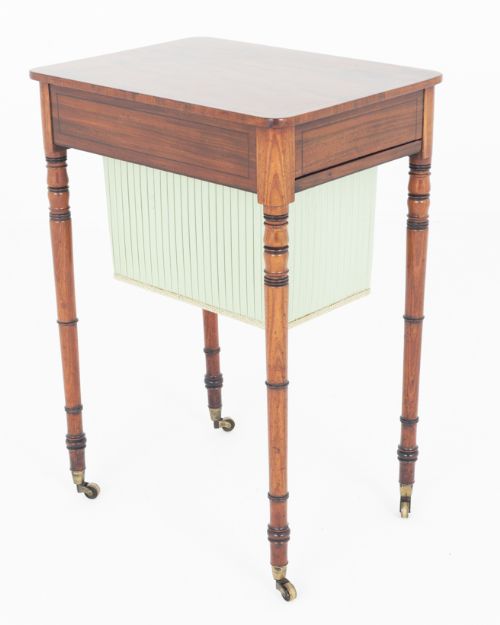


Georgian Sewing Basket Table
A georgian sewing basket table is a neat, multifunctional piece of furniture designed for needlework and small domestic tasks, combining elegant proportions with hidden storage.
Georgian Sewing Basket Table
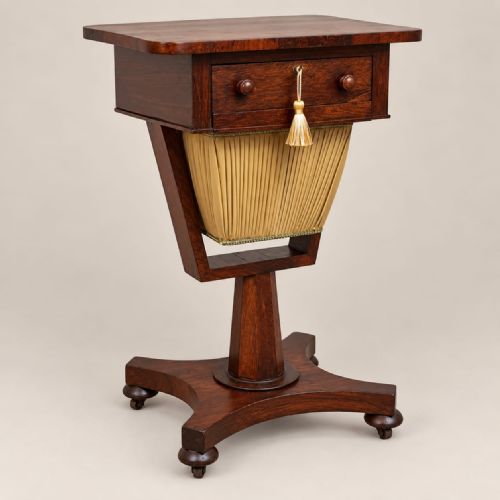
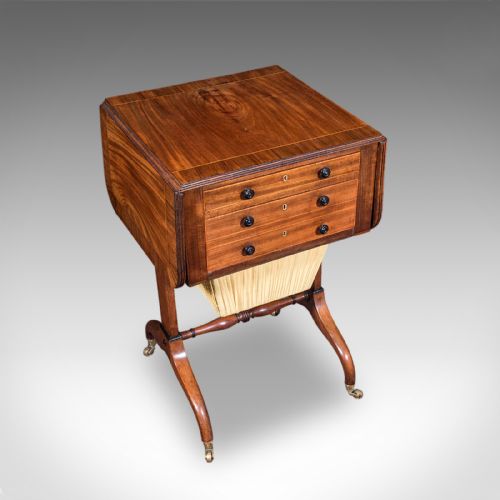
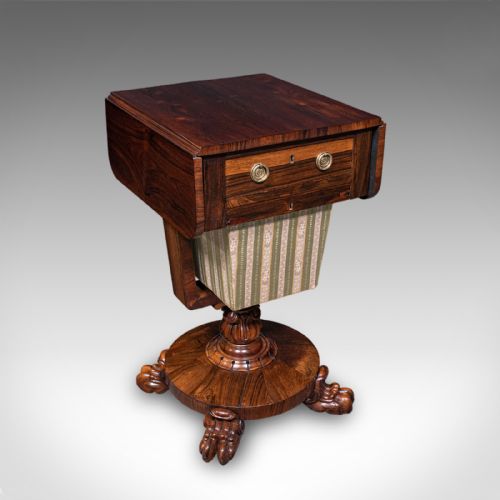
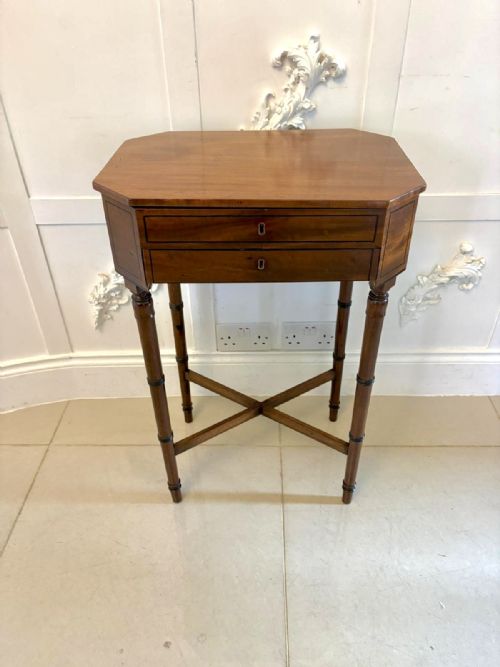
A georgian sewing basket table appears across several periods in the evidence, most notably during the Regency, William IV, George IV, and Georgian eras, alongside later nineteenth-century interpretations. These items function primarily as work tables, occasional tables, side tables, and lamp tables, often featuring drop leaves or drop flaps for versatility.
The form typically incorporates a hanging fabric bag, silk pouch, or removable sewing basket beneath the main surface to hold textiles and sewing implements. Buyers encounter various timbers such as mahogany, rosewood, and pollard oak, occasionally embellished with boxwood inlay, brass details, or bone accents.
Examples range from compact ladies hobby tables and parlour workboxes to lyre-ended stands and sofa tables. The construction often accommodates multiple uses within a single room, serving as a writing surface, side table, or dedicated needlework station.
Materials and Construction
Cabinet makers utilised dense cabinet timbers like figured mahogany and rosewood, selected for their rich grain patterns and polished finishes. Secondary woods and decorative elements incorporated boxwood stringing, brass mounts, and inlaid motifs to accent the edges and surfaces.
Silk and fabric formed the soft hanging compartments and removable baskets that define the work table typology. Joinery techniques included drop-leaf hinges, lyre-shaped pedestals, and fitted drawer interiors designed to organise sewing tools and small accessories.
Georgian Sewing Basket Table Retail Price Guide 2026
Typical asking prices for georgian sewing basket table among the pieces listed under this phrase on Sellingantiques today, from the lower quarter to the upper quarter. They describe what is for sale here now, not the wider market.
The furniture spans stylistic periods from George III and Regency through to William IV and the nineteenth century.
Markers of Quality
The distinction between standard and superior pieces rests on the selection of figured timber, the crispness of inlaid boxwood or brass details, and the architectural grace of pedestals like lyre ends. Superior items demonstrate meticulous cabinet-making in the sliding drawers, fitted interiors, and the structural integration of the hanging silk bag or removable basket.
Proportion and execution dictate value, with master workshops displaying superior balance in drop-leaf mechanisms and secondary woods. The survival of original fabric linings, intact brass work, and well-preserved surface patination separate everyday utility pieces from finer cabinet work.
Gillows of Lancaster
The Georgian Sewing Basket Table Glossary
- Work table
- A small functional table equipped with drawers and a fabric bag for holding sewing materials. These pieces were essential items for ladies of the household during the Georgian and Regency periods.
- Drop leaf
- A hinged table leaf that folds down to reduce the footprint of the furniture or lifts to provide extra surface area. This mechanism allows the table to adapt easily to smaller parlour spaces.
- Lyre-ended
- A furniture base design shaped like the ancient Greek stringed instrument, frequently utilised on the pedestals of Regency tables. It provides both structural support and visual elegance.
- Pollard oak
- Oak timber taken from trees that have been pollarded, producing a heavily figured and mottled grain pattern. Cabinet makers valued this wood for decorative veneers on high-status furniture.
- Stringing
- A thin inlay of contrasting wood used to outline drawers, borders, and tabletops. This technique added subtle geometric definition to mahogany and rosewood surfaces.
Georgian Sewing Basket Table: Frequently Asked Questions
What is a georgian sewing basket table used for?
These tables served as dedicated stations for needlework, embroidery, and small domestic crafts in period drawing rooms and parlours. The integrated fabric bags and fitted drawers kept threads, needles, and unfinished projects neatly stored out of sight.
Beyond sewing, their compact proportions and drop leaves made them practical as occasional lamp tables, writing desks, or side tables for everyday entertaining.
How do I identify a Regency period sewing table?
Regency examples frequently feature architectural motifs, such as lyre-ended pedestals, brass inlay, and dark exotic timbers like rosewood. The design emphasises classical proportions, bold grain patterns, and refined brass or boxwood detailing.
Cabinet work from this era often incorporates clever internal compartments within the drawers alongside the characteristic hanging silk or fabric sewing pouch.
Are the fabric baskets on these tables original?
The soft fabric bags and silk pouches suspended beneath the tables experience significant wear over centuries of use. Consequently, many surviving pieces have had their fabric linings replaced or restored to match historical precedents.
When examining a piece, look at how the fabric integrates with the wooden frame to assess whether the mounting style aligns with the period of the table.
How do I care for a rosewood work table?
Rosewood and mahogany surfaces require protection from direct sunlight and extreme fluctuations in humidity to prevent timber splitting. Regular dusting with a dry, soft cloth preserves the natural polish without building up excess residue.
Condition the wood periodically using traditional wax polish formulated for antique furniture, avoiding modern silicone sprays that can damage the historical finish.