



Georgian Serving Tureen
A georgian serving tureen brings serious dining history to the table, offering practical grandeur through heavy silver, ironstone, and porcelain forms.
Georgian Serving Tureen
When searching for a georgian serving tureen, buyers encounter substantial vessels designed to hold soups, vegetables, and sauces at formal dining tables. These pieces span the eighteenth and early nineteenth centuries, covering the Georgian and Regency periods.
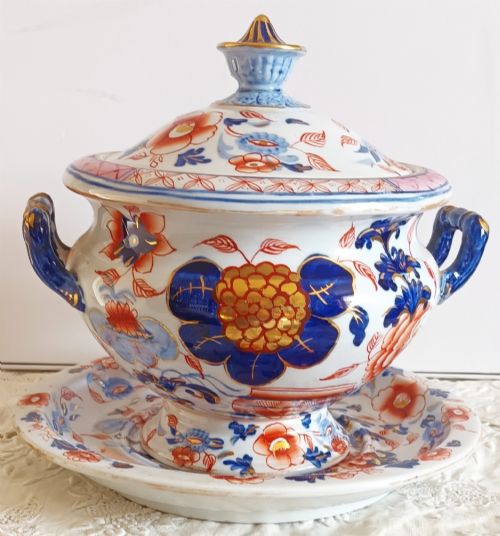
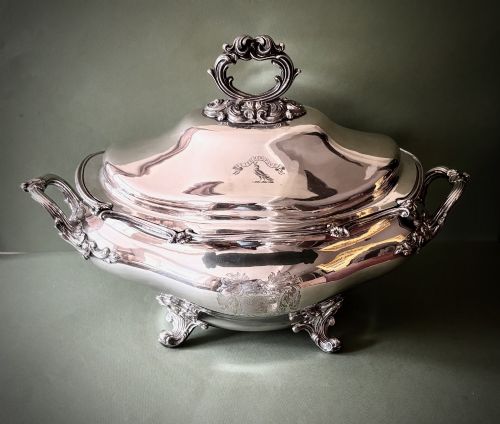
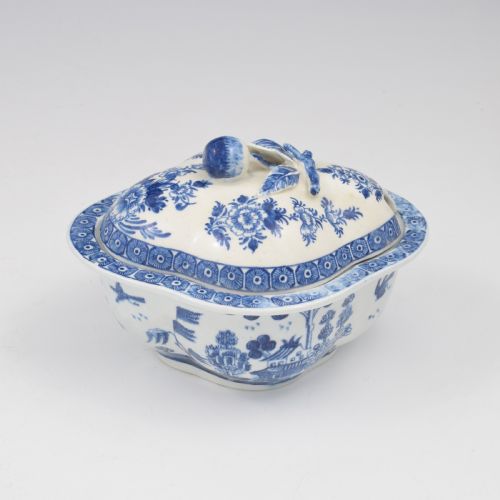
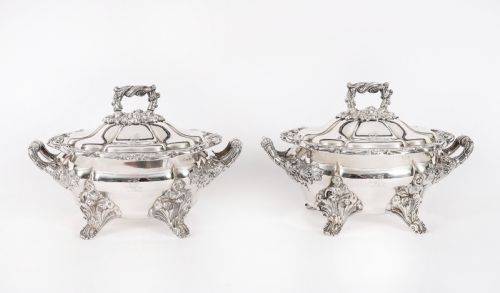
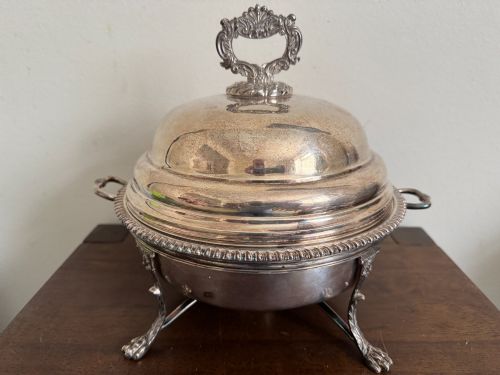
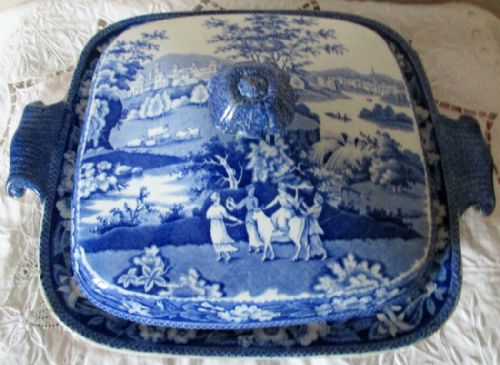
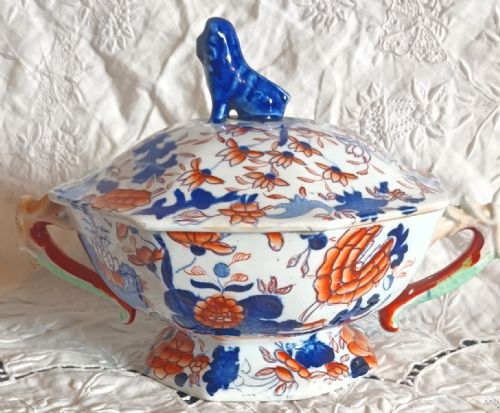
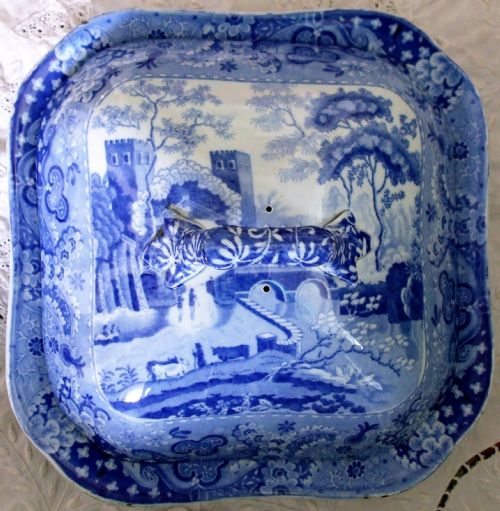
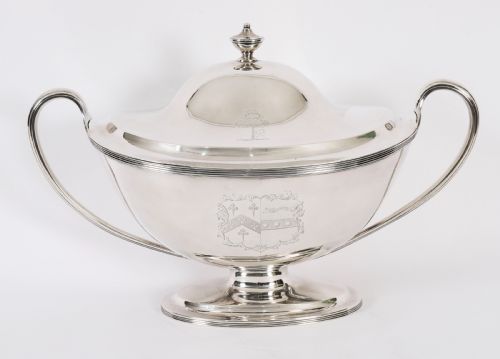
The versions most commonly met on this page include earthenware and ironstone transferware pots decorated with blue and white patterns, alongside gleaming Old Sheffield plate and sterling silver tureens. Many survive complete with original lids and stands.
Forms range from large soup and vegetable tureens to smaller sauce tureens and warming dishes. Makers and potteries utilised distinct regional styles, producing everything from English Staffordshire earthenware to Indian Colonial silver.
Materials and construction
Pottery and ironstone tureens were shaped from clay, fired, and finished with white glazes before being hand-printed with detailed blue transfer patterns like castle and romantic ruins scenes.
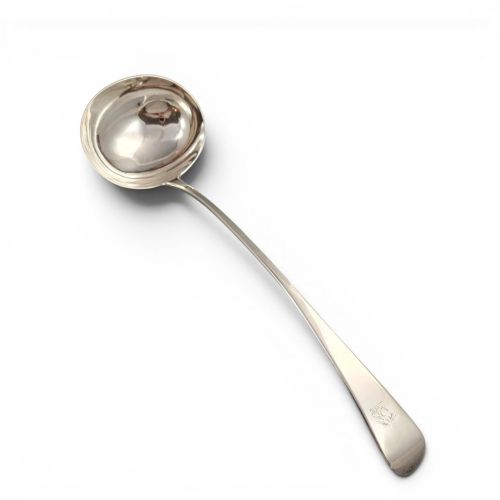
Silver and Old Sheffield plate examples relied on metalworking techniques, fusing thin sheets of silver over copper bases or casting sterling silver into substantial handles, feet, and bodies.
Porcelain items from factories like Derby and Worcester involved delicate ceramic pastes moulded into quatrefoil or oval shapes, then hand-painted with blue and white or polychrome designs.
Georgian Serving Tureen Retail Price Guide 2026
Typical asking prices for georgian serving tureen among the pieces listed under this phrase on Sellingantiques today, from the lower quarter to the upper quarter. They describe what is for sale here now, not the wider market.
Dinners featured elephants, peacocks, and romantic ruins printed across the serving dishes before a single guest lifted a spoon.
Distinctions in quality
Quality rests in the crispness of the transfer print or the weight and balance of the metalwork, distinguishing standard utility vessels from high-status dining pieces. Heavy gauge silver and well-defined cast handles mark superior metal tureens.
For ceramics, the clarity of the cobalt blue transfer and the preservation of the glaze define the tier of the piece. Complete sets including matching stands and original covers elevate individual items within their class.
J. & R. Clews·John and Richard Riley·Flight Barr & Barr·William Bennett·Spode·Matthew Linwood·Cresswick·John Rogers and Son
The Georgian Serving Tureen Glossary
- Old Sheffield Plate
- A composite material made by fusing a thin sheet of silver to a copper base, widely utilised for dining wares before electroplating was invented.
- Ironstone
- A heavy, durable type of earthenware patented in the early nineteenth century that resists chipping much better than traditional pottery.
- Transferware
- Pottery decorated by applying a printed paper design from an engraved copper plate onto the ceramic surface prior to glazing.
- Sauce Tureen
- A smaller tabletop vessel specifically proportioned for holding gravies and sauces, often supplied with its own matching ceramic or metal stand.
Georgian Serving Tureen: Frequently Asked Questions
What was a georgian serving tureen used for?
These vessels held food at the centre of large dining tables during formal meals, keeping soups, sauces, and vegetables warm until serving.
Servants would transfer the contents onto individual plates as diners partook in grand multi-course meals.
How do I identify a georgian serving tureen?
Look at the overall form, decorative motifs, and material types to gauge the period. Georgian and Regency pieces typically show neoclassical lines, heavy silver plating, or distinct blue and white transfer scenes.
Maker marks, where present on the base of ceramics or stamped into metal, provide exact clues to origin.
Can I use an antique tureen for dining?
Most buyers choose to display these pieces as decorative dining room centerpieces or sideboard ornaments. While solid, antique ironstone and silver can be sensitive to modern dishwashers and harsh detergents.
Hand washing in lukewarm water preserves the fragile glazes and historic metal surfaces.
What is the difference between ironstone and porcelain?
Ironstone is a dense, opaque, and robust earthenware developed to withstand heavy daily use. Porcelain is a finer, more vitreous ceramic material that often transmits light through the body when held up.