

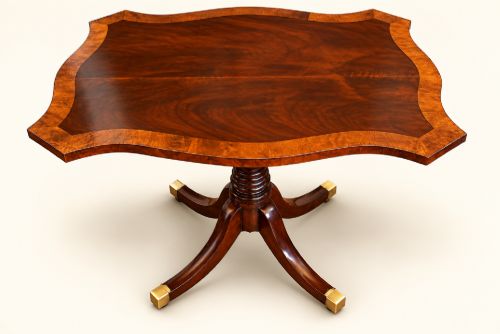
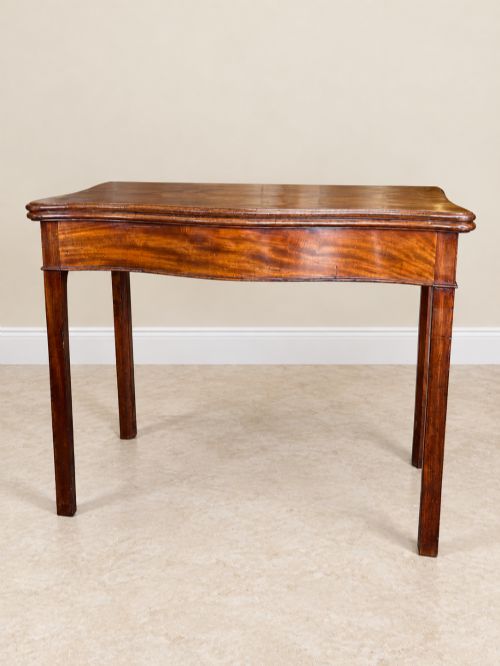
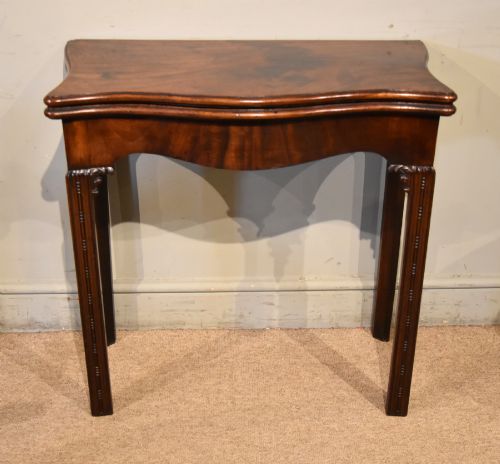
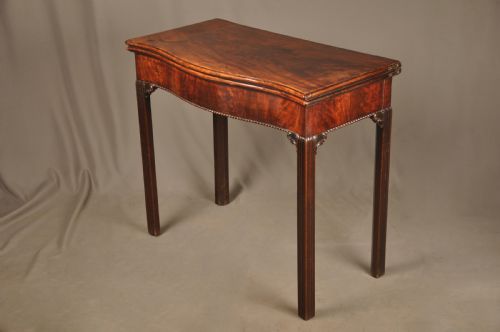

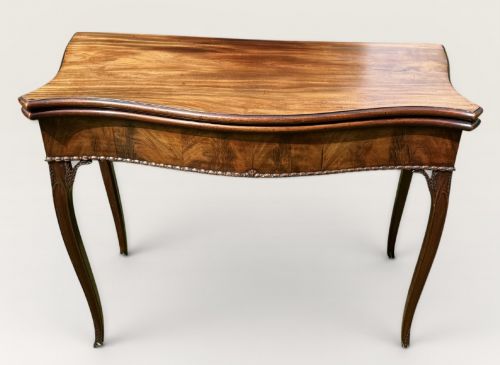
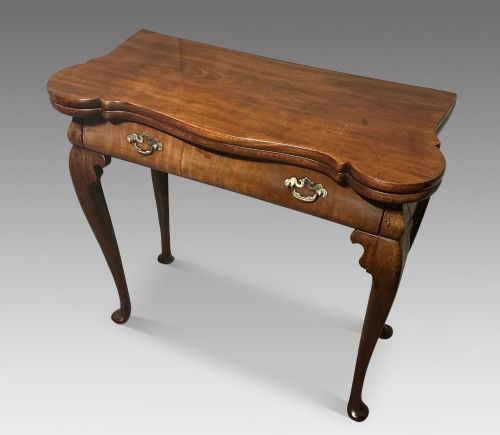
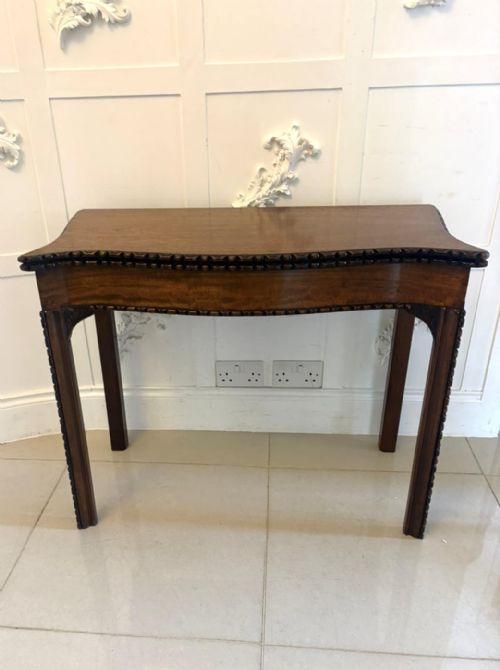


Georgian Serpentine Tea Table
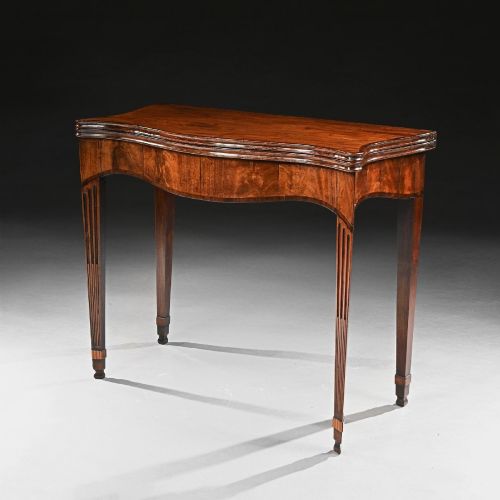
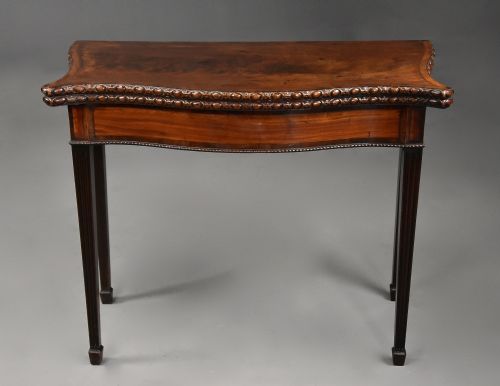
A georgian serpentine tea table brings fluent eighteenth-century curves and rich mahogany timber into a room.
Georgian Serpentine Tea Table
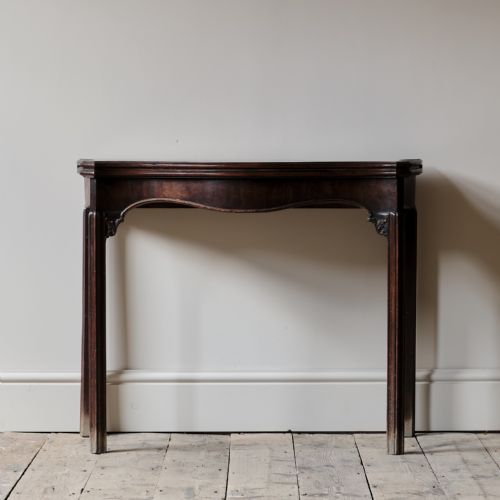
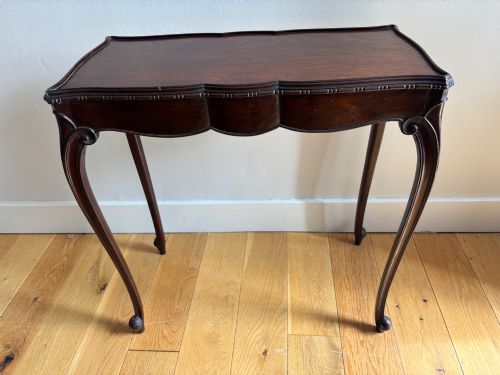
A georgian serpentine tea table appears in various guises across the eighteenth and nineteenth centuries, merging tea tables with card tables and side tables. The overarching form relies on a sinuous, undulating front edge that distinguishes it from straight-fronted variants.
Most examples date from the eighteenth century, aligned with the George III and Hepplewhite periods, while later revivals emerge into the Edwardian era and the early twentieth century. Makers fashioned these as folding card tables, games tables, and occasional pieces utilising mahogany, walnut, and satinwood.
Materials and Construction
Makers constructed these tables predominantly from solid mahogany and wood veneers, often integrating brass hardware and delicate boxwood or satinwood inlay. The curved serpentine outline required precise cabinet-making to shape the solid timber and veneer along the undulating front.
Many incorporate folding tops for dual use as tea and card tables, whilst others feature gallery tops or tripod pillar supports. The integration of carved details in the Hepplewhite and Chippendale styles demonstrates the skilled hand-working characteristic of the period.
Georgian Serpentine Tea Table Retail Price Guide 2026
Typical asking prices for georgian serpentine tea table among the pieces listed under this phrase on Sellingantiques today, from the lower quarter to the upper quarter. They describe what is for sale here now, not the wider market.
The listings span the eighteenth to the twentieth centuries, featuring mahogany, satinwood, and walnut across various folding and tea table formats.
Distinctions in Execution
Quality rests in the fluidity of the serpentine sweep and the depth of the timber's original patina and colour. Superior pieces display crisp, hand-carved mouldings and precise inlay rather than mechanical uniformity.
The integrity of the folding mechanism and the grain continuity across the top boards separate workshop outputs, reflecting the maker's underlying ambition and skill.
The Georgian Serpentine Tea Table Glossary
- Serpentine
- A curved outline featuring a convex centre flanked by concave wings. This graceful profile defines the characteristic front edge of these tables.
- Patina
- The surface sheen and mellowing developed by wood over centuries of handling and exposure. It indicates age and careful preservation.
- Inlay
- A technique where contrasting woods such as satinwood or boxwood are set into recesses on the table surface to form decorative patterns.
- Gallery
- A raised miniature railing or border around the edge of a tabletop. It prevents items from sliding off small tea and occasional tables.
Georgian Serpentine Tea Table: Frequently Asked Questions
How do I tell an 18th century table from a later revival?
Examine the timber construction, secondary woods underneath, and hand-cut joinery details.
Eighteenth-century examples show authentic surface wear and tool marks absent in later Edwardian or twentieth-century revivals.
Were these tables used exclusively for tea?
Many examples served multiple domestic purposes, doubling as card and games tables with folding tops.
Their versatile designs accommodated the social rituals of Georgian interiors.
How should I care for a mahogany tea table?
Keep the timber away from direct heat sources and sudden humidity shifts to prevent veneer lifting.
Apply traditional wax sparingly to nourish the wood and maintain the natural patina.
What distinguishes Hepplewhite style tables?
Hepplewhite designs emphasise lighter proportions, tapered legs, and refined satinwood or boxwood inlay.
These pieces often feature delicate carving that contrasts with earlier, heavier Chippendale influences.