





Georgian Fold Top Desk
A georgian fold top desk offers ingenious versatility, transforming from a compact console into a fully functional surface for writing, tea, or play.
Georgian Fold Top Desk
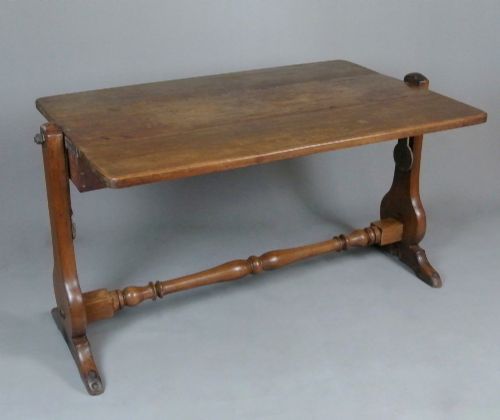
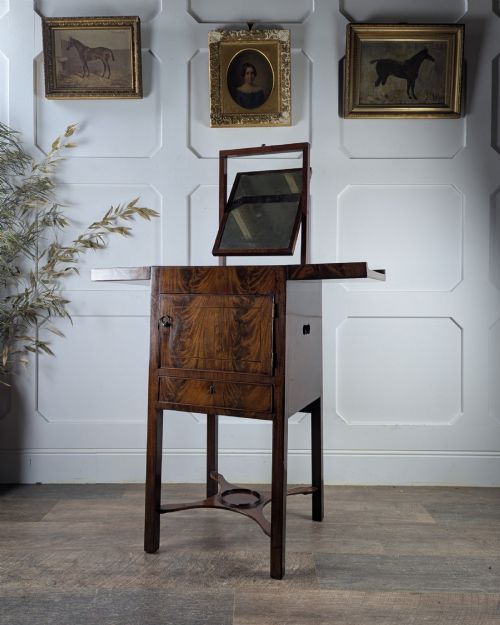
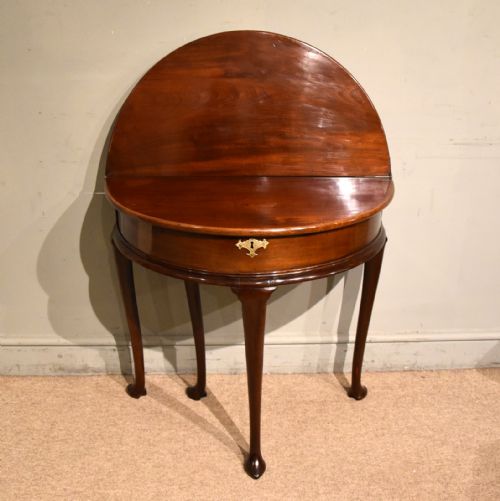
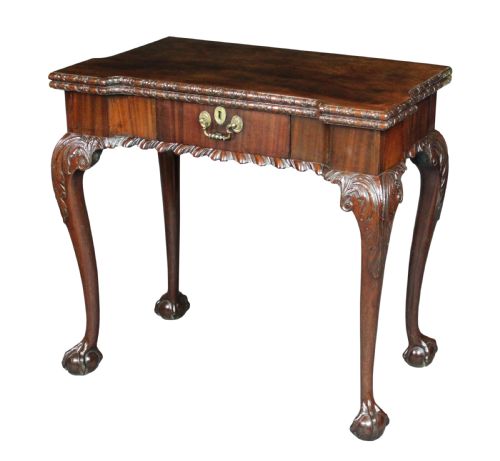
When you search for a georgian fold top desk, you encounter clever case furniture designed to expand when needed and fold flat against a wall when not in use. The examples appearing here span the Georgian, George III, and Regency periods, alongside the Queen Anne style and the year 1900.
The forms on this page include tea tables, card and games tables, console tables, side tables, washstands, and dressing tables. Most pieces rely on a fold-over or fold-away mechanism to reveal a polished timber top or fitted interior compartments.
Makers and craftsmen built these items primarily in mahogany, Cuban mahogany, satinwood, rosewood, and solid teak, occasionally incorporating glass, iron, and brass details. These tables served the drawing room, the bedroom, and even travel, as seen in the campaign tables.
How they were made
Cabinet makers utilised dense timbers such as mahogany and Cuban mahogany, selecting boards with rich grain patterns to form the folding leaves and main carcases. Satinwood and rosewood also appear, providing contrasting banding or simpler veneered surfaces.
Construction relied on precise joinery to ensure the hinged top rested level when opened, supported by pivoting rear legs or swing actions. Brass hinges, locks, and handles fastened the components securely together without hindering the folding action.
Georgian Fold Top Desk Retail Price Guide 2026
Typical asking prices for georgian fold top desk among the pieces listed under this phrase on Sellingantiques today, from the lower quarter to the upper quarter. They describe what is for sale here now, not the wider market.
A travelling officer in 1790 could fold down a solid teak campaign table and pack it flat before the morning march began.
What varies in quality
Quality rests upon the selection of timber and the precision of the folding mechanism, where tighter joints and well-fitted hinges indicate superior workshop standards. The depth of carved detail, particularly on legs and friezes, separates standard items from finer works.
Proportion and the handling of secondary woods also define the standard, with better pieces maintaining stability and balance whether opened for play or closed as a side table.
The Georgian Fold Top Desk Glossary
- Fold-over top
- A hinged wooden surface that doubles the available area when opened and supported. This mechanism is central to tea and card tables.
- Campaign table
- Portable furniture constructed for travel, often featuring folding stands and brass mounts. These pieces break down or fold compactly.
- Cuban mahogany
- A dense, dark timber prized for its rich grain and heavy weight. It was frequently used in high-status furniture during the eighteenth century.
- Satinwood
- A pale, lustrous wood with a golden sheen, used for veneers and decorative inlay. It brightens the surface of late eighteenth-century pieces.
- Serpentine shape
- A curved outline undulating outward and inward in a gentle wave. This contour appears on the edges of table tops and friezes.
Georgian Fold Top Desk: Frequently Asked Questions
What is a georgian fold top desk used for?
These tables served multiple domestic purposes, adapting from narrow side tables into surfaces for tea service, card games, or dressing. The folding mechanism allowed households to save floor space in formal rooms.
By opening the leaf, occupants gained a stable wooden top suitable for evening entertainment or writing correspondence by candlelight.
How do I tell a tea table from a card table?
Tea tables generally feature plain or moulded interiors designed to hold porcelain or silver tea wares safely. Card tables often incorporate lined interiors of baize or leather, sometimes with corner wells for coins or candlesticks.
The presence of rule joints and swing legs is common to both, but the internal layout reveals the intended pastime.
What woods were used in these pieces?
Makers relied heavily on mahogany, including dense Cuban mahogany, for its strength and dark tone. Satinwood and rosewood were also employed for contrasting veneers and decorative borders.
Solid teak appears in portable campaign furniture built for durability during travel.
How do I care for a historic folding top?
Protect the timber by keeping the table away from direct heat sources and strong sunlight that can dry out the old polish. Dust gently with a dry cloth and avoid harsh chemical cleaners.
When opening or closing the leaf, support the hinged section carefully to prevent strain on the original brass joints.