


Georgian Serpentine Fronted Chest
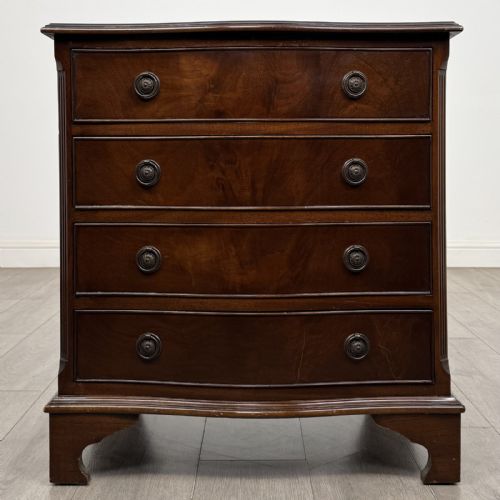
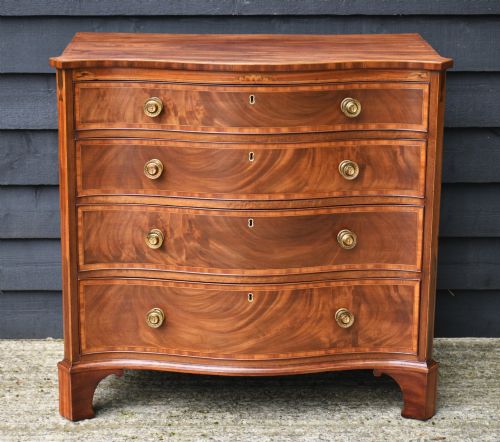
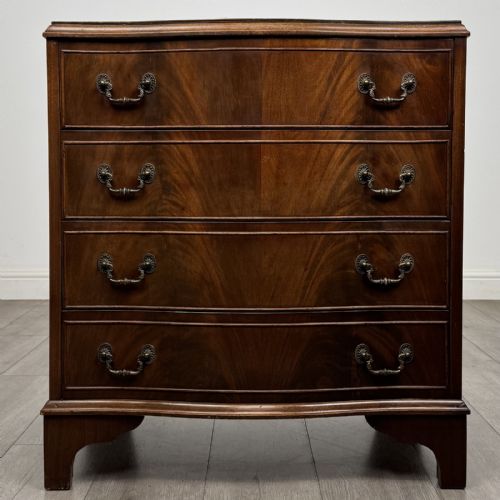
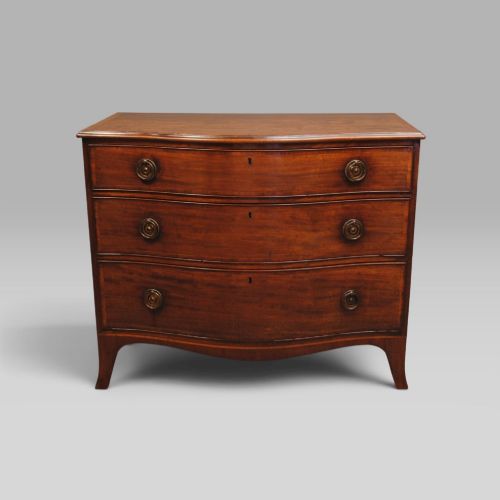
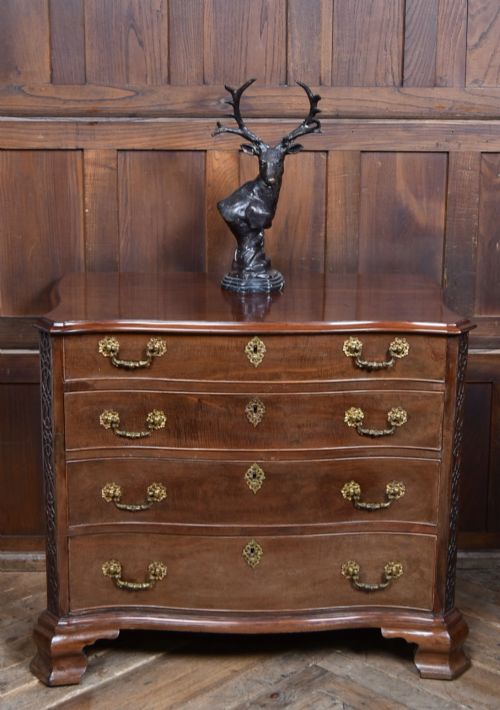
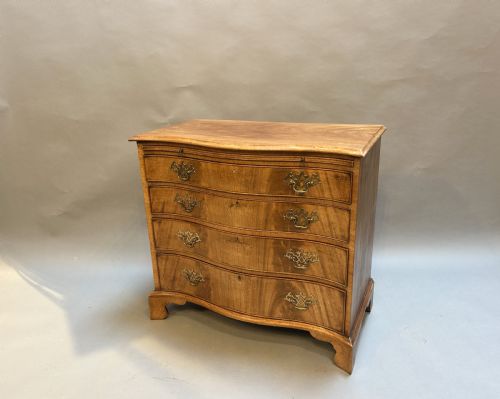
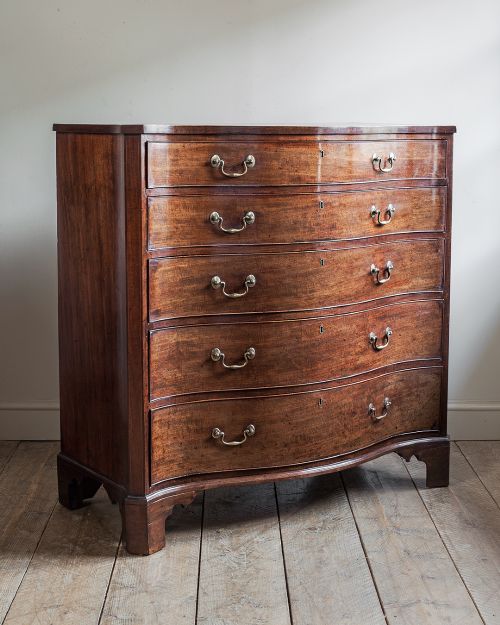
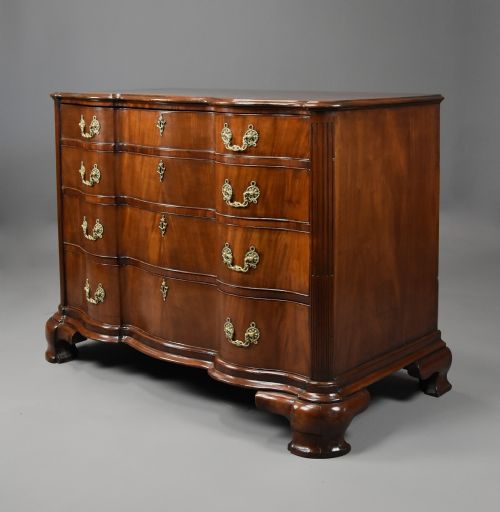
A georgian serpentine fronted chest combines a flowing, undulating facade with the robust proportions of eighteenth-century cabinet making.
Georgian Serpentine Fronted Chest
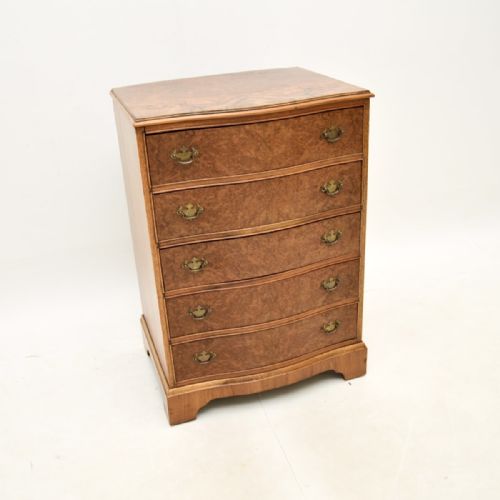
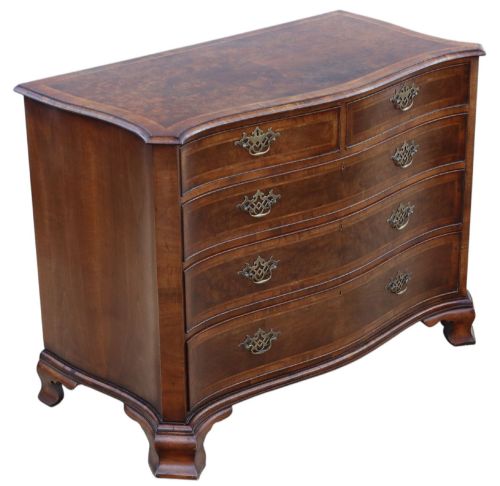
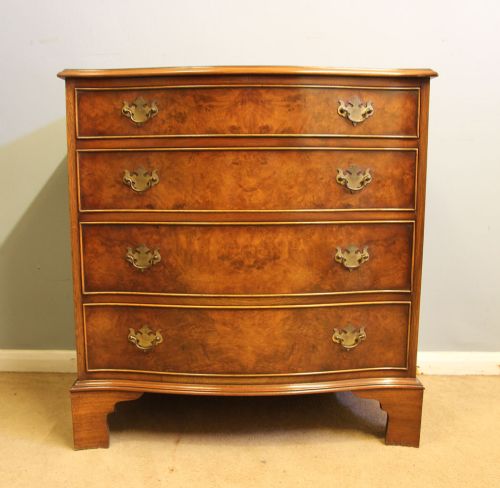
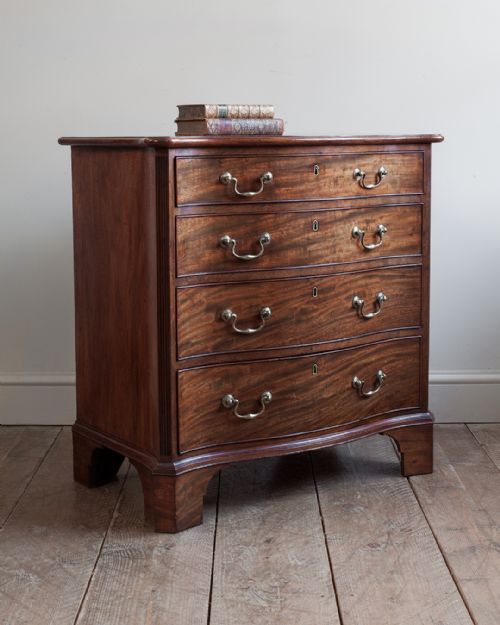
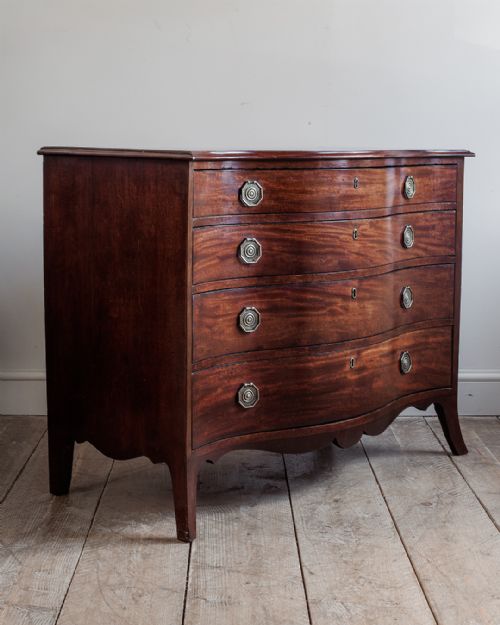
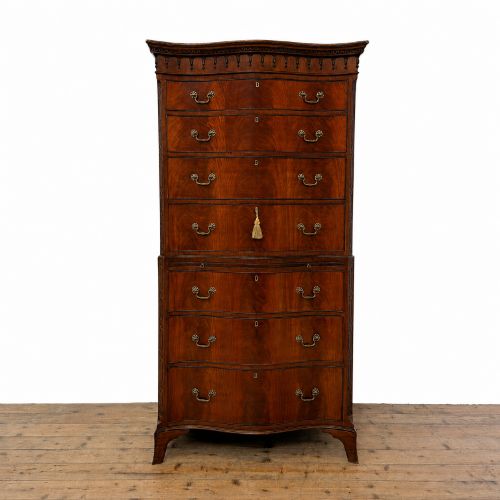
A georgian serpentine fronted chest is primarily encountered as an eighteenth-century original in mahogany or burr walnut, shaped with a convex centre flanked by concave ends. These case pieces take the form of standard chests of drawers, taller chest on chest designs, or bedside lamp tables.
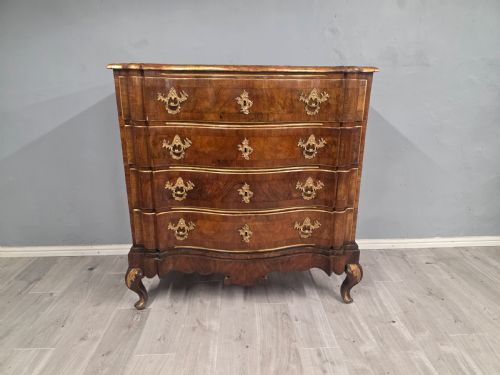
The historical record also includes later revivals from the nineteenth and twentieth centuries, produced in styles that echo George III and Queen Anne designs. Continental examples and Dutch baroque interpretations further widen the scope of surviving forms on offer.
How They Were Made
Cabinet makers constructed these undulating carcases using solid timbers such as mahogany and oak alongside decorative veneers like burr walnut and satinwood. The curved front required meticulous shaping of the drawer fronts and solid timber frames.
Brass hardware such as swing handles and escutcheons punctuate the facades, while marquetry inlay and crossbanding add surface detail to select pieces.
Georgian Serpentine Fronted Chest Retail Price Guide 2026
Typical asking prices for georgian serpentine fronted chest among the pieces listed under this phrase on Sellingantiques today, from the lower quarter to the upper quarter. They describe what is for sale here now, not the wider market.
One recorded piece once resided at Chatsworth House before entering the open market.
What Varies in Quality
The standard of a serpentine chest rests on the handling of the curved timber grain and the precision of the drawer fit along the undulating line. Superior examples demonstrate continuous matching veneers and carefully proportioned cockbeading around each drawer.
Makers who worked with figured mahogany or burr walnut achieved greater visual depth, whereas later revival pieces rely on different joinery methods and varied timber selections.
The Georgian Serpentine Fronted Chest Glossary
- Serpentine front
- A furniture front characterised by a convex central section curving into concave sides. This shape demands considerable skill from the carpenter to execute properly.
- Crossbanding
- A border of veneer laid around the perimeter of a drawer front so that the grain runs perpendicular to the main panel. It provides a neat framing effect.
- Tallboy
- A tall chest of drawers made in two sections, often combining a chest on chest configuration. These pieces maximise storage capacity whilst maintaining a compact floor footprint.
- Commode
- A low chest of drawers or cabinet originating from French furniture forms. The term often describes decorative serpentine pieces from the eighteenth century onwards.
- Marquetry
- The art of forming decorative patterns using fitted pieces of wood veneer. Artisans apply this technique to enrich the surfaces of premium case furniture.
Georgian Serpentine Fronted Chest: Frequently Asked Questions
Where should a serpentine chest go?
These chests suit principal bedrooms, living rooms or hallways where the curved facade can catch the light and command attention. Their decorative fronts make them suitable for placement against flat walls or within alcoves.
Because they project outward at the centre, measuring the clearance space in narrower corridors or smaller rooms ensures the piece sits comfortably in the interior layout.
How do I date a serpentine chest?
Dating relies on examining the secondary timbers inside the drawer carcases, the style of the brass hardware, and the construction methods used for the drawer linings. Eighteenth-century pieces exhibit hand-cut dovetails and native woods like oak or pine behind the mahogany facades.
Revival pieces from the Edwardian era or the 1920s show machine assistance, different internal woods, and distinct finishing techniques that separate them from original period furniture.
What is the difference between a chest and a commode?
Historically, a chest of drawers functions primarily for utilitarian bedroom storage, while a commode often denotes a more decorative, continental-influenced cabinet form. Both terms apply to serpentine fronted furniture across the Georgian and revival periods.
In practice, makers and dealers use the names interchangeably for pieces sharing the same curved proportions and drawer arrangements.
How do I maintain burr walnut veneer?
Burr walnut requires stable indoor humidity levels away from direct sunlight and heat sources to prevent the delicate veneer from drying or lifting. Regular dusting with a soft, dry cloth preserves the polished surface.
Avoiding harsh chemical polishes protects the historic finish and maintains the natural grain patterns inherent in the figured wood.