





Georgian Serpentine Desk
A georgian serpentine desk brings an undulating, swelling front line and rich cabinet timbers to a study or library.
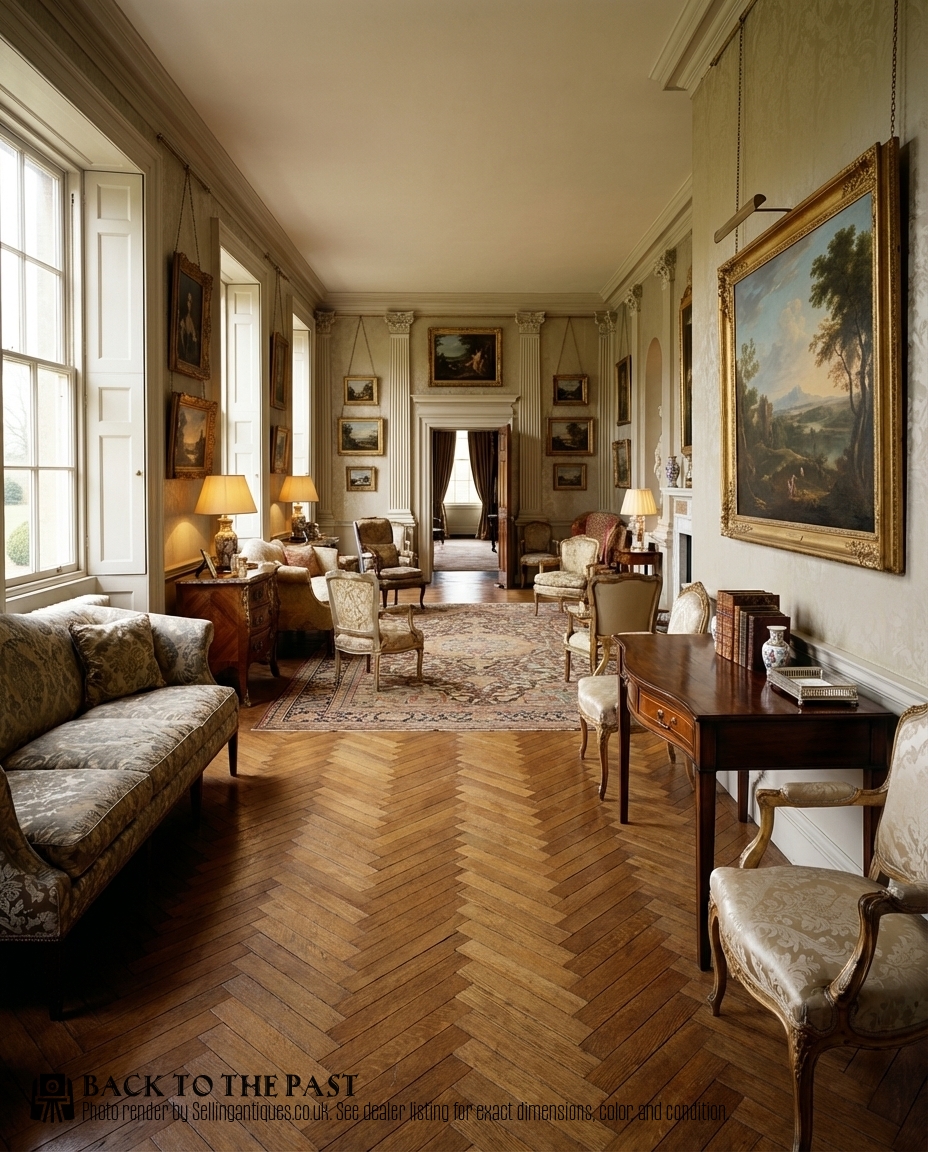
Georgian Serpentine Desk
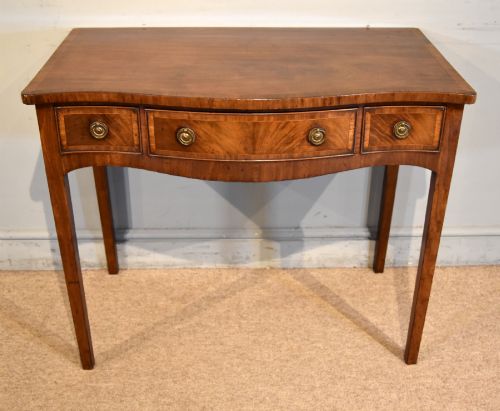
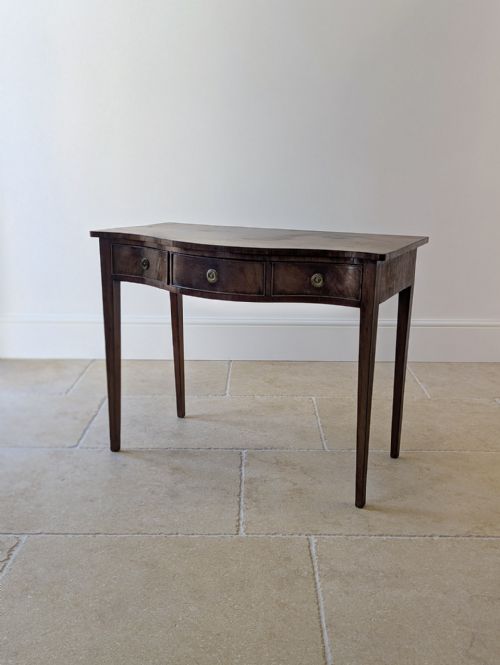
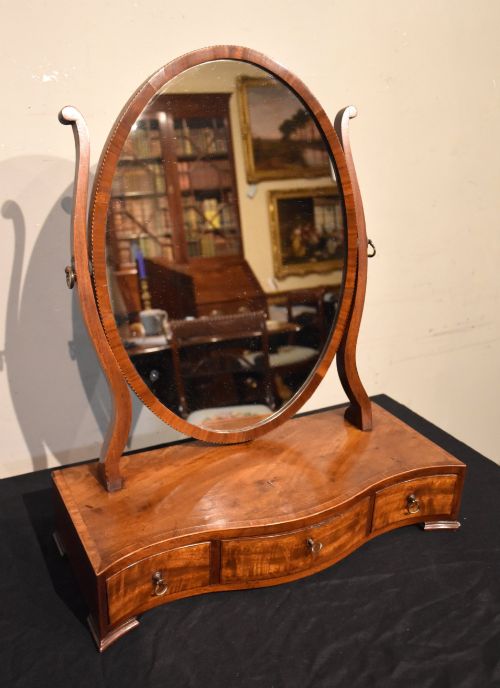
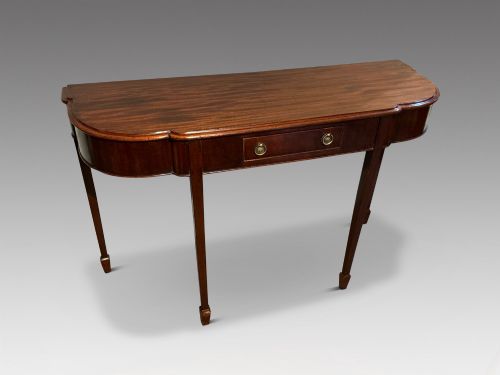
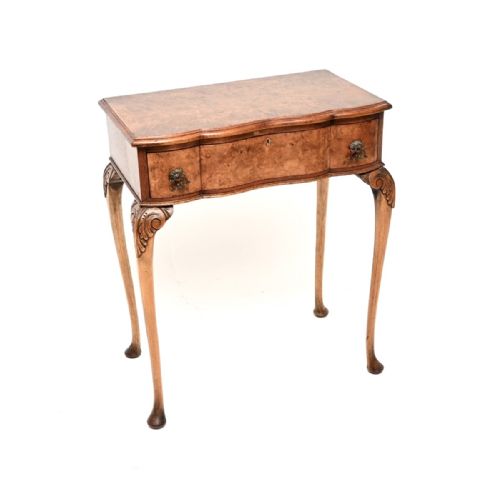
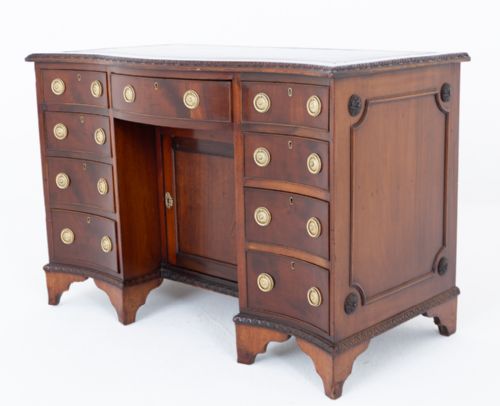
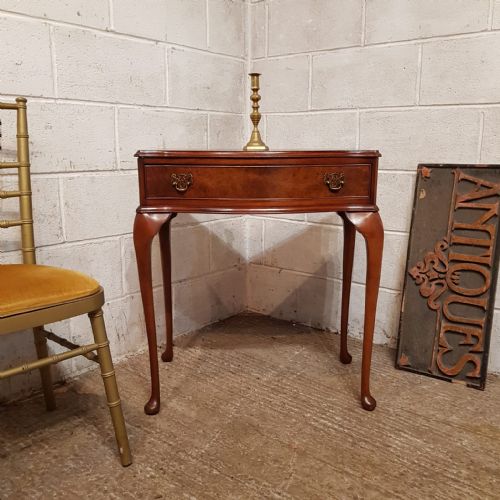
A georgian serpentine desk presents a distinctive convex centre flanked by concave wings, creating a flowing silhouette known as a serpentine front. The pieces seen here encompass full pedestal writing desks, kneehole variants, and related forms like dressing tables and side tables spanning the eighteenth century through later revival periods.
Buyers will encounter genuine eighteenth-century examples alongside twentieth-century revivals executed in matching timber. The form relies on precise carpentry to curve solid wood or veneers smoothly without compromising structural integrity.
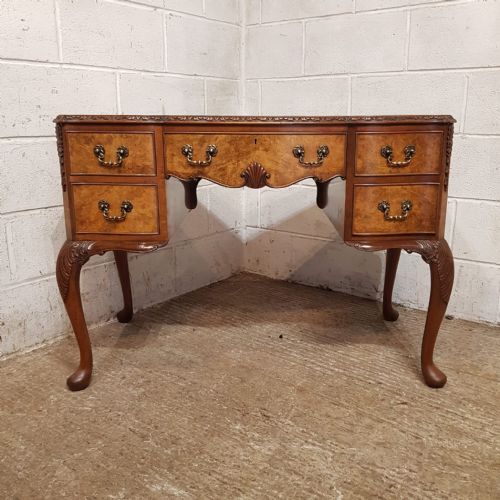
Pedestal formats and smaller kneehole configurations dominate the selection, often featuring fitted drawers and inset leather writing surfaces. Each piece displays the characteristic undulating outline that defines this specific cabinetry tradition.
Materials and construction methods
Cabinetmakers utilised dense hardwoods like mahogany, walnut, and burr walnut, frequently applying fine veneers over stable secondary timbers to achieve complex curved profiles. Satinwood also appears as a primary surface timber, often accented with delicate inlay work.
Brass hardware such as drop handles, escutcheons, and hinges provide functional contrast to the dark grain of the timber. Glass and leather inserts complete the worksurfaces and display compartments on specific writing and console forms.
Shaping the serpentine front required expert hand-sawing and planing of solid timber blocks or careful bending of laminated core boards. Joinery relied on dovetailed drawer construction and mortise and tenon frames to withstand daily use.
Listings feature pieces spanning the georgian period through nineteenth-century revivals and twentieth-century reproductions in mahogany, burr walnut, and satinwood.
Judging execution and finish
Quality rests upon the harmony of the curving line and the selection of figured grain across the drawer fronts. Superior pieces exhibit continuous grain patterns matched symmetrically from the central convex sweep out to the concave corners.
The crispness of carved details, where present, distinguishes master workshops from standard production. Inlaid banding, finely cut dovetails, and original brass fittings further elevate an example.
Subtlety in proportion and the preservation of original surface finishes determine the standing of individual desks. Later revivals vary according to the fidelity of their period styling and the depth of timber selection.
The Georgian Serpentine Desk Glossary
- Serpentine front
- A furniture front featuring a convex central section flanked by two concave curves. This contour requires advanced woodworking skill to execute properly across drawers and frames.
- Kneehole desk
- A compact writing table featuring a central recess for the user's legs, flanked by banks of small drawers. These pieces often incorporate a concealed central drawer or cupboard door.
- Pedestal desk
- A heavy library or writing table built with two supporting columns of drawers that hold up the top surface. The user sits in the central gap between the pedestals.
- Burr walnut
- Timber harvested from walnut tree growths that display intricate, swirling grain patterns. Cabinetmakers prize this material for decorative veneer panels on high-status desks.
- Satinwood
- A durable, light-yellow exotic timber used for fine cabinetmaking and decorative stringing. It takes a high polish and provides sharp contrast against darker woods.
Georgian Serpentine Desk: Frequently Asked Questions
What is a serpentine front?
A serpentine front is an undulating furniture shape defined by a convex curve in the middle that flows smoothly into concave curves on either side. This design creates a sense of movement and depth on flat-faced furniture.
Cabinetmakers adopted this profile during the eighteenth century to showcase decorative wood veneers and demonstrate advanced joinery skills.
How do I care for a walnut desk?
Walnut and burr walnut surfaces require protection from direct sunlight and excessive moisture to prevent fading and veneer lifting. Regular dusting with a dry, soft cloth preserves the polished finish.
Applying microcrystalline wax periodically helps nourish the timber and maintain a gentle sheen without building up heavy residues.
Are all these desks from the eighteenth century?
The selection includes genuine eighteenth-century pieces alongside revival desks made during the Edwardian era and the early twentieth century. Makers in later decades frequently reproduced classic georgian forms using traditional timbers.
Examining construction techniques, drawer linings, and secondary woods helps determine whether a desk originates from the georgian period or a later revival.
What is the difference between a kneehole and pedestal desk?
A kneehole desk is typically smaller, featuring a single recessed opening beneath the desk surface with shallow drawer banks on either side. They suit smaller studies and dressing rooms.
Pedestal desks are larger, heavier pieces built with two substantial banks of full-depth drawers resting directly on the floor to support a wide writing top.