


Georgian Seating Furniture
Georgian seating furniture brings together sturdy oak settles, mahogany dining chairs and elm armchairs that ground a room with period character.
Georgian Seating Furniture
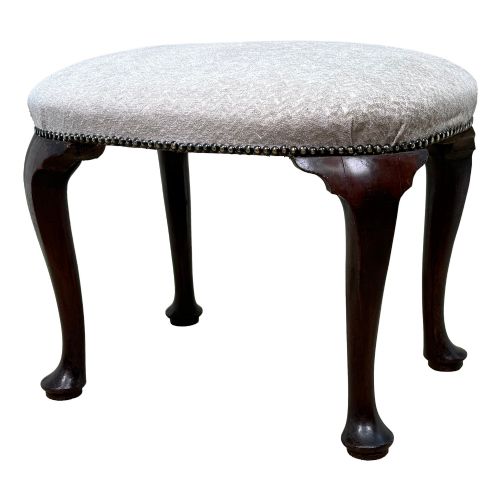
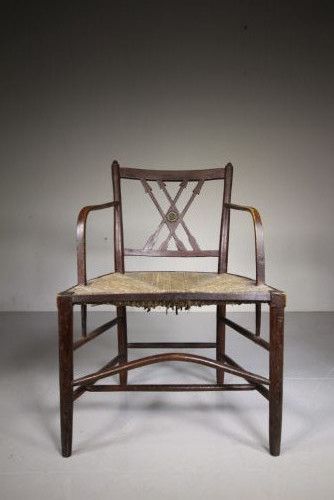
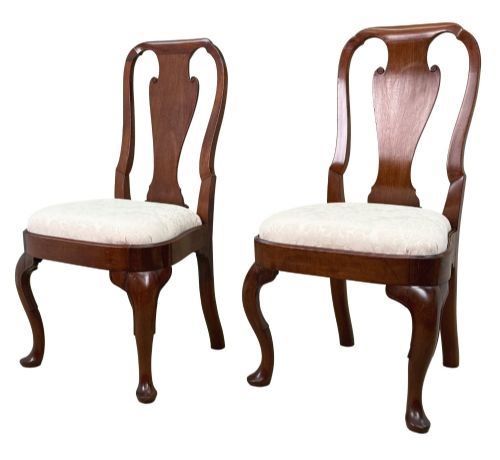
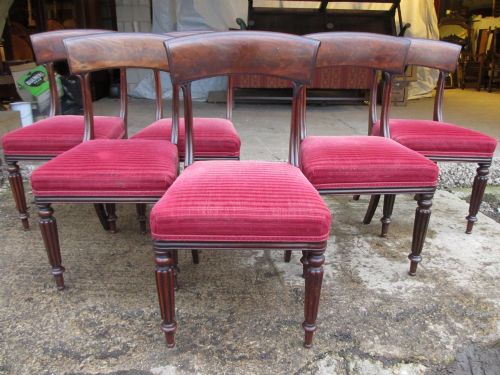
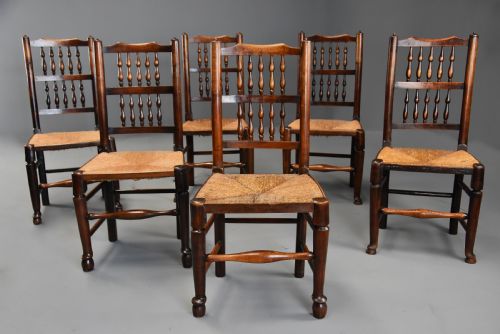
Georgian seating furniture encompasses a wide range of domestic forms designed for comfort and utility across the eighteenth and nineteenth centuries. Buyers encounter dining chairs, armchairs, window seats, stools and settles originating from both refined urban workshops and provincial country houses.
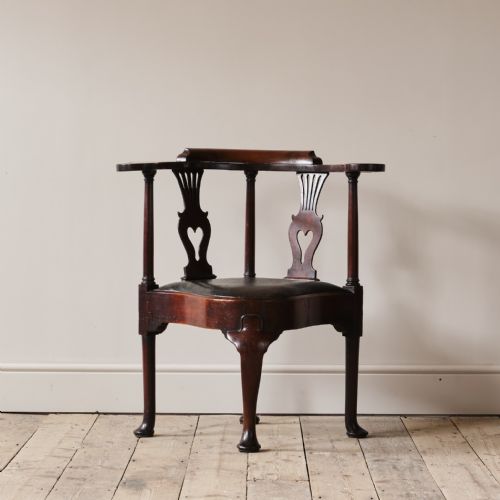
The pieces reflect the shift from heavy vernacular oak to lighter mahogany, walnut and exotic veneers as trade routes expanded. Sets of dining chairs appear alongside individual library armchairs, children's chairs and robust elm or ash windsors.
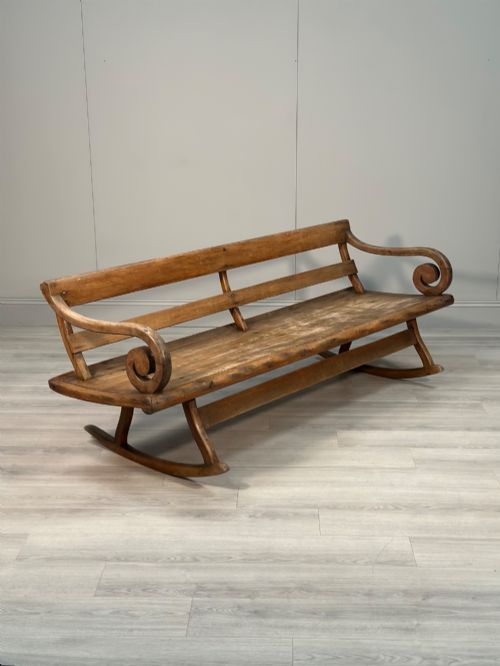
Regional variations emerge clearly in the selection, from Welsh high-back Windsor armchairs to Scottish Grecian side chairs and English country vernacular settles. These items served practical daily functions in halls, libraries, dining rooms and gardens.
Materials and Technique
Makers relied on native timbers such as oak, elm, ash and yew for country vernacular pieces, while importing dense mahogany and rosewood for urban neoclassical forms. Joinery methods combined pegged mortise and tenon joints in early oak settles with sophisticated turning, carving and framing techniques in later mahogany chairs.
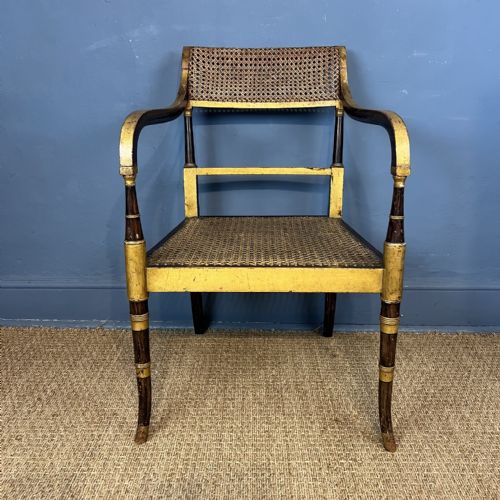
Surface treatment played an essential role in construction, utilising clear polishes, paint, faux finishes and parcel gilt to enhance the natural grain or create decorative optical effects. Upholstery, cane work and brass inlay appeared on sophisticated library chairs and dining sets to introduce texture and pattern.
The listings span the eighteenth and nineteenth centuries, featuring periods from George II and the Regency era through to Victorian production.
Proportion and Finish
The distinction between ordinary and exceptional examples rests in the crispness of the carved detail, the balance of the proportions and the integrity of the timber. Finer pieces retain deep patination and original structural elements without excessive timber replacement.
Subtleties in turning, joint construction and the selection of figured mahogany or unblemished elm separate standard utilitarian output from pieces commissioned for major country houses.
The Georgian Seating Furniture Glossary
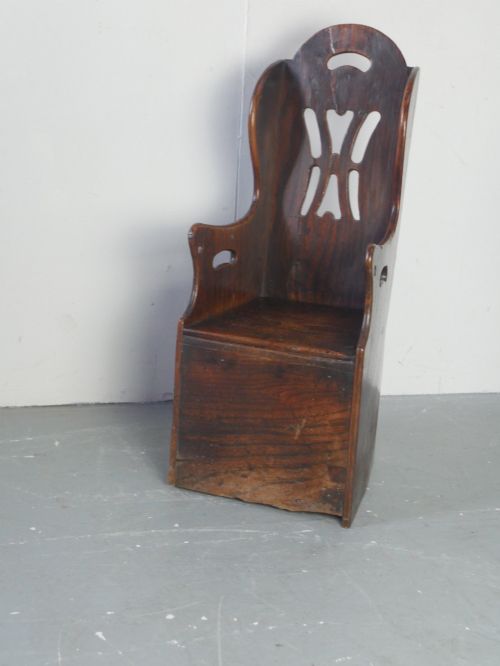
- Settle
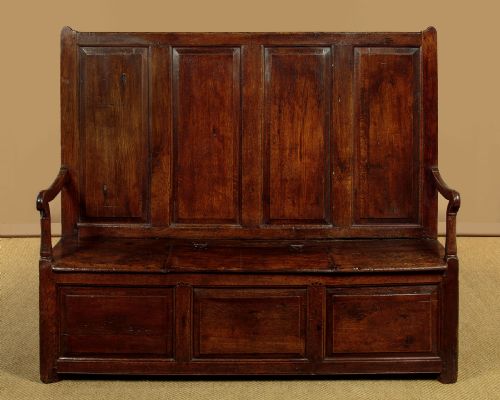
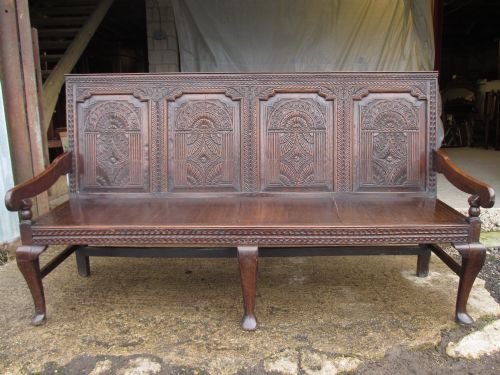
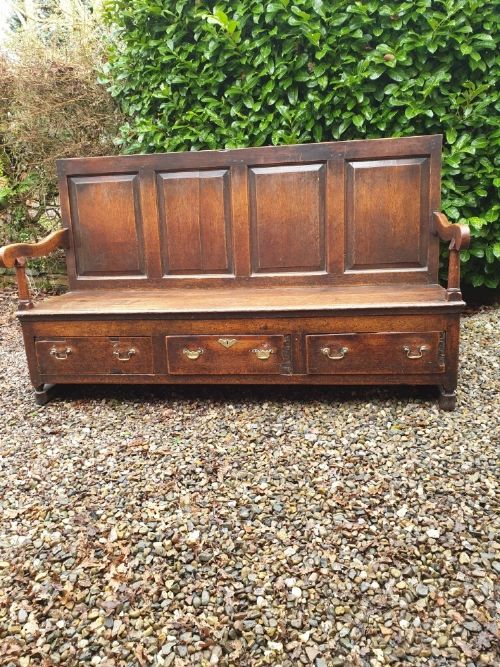
- A wooden bench with a high back, solid arms and frequently a box seat or enclosed base to block drafts. It represents a primary form of domestic seating in early country interiors.
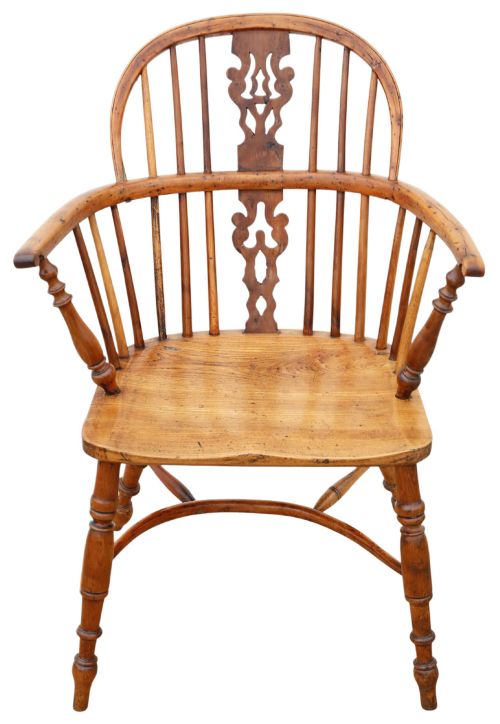
- Windsor chair
- An armchair or side chair constructed with a solid wooden seat into which the legs and back spindles are separately bored and wedged. Provincial examples often combine elm seats with ash or yew spindles.
- Bergère
- An enclosed upholstered armchair featuring cane or fabric sides and a loose seat cushion. This form gained popularity during the Regency period for library and drawing-room use.
- Joint stool
- A low wooden stool built with pegged mortise and tenon joinery rather than turned legs inserted into a seat. They provided sturdy seating or auxiliary table surfaces in early rooms.
- Carver
- A traditional term for an armchair, often used to describe the single larger elbow-chair designed to match a set of smaller dining chairs.
Georgian Seating Furniture: Frequently Asked Questions
How do I identify a genuine period settle?
Examine the construction of the back panels and the wear patterns on the seat and armrests. Genuine early examples display pegged joints, hand-adzed boards and natural surface patination built up over generations of use.
Check for consistency in the timber species used throughout the frame, as later repairs or alterations often mix replacement pine or modern fixings with older oak.
Can I use antique dining chairs daily?
Solid mahogany and oak dining chairs from the eighteenth and early nineteenth centuries were built for heavy daily use and remain remarkably sturdy. Ensure that the frame joints are secure and consult a conservator if the original glue has dried out.
Upholstered seats may require modern webbing or reinforcement to support regular sitting without placing undue strain on the historic wooden rails.
What is the difference between a side chair and an armchair?
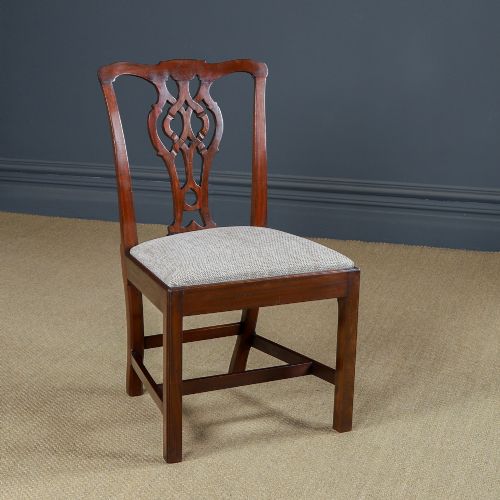
Side chairs are built without armrests, designed primarily to be tucked neatly around a dining table or placed against a wall. Armchairs feature supportive elbow rests and are proportioned for individual comfort in libraries, parlours or bedrooms.
In many historic dining sets, a pair of matching armchairs accompanied a larger number of armless side chairs at the head and foot of the table.
How do I care for polished mahogany and oak furniture?
Maintain the timber by dusting regularly with a soft, dry cloth and applying natural beeswax sparingly to preserve the surface sheen. Avoid placing antique seating near direct heat sources or in strong sunlight, which can dry out the wood and fade old polishes.
Protect finished surfaces from moisture and sharp impacts to safeguard the original patination.