
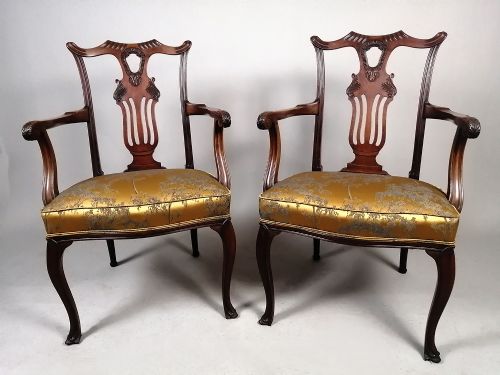
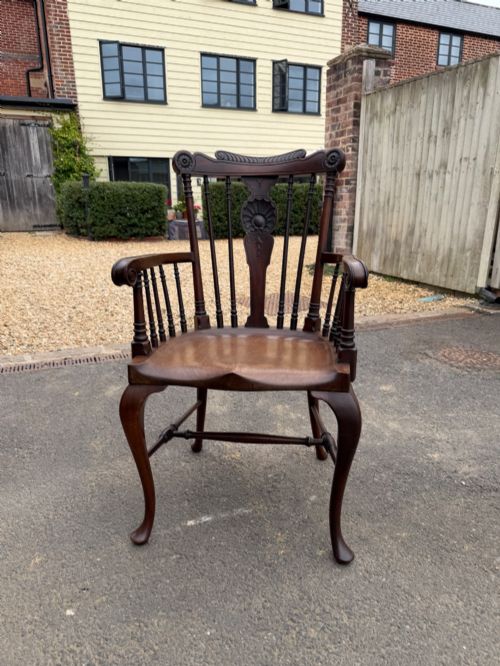
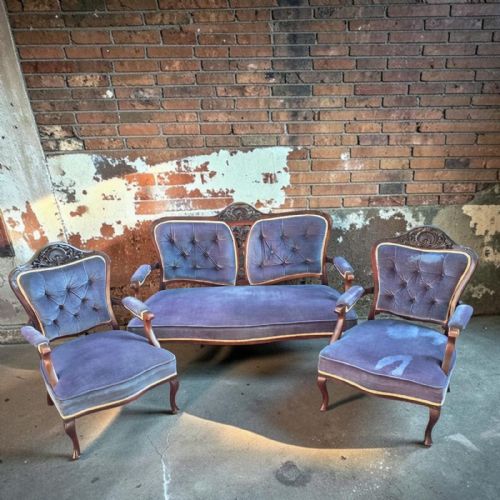
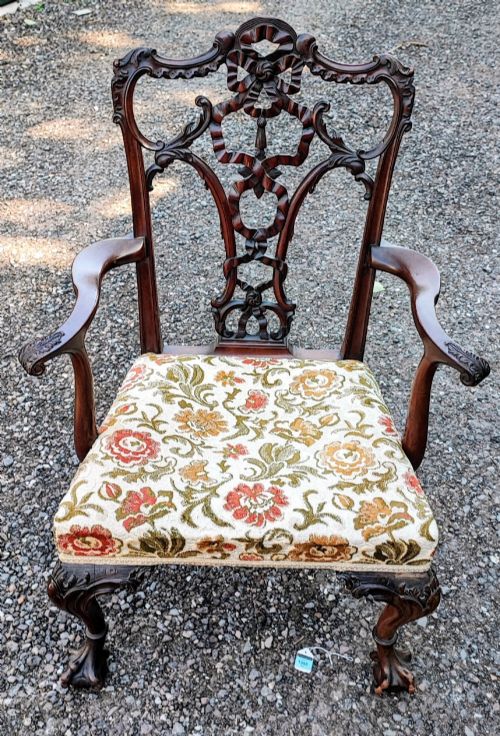
Mahogany Cabriole Armchairs
Mahogany cabriole armchairs bring together rich timber frames and sweeping scroll legs, offering solid seating rooted in eighteenth-century design.
Mahogany Cabriole Armchairs
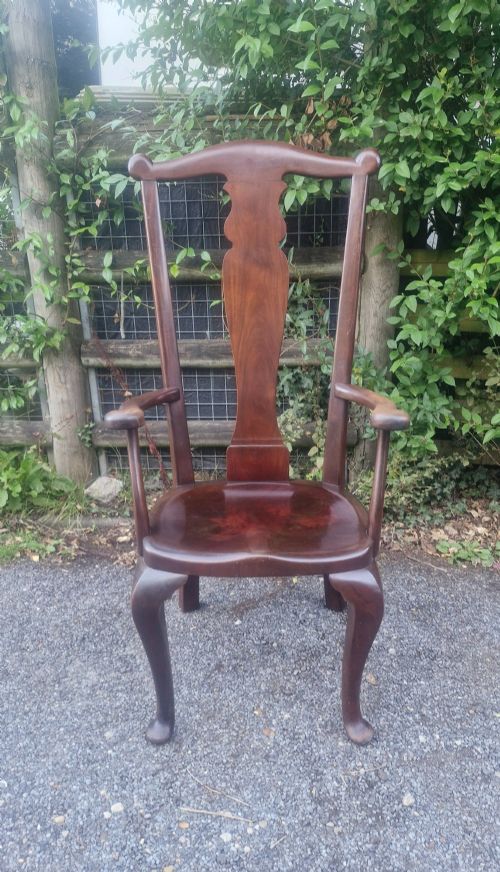
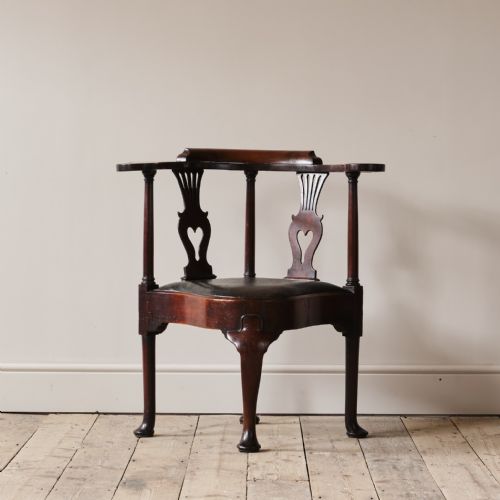
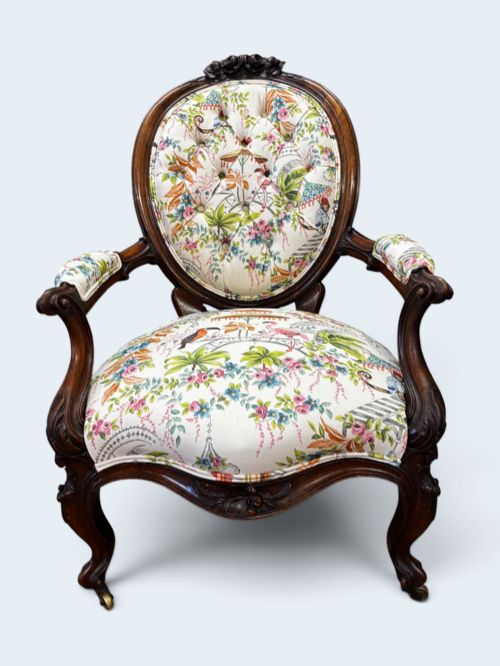
When you search for mahogany cabriole armchairs, you encounter seating built across several centuries, spanning the eighteenth, nineteenth, and early twentieth periods. These forms range from formal desk chairs and library seating to dining carvers and upholstered easy chairs.
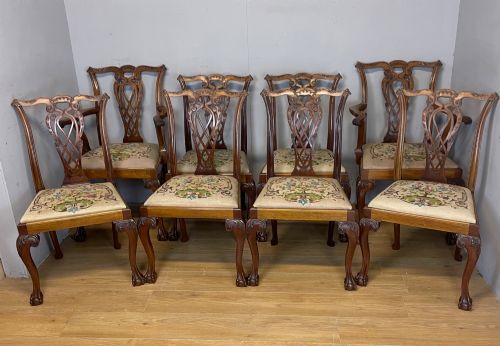
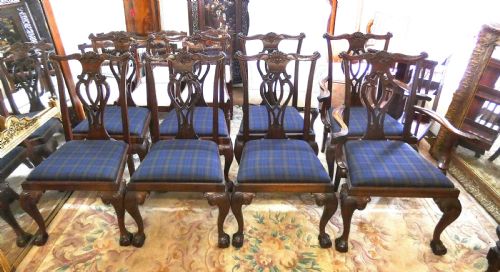
The examples most commonly met on this page date from the Victorian, Edwardian, and revival eras, drawing heavily upon Georgian and Queen Anne design idioms. Makers utilised solid timber frames supported by characteristic curved legs that terminate in pad, claw, or ball feet.
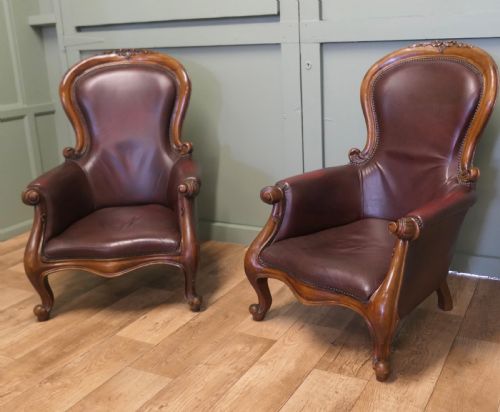
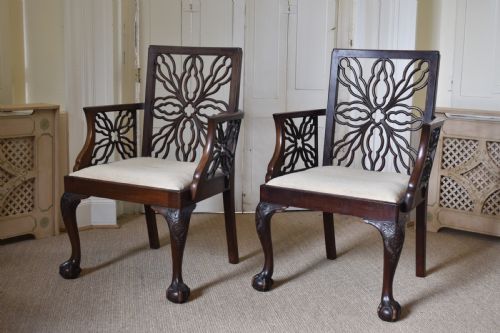
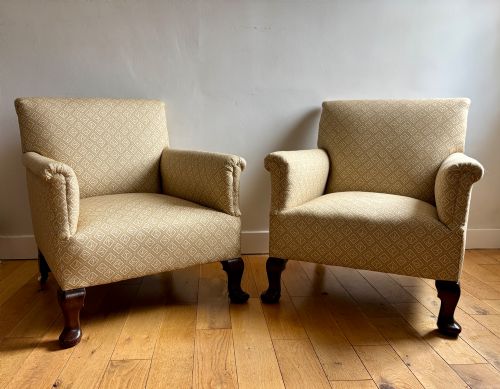
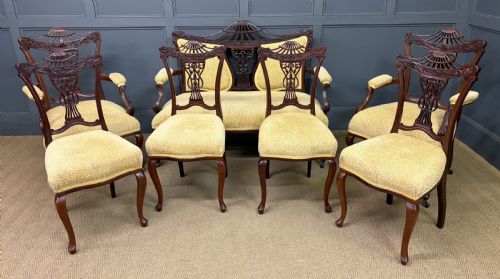
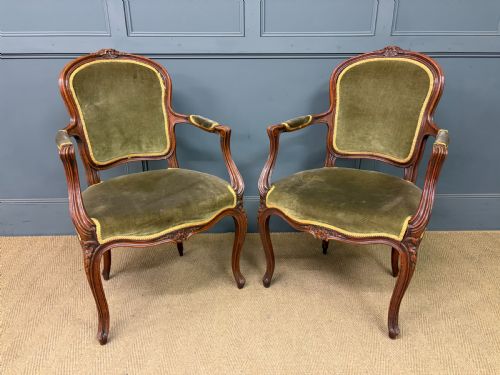
Seating configurations vary from single library and desk chairs to pairs of open armchairs and full dining sets. Many pieces retain period upholstery fabrics, leather, or velvet, whilst others arrive newly covered in calico.
How they were made
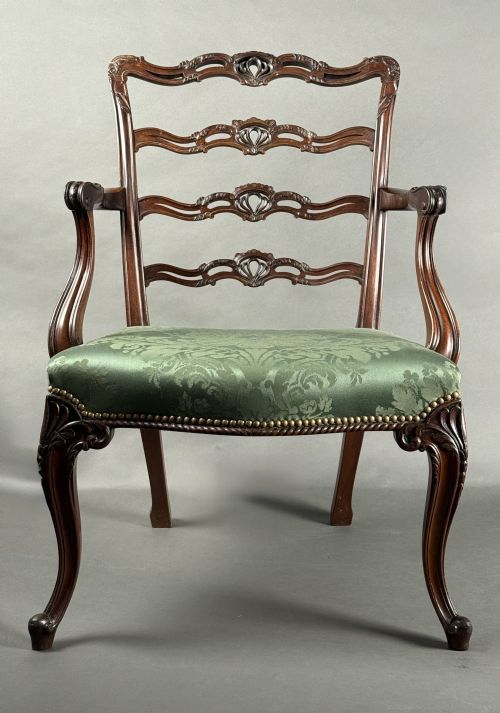
Craftsmen built the structural frames primarily using dense, dark mahogany, often selected for its deep grain and stability. Carved ornamentation such as shell motifs, acanthus leaves, and ribbon backs was worked directly into the solid timber.
Support and comfort relied upon traditional joinery techniques combined with stuffing materials like horsehair secured beneath layers of leather, velvet, damask fabric, or patterned upholstery. Brass tacks frequently finished the edges of the upholstered panels on leather and buttoned easy chairs.
Several armchairs arrive newly dressed in plain calico, waiting patiently for someone to choose their final velvet outfit.
What varies in quality
The standard of a piece rests heavily upon the crispness of the timber carving on the knees of the cabriole legs and the proportions of the arms and back. Superior examples display fluent, uninterrupted curves and tight joinery that resists movement under weight.
The integrity of the internal stuffing and the choice of covering material also separate standard production from finer workshop output. Original leather surfaces or well-executed traditional re-upholstery maintain the historical character of the seating far better than rushed modern replacements.
Warings·Whytock and Reid
The Mahogany Cabriole Armchairs Glossary
- Cabriole leg
- A furniture leg that bends outward in a convex curve at the knee and tapers inward in a concave curve near the foot, resembling the leg of an animal.
- Carver
- An armchair designed to match a set of straight dining chairs, usually placed at the heads of a dining table.
- Gainsborough chair
- A type of upholstered armchair with an open-framed mahogany structure, padded armrests, and a low seat, popular during the eighteenth century.
- Ball and claw foot
- A furniture foot carved to represent a bird's talon grasping a spherical ball, commonly found on eighteenth-century and revival cabriole legs.
- Spoon back
- An upholstered chair back shaped in a concave vertical curve that mirrors the contour of the human spine, prevalent in Victorian seating.
Mahogany Cabriole Armchairs: Frequently Asked Questions
Were these chairs used at desks or dining tables?
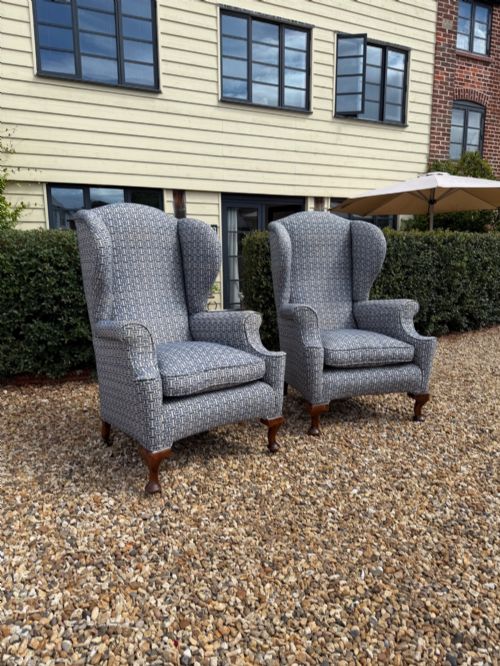
Many mahogany cabriole chairs served specific utilitarian roles as desk chairs, library seating, or dining carvers. Open armchairs and wingbacks were typically positioned in parlours or studies for reading and conversation.
Dining sets featured armchairs placed alongside matching side chairs to accommodate guests at formal meals.
How do I care for antique mahogany frames?
Maintain the timber by keeping the chairs away from direct heat sources and strong sunlight, which can dry out and fade the wood. Occasional application of a suitable wax polish helps nourish the grain.
Avoid using silicone-based sprays, as they build up residue and attract dust over time.
How can I tell original period pieces from revivals?
Examination of the timber beneath the seat, the type of secondary woods used in the frame construction, and tool marks reveal the manufacturing era. Revival pieces from the nineteenth and twentieth centuries often utilise machine-cut elements and standardised joinery.
Wear patterns on the feet and joints also indicate the actual age and intensity of use a chair has experienced.