


.JPG)
Georgian Scent Box
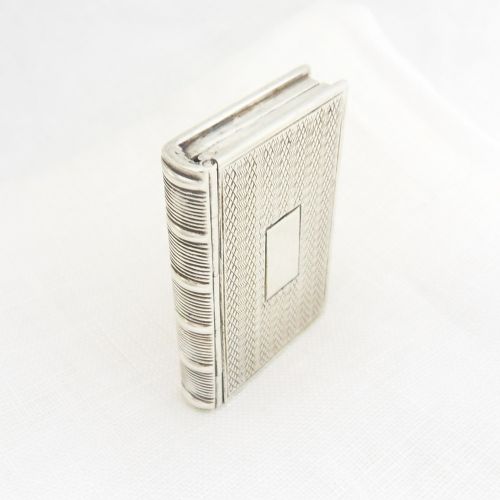
These georgian scent box pieces are small portable containers designed for holding perfumes or aromatic vinegars, prized by collectors for their intricate metalwork and miniature scale.
Georgian Scent Box
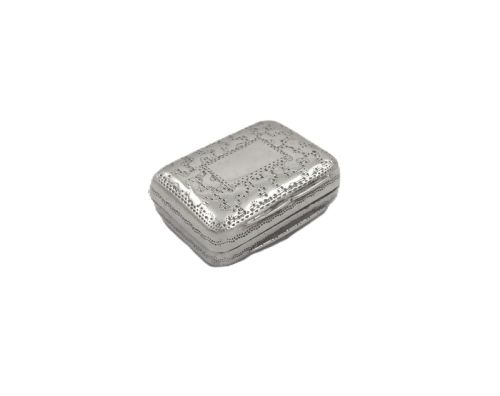
When you search for a georgian scent box, you encounter a specialised range of small personal containers spanning the Georgian and Victorian eras, including vinaigrettes and perfume bottle holders. The most frequent forms on this page are silver vinaigrettes and scent bottles, alongside rarer novelty shapes.
The objects originate primarily from the eighteenth and nineteenth centuries, taking forms such as egg shapes, round boxes, and articulated fish. Examples range from simple silver pieces to elaborate designs incorporating glass, agate, and gold plate.
Materials and construction methods
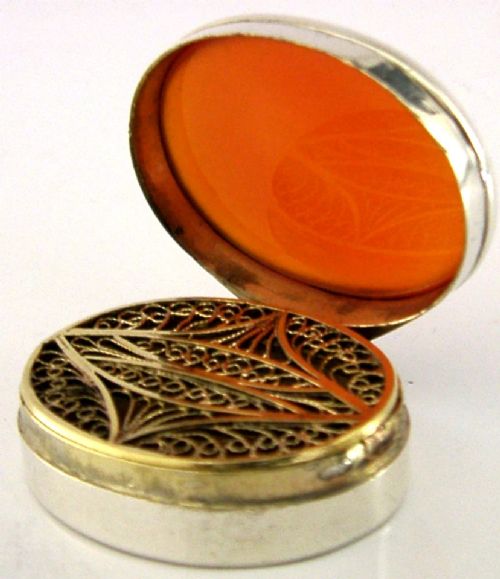
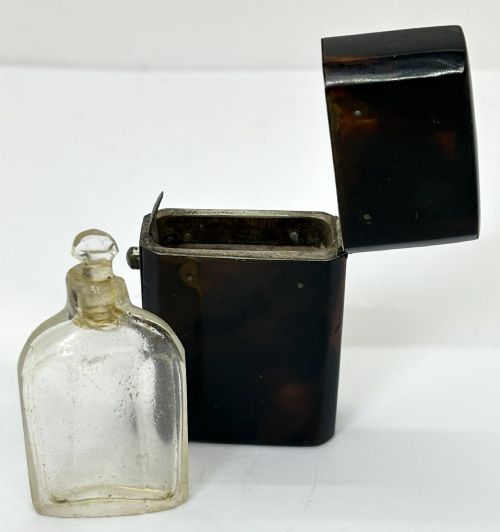
Silversmiths utilised sterling silver and silver-gilt, frequently shaping them into intricate boxes fitted with internal pierced grilles to diffuse scent. Skilled craftspeople also employed gold plate, tortoiseshell, leather, and velvet to line and construct the exterior housings.
Decorative work involved setting polished stones such as orange agate into the metal lids, as well as applying enamel and two-colour gold decoration. Glass was blown and cut to form the interior scent bottles housed within satinwood or leather outer boxes.
An articulated fish vinaigrette wiggles its silver tail to freshen the air.
Distinguishing quality in small containers
Quality rests upon the crispness of the chased decoration on the silver and the precision of the hinge work on tiny lids and internal grilles. Superior examples display fine piercing work on the inner gilt grilles and secure, flush-fitting closures.
The choice of secondary materials marks the distinction between standard production and exceptional pieces, particularly where skilled lapidaries set hardstones like agate or jewelled enamel into the gold framework.
Giles Loyer·John Bettridge·REILY AND STORER
The Georgian Scent Box Glossary
- Vinaigrette
- A small pocket container fitted with a sponge soaked in aromatic vinegar, featuring a hinged pierced inner grille to release the scent. These pieces replaced larger scent bottles for pocket use during the period.
- Silver-gilt
- Sterling silver coated with a thin layer of gold, often applied to the interior grilles of vinaigrettes to protect the metal from the corrosive action of acidic vinegars. This finish provides a rich yellow contrast to the exterior silver.
- Agate
- A form of chalcedony quartz showing coloured bands, frequently cut and polished to form decorative panels inset into box lids. The stone varies in tone from orange to grey.
- Articulated
- Constructed with hinged segments that allow the body of the object to flex, a technique seen in novelty fish-shaped vinaigrettes. This mechanical complexity required skilled metalworking.
- Satinwood
- A durable exotic timber with a lustrous grain, utilised for constructing outer protective cases to hold glass scent bottles. It provides a smooth surface for portable travel boxes.
Georgian Scent Box: Frequently Asked Questions
What is a georgian scent box used for?
These containers held perfumes or smelling salts, which were carried in pockets or handbags to counter unpleasant odours in public spaces. The internal sponge absorbed the liquid, while the pierced grille allowed the aroma to disperse gradually when opened.
In the period, portable scent containers served as both practical personal accessories and items of high fashion, often displayed on chatelaines or kept on dressing tables.
What materials appear on these pieces?
Sterling silver and gold form the primary structure for the metal boxes, often enhanced with silver-gilt interiors or two-colour gold work. Decorative elements incorporate orange agate, enamel, tortoiseshell, and glass.
Some larger travel examples utilise satinwood paired with fitted glass bottles, while smaller pocket pieces rely entirely on precious metals and hardstones.
How do I date an antique piece?
Dating relies on hallmarks stamped into the metal, which indicate the assay office, the town, and the year of production. stylistic indicators such as Neoclassical motifs or plain geometric shapes also point toward specific decades within the Georgian and Victorian eras.
Makers' marks stamped alongside the assay stamps help narrow the production period when cross-referenced with silversmith registration records.