

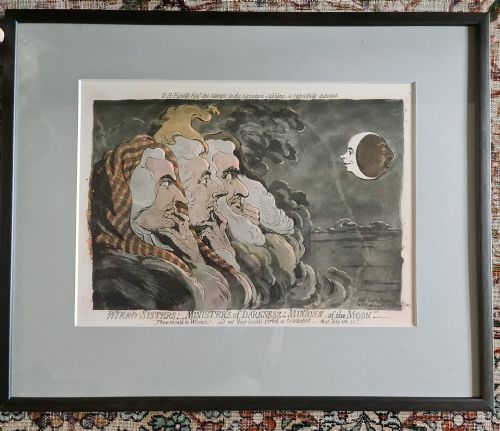


Georgian Satirical Engravings
Georgian satirical engravings capture the biting wit, political scandals and social absurdities of the eighteenth and nineteenth centuries with remarkable candour.
Georgian Satirical Engravings
Georgian satirical engravings offer a biting window into eighteenth and nineteenth-century social commentary, politics and daily life. When exploring georgian satirical engravings, buyers encounter framed prints, portfolios and individual sheets depicting caricature, moral tales and political scandal.
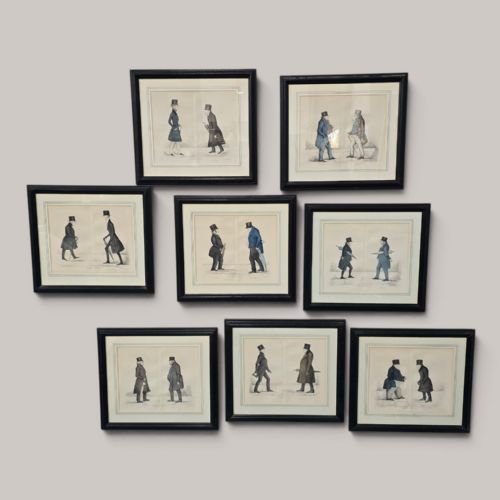
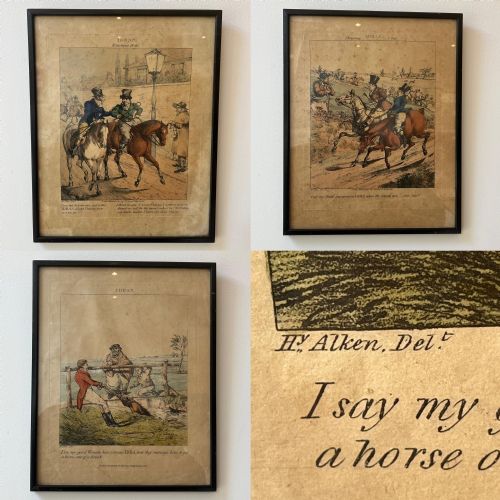
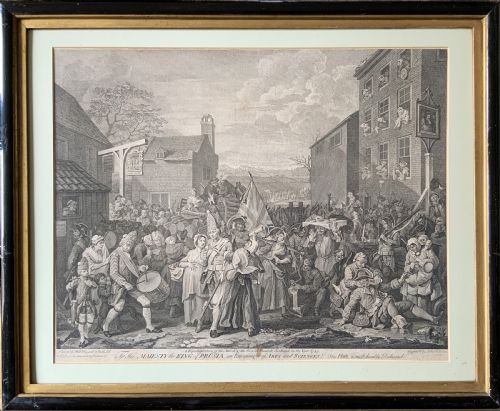
The selections available range from eighteenth-century copperplate impressions by master printmakers to nineteenth-century restrikes and hand-coloured interpretations. Prominent themes include social satires of Georgian life, sporting mishaps, theatrical scenes and moral progress series.
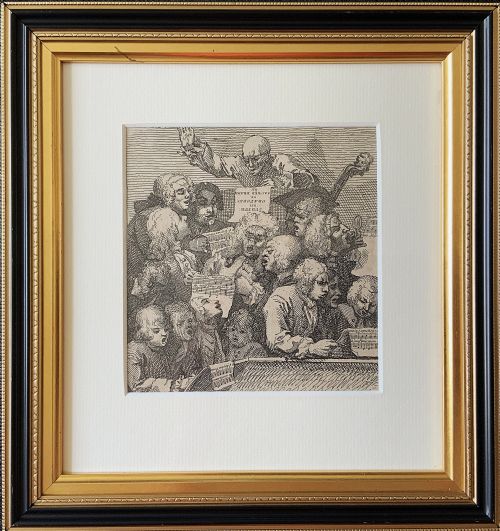
Most examples appear mounted behind glass within period timber frames, including maple surrounds, preserving the delicate paper substrates. Collectors acquire these works to study historical graphic art and to display punchy, narrative-driven imagery on domestic walls.
How they were made
These works rely upon copperplate engraving and etching techniques executed on laid or wove paper substrates using carbon ink. Master craftsmen carved lines directly into metal plates before transferring the inked designs under heavy press pressure.
Many sheets received subsequent hand-colouring using translucent watercolours applied with fine brushes to accentuate specific figures, garments and interior details. Completed prints were frequently housed in wooden frames, sometimes utilising figured maple, paired with glass protection.
Georgian Satirical Engravings Retail Price Guide 2026
Typical asking prices for georgian satirical engravings among the pieces listed under this phrase on Sellingantiques today, from the lower quarter to the upper quarter. They describe what is for sale here now, not the wider market.
Current listings feature works printed on paper, employing carbon ink and watercolour, housed within maple and timber frames.
What varies in quality
Quality rests upon the crispness of the plate impression, where early strikes reveal sharp, deep lines and later impressions can appear softened through plate wear. The delicacy and accuracy of contemporary hand-colouring further distinguish standard impressions from superior exhibition-grade plates.
Condition of the paper substrate, including minimal toning, absence of severe foxing and intact margins, dictates desirability among serious collectors. The historical significance of the publisher, the draughtsman and the engraver adds considerable weight to the standing of any individual sheet.
Henry Alken·William Hogarth·Luke Sullivan·Gilray·Riepenhausen·Thomas Rowlandson·William Bunbury
The Georgian Satirical Engravings Glossary
- Engraving
- A printmaking technique where an artist cuts lines directly into a copper plate using a sharp steel tool called a burin. The resulting metal grooves hold the ink for transfer to paper under press pressure.
- Etching
- A process where metal plates are coated with an acid-resistant ground and drawn through with a needle to expose the copper, which is then bitten by acid. This method allows for freer, more painterly lines than direct engraving.
- Copperplate
- A flat sheet of polished copper used as the primary matrix for engraving or etching intricate satirical designs. These plates wear down gradually over multiple printing sessions.
- Hand-coloured
- The practice of applying watercolours by hand to a monochrome printed impression after it leaves the press. This meticulous finishing added vibrancy and commercial appeal to caricatures.
- Wove paper
- A paper manufacturing type created on a fine wire sieve, producing a smooth, uniform surface without ribbed chain lines. It became the preferred substrate for fine graphic art by the late eighteenth century.
Georgian Satirical Engravings: Frequently Asked Questions
What subjects do these prints cover?
The imagery spans political scandal, theatrical caricature, sporting misadventures and moral cautionary tales depicting eighteenth-century society. Artists targeted politicians, fashionable elites and everyday human folly with equal vigour.
Series such as progress narratives document human downfall through sequential plates, while single sheets capture specific contemporary events or comedic archetypes.
How should I display them at home?
These works require framing behind glass to protect fragile paper substrates from atmospheric dust, moisture and physical handling. UV-filtering glass helps prevent the fading of both the carbon ink and any applied watercolours.
Position prints away from direct sunlight and damp environments, such as unventilated kitchens or bathrooms, to ensure the long-term stability of the paper and wooden frames.
Are these works original eighteenth-century printings?
Age varies considerably across the market, encompassing genuine eighteenth-century impressions, c.1794 copperplate printings and nineteenth-century restrikes or copies. Catalogues generally specify whether an item is an original period impression or a later Victorian iteration.
Examining the paper characteristics, plate marks and printing ink helps differentiate between early impressions and later commemorative editions.
Why are some prints hand-coloured?
Publishers employed colourists to hand-tint monochrome impressions with watercolours to enhance visual impact and marketability. Contemporary hand-colouring adds significant character and vibrancy to the narrative scenes.
Careful inspection reveals whether pigment was applied during the period of publication or added during later decorative interventions.