



Antique Satirical Print
An antique satirical print delivers social commentary and political wit, offering a sharp window into past manners through ink, paper and engraving.
Antique Satirical Print
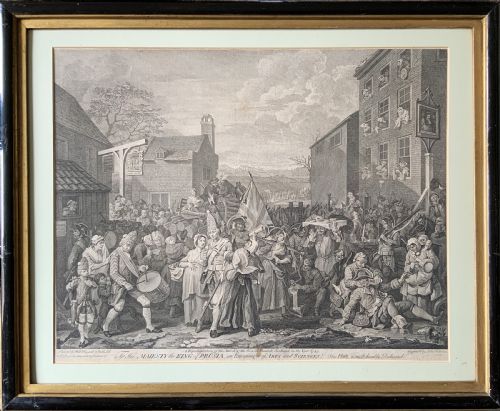
An antique satirical print records the humour, politics and social critiques of past centuries through various graphic formats. These works range from individual copperplate engravings and hand-coloured etchings to complete portfolios and book pages.
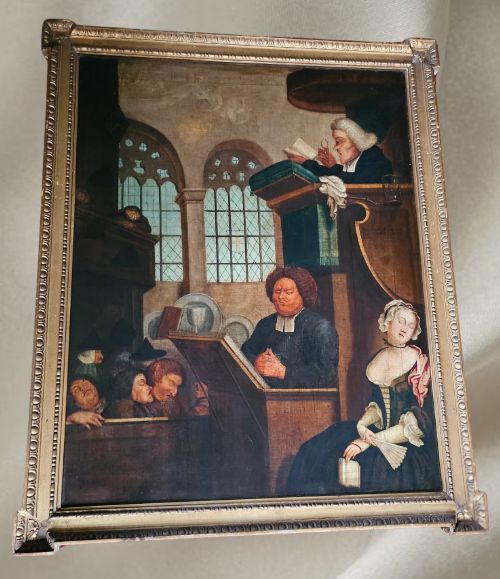
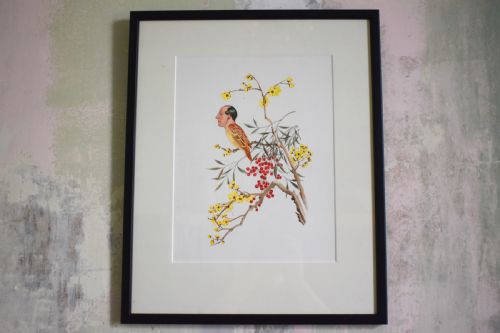
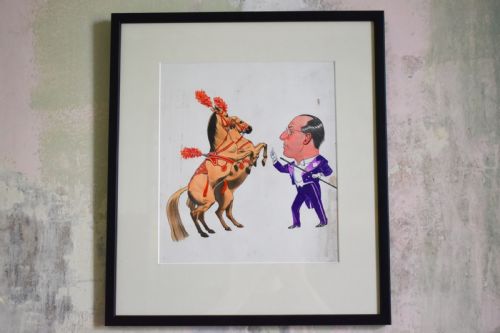
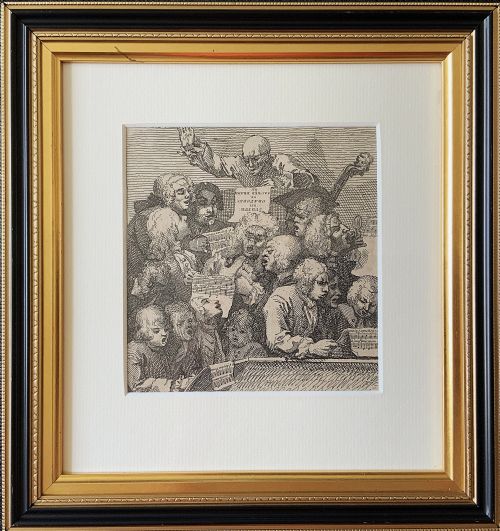
The most common versions met on this page include Georgian social satires, Victorian caricatures, and framed artwork housed in maple or mahogany frames. Buyers also encounter multi-plate series and illustrated scrapbook pages depicting historical figures and everyday absurdities.
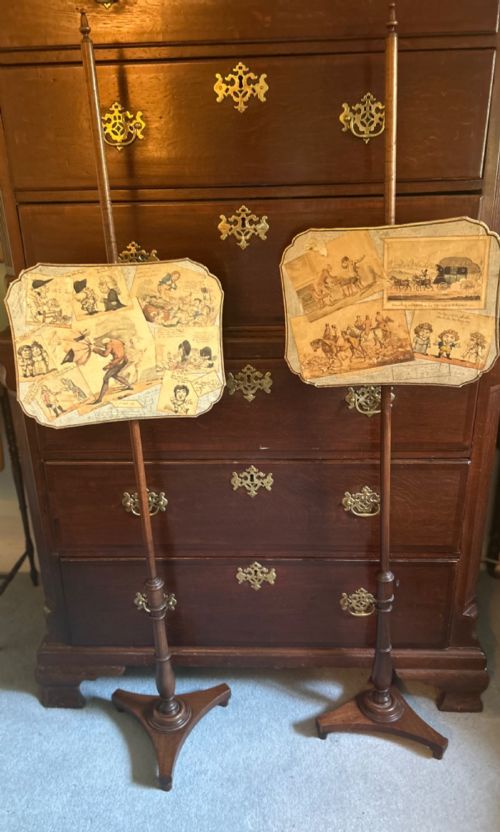
Originating predominantly from British and American makers across the eighteenth, nineteenth and early twentieth centuries, these objects combine historical commentary with distinct artistic illustration. They survive as single sheet prints, bound portfolios, or incorporated into functional furnishings like pole screens.
Materials and printmaking techniques
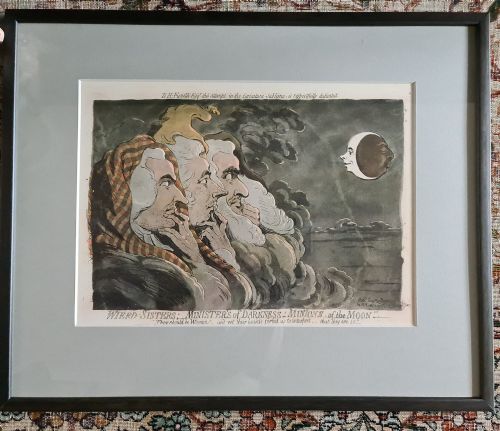
These works rely on paper sheets printed with ink using copperplate engraving, etching, stipple engraving, or chromolithography techniques. Many examples receive additional hand colouring using watercolour pigments applied directly over the printed lines.
Framed pieces utilise timber mouldings made from maple or mahogany, often paired with protective glass coverings. Early portfolios and book pages preserve the raw paper substrate alongside marbled paper bindings and structural backing boards.
Listings feature paper, glass, wood, ink, watercolour, maple, marbled paper and mahogany across the eighteenth, nineteenth and early twentieth centuries.
Distinctions in craftsmanship and condition
Quality separates through the crispness of the ink impression left by the copperplate and the precision of the original draughtsmanship. Early pulls and genuine period impressions retain sharp lines, whereas later copies show softer definition.
The vibrancy and application of hand-applied watercolour elevate individual examples, while the preservation of the paper margin influences overall integrity. Original framing materials, such as period wood mouldings, add contextual value to the graphic work.
William Hogarth·Luke Sullivan·E.L. Riepenhausen·Thomas Rowlandson·Henry William Bunbury·Thomas Worth
The Antique Satirical Print Glossary
- Engraving
- A printmaking technique where an artist cuts lines directly into a copper plate using a sharp tool. The resulting metal plate holds ink to create detailed printed images on paper.
- Chromolithography
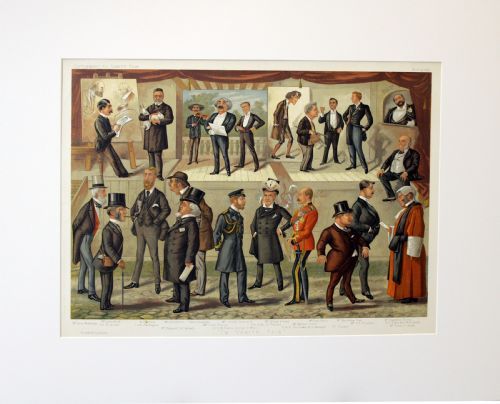
- A planographic colour printing method that builds up multiple stone-drawn lithographic layers. This process creates rich, multicoloured prints common in late nineteenth-century periodicals.
- Etching
- A process where acid bites into unprotected areas of a metal plate covered with an acid-resistant ground. This technique produces fluid, expressive lines characteristic of satirical artwork.
- Stipple engraving
- A method of creating tonal gradations using dots rather than continuous lines, often combined with hand colouring. It yields soft, painterly textures on eighteenth-century plates.
- Caricature
- A rendered portrait or scene exaggerating physical traits or social behaviours for comic effect. These graphic commentaries target political figures, fashion trends and public manners.
Antique Satirical Print: Frequently Asked Questions
What is an antique satirical print?
An antique satirical print is a period artwork on paper that uses humour, caricature or political critique to mock contemporary society, politics and fashion.
These pieces document historical attitudes through copperplate engravings, etchings and hand-coloured lithographs produced primarily during the eighteenth and nineteenth centuries.
How were these prints originally displayed?
Period prints were frequently framed behind glass in timber mouldings made from maple or mahogany for wall display. Others remained bound within complete portfolios or collected inside historical scrapbooks.
Some satirical engravings were even integrated into functional household items like pole screens and fire screens.
How do I care for paper prints?
Protect antique paper prints by keeping them away from direct sunlight to prevent fading of the ink and watercolour pigments. Maintain stable indoor humidity levels to avoid warping the paper or damaging the surrounding wooden frames.
Display the works behind UV-protective glass when possible.
How can I tell periods apart?
Georgian pieces often feature copperplate engravings with social critiques or biting political commentary, sometimes accompanied by delicate hand colouring. Victorian and later examples frequently utilise chromolithography and softer illustrative styles associated with periodicals.
Examining the paper type, printing technique and framing style provides clear clues to the exact era.