



19th Century Caricatures
These 19th century caricatures combine sharp social commentary with lively portraiture, offering a direct window into historical wit that collectors treasure for their humour.
19th Century Caricatures
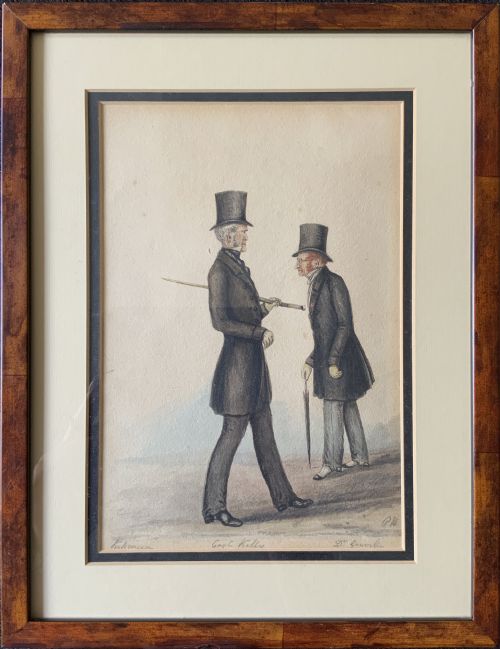
When you search for 19th century caricatures, you are looking at works that capture the satirical spirit of the period through exaggerated portraiture and social observation. The pieces available here span wall art, framed art, antique prints, sculptures, watercolour paintings, and oil paintings.
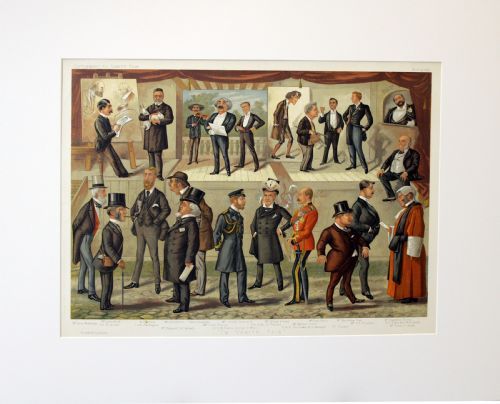
You are most likely to meet printed works such as chromolithographs from Vanity Fair alongside original watercolours and hand-coloured prints. These items range across the Georgian, Late Georgian, Victorian, and 1880 to 1890 periods, including examples of Victorian novelty, Victorian folk art, and 19th century American origin.
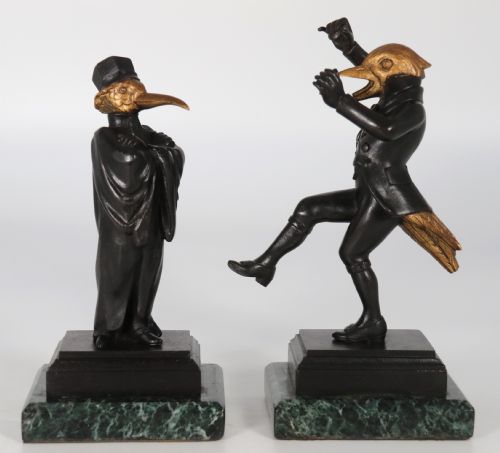
The subjects vary widely from political allegories and theatrical birds to military figures, fishermen, and double portraits. Each piece reflects the specific satirical concerns and artistic styles of its particular decade.
How they were made
The works in this collection utilise paper as a primary support for watercolours, ink, and printed imagery, often finished with hand colouring. Prints frequently employ chromolithography to achieve their vibrant multi-coloured surfaces.
Three-dimensional pieces like bronze figures demonstrate lost-wax casting techniques, capturing fine detail in metal. Many works are completed with traditional framing materials, including wood, mount board, and giltwood.
Listings feature paper, glass, wood, watercolour, ink, giltwood, mount board, and bronze across the 19th Century, Georgian, 1880, and 1890 periods.
What varies in quality
The distinction between standard and superior pieces rests largely on the execution of the hand colouring and the strength of the original draughtsmanship. Works after notable artists or published in prominent satirical series generally display a crisper level of detail.
The preservation of the paper support, the vibrancy of the ink and watercolour pigments, and the quality of the associated framing elements all contribute to the overall standard of an individual piece.
Thomas Rowlandson·Thomas Worth·Boilly
The 19th Century Caricatures Glossary
- Chromolithograph
- A multicoloured print produced using a lithographic process that uses multiple stone plates, one for each colour. This technique allowed for rich and vibrant colour reproduction on paper during the period.
- Allegorical print
- An artwork that uses symbolic figures and imagery to convey a hidden political or moral meaning. These prints often comment on contemporary events and leading political figures of the day.
- Watercolour painting
- A medium where coloured pigments are suspended in a water-based solution and applied to paper. It allows for translucent washes and delicate tonal gradations.
- Bronze figure
- A sculptural work cast in bronze metal, often depicting caricatured subjects or animals. These pieces rely on patination and metalworking skills to define their forms.
- Hand colouring
- The manual application of watercolour or tint to a printed image after it has been struck. This process enhances specific details and adds individuality to mass-produced plates.
19th Century Caricatures: Frequently Asked Questions
How were they used?
Many of these pieces were published in periodicals or sold as standalone prints to entertain the public with political satire and social commentary.
Original watercolours and sculptures served as decorative conversation pieces in period homes, reflecting the wit and interests of their owners.
How do I live with them?
Because many works are executed on paper, they should be hung away from direct sunlight to prevent the watercolour pigments and inks from fading over time.
Pairing framed prints or watercolours with traditional wood and giltwood surrounds allows them to integrate naturally into period or eclectic interiors.
How do I tell periods apart?
Georgian and Late Georgian pieces often feature sharp political allegories and hand-coloured engravings associated with artists like Thomas Rowlandson.
Later Victorian examples frequently include mass-produced chromolithographs from publications like Vanity Fair alongside folk art and bronze novelty sculptures from the 1880s and 1890s.