
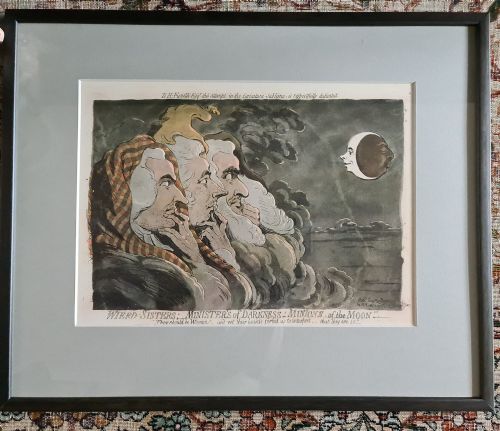


Georgian Caricature Art
Georgian caricature art delivers biting social satire and political wit through ink, watercolour, and print on paper.
Georgian Caricature Art
Buyers on this page encounter framed prints, stipple engravings, scrapbooks featuring armorials and caricatures, and original pen and ink sketches. The selection includes works by notable satirists as well as period hand-coloured engravings on paper.
Most examples date from the Georgian, Regency, and Late Georgian eras, housed in traditional wooden and giltwood frames. The subjects range from royal portraits and parliamentary ministers to everyday figures such as soldiers, tailors, and sailors.
How they were made
Makers produced these works using pen and ink, watercolour pigment, and printmaking techniques on paper sheets. Many prints received subsequent hand colouring to accentuate the comedic details and vibrant costumes.
Finished plates and original sketches found homes behind glass within wood or giltwood frames to protect the delicate paper surfaces from light and handling.
A long minuet danced at Bath required serious stamina, perfectly captured by artists who immortalised society's most elaborate dance steps on paper.
What varies in quality
Quality rests upon the crispness of the original line work, the preservation of the paper, and the vibrancy of any applied watercolour pigment. Strong impressions from copper plates retain finer details in the facial expressions and cross-hatching than worn plates.
The sophistication of the social or political commentary separates standard illustrative prints from works by master satirists of the era. Original hand-coloured sketches and signed works carry distinct artistic weight compared to later nineteenth-century print reproductions.
Gilray·Thomas Rowlandson·William Bunbury·Henry William Bunbury
The Georgian Caricature Art Glossary
- Stipple engraving
- A printmaking technique that uses dots of varying density to create tonal gradients and soft shadows. This method allowed printmakers to replicate the delicate appearance of chalk or watercolour drawings.
- Hand colouring
- The application of watercolour pigments by hand to a printed monochrome base. This traditional workshop practice enhanced the visual appeal of satirical prints.
- Political allegory
- A narrative or visual artwork that uses symbolic figures and actions to convey hidden political meanings. Georgian caricaturists frequently employed this device to comment on royalty and government ministers.
- Giltwood
- Carved wood treated with a thin layer of gold leaf or gilt powder. It is commonly found on traditional frames from the eighteenth and nineteenth centuries.
Georgian Caricature Art: Frequently Asked Questions
What subjects appear in georgian caricature art?
These works depict political allegories involving monarchs and ministers alongside everyday social scenes featuring soldiers, tailors, and sportsmen.
Artists used biting humour to satirise the fashions, politics, and daily absurdities of eighteenth and nineteenth-century society.
How should I hang these framed pieces?
Keep framed prints and watercolours away from direct sunlight to prevent the watercolour pigments and paper from fading over time.
Display them on interior walls where household humidity levels remain relatively stable.
Are these pieces original or later prints?
The selection includes original pen and ink watercolours alongside period engravings produced during the eighteenth and nineteenth centuries.
Some prints feature contemporary hand colouring applied over the inked lines shortly after publication.
What framing do these artworks typically use?
Many examples are presented in traditional wooden or giltwood frames behind protective glass.
This framing preserves the fragile paper and delicate ink mediums from environmental damage.