



Georgian Satinwood Tea Box
A georgian satinwood tea box is a prized timber container built to hold precious imported leaves, offering luminous grain and fine period detail.
Georgian Satinwood Tea Box
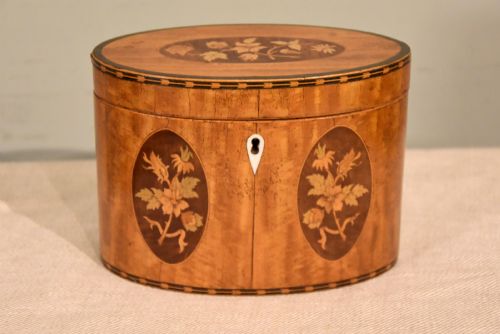
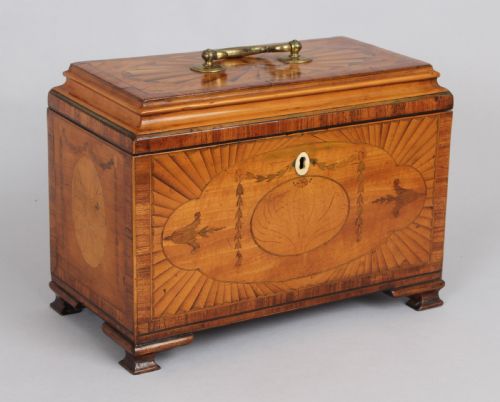
A georgian satinwood tea box takes various geometric forms, appearing most frequently on this page as an oval or octagonal tea caddy shaped to showcase figured timber. These pieces span periods from the eighteenth century into the regency era, shifting from simple classical outlines to more robust sarcophagus shapes.
Beyond standard caddies, related forms include larger teapoys, decorative boxes, and sewing tables constructed with the same attention to decorative veneers. Many incorporate contrasting stringing or inlaid motifs like shells and butterflies.
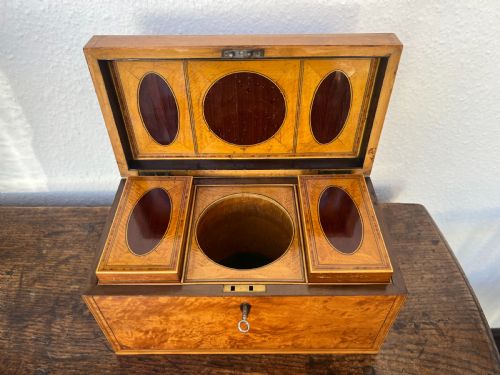
The materials visible in these boxes extend beyond satinwood alone, frequently pairing with harewood, rosewood, ebony, and mahogany. Interiors often retain original fittings such as glass bowls and mixing sticks.
What varies in quality
The refinement of the timber selection dictates much of the visual impact, with deeply figured satinwood commanding attention through its natural chatoyancy. Superior examples display meticulously matched grain patterns across the lid and sides.
The complexity and precision of the marquetry and inlay work reveal the hand of a skilled maker. Crisp, tight joints in the stringing and finely rendered shell or butterfly motifs separate standard production from exceptional pieces.
Survival of original interior elements, such as glass mixing bowls and compartmentalised lids, enhances the integrity of the piece. The patination developed over centuries of polishing also plays a role in the overall aesthetic weight.
Several surviving boxes still contain their original glass mixing sticks, used centuries ago to blend green and black tea leaves.
The Georgian Satinwood Tea Box Glossary
- Satinwood
- A lustrous, yellow-gold tropical timber prized for its reflective grain. It forms the primary visual surface of these boxes.
- Harewood
- Sycamore wood that has been stained to a greenish-grey hue, often used for contrasting panels and inlaid details.
- Stringing
- Thin lines of contrasting wood inlay used to outline panels and geometric forms on cabinet furniture.
- Sarcophagus form
- A box shape featuring a sloped lid and stepped base, reminiscent of a classical stone coffin, popular in the regency period.
- Crossbanding
- A border veneer applied so that the grain runs perpendicular to the main panel, framing the central wood.
Georgian Satinwood Tea Box: Frequently Asked Questions
How were tea boxes used in the Georgian period?
Tea was an expensive commodity, so leaves were kept locked inside these boxes by the lady of the house. The interior typically featured divided compartments for different tea varieties and a central glass bowl for blending.
Servants brought the caddy to the parlour, where the mistress measured out the leaves before hot water was added from a separate urn.
What is the difference between a tea caddy and a teapoy?
A tea caddy is a portable box designed to sit on a table or sideboard. These containers could be moved easily around the home.
A teapoy is a larger tea caddy mounted on its own central pillar and pedestal base, standing independently on the floor.
How do I care for satinwood furniture?
Keep wooden boxes away from direct sunlight and heat sources to prevent the satinwood veneer from drying out and cracking. Maintain the finish by occasionally applying a pure beeswax polish.
Avoid using modern liquid sprays, which can damage the aged French polish or wax surfaces.
How can I tell the period of a box?
Eighteenth-century boxes often favour oval or straight-sided geometric shapes with delicate neoclassical stringing. Regency examples tend towards sarcophagus silhouettes and bolder contrasting veneers like rosewood and ebony.
Examining the construction methods and interior paper linings also helps establish the era of manufacture.