
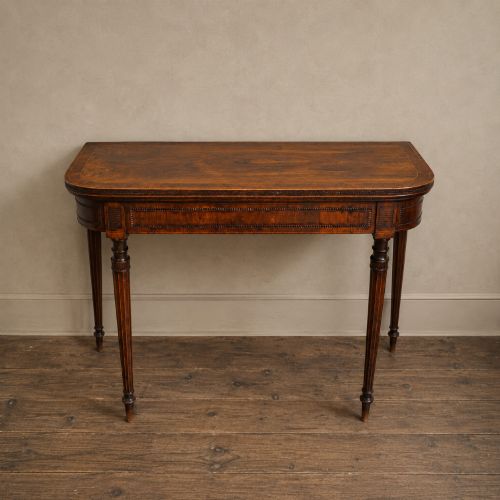
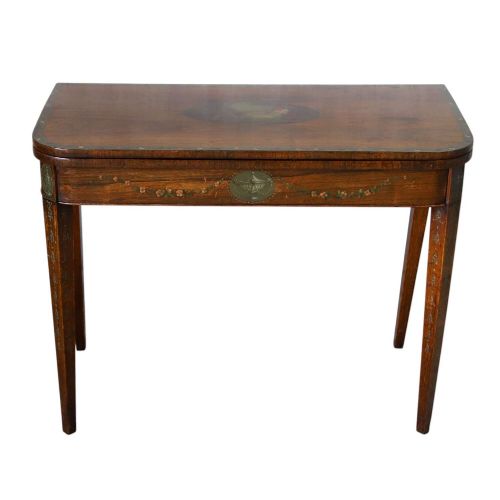
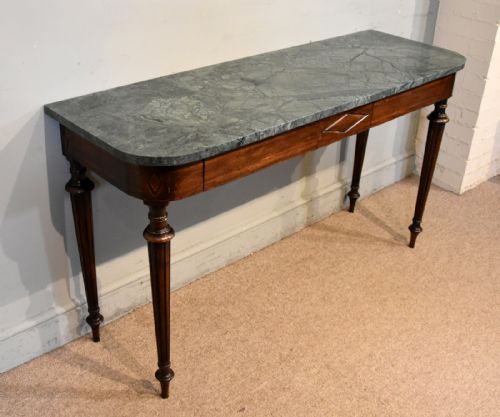
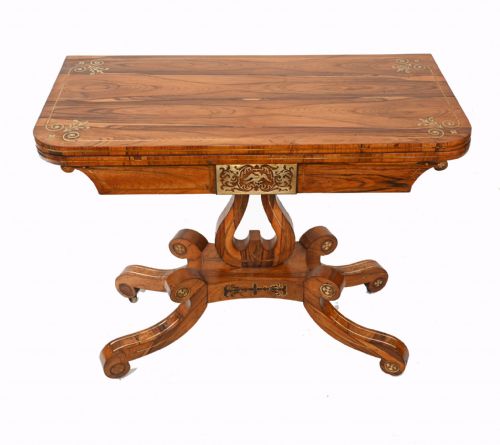




Georgian Rosewood Console Table
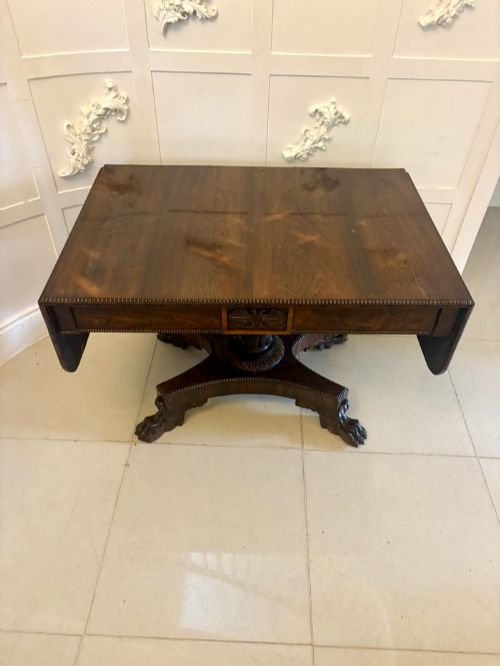
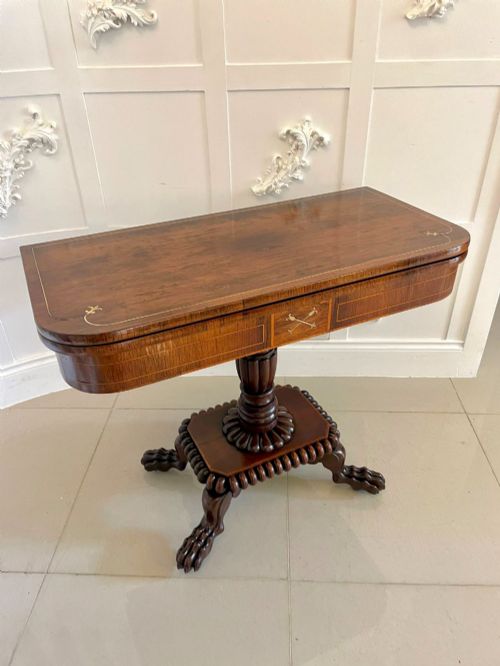
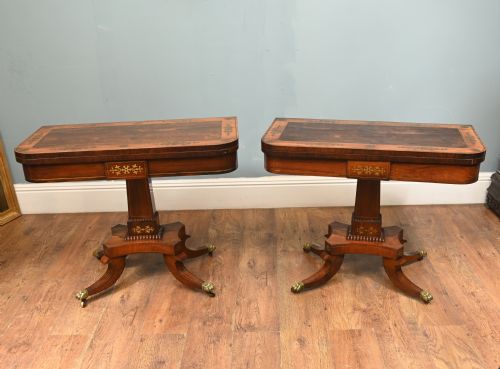
A georgian rosewood console table brings dense grain and architectural presence into a room, largely appearing through card, sofa and games tables from the Regency era.
Georgian Rosewood Console Table
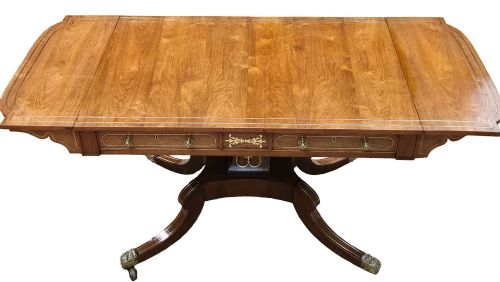
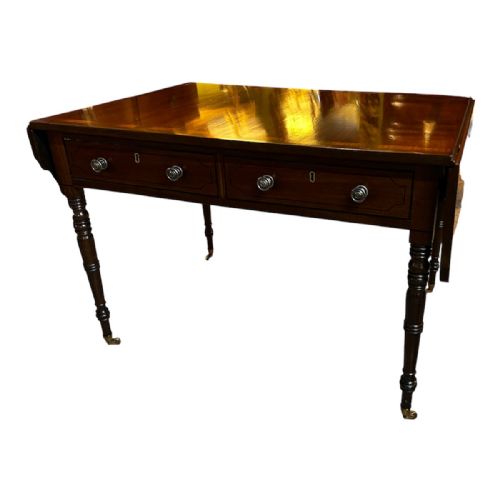
A georgian rosewood console table predominantly surfaces in forms designed for versatile parlor use, spanning card tables, sofa tables and games tables from the Regency period and the wider eighteenth and nineteenth centuries.
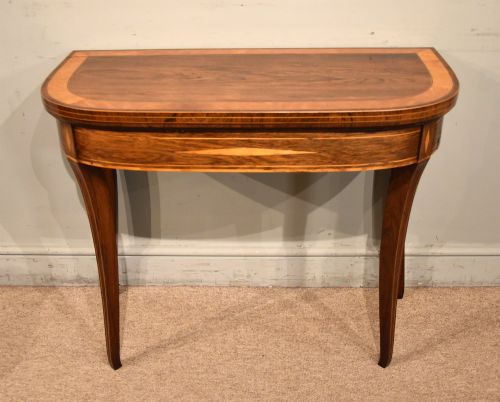
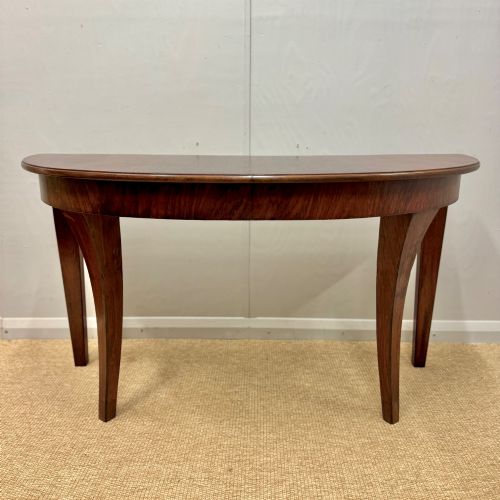
Makers of the period utilised rosewood for its deep, variegated grain, frequently pairing the timber with console and side tables featuring concave legs or folding tops intended to sit flat against a wall.
The selection ranges from George III and George IV examples through to Late Regency and William IV iterations, capturing a broad sweep of English cabinet work.
How they were made
Cabinet makers built these surfaces using dense rosewood veneers laid over secondary timbers, often incorporating satinwood, boxwood, and mahogany to create contrasting borders and panels.
Brass inlay, mounts, and gilding frequently accent the timber, whilst specific forms utilise marble tops, leather inserts, or intricate marquetry to define the frieze and supports.
Object forms documented here include card tables, sofa tables, games tables, console tables, and library tables.
What varies in quality
The sophistication of the timber selection dictates much of the distinction, where highly figured grain and precise crossbanding elevate an example above plain stock.
The crispness of carved details, the integration of brass inlay, and the structural integrity of folding mechanisms and pedestals mark the division between standard workshop production and finer cabinet work.
The Georgian Rosewood Console Table Glossary
- Crossbanding
- A border strip of veneer laid with the grain running perpendicular to the main panel. This technique frames the top surface of card and sofa tables.
- Console table
- A table designed to stand against a wall, frequently supported by brackets or legs at the front. These pieces often feature marble tops or decorative friezes.
- Sofa table
- A rectangular occasional table intended to stand in front of or behind a sofa. They typically feature drop leaves and two small drawers.
- Marquetry
- Decorative inlay using various woods and materials to form pictorial patterns. It appears on the surfaces of library and console tables from the late Regency period.
- Parcel gilt
- Portions of an object highlighted with gold leaf. This treatment often accents the carved wooden elements of Regency tables.
Georgian Rosewood Console Table: Frequently Asked Questions
Where did these tables stand?
These tables typically occupied principal reception rooms, placed against walls or positioned behind sofas and in the centre of libraries.
Their versatile designs allowed them to function as writing surfaces, card tables, or display ledges depending on the room layout.
How do I identify a Regency piece?
Regency pieces often display classical architectural influences, incorporating brass inlay, parcel gilding, and dense rosewood veneers.
Cabinet makers during this period also favoured specific leg configurations, including concave supports and pillar pedestals.
What is fold over construction?
Fold over construction allows a table top to hinge open, doubling the surface area for card games or tea service.
A hinged flap rotates or lifts to reveal a baize-lined interior or secondary wood surface beneath.
How should I care for rosewood?
Rosewood benefits from stable indoor humidity and protection from direct sunlight to preserve the deep colour and prevent timber splitting.
Periodic gentle dusting with a dry cloth maintains the polish without introducing moisture to the antique veneer.