


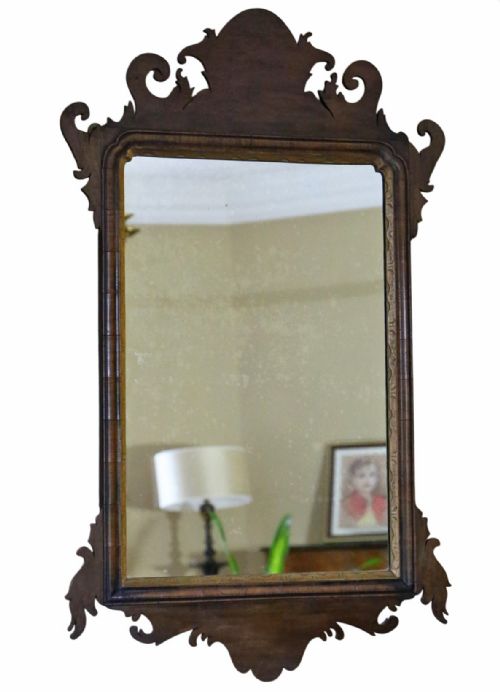


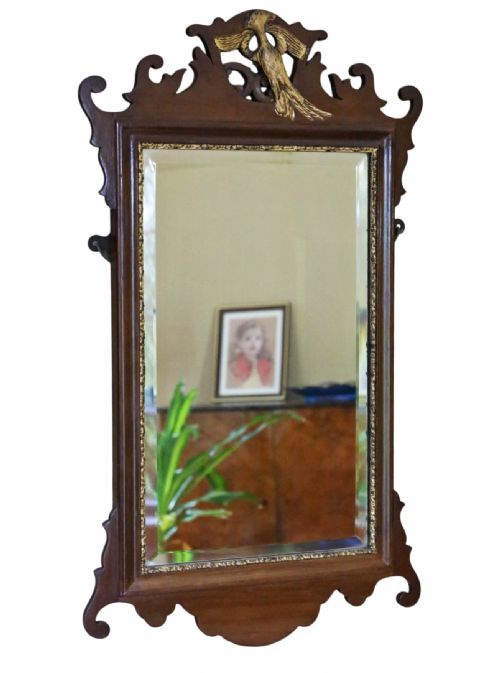


Georgian Revival Wall Mirror
A georgian revival wall mirror brings eighteenth-century classical elegance into nineteenth and twentieth-century rooms through walnut, mahogany, and giltwood frames.
Georgian Revival Wall Mirror
A georgian revival wall mirror draws on design vocabulary established during the reigns of the Georges, reinterpreted by makers from the nineteenth and early twentieth centuries. These pieces appear in forms such as fret-cut pier mirrors, overmantels, and convex plates.
Makers of these revival pieces looked back to Adam, Chippendale, and Sheraton design books to produce wall-hanging mirrors suited to later domestic interiors. Walnut, mahogany, and giltwood dominate the construction across the periods represented.
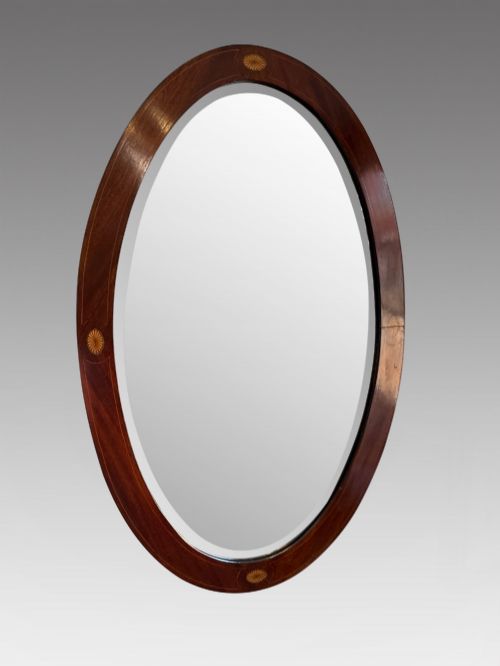
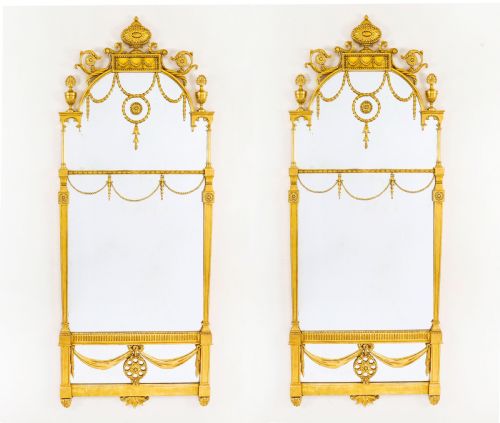
The selection ranges from compact Edwardian inlaid mahogany frames to large nineteenth-century giltwood and gesso overmantels. Walnut veneer and parcel-gilt details recur frequently in pieces dating around nineteen-twenty.
Materials and Construction
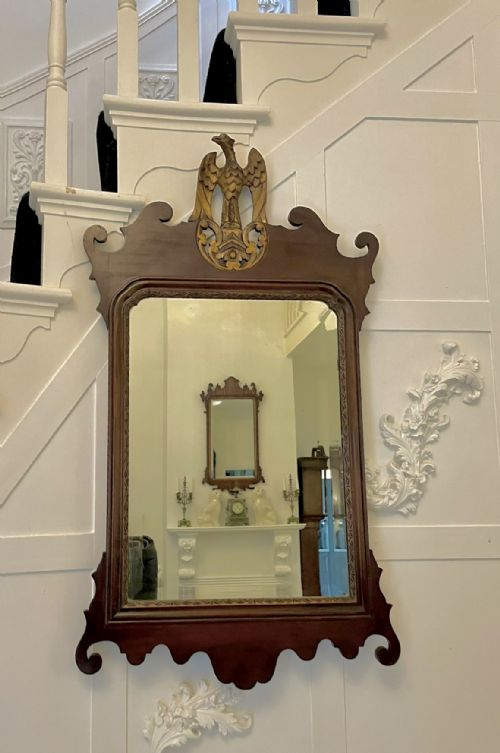
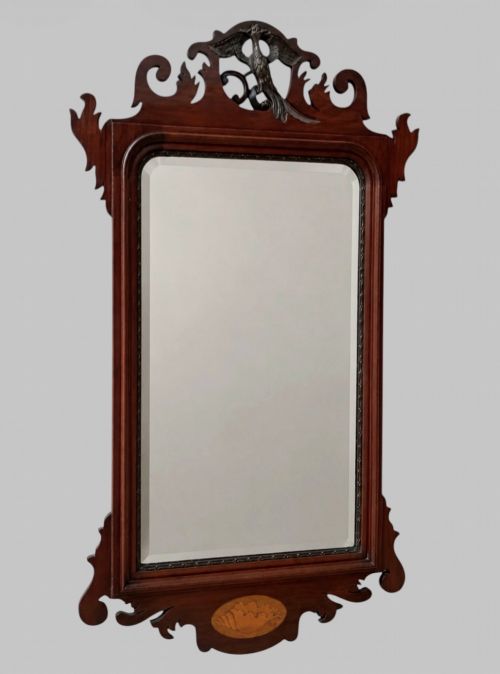
Frames rely on timber foundations of mahogany or walnut, frequently accented with gesso, gold leaf, and parcel-gilt highlights. Cabinetmakers shaped these woods using fret-saw techniques for pierced silhouettes or carved them into classical mouldings.
Giltwood and gesso work required precise application of gold leaf over prepared plaster layers, especially on pier mirrors and overmantels designed in Adam or Regency revivals. Mirror glass plates were set into these frames with bevel-edged profiles or traditional silvering.
Convex mirrors distortion offered Victorian parlour guests a playful, fish-eye perspective of the entire tea party at once.
Distinctions in Execution
Quality rests on the crispness of the carving in wood and gesso, alongside the depth of the gilding. Fret-cut mahogany and walnut frames demonstrate superior craftsmanship when the pierced scrolls remain sharp and well-proportioned.
The treatment of the mirror plate and the weight of the timber ground separate standard production from finer examples. Heavier giltwood frames with detailed composition ornament reflect greater workshop ambition than simpler veneer versions.
Sir Willian Trotter·John Belchier·William Kent
The Georgian Revival Wall Mirror Glossary
- Pier Mirror
- A tall mirror designed to hang on the wall between windows, often placed above a pier table or console. These items frequently feature giltwood frames and candle sconces.
- Gesso
- A plaster-like mixture applied to wood frames to provide a smooth surface for gilding or painting. Artisans carved intricate decorative motifs directly into this dried layer.
- Parcel-Gilt
- Partially gilded decoration where gold leaf highlights specific carved areas while leaving the underlying wood grain visible. This technique contrasts metallic sheen with warm mahogany or walnut.
- Fret-Cut
- Woodwork pierced with decorative patterns using a fretsaw, producing lightweight openwork frames. This method defines many Chippendale and Georgian revival silhouettes.
- Convex Mirror
- A circular glass plate curved outward to provide a wide-angle reflection of the room. These frames often incorporate gilded balls and eagle crests within a neoclassical design.
Georgian Revival Wall Mirror: Frequently Asked Questions
What defines a georgian revival wall mirror?
These mirrors borrow decorative motifs from eighteenth-century designers like Adam and Chippendale but were manufactured during the nineteenth and early twentieth centuries.
They utilise traditional timbers and gilding techniques to recreate earlier aesthetic standards for later homes.
Where were these mirrors hung originally?
Pier mirrors were positioned on the wall space between two windows, frequently above a console table. Overmantel mirrors sat directly above fireplace mantels to reflect light into the room.
Smaller fret-cut designs hung in hallways, parlours, and bedrooms as functional decoration.
How do I date a revival mirror?
Dating relies on timber selection, backing boards, mirror glass characteristics, and revival style cues. Edwardian and 1920s pieces often combine mahogany or walnut with machine-beveled glass.
Earlier nineteenth-century examples display heavier giltwood frames and distinct construction methods on the reverse.
Are the mirror plates original?
Many mirrors retain their original glass, which can exhibit light oxidation, foxing, or minor silver loss over time. Replacement plates occur when earlier glass became too damaged to salvage.
Examining the edge bevel and mounting helps determine whether the glass matches the age of the frame.