

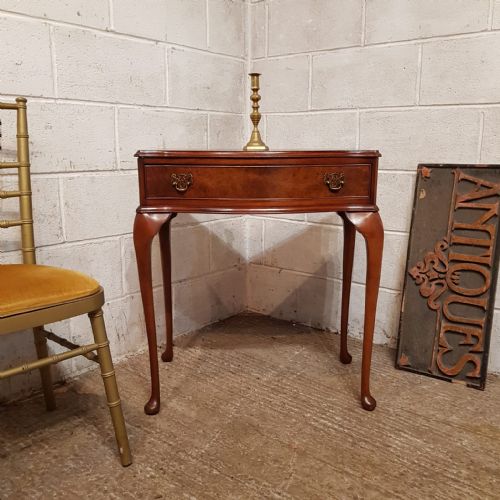
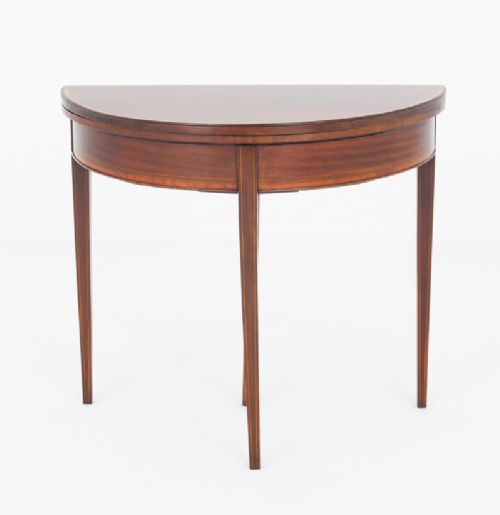


Georgian Revival Console
When you search for a georgian revival console, you find tables built in later centuries that borrow the poise, proportion and vocabulary of the eighteenth century.
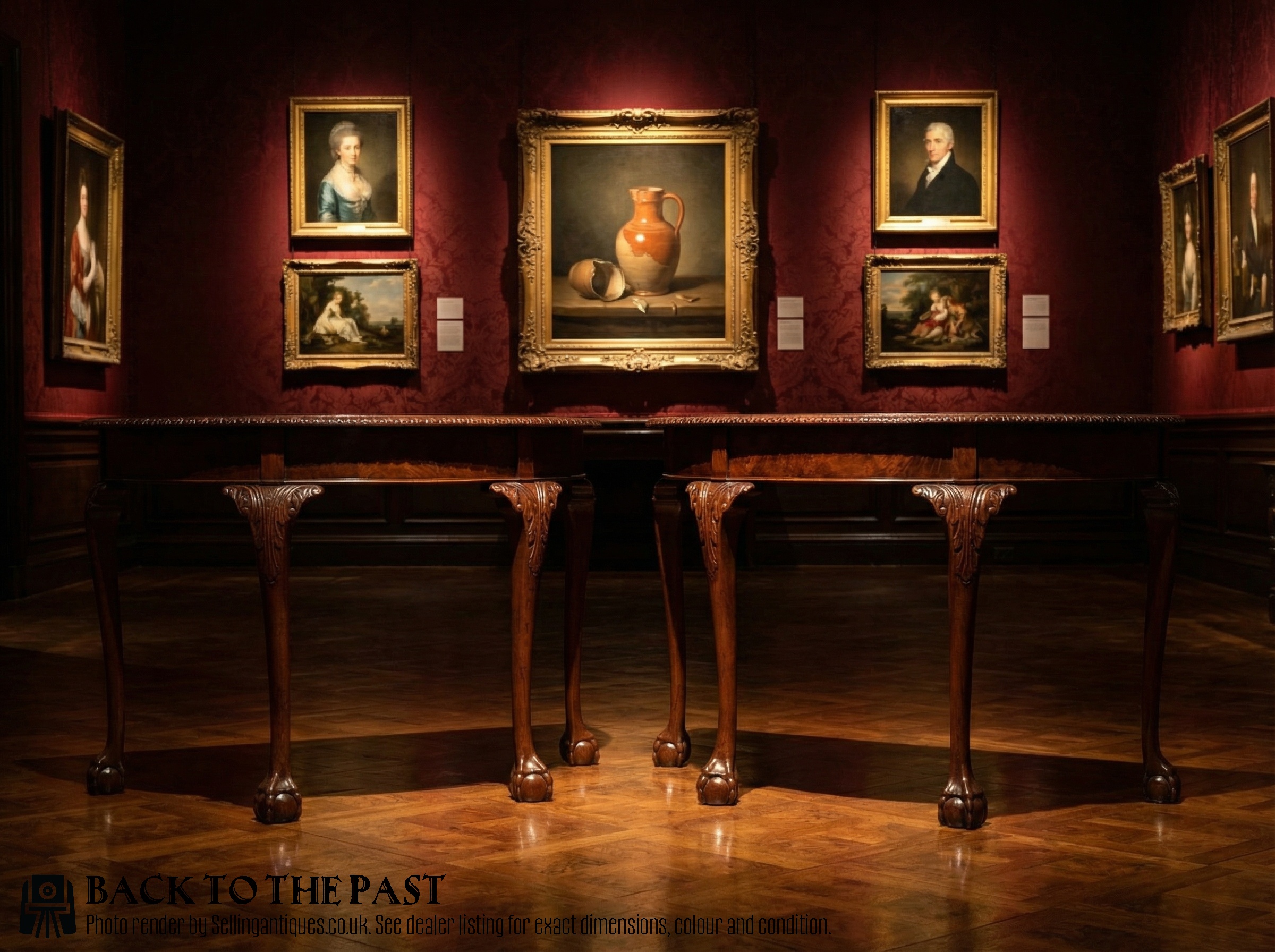
Georgian Revival Console
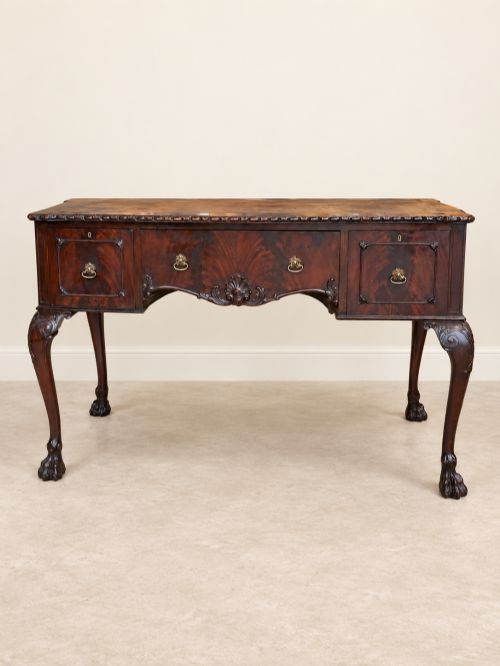
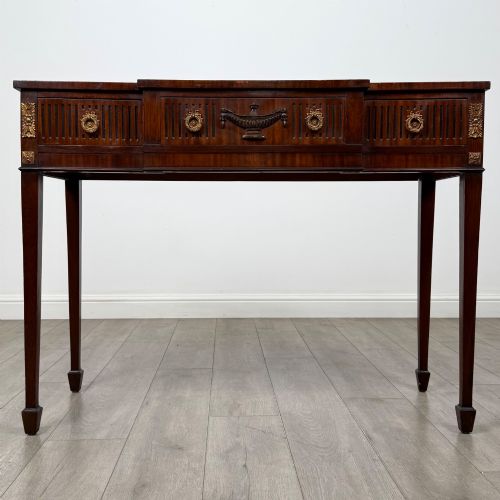
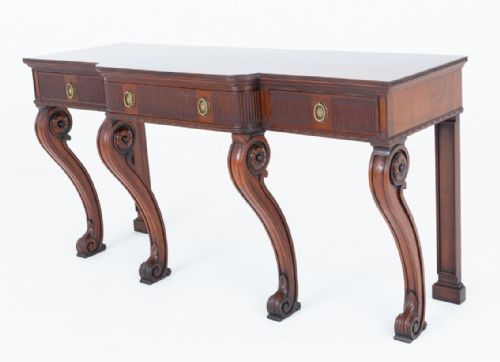
A georgian revival console is a table made during the nineteenth and early twentieth centuries, including the Edwardian era, that looks back to the golden age of British cabinet making. You will most frequently meet mahogany side tables, card tables and serving tables that channel Chippendale, Sheraton, Hepplewhite and Adam designs. These pieces were constructed to bring the dignified lines of earlier eras into later homes without relying on original eighteenth century stock.
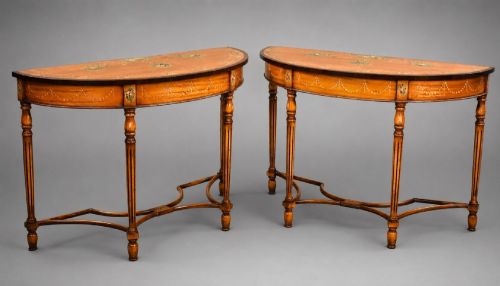
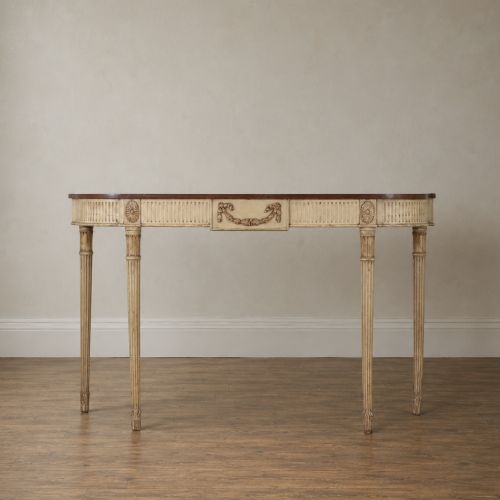
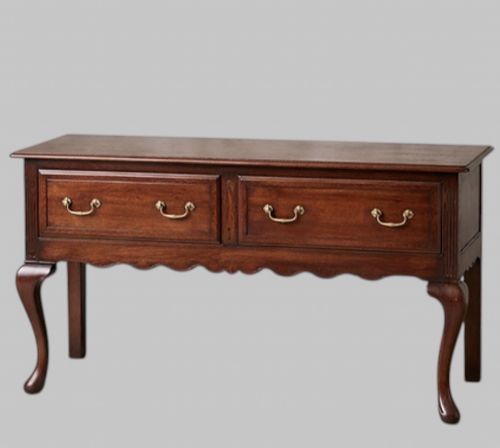
The form spans straightforward oak lowboys and writing desks to elaborate painted satinwood demi-lune tables and marble topped side tables. Makers drew on specific historical idioms, resulting in pieces shaped by neoclassical symmetry, carved giltwood details or robust walnut grain. They served as functional furniture for halls, drawing rooms and dining rooms, fulfilling the exact decorative role of the originals.
How they were made
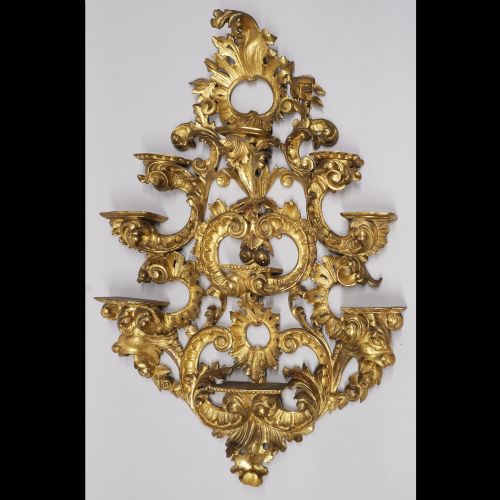
Cabinet makers utilised solid timbers and selected veneers, relying principally on mahogany, walnut, oak and satinwood for the primary surfaces. Finer examples integrated intricate inlays, while gesso and water gilding provided the lustrous finish seen on decorative wall brackets and pier tables. Timber selection dictated the weight and visual depth of each console, with burr walnut and figured mahogany offering rich natural patterns.
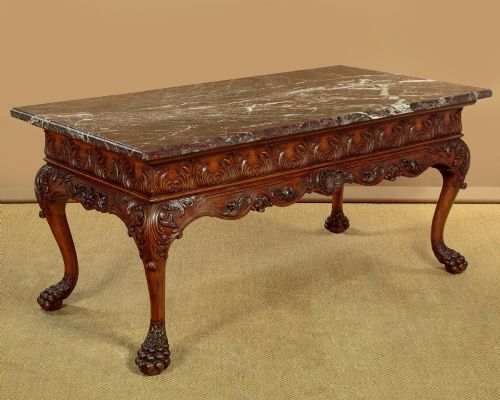
Construction techniques balanced period accuracy with contemporary workshop standards, employing folding mechanisms for card tables and precise joinery for drawers and frames. Carved elements such as ball and claw feet, fluted legs and paterae were shaped by hand to emulate eighteenth century prototypes. Surface finishes ranged from polished French polish to painted decoration on satinwood.
Listings feature mahogany, oak, walnut and satinwood across the Victorian, Edwardian and 1920s periods.
What varies in quality
Quality rests on the depth of the carving and the selection of the timber grain rather than any single decorative flourish. A superior console displays crisp, hand carved detail that retains sharp edges, whereas lesser examples show softer, shallower moulding produced with mechanical shortcuts. The choice of veneer also separates standard production from exceptional work, particularly where book matched burr walnut or painted satinwood is concerned.
Structural integrity and proportion further define the upper tier of these pieces. Well proportioned tables maintain balanced dimensions and sturdy internal framing that supports marble tops or folding leaves without strain. The harmony between the revival style and the execution determines whether a table feels like a deliberate homage or a hurried imitation.
Edwards & Roberts
The Georgian Revival Console Glossary
- Demi-lune
- Half moon shape, typically describing tables designed to stand flat against a wall. These are frequently found in satinwood or mahogany during the revival period.
- Lowboy
- A small table with drawers, usually standing on four tall legs, functioning as a dressing table or side table. They appear often in oak and walnut.
- Gesso
- A plaster based material applied to wood surfaces and carved or moulded before being gilded. It provides the raised detail on giltwood brackets and pier tables.
- Card table
- A folding table designed for games, featuring a hinged top that opens to reveal a baize lined surface. Revival examples often incorporate clever concertina or swing leg actions.
- Pier console
- A table made to fit snugly against the wall between two windows, frequently paired with a mirror above. They often feature marble tops and carved giltwood frames.
- Satinwood
- A pale, lustrous hardwood prized for its fine grain and yellow colour, frequently used in Sheraton revival pieces for painted and inlaid surfaces.
Georgian Revival Console: Frequently Asked Questions
What is a georgian revival console?
A georgian revival console is a nineteenth or early twentieth century table designed in the style of eighteenth century cabinet makers like Chippendale and Sheraton.
These pieces capture the formal elegance of earlier periods while offering practical surfaces for modern domestic spaces.
How do I date a revival console?
Dating relies on timber characteristics, construction methods and stylistic cues recorded across the Victorian, Edwardian and early twentieth century eras.
Secondary woods, fixings and the crispness of the carving help distinguish an 1880s interpretation from a 1920s piece.
Where should I place a console table?
Console tables suit entrance halls, drawing rooms and dining areas where a shallow footprint is advantageous.
They function well against blank walls, often paired with mirrors, lamps or decorative objects above them.
Are these tables sturdy enough for daily use?
These tables are built from durable hardwoods like mahogany and oak, designed for practical household service.
Folding card tables and writing desks require gentle handling of their mechanisms, but standard side tables offer robust everyday utility.