

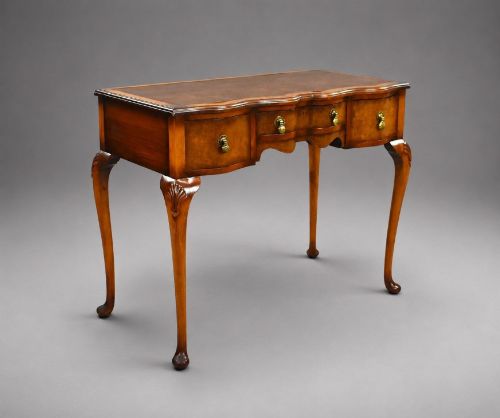

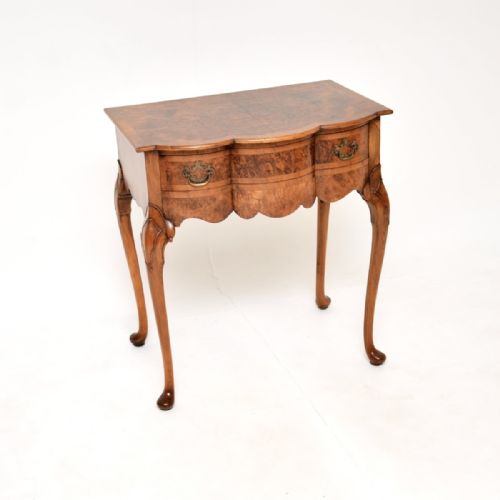
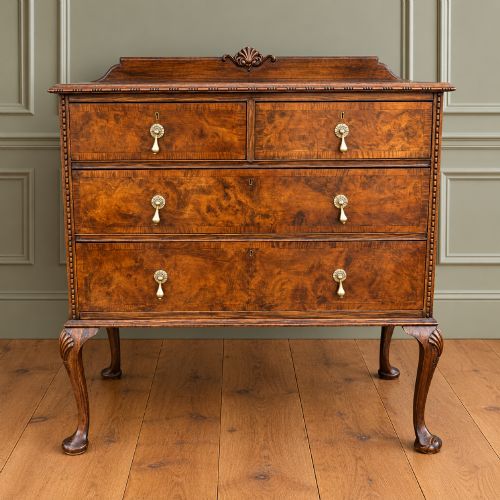


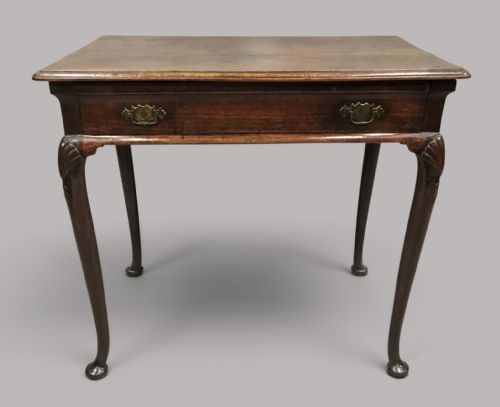
Carved Walnut Lowboy
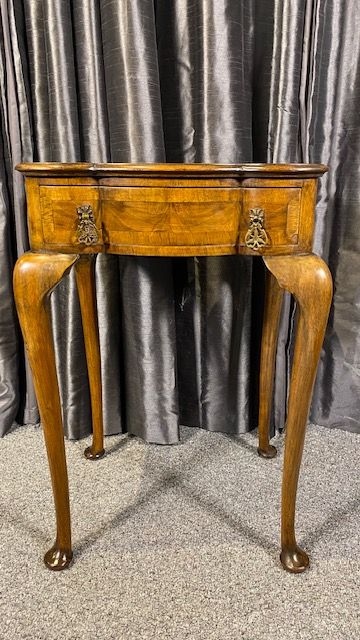
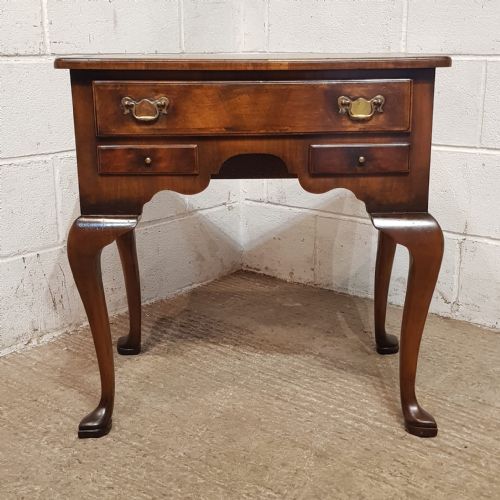
A carved walnut lowboy is a compact domestic table with drawers, offering subtle timber figuring and elegant proportions that anchor an entrance hall or bedroom.

Carved Walnut Lowboy
A carved walnut lowboy stands as a practical small table fitted with drawers, originating in period iterations from the eighteenth century through to later revivals. Buyers seeking this form encounter seventeenth and eighteenth-century originals alongside early twentieth-century interpretations, including Queen Anne and Georgian Revival examples.
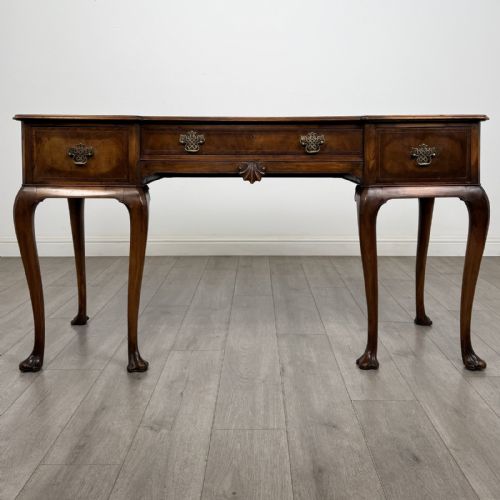
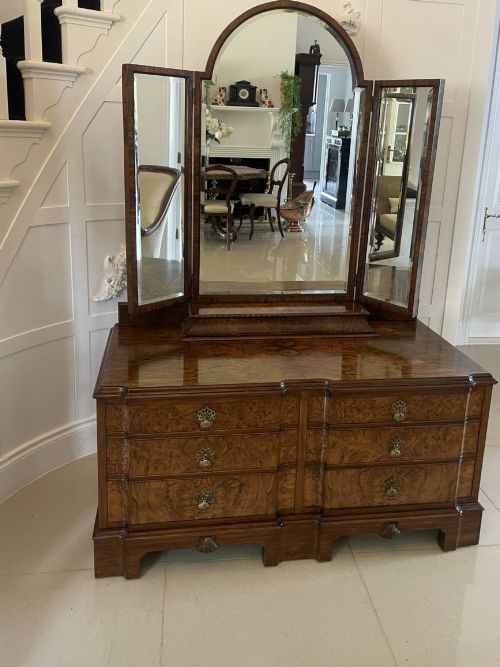
The selection on this page demonstrates the enduring appeal of walnut timber, incorporating both solid stock and burr walnut veneers. Forms range from dedicated lowboys with cabriole legs to related side tables, dressing tables, and compact servers sharing the same characteristic drawer configuration.
While genuine eighteenth-century pieces appear alongside Edwardian and 1920s revivals, the overall aesthetic remains consistent through proportion and timber choice. These tables function successfully in modern interiors as hallway consoles, writing desks, or occasional side surfaces.
Materials and construction methods
Makers utilised walnut and burr walnut timber, frequently laid as veneers over secondary woods to display striking grain patterns. Brass handles and drawer pulls provide functional contrast to the dark polished surfaces.
Construction techniques involve traditional joinery, with drawers framed carefully into the apron beneath the main surface. Legs are frequently shaped into cabriole forms, sometimes terminating in pad feet or incorporating carved ornamentation.
Carved Walnut Lowboy Retail Price Guide 2026
Typical asking prices for carved walnut lowboy among the pieces listed under this phrase on Sellingantiques today, from the lower quarter to the upper quarter. They describe what is for sale here now, not the wider market.
Judging quality and execution
The distinction between standard examples and superior pieces rests upon the selection of the walnut timber and the depth of carving. Richly figured burr veneers and crisp carving along the knees and aprons elevate the visual presence of a lowboy.
Proportion and structural integrity dictate the standing of each piece, with finer examples retaining their original brass hardware and well-fitted drawer linings. The fluency of the cabriole leg profile separates competent workshop productions from exceptional items.
Shoolbred and Co
The Carved Walnut Lowboy Glossary
- Lowboy
- A low-standing side table or dressing table featuring one or more rows of drawers beneath the top surface. This form gained popularity in the late seventeenth century and remained a staple of domestic furniture design.
- Burr walnut
- A specialised wood cut from the abnormal growths on walnut trees, yielding highly decorative swirling grain patterns. Cabinet makers prized this material for veneering prominent surfaces.
- Cabriole leg
- A furniture leg that curves outward at the knee and tapers inward toward the ankle, mimicking animal limbs. It is strongly associated with Queen Anne and Georgian design.
- Oyster veneer
- Thin circular slices cut horizontally from small branches or twigs of walnut to create a repeating pattern resembling oyster shells. This technique appeared on fine cabinet work from the late seventeenth century onward.
Carved Walnut Lowboy: Frequently Asked Questions
What is a lowboy used for?
A lowboy functions primarily as a small side table, dressing table, or hall console equipped with drawers for storage. Historically placed in bedrooms or parlours, it provides a surface for personal items while occupying minimal floor space.
In modern homes, these tables serve well in hallways for keys and correspondence or as compact writing desks. Their modest scale allows them to fit easily into alcoves and narrow passages.
How do I date a walnut lowboy?
Dating relies upon examining construction methods, timber choice, hardware, and stylistic details such as leg shape and drawer framing. Eighteenth-century originals display hand-cut dovetails and genuine age-related wear to the timber.
Revival pieces from the Edwardian era and the 1920s often utilise machine-sawn elements and standardised fixings while mimicking earlier Queen Anne or Georgian aesthetics. Comparing the secondary woods inside the drawers provides further clues to the period of manufacture.
What is the difference between an original and a revival piece?
Original pieces date from the eighteenth century, showing the construction techniques, wear patterns, and patination acquired over centuries of use. They represent the primary period of the form's domestic popularity.
Revival pieces were manufactured during the Victorian, Edwardian, and 1920s periods, echoing the earlier styles with updated workshop practices. Both categories offer distinct qualities for collectors and interior decorators.
How do I care for walnut furniture?
Walnut furniture benefits from stable indoor environments away from direct sunlight and sudden temperature fluctuations. Regular dusting with a soft, dry cloth preserves the polished surface without the need for heavy chemical polishes.
Applying a traditional beeswax occasionally helps nourish the timber and maintain the natural lustre of the veneer. Avoiding excess moisture will protect both the solid wood and the historic joints.