

Georgian Regency Chairs
Georgian Regency chairs are seating pieces spanning the late eighteenth and nineteenth centuries, offering robust timber frames and classical proportions that anchor a dining room.
Georgian Regency Chairs
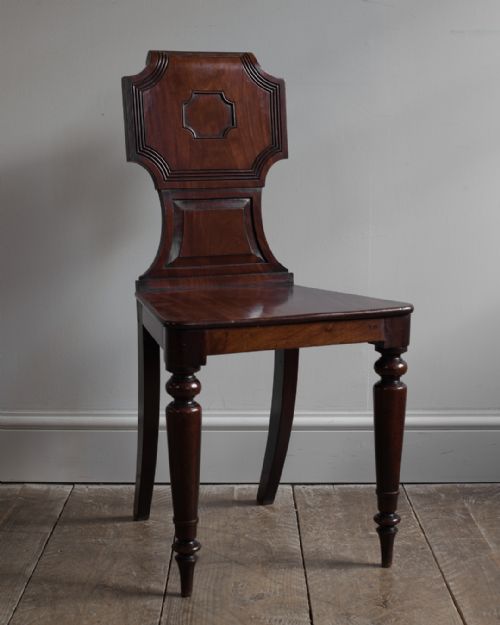
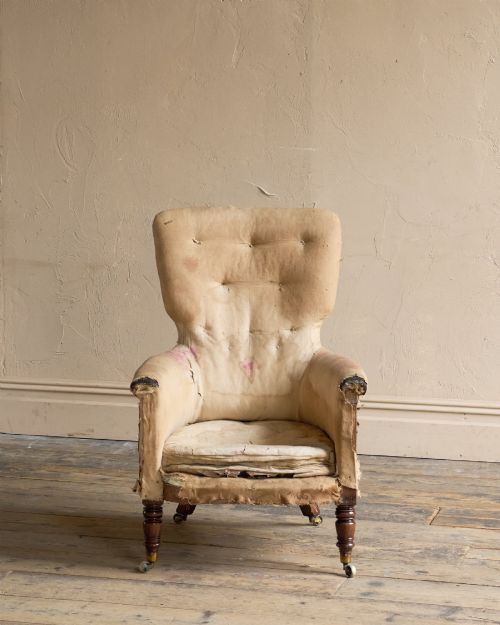
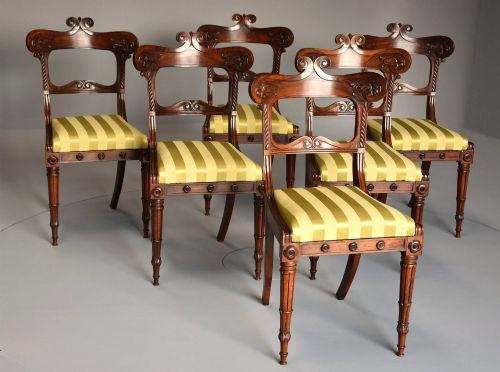
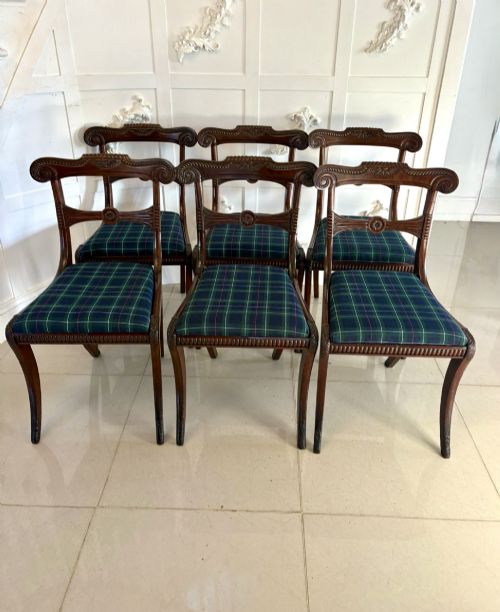
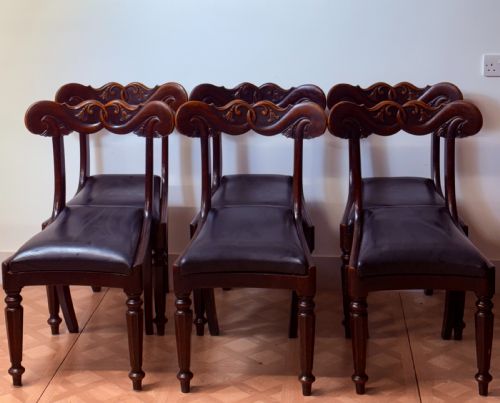
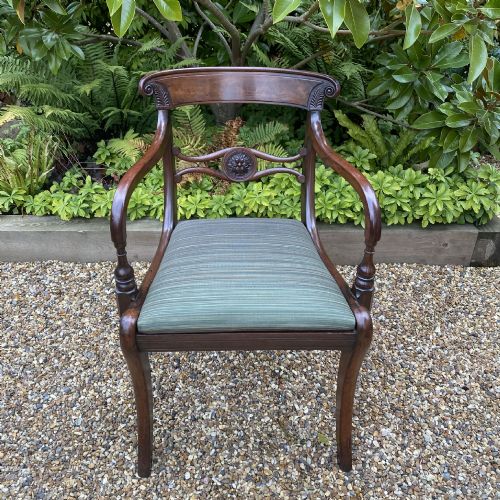
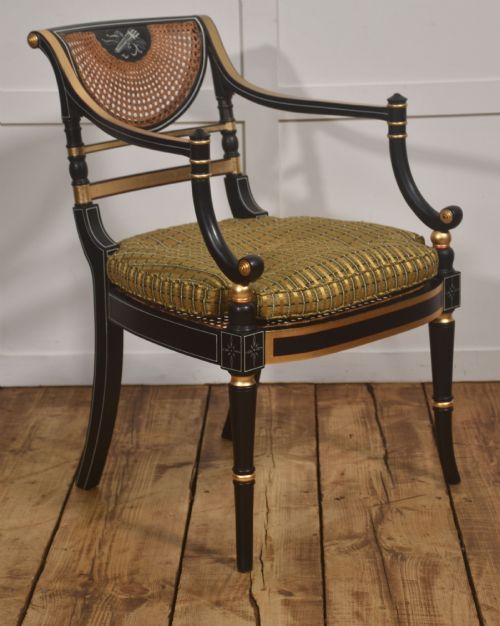
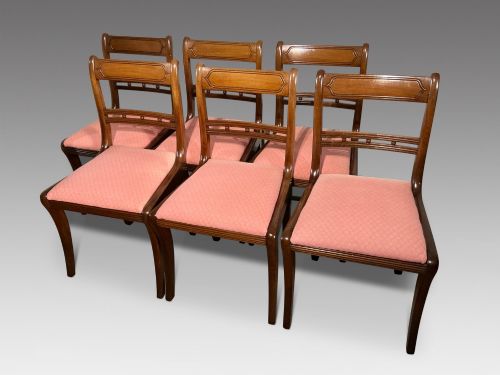
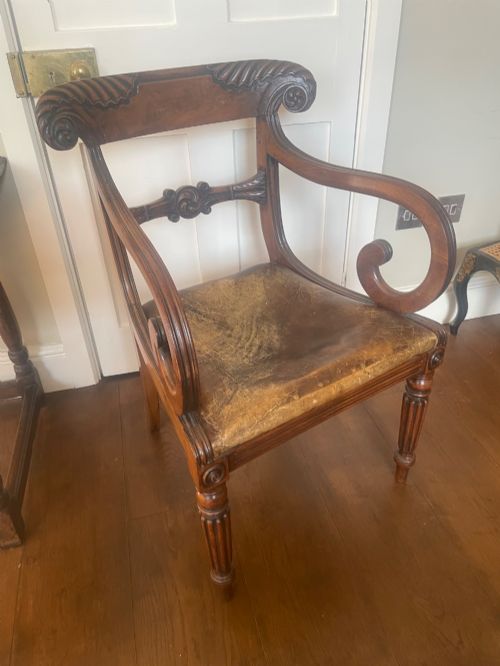
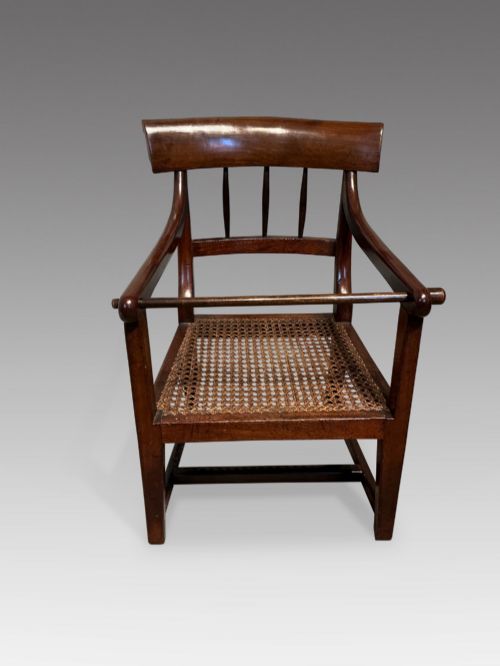
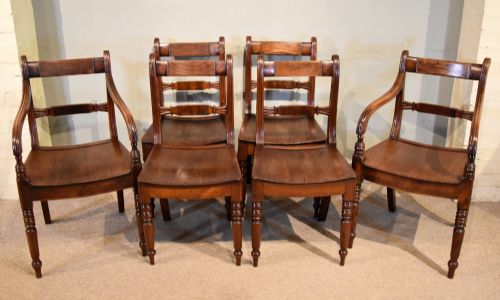
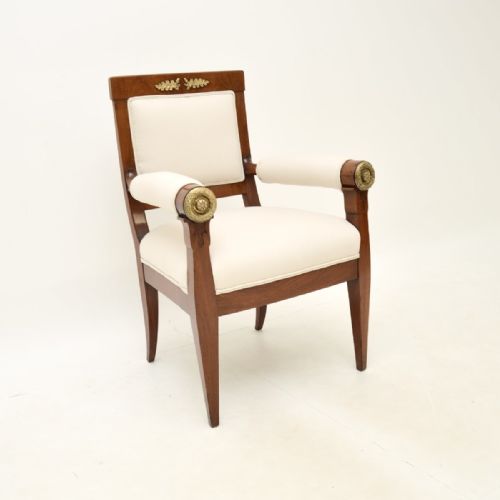
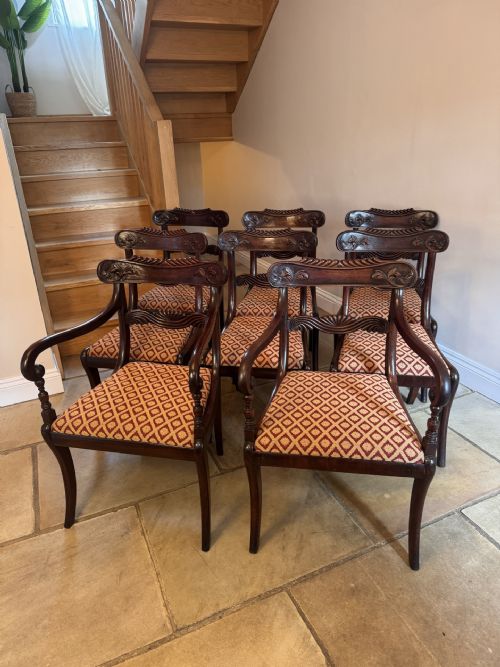
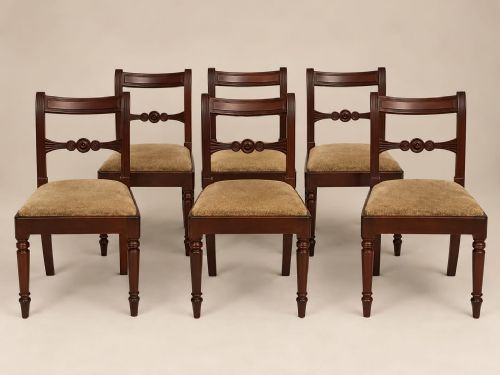
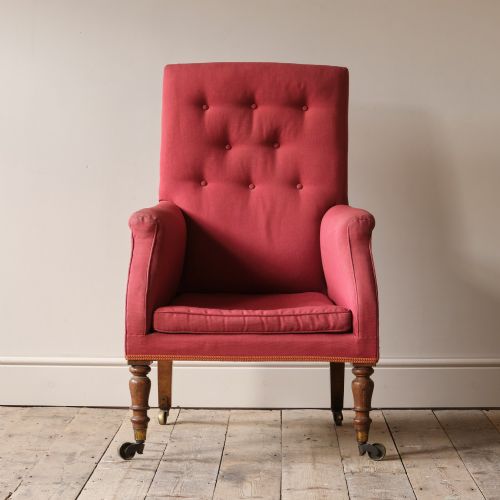
Georgian Regency chairs comprise dining chairs, carvers, armchairs, and hall chairs dating primarily from the eighteenth and nineteenth centuries. You will frequently encounter sets of mahogany dining chairs alongside individual library armchairs, desk chairs, and hall seating.
The styles range through standard Regency, Grand Regency, William IV, and George III, with occasional regional variations such as Scottish Regency or Irish pieces. These forms served formal dining rooms, libraries, and halls, reflecting the domestic habits of their periods.
Materials and construction
Makers built these chairs predominantly in solid mahogany, flame mahogany, rosewood, and gonçalo alves, supplemented by yew, laburnum, and giltwood. Timber selection dictated the structural integrity and surface figure of the finished piece.
Joinery methods involved precise framing for cane seats, drop-in pads, and fixed upholstery covered in fabric or velvet. Brass inlay appeared on select models, whilst turned or carved elements defined the legs and back rails.
Georgian Regency Chairs Retail Price Guide 2026
Typical asking prices for georgian regency chairs among the pieces listed under this phrase on Sellingantiques today, from the lower quarter to the upper quarter. They describe what is for sale here now, not the wider market.
Listings feature timbers including mahogany, rosewood, yew, laburnum, and gonçalo alves across nineteenth-century forms.
Distinctions in quality
Quality rests in the crispness of the carving, the selection of figured timbers such as flame mahogany or rosewood, and the proportional balance of the frame. Superior examples maintain original structural timber without excessive replacement.
Matching sets exhibit uniform grain and consistent turning across all units, whereas assembled groups show minor variations in timber tone and proportion. The presence of specialised mechanics, such as patent reclining actions, separates standard seating from high workshop output.
Strahan And Co·Waugh And Son·Daws Patent
The Georgian Regency Chairs Glossary
- Carver
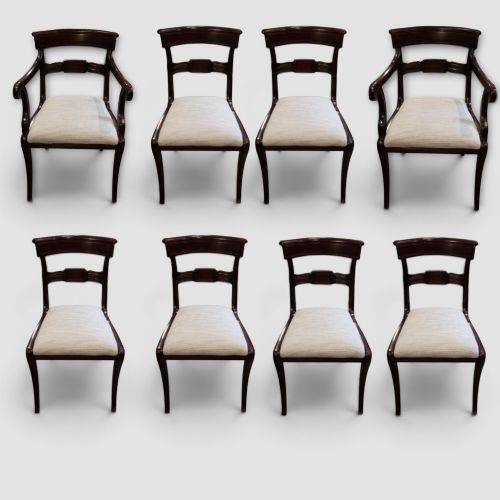
- An armchair designed to sit at the head of a dining table, typically matching the single chairs in a set. These provide open arms for ease of movement during meals.
- Hall chair
- A rigid wooden seat placed in entrance halls, often featuring a painted or carved shield crest on the back. They were designed for temporary seating rather than long-term comfort.
- Rope back
- A chair back featuring horizontal reeded members that resemble twisted rope. This motif is characteristic of Regency and late Georgian design.
- Gonçalo Alves
- A dense exotic hardwood with distinct dark brown and yellowish-brown figuring. Makers utilised this timber for high-status Regency furniture.
- Tub chair
- An upholstered armchair with a rounded back enclosing the sides. These pieces offered comfortable seating in nineteenth-century libraries.
Georgian Regency Chairs: Frequently Asked Questions
What is a carver chair?
A carver chair is an armchair intended for the head of a dining table. It shares its design style with the matching single chairs in a set.
These chairs offer open arms to accommodate formal clothing and provide a commanding presence at the table.
How do I identify a Regency chair?
Regency chairs are identified by classical lines, sabre legs, and carved top rails reflecting early nineteenth-century taste. They draw inspiration from ancient Greek and Roman forms.
Common motifs include reeding, brass inlay, and rope back designs executed in dense timbers.
Were these chairs used for dining?
Many of these pieces served as dining seating, supplied in sets of six, eight, ten, or twelve. Dining sets typically included a mix of single chairs and matching carvers.
Other forms, such as hall chairs and desk chairs, served specific functional roles in nineteenth-century domestic spaces.
How do I care for rosewood furniture?
Rosewood furniture requires stable indoor humidity and protection from direct sunlight to prevent timber splitting and fading. Regular dusting with a dry cloth maintains the surface finish.
Avoid placing these chairs near direct heat sources or using harsh chemical polishes that degrade historic finishes.