






Georgian Pottery Set
These georgian pottery set pieces are robust ceramics created for formal dining and display, offering historic charm for the modern table.
Georgian Pottery Set
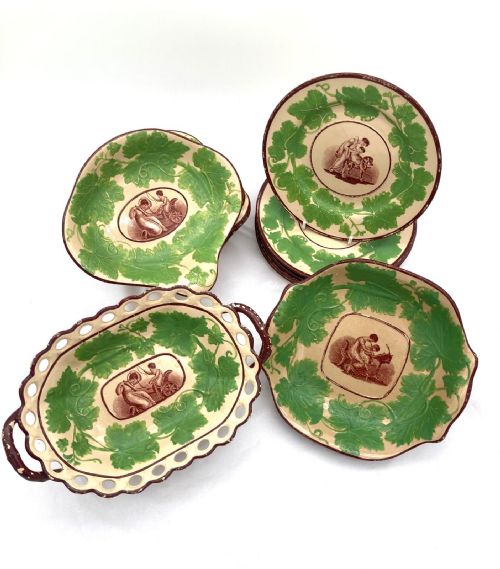
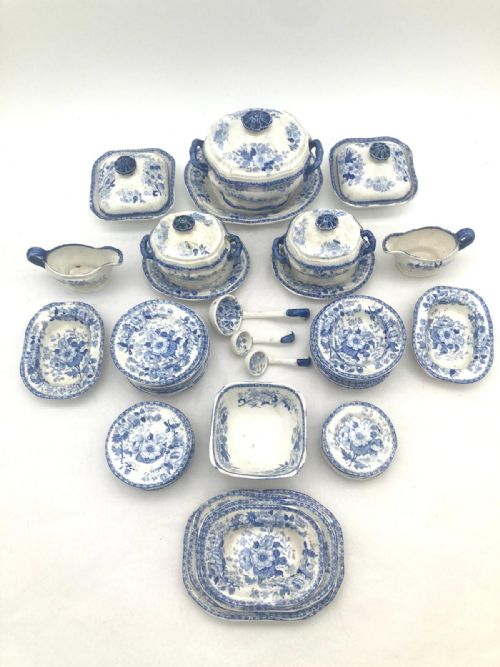
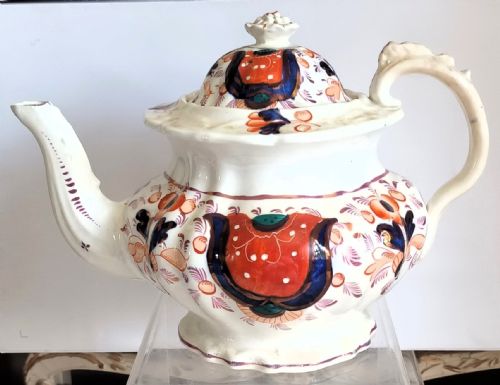
A georgian pottery set encompasses various grouped ceramics designed for serving food, drinking tea, or decorative use in domestic interiors. The examples met here span dinner services, dessert services, supper sets, and smaller groupings of plates and teapots.
Production dates stretch across the eighteenth and nineteenth centuries, taking in the Georgian, Regency, and early Victorian eras. Forms range from utilitarian creamware and tin-glazed earthenware to delicate child's services and printed ironstone.
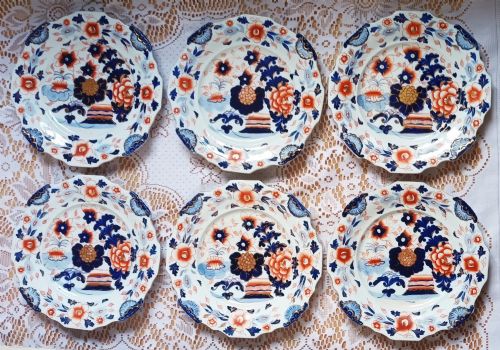
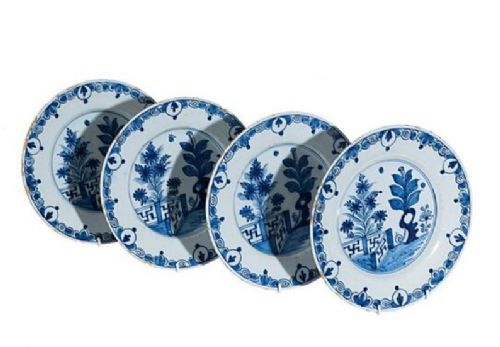
Buyers encounter tableware configured for specific courses, alongside individual sets of plates featuring traditional patterns like Imari palettes, blue and white transfer prints, and Chinoiserie scenes.
How they were made
Potters utilised earthenware, creamware, pearlware, and ironstone as the primary ceramic bodies for these wares. Artisans applied tin glaze, enamel colours, and gold leaf to decorate the surfaces.
Decoration techniques relied heavily on blue and white transfer printing, hand-painting in the Imari palette, and bar printing. Firing took place in traditional kilns to set the glaze and pigments permanently onto the clay bodies.
Georgian Pottery Set Retail Price Guide 2026
Typical asking prices for georgian pottery set among the pieces listed under this phrase on Sellingantiques today, from the lower quarter to the upper quarter. They describe what is for sale here now, not the wider market.
The inventory includes dessert services, child's services, supper set tureens, and inkwells with Watteau scenes.
What varies in quality
The refinement of the ceramic body and the crispness of the transfer print or hand-painted brushwork distinguish standard utilitarian wares from finer display services. Finer items exhibit precise application of enamel colours and gold leaf details.
Completeness significantly influences the status of a service, as surviving multi-piece dinner and dessert sets retain greater historical cohesion than partial groupings. The complexity of the pattern, such as detailed Chinoiserie or Watteau scenes, points to skilled execution.
Minton·Wedgwood
The Georgian Pottery Set Glossary
- Creamware
- A refined earthenware with a pale yellowish-buff glaze developed in the eighteenth century. It became a staple of English table services for its clean utility.
- Pearlware
- An earthenware body developed in the late eighteenth century featuring a bluish glaze that pooled in recesses to mimic Chinese porcelain. It frequently carried blue and white transfer printing.
- Ironstone China
- A durable, heavy ceramic patented in the nineteenth century designed to resist chipping. It provided a robust surface for dense patterns like Japan and Imari designs.
- Tin Glaze
- An opaque white glaze containing tin oxide, applied to earthenware to create a smooth surface for painting. It formed the basis for Delftware production.
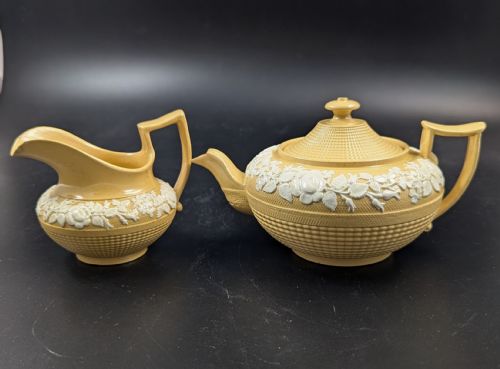
- Drabware
- A stoneware or earthenware body finished in a subdued brownish-grey or olive tone. It enjoyed popularity for formal dessert and tea services during the nineteenth century.
Georgian Pottery Set: Frequently Asked Questions
How do I clean an antique ceramic set?
Wash these pieces gently by hand using lukewarm water and mild soap. Avoid soaking them, particularly if they feature delicate enamel or gold leaf decorations.
Keep them away from modern dishwashers and harsh scrubbers to protect the historic glaze and ceramic body from damage.
Can I use these sets for dining?
Many of these ceramics remain structurally sound for occasional light use, though historic glaze can be sensitive to acidic foods. Consider using them primarily for dry foods or display.
Displaying them on a table or in a cabinet preserves the painted surfaces and transfer prints from modern wear and tear.
What is the difference between creamware and pearlware?
Creamware has a warm, ivory-toned glaze suited for eighteenth-century dining tables. It lacks the bluish tint found in later bodies.
Pearlware incorporates a faint blue tinge in the pooling glaze specifically formulated to imitate the whiteness of imported Chinese porcelain.
How do I date a transfer printed service?
Examine the colour palette, pattern style, and the composition of the ceramic body itself. Floral sheet patterns and specific blue and white transfer designs often point to the early nineteenth century.
Maker marks stamped or painted on the underside provide further clues, though many domestic sets from this period remain unmarked.