




Georgian Pottery Serving Platter
A georgian pottery serving platter brings heavy earthenware presence and detailed blue and white transfer prints to the dining table.
Georgian Pottery Serving Platter
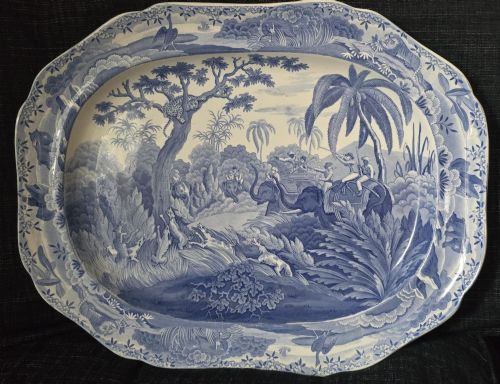
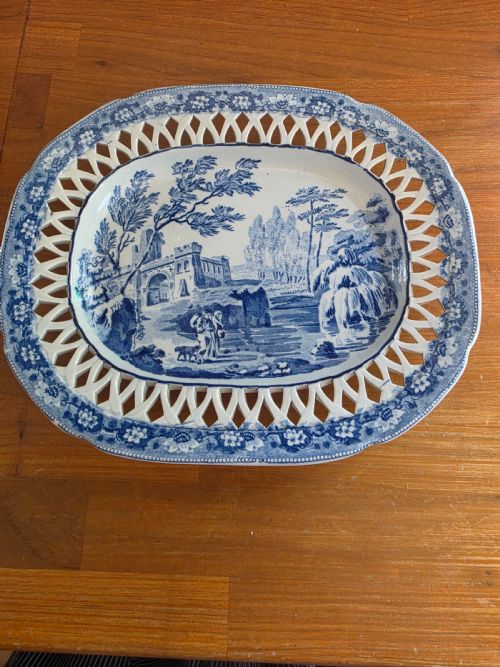
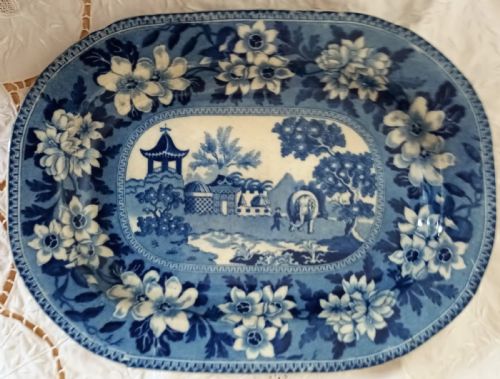
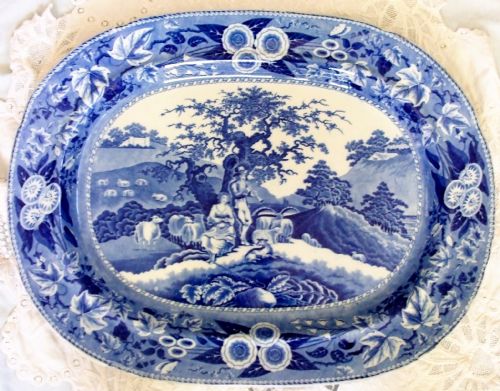
A georgian pottery serving platter encompasses large meat dishes, footed bread stands, and pierced draining trenchers designed for grand dining. Most examples met here emerge from Staffordshire potteries and span the late eighteenth century through the early nineteenth century.
Makers produced these large vessels to handle substantial roasts and fowl, utilising generous ovoid surfaces to catch juices. Collectors encounter named topographical designs, exotic animal scenes, and architectural patterns transferred onto durable earthenware bodies.
Materials and Techniques
Potters formed these heavy serving vessels from earthenware and pearlware bodies, applying tin glazes or clear lead glazes over the shaped clay. Artisans then transferred detailed copperplate engravings onto the damp surfaces using cobalt pigment and cobalt oxide.
The painted or printed wares underwent high-temperature kiln firing to bond the blue pigment permanently beneath the glossy surface glaze. Pierced rims and raised footrings required steady hand-shaping before firing to prevent warping in the heat.
Georgian Pottery Serving Platter Retail Price Guide 2026
Typical asking prices for georgian pottery serving platter among the pieces listed under this phrase on Sellingantiques today, from the lower quarter to the upper quarter. They describe what is for sale here now, not the wider market.
The listings show earthenware and pearlware serving vessels decorated primarily with deep cobalt pigment transfer prints.
Assessing Quality
Quality rests in the crispness of the transfer print and the registration of the cobalt pigment across the wide earthenware surface. Finer platters display deep, even blue tones without blurred edges or pooling glaze in the recessed wells.
Weight, balance, and the crisp execution of pierced borders separate standard kitchen wares from ambitious factory output. Potters who managed successful kiln firings achieved bright white grounds that contrast sharply with rich blue pictorial details.
John Rogers and Son·Thomas Lakin·Don Pottery·J and R Clews·Elkin Knight and Bridgwood
The Georgian Pottery Serving Platter Glossary
- Pearlware
- A refined earthenware body developed in the late eighteenth century featuring a subtle bluish glaze that pooled in crevices. This ceramic innovation preceded standard white ironstone.
- Transferware
- Pottery decorated by applying a paper print dusted with metallic oxide from an engraved copper plate onto the unglazed or bisque clay. This technique allowed intricate pictorial scenes to be replicated rapidly.
- Tin-glazed earthenware
- Buff or pinkish clay covered with an opaque white glaze containing tin oxide, providing a smooth surface for painted decoration. Dutch and early English workshops utilised this method extensively.
- Cobalt oxide
- A metallic compound used to achieve deep blue tones in underglaze ceramic decoration. It withstands high kiln temperatures without losing intensity.
- Meat dish
- A large utilitarian platter featuring a recessed well and channel to catch juices from carved roasts. These heavy vessels formed the centre of formal dining tables.
Georgian Pottery Serving Platter: Frequently Asked Questions
What were these large platters used for?
These vessels served massive joints of meat, fowl, and fish during formal dining services.
Their wide ovoid surfaces and recessed juice wells allowed hosts to carve roasted dishes directly at the table.
How do I care for antique earthenware?
Wash these pieces gently by hand using mild soap and warm water rather than placing them in a machine.
Avoid sudden temperature changes to protect the historic ceramic body and the original glaze surface.
How can I tell the period of a transfer print?
Examine the depth of the blue colour, the clarity of the copperplate lines, and the characteristics of the earthenware body.
Early nineteenth-century examples often display refined pearlware bodies alongside romantic or topographical landscape scenes.
Can I use these platters for serving food today?
Many collectors continue to use sturdy antique platters for presentation during special family meals and gatherings.
Inspect the surface for stable historical wear before placing dry foods directly onto the antique glaze.