

Georgian Picture Prints
Georgian picture prints bring together delicate hand-coloured engravings, mezzotints, and reverse glass pieces that capture the visual character of the eighteenth and nineteenth centuries.
Georgian Picture Prints
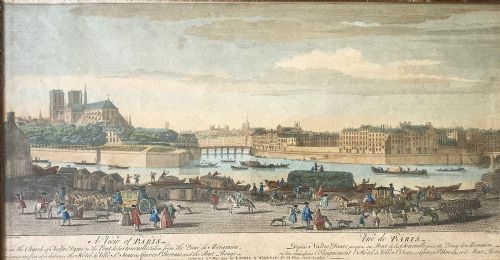
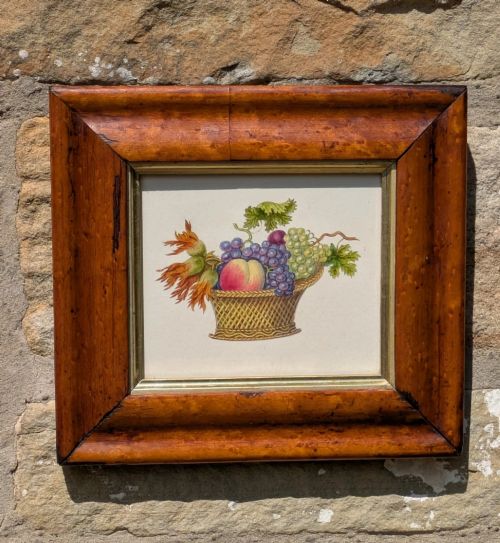
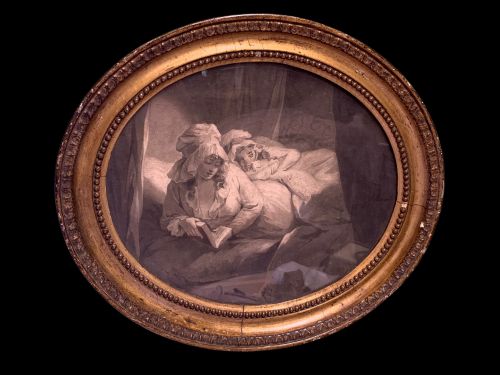
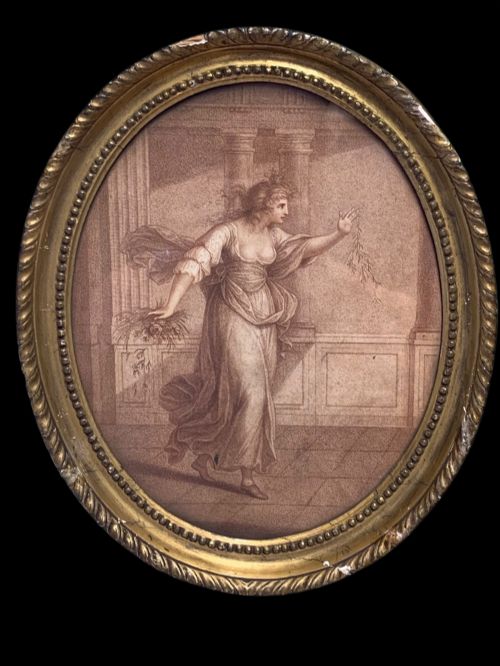
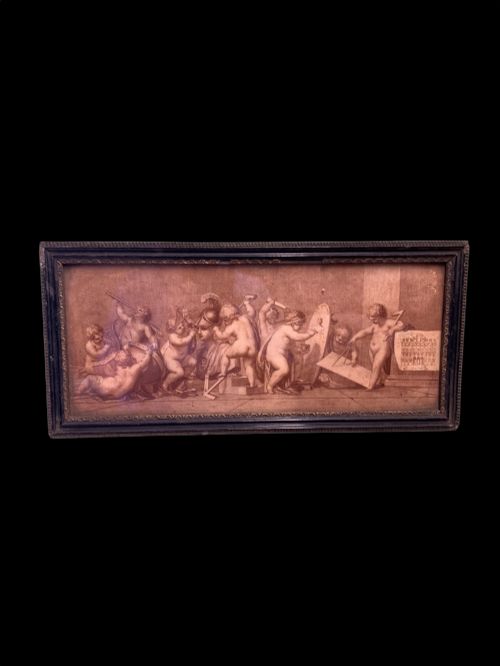
Georgian picture prints encompass wall art ranging from architectural engravings and sporting scenes to detailed portraits and botanical studies. These works reflect the domestic tastes and print-publishing culture of the eighteenth and nineteenth centuries.
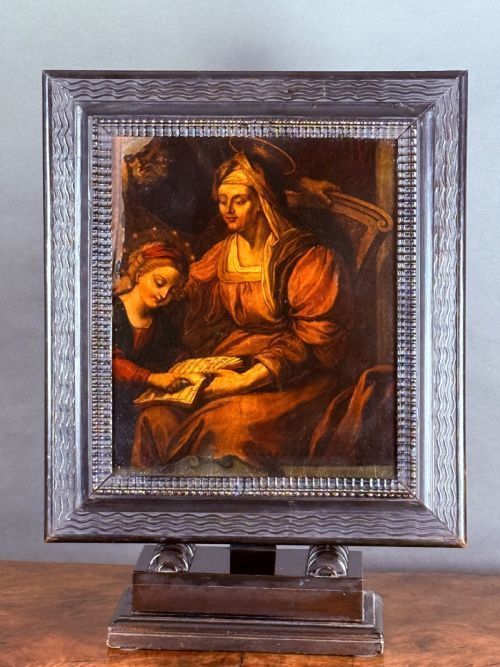
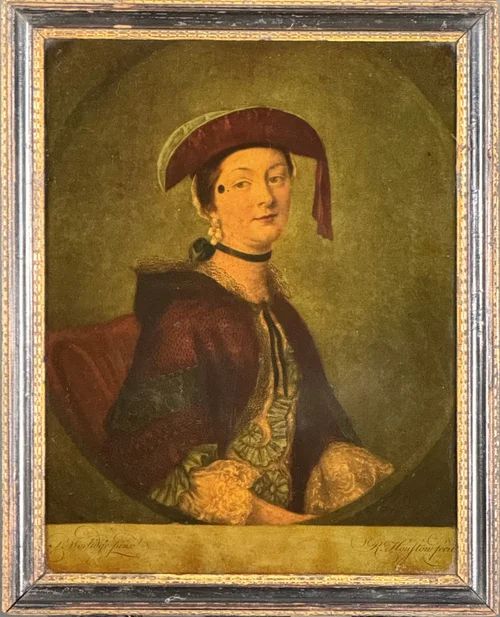
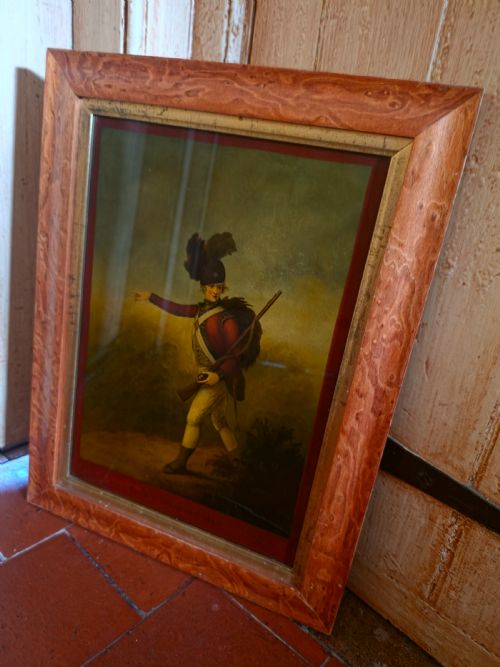
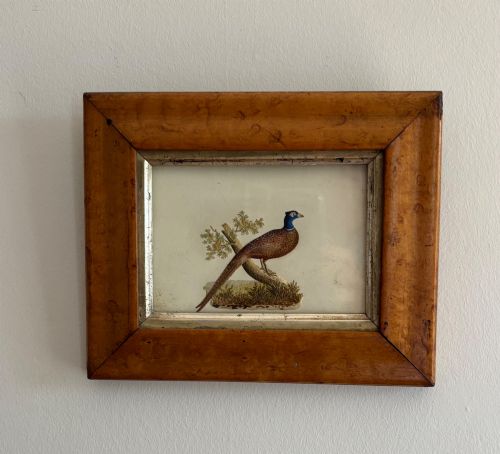
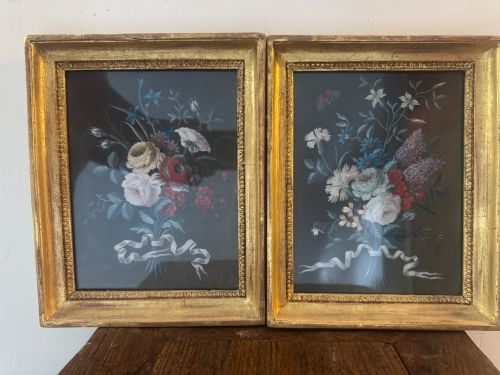
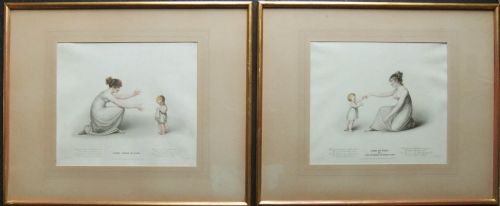
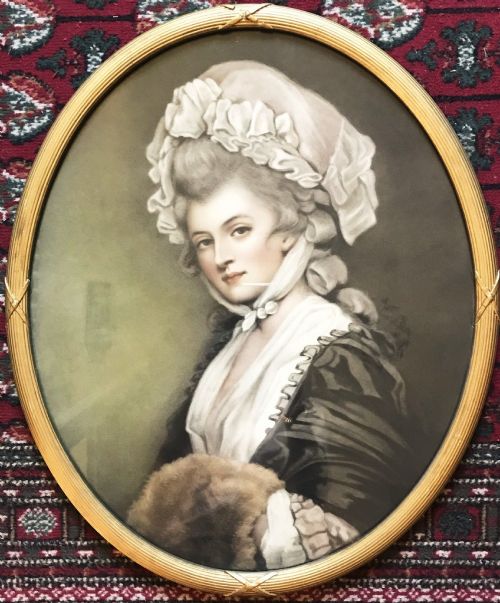
The pieces on this page are most commonly framed engravings, hand-coloured mezzotints, and reverse glass paintings. They frequently survive in period wooden frames with original glass.
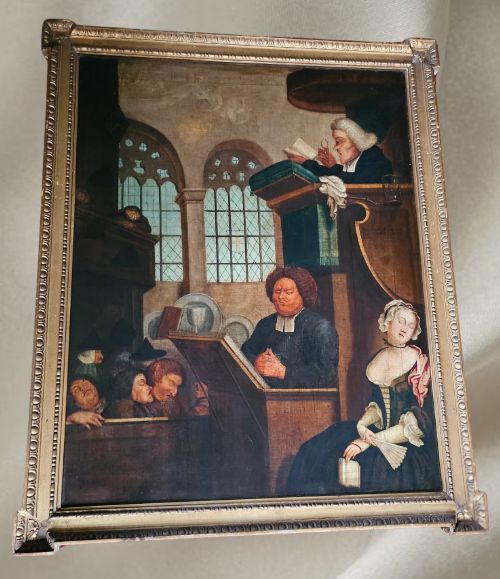
Subjects span allegorical figures, historical events, landscape views, and traditional London street scenes after painters such as Wheatley and Hogarth.
How they were made
Makers produced these works using copperplate engraving, stipple engraving, or mezzotint techniques on paper. Many plates then received subtle washes of watercolour pigment by hand.
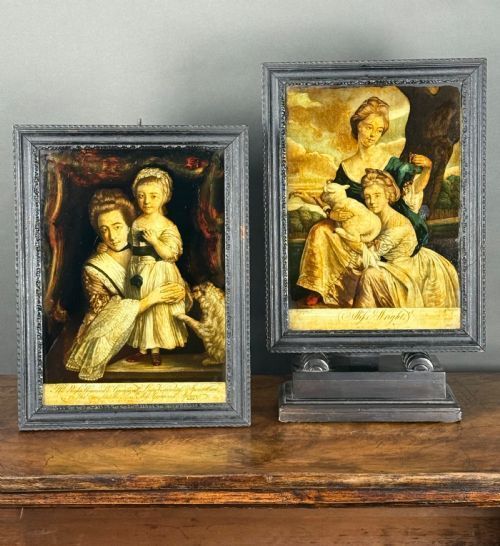
Reverse glass paintings involved applying oil paint or pigment directly to the underside of a glass sheet, often combining mezzotint transfers with hand-colouring to achieve luminous depth.
Carpenters housed these prints in wooden frames, sometimes utilising gold leaf, giltwood, or rosewood alongside protective glass to preserve the delicate pigments underneath.
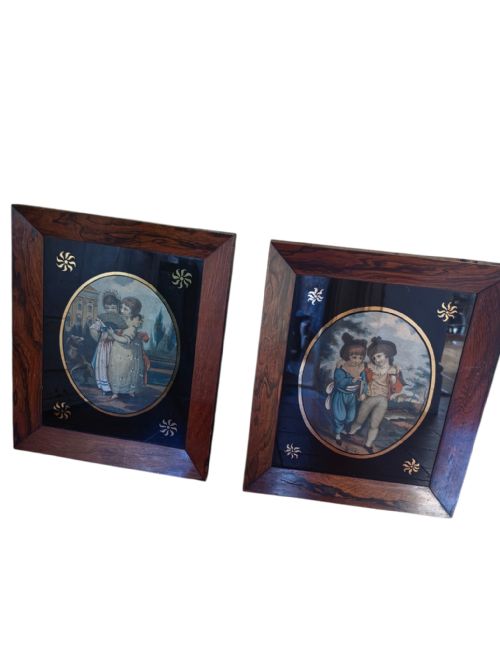
Several Georgian children gaze out from rosewood frames, looking thoroughly unimpressed by the formality of their portraits.
What varies in quality
Quality rests heavily on the crispness of the original plate impression and the skill of the hand-colouring. Stronger strikes reveal finer details in facial expressions and architectural lines.
The survival of original framing components significantly influences the integrity of a piece. Retaining period glass and untouched giltwood or rosewood frames elevates the overall character.
Charles Spooner·Richard Purcell·Robert Sayer·Samuel Dixon·Thomas G Appleton
The Georgian Picture Prints Glossary
- Mezzotint
- A printmaking process where the copper plate is roughened uniformly to produce rich dark tones and smooth gradations of light. This technique allowed printmakers to replicate the tonal depth of oil paintings.
- Reverse glass painting
- An artwork created by painting or transferring an image onto the reverse side of a glass panel so the final picture is viewed through the front. It creates a distinct glossy finish.
- Stipple engraving
- A method of creating prints using dots of varying density rather than continuous lines to render soft contours and flesh tones. It was popular for sentimental and portrait subjects.
- Eglomise
- A decorative technique involving the application of gold or silver leaf onto glass alongside painting. It yields a reflective, mirror-like border often found on antique picture frames.
Georgian Picture Prints: Frequently Asked Questions
How do I care for reverse glass prints?
Keep these pieces away from direct sunlight to prevent the pigments from fading or the underlying adhesives from failing over time.
Clean the glass gently with a dry microfibre cloth, avoiding any liquid sprays that might seep beneath the edges and damage the painted surface.
Are these prints usually hand-coloured?
Many eighteenth and nineteenth-century impressions received subtle watercolours by hand in the workshop after the initial black and white ink impression dried.
Close inspection under magnification often reveals the fine brushstrokes and pigment pooling characteristic of period hand-colouring.
How can I identify a period frame?
Period frames frequently exhibit hand-carved wooden construction, early giltwood surfaces, or rosewood veneers that show age-appropriate shrinkage and wear.
The presence of old backing boards, hand-blown glass with minor bubbles, and old fixings further supports the authenticity of the framing.
What is the difference between an engraving and a mezzotint?
An engraving relies on lines cut directly into a metal plate with a sharp tool to build up an image through hatching and cross-hatching.
A mezzotint builds up an image from dark to light by roughening the entire plate surface to hold ink, producing velvety shadows and subtle tones.