



Georgian Period Silver Spoon
A georgian period silver spoon brings the weight of eighteenth-century craftsmanship straight to your table, prized for enduring utility and distinct regional hallmarks.
Georgian Period Silver Spoon
A georgian period silver spoon encompasses items forged across the eighteenth and early nineteenth centuries, ranging from delicate tea caddy spoons to heavy serving spoons and soup ladles. You will regularly encounter formal flatware bearing the hallmarks of London workshops alongside provincial examples marked with town letters.
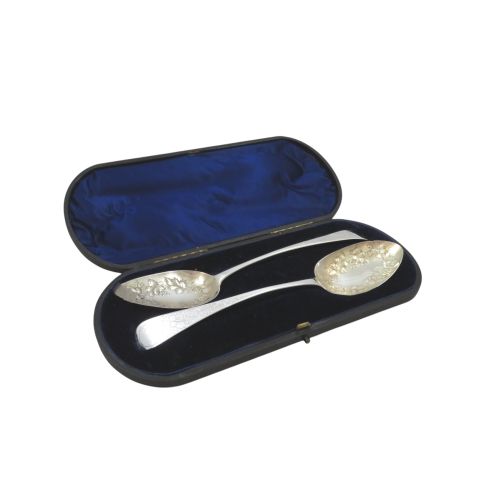
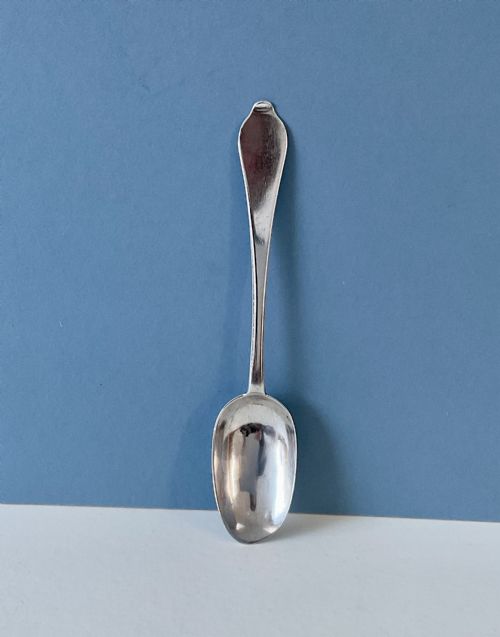
The selection extends from late seventeenth-century dognose tablespoons through to nineteenth-century fiddle pattern dessert spoons and cased berry spoons. Many pieces retain family crests or engraved initials that record their long domestic history.
How they were made
Makers shaped these items from solid silver and higher-purity Britannia silver, hammering and casting the metal to achieve balanced bowls and sturdy stems. Surfaces often show hand-wrought finishing marks beneath crisp hallmarks that identify the assay office, date letter, and silversmith.
Specialised forms such as marrow scoops and slip top spoons required specific forging techniques to create deep channels or faceted handles. Textile elements like velvet and silk occasionally appear in fitted presentation cases for berry spoons.
Current listings and archive records feature solid silver, Britannia silver, and velvet, spanning the seventeenth, eighteenth, and nineteenth centuries.
What varies in quality
Quality rests upon the crispness of the original hallmarks and the retention of clean lines along the stem and bowl edges through centuries of use. Superior examples preserve their original weight and balance without excessive thinning of the silver from polishing.
The presence of clear provincial town marks, maker stamps, or detailed armorial crests elevates certain items beyond standard domestic flatware. The integrity of associated presentation cases, when present, also influences the character of the piece.
Isaac Davenport·George Wintle·BCN
The Georgian Period Silver Spoon Glossary
- Hallmark
- Official stamped marks guaranteeing the purity of precious metal, alongside symbols for the maker, assay office, and year of production. These stamps provide the primary method for dating british silver.
- Britannia Silver
- A higher standard of silver alloy introduced by statute, containing ninety-five point eight percent pure silver by weight. It was mandatory for all silver vessels and flatware between seventeen hundred and seventeen twenty.
- Dognose Spoon
- An early flatware form featuring a broad, notched terminal handle popular during the late seventeenth and early eighteenth centuries. The shape evolved directly from the trifid spoon.
- Fiddle Pattern
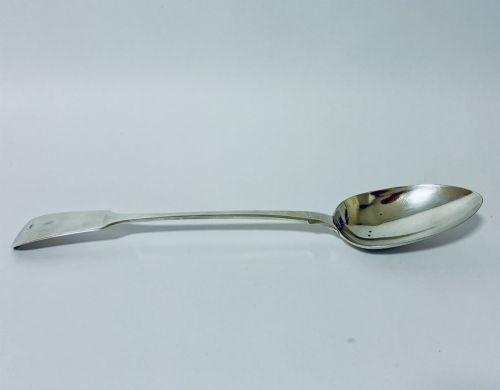
- A nineteenth-century flatware style characterised by a slender stem that broadens near the terminal into a distinct shoulder resembling a fiddle. This design remained standard for decades across domestic dining sets.
Georgian Period Silver Spoon: Frequently Asked Questions
How do I date a georgian period silver spoon?
Dating relies on reading the stamped hallmarks, which include a specific letter code for the year and a leopard head or other symbols for the assay office.
Matching these marks against historical registry tables reveals the exact year and city of manufacture.
What is the difference between sterling and britannia silver?
Britannia silver contains a slightly higher proportion of pure silver than standard sterling, making it fractionally softer.
This higher standard was legally required for a brief period in the early eighteenth century before sterling standards returned.
Were these spoons used daily?
Many examples served practical roles in wealthy households for tea service, marrow extraction, and formal soup courses.
Over generations, regular polishing and use gradually thinned the metal bowls while softening sharp edges.
What are town marks on silver spoons?
Town marks indicate the specific regional assay office outside London where the silver was tested and stamped.
Provincial marks from makers outside the capital often command particular interest from collectors.