


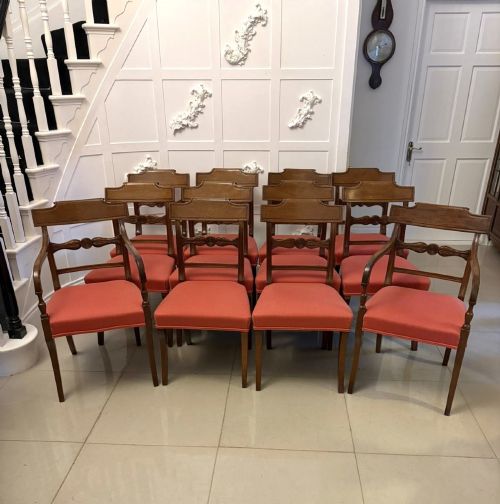
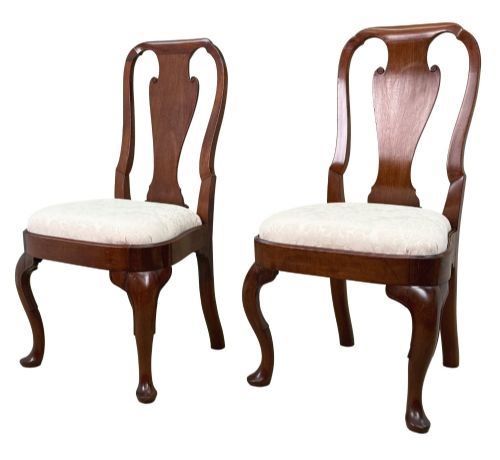
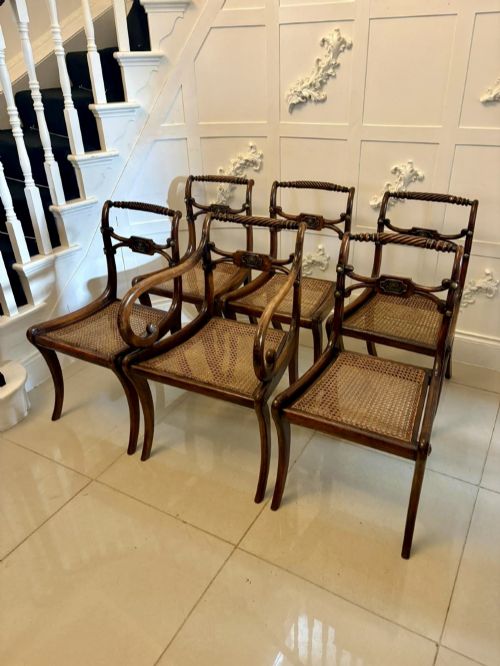
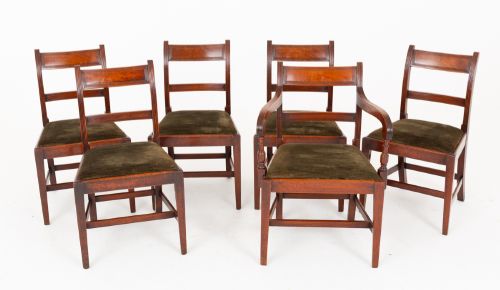
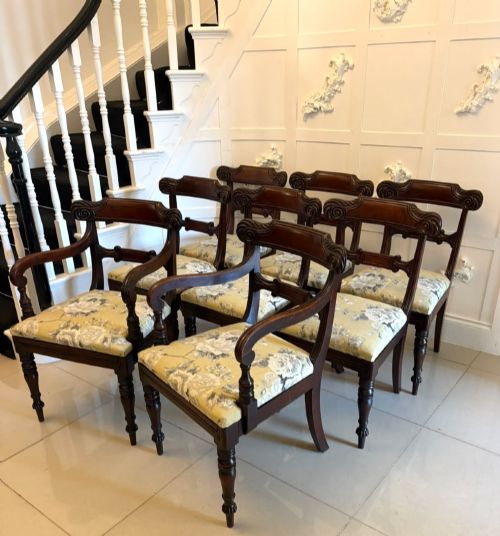
Georgian Period Seating
Georgian period seating spans dining chairs, armchairs, benches, and sofas built from solid mahogany and walnut across the eighteenth and nineteenth centuries.
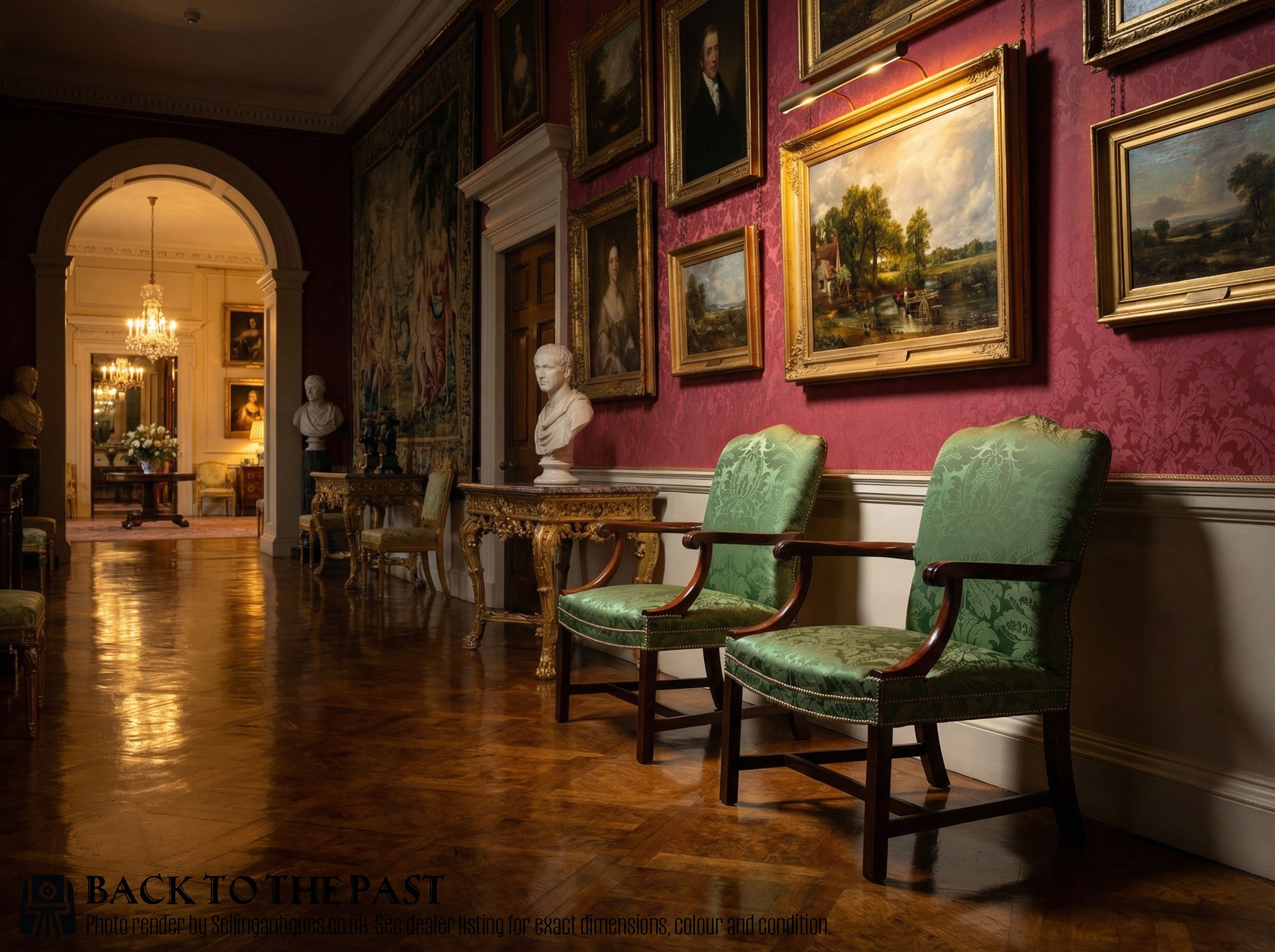
Georgian Period Seating
Georgian period seating encompasses a wide array of forms designed for dining rooms, libraries, and parlours, ranging from single side chairs to large matching dining sets. The pieces listed under georgian period seating demonstrate how makers adapted designs from the early eighteenth century through the Regency era and into later revival periods.
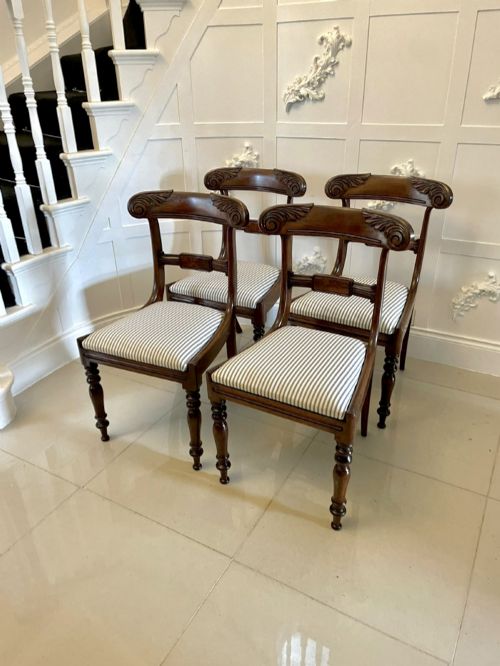
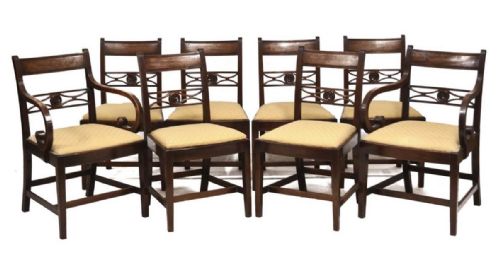
Dining chairs and carvers dominate the selection, often appearing in sets of four, six, eight, or twelve. Alongside these, buyers find library armchairs, window seats, hall benches, and large framed sofas that reflect the shifting aesthetic tastes of the Georgian and Regency periods.
The material palette centres heavily on rich mahogany and walnut, occasionally complemented by cane seats, brass details, and various upholstery fabrics. These woods display the deep natural grain and warm tones characteristic of eighteenth and nineteenth-century cabinetmaking.
Materials and Construction
Cabinetmakers relied on dense timber such as mahogany and walnut, utilising their natural strength to support slender chair backs and sturdy legs without excess bulk. Joints were closely fitted using traditional joinery methods that allowed wooden frames to endure centuries of daily use.
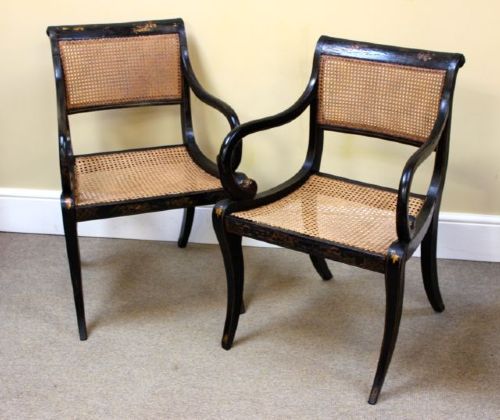
Many examples incorporate woven cane panels within the seat frames, providing a resilient and flexible surface prior to the application of loose cushions. Other pieces employ textile, velvet, and various upholstery fabrics stretched over padded frames.
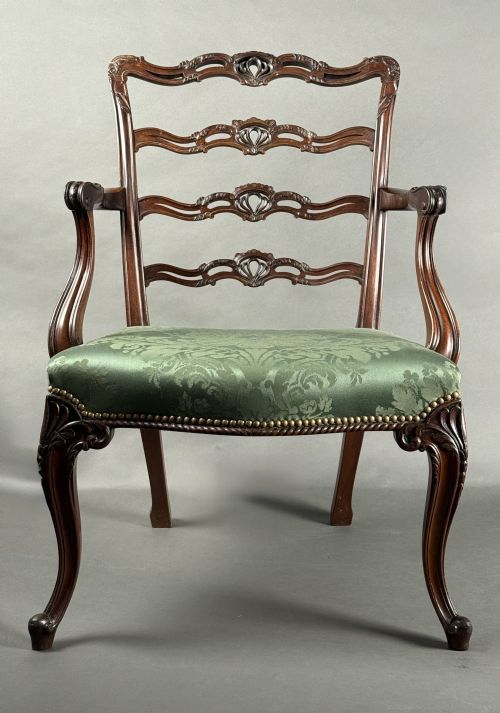
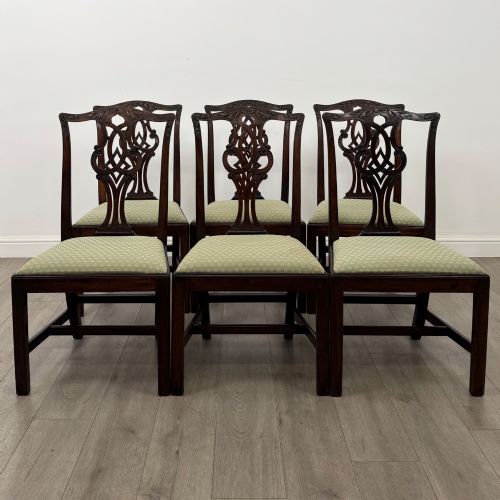
Carved wooden details, such as bar backs, sabre legs, and ladder-back rails, were shaped by hand using specialised chisels and gouges. This direct carving gave each piece individual character while maintaining structural integrity.
Georgian Period Seating Retail Price Guide 2026
Typical asking prices for georgian period seating among the pieces listed under this phrase on Sellingantiques today, from the lower quarter to the upper quarter. They describe what is for sale here now, not the wider market.
Mahogany is the predominant wood across these listings, accompanied by walnut, elm, rosewood, and cane.
Assessing Quality and Execution
The quality of georgian period seating rests on the crispness of the carved details and the proportional harmony of the frame. Superior examples display sharply defined mouldings and balanced proportions that reflect the hand of a skilled maker.
The integrity of the timber and the preservation of original surfaces also determine the standing of a piece. Original or early timber surfaces with deep patination hold greater appeal than heavily restored or stripped frames.
Consistency across a matched set elevates its stature, particularly when dealing with larger dining sets where every single chair and carver must share identical wood grain and turning quality.
The Georgian Period Seating Glossary
- Carver
- An armchair, typically designed with arms to sit at the head of a dining table alongside matching single chairs. These often match larger sets of dining chairs.
- Bar Back
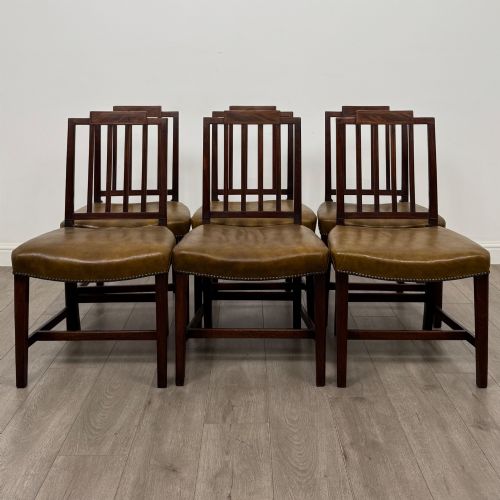
- A chair back featuring a horizontal crossbar or slats shaped to resemble architectural elements. This design appears frequently on nineteenth-century dining chairs.
- Caning
- A seating material woven from peeled rattan strips. It provides a lightweight, resilient surface found on many Regency and Georgian chairs.
- Sabre Leg
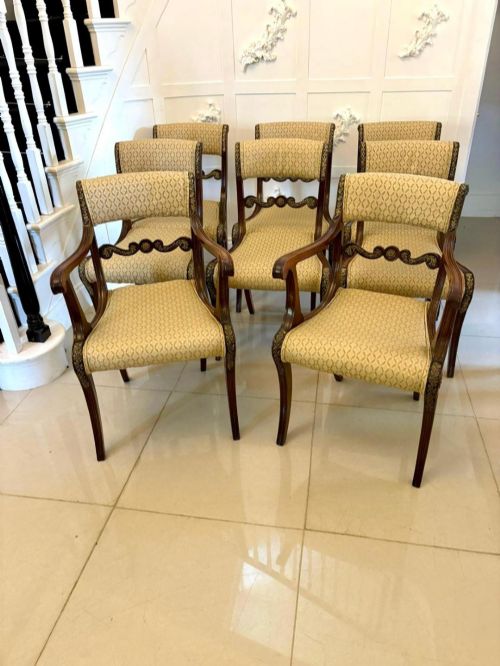
- A chair or table leg that curves outward in a concave sweep reminiscent of a cavalry sabre. This form is common in Regency design.
- Library Chair
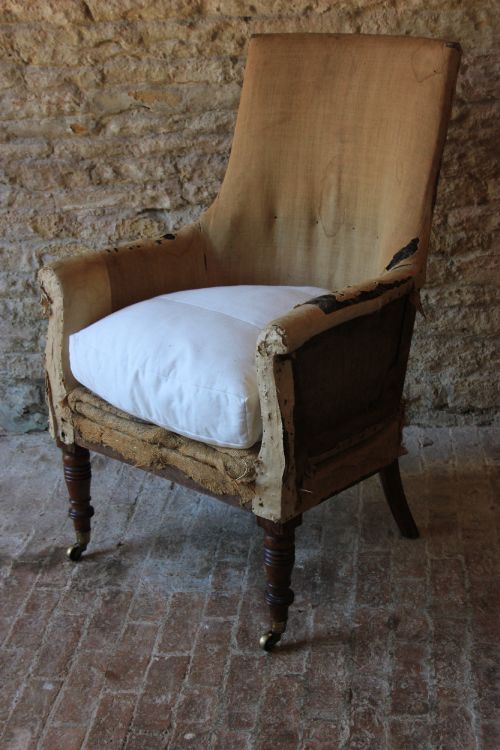
- A heavily padded armchair designed for reading and comfort, often featuring upholstered arms and deep seating. These pieces originate from domestic studies and libraries.
Georgian Period Seating: Frequently Asked Questions
How do I care for antique wood chairs?
Keep wooden seats away from direct heat sources and sudden humidity changes to prevent the timber from splitting or warping.
Apply a traditional microcrystalline wax occasionally to nourish the grain and protect the surface from dust and minor scuffs.
Can I use these chairs for daily dining?
Most sturdy mahogany and walnut frames remain robust enough for regular daily use provided the joints are stable and secure.
It is wise to check the frame stability periodically and avoid placing excessive weight on delicate carved crest rails.
How do I identify a Regency piece?
Regency seating often incorporates classical motifs, ebonised finishes, sabre legs, and brass inlay inspired by ancient Roman and Greek designs.
These pieces typically date from the early nineteenth century and display a leaner, more architectural silhouette than earlier Georgian furniture.
What is the difference between single chairs and carvers?
Single chairs are armless side chairs built to fit neatly around a dining table in multiples.
Carvers are larger armchairs intended for the host at the head of the table, offering wider seats and armrests.