


Georgian Period Landscape Artwork
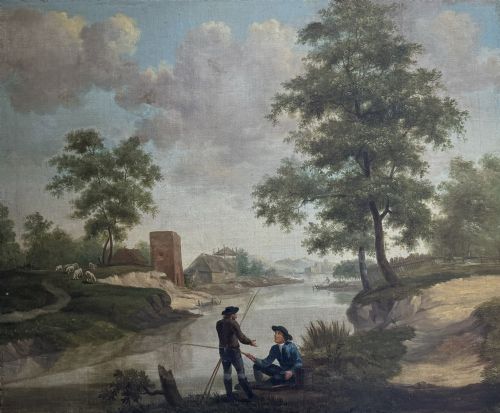
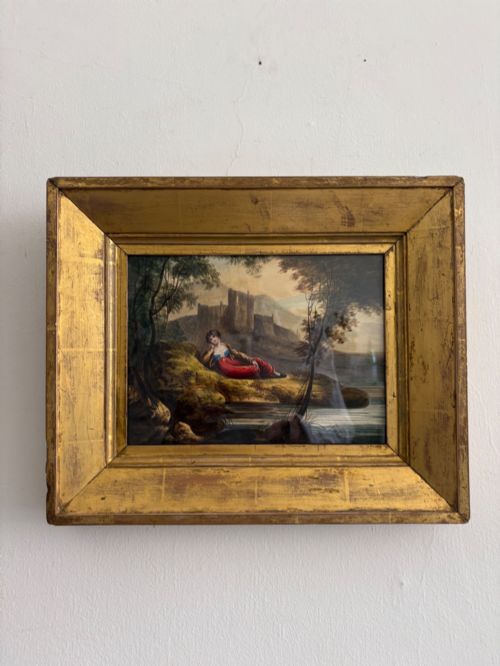
Georgian period landscape artwork captures the rolling countryside, coastal scenes and classical ruins that fascinated collectors across the eighteenth and nineteenth centuries.
Georgian Period Landscape Artwork
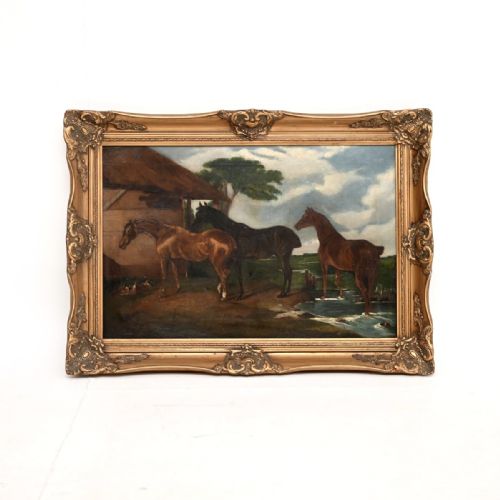
When you search for georgian period landscape artwork, you encounter oil paintings, watercolours and oil on wood panels dating from the eighteenth century into the nineteenth century. These works capture rivers, rural views, coastal settings and architectural caprices with distinct regional character.
The selections available lean heavily towards British and Irish schools, featuring atmospheric rural vistas, rustic figures and pastoral tranquility. Works range from intimate watercolour studies on paper to grand oil on canvas pieces housed in elaborate giltwood frames.
Many examples reflect the prevailing aesthetic movements of their day, drawing on Romanticism, English naive art and the atmospheric observations of the Norwich School. You will find both signed compositions by noted hands and evocative pieces by anonymous provincial painters.
Materials and Technique
Artists of this era applied oil paint to stretched canvas or prepared wood panels, building rich textures and deep tones that have endured for centuries. Watercolour on paper was equally prevalent, often utilised for rapid landscape studies or finished topographical views.
Framing played an integral role in presentation, with many works retained in heavy giltwood frames featuring moulded plaster ornamentation. These frames were designed to complement the artwork and project status within a country house setting.
Listings feature works spanning the eighteenth century, the Regency era, and the nineteenth century, executed in oil and watercolour.
Assessing Quality
Quality reveals itself in the confidence of the brushwork and the artist's command of light, atmosphere and perspective. Superior works demonstrate subtle tonal transitions and a convincing sense of depth, whereas lesser examples rely on formulaic repetition and stiff composition.
The integrity of the original support and the survival of the paint layer significantly influence the standing of a piece. Works that retain their untouched surface and period giltwood framing carry greater historical coherence.
John Hamilton Mortimer·Giovanni Paolo Panini·George Morland·Thomas Rowlandson·Thomas Monro
The Georgian Period Landscape Artwork Glossary
- Giltwood
- Wood carved and coated with gold leaf or metal powder to create a bright, reflective surface. It was extensively used for framing important Georgian oil paintings.
- Oil on Canvas
- Pigment mixed with drying oil applied to a woven fabric support stretched over a wooden frame. This medium allowed artists to achieve rich colour saturation and lasting durability.
- Watercolour Painting
- Pigments suspended in a water-soluble binder applied to paper. It was favoured by artists for its immediacy and luminosity.
- Wood Panel
- A solid or laminated wooden board used as a rigid painting support before canvas became dominant. Artists often ground the surface with gesso before applying oil paint.
- Norwich School
- The first provincial art movement in Britain, celebrating the local Norfolk landscape. Painters associated with this school focused on realistic depictions of rural scenery and flatland vistas.
Georgian Period Landscape Artwork: Frequently Asked Questions
What defines a Georgian landscape?
A Georgian landscape reflects the era's fascination with pastoral scenes, coastal views and picturesque countryside. These works often incorporate rustic figures, architectural ruins or atmospheric weather effects.
Artists balanced natural observation with classical compositional rules, creating harmonious views of Britain, Ireland and continental Europe.
How do I care for antique watercolours?
Antique watercolours on paper require careful protection from direct sunlight to prevent the fugitive pigments from fading. Displaying them away from moisture and extreme temperature fluctuations preserves the paper support.
Using conservation-grade mounting materials during framing further protects the delicate medium from chemical degradation over time.
Are these paintings signed by artists?
Many Georgian and Regency landscape works remain unsigned, as studio practice often left provincial or student pieces unattributed. When signatures or contemporary inscriptions do appear, they help connect the work to specific hands or regional schools.
Attributions are frequently determined through stylistic comparison, handling of pigment and historical provenance recorded on the reverse of the canvas or frame.
How should I display giltwood frames?
Period giltwood frames require stable indoor humidity to prevent the underlying gesso and wood from cracking or shrinking. Hanging them on secure structural walls ensures the considerable weight of the frame is properly supported.
Dusting should be performed gently with a dry, soft brush to avoid disturbing the fragile gold leaf surface.