
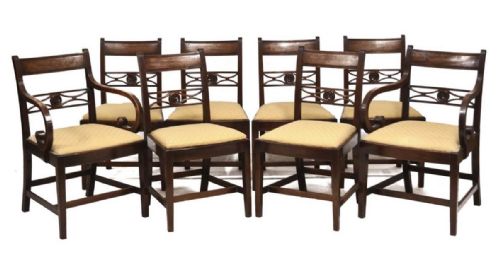
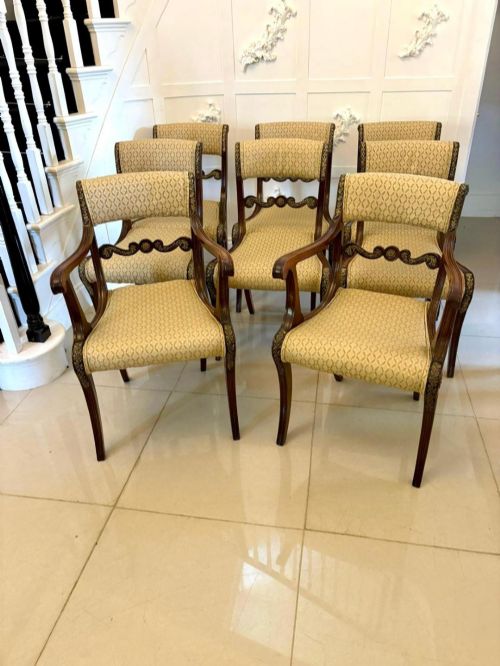
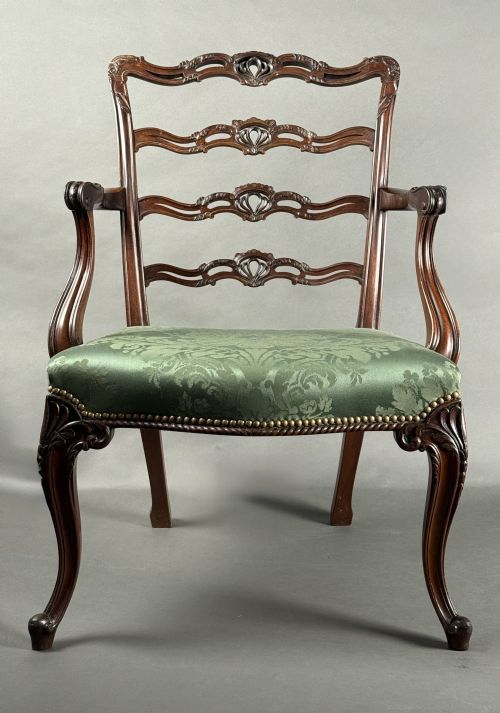
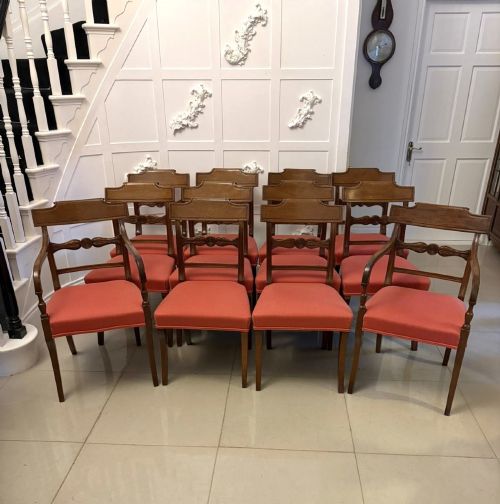
Georgian Period Carver Seat
When you handle a georgian period carver seat, you hold an anchor of the dining room that balances robust framing with refined arm support.
Georgian Period Carver Seat
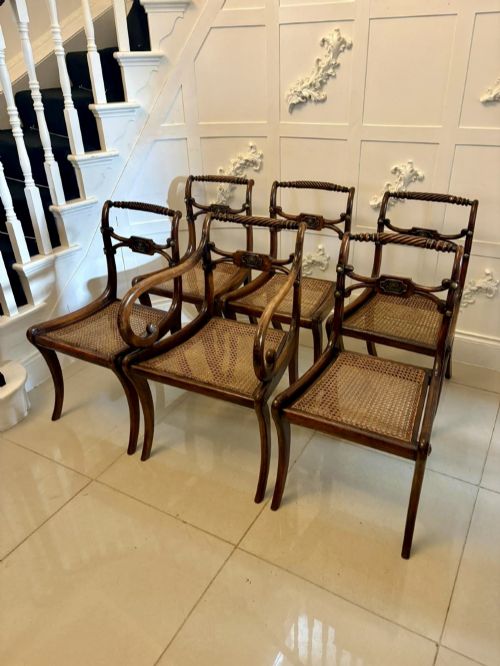
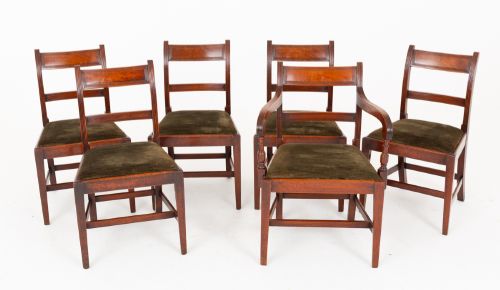
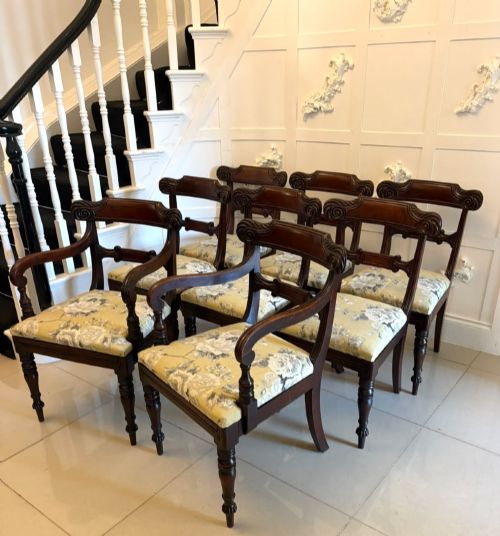
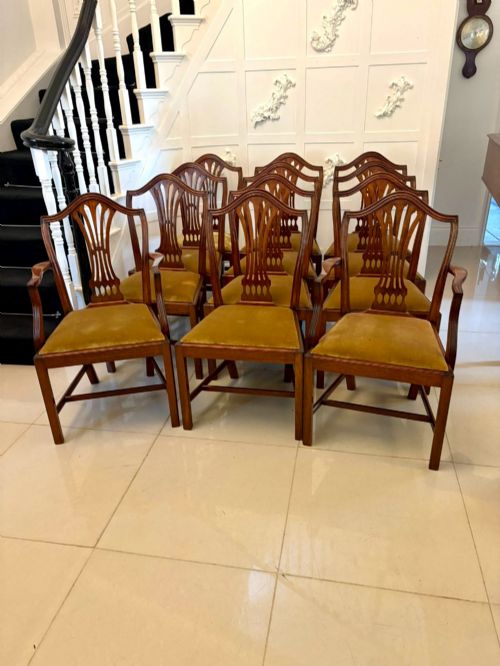
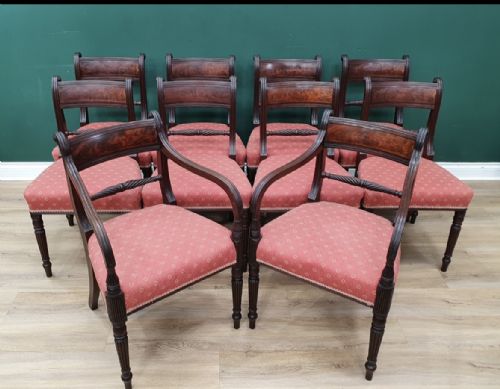
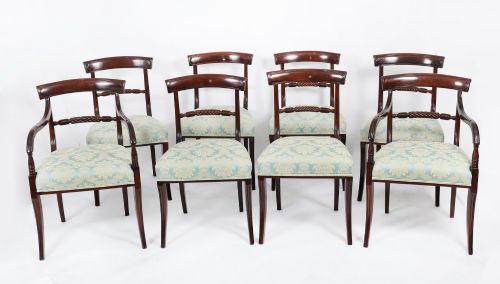
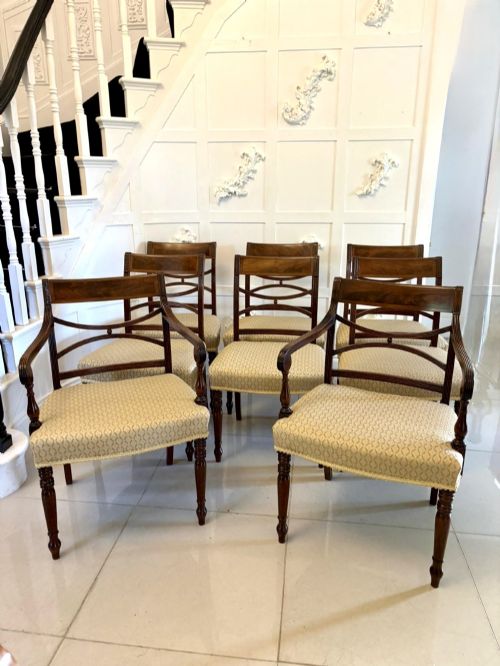
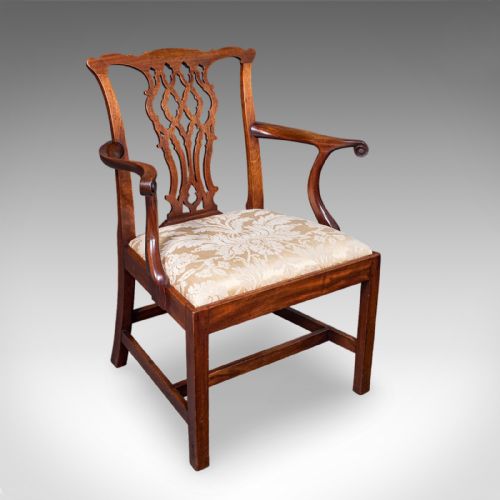
A georgian period carver seat functions as the principal elbow chair at the head of a dining table, combining substantial armrests with supportive upright backs. These seating forms appear across eighteenth-century designs, often shaped in mahogany or elm with distinct regional variations.
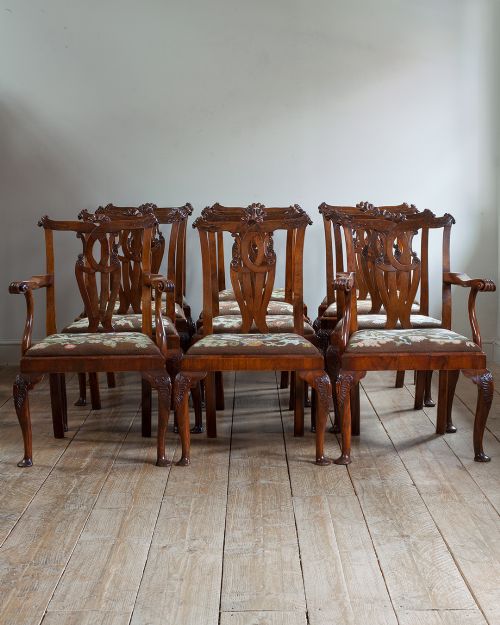
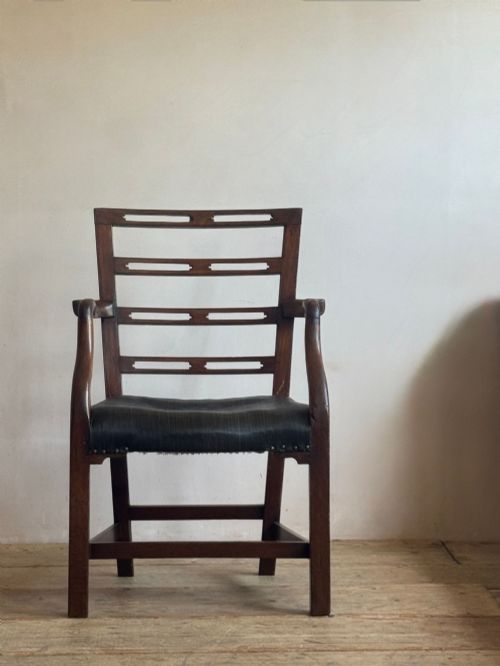
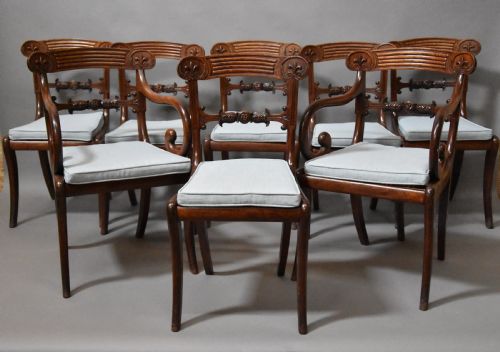
The versions most common here emerge from Georgian, Regency, and nineteenth-century traditions, spanning formal Chippendale and Hepplewhite aesthetics alongside ladder-back and comb-back country forms. Buyers encounter these pieces both as individual armchairs and as paired additions to larger dining sets.
Makers constructed these seats to anchor formal dining arrangements while offering practical comfort during long meals. The architectural proportions reflect the prevailing stylistic shifts from solid cabriole framing to lighter, geometric shield backs.
Materials and construction methods
Cabinetmakers relied heavily on dense mahogany and regional timbers like elm and walnut, joining frame components with traditional mortise and tenon joinery. These structural choices allowed craftsmen to carve intricate details into crest rails and splats without compromising the integrity of the arm supports.
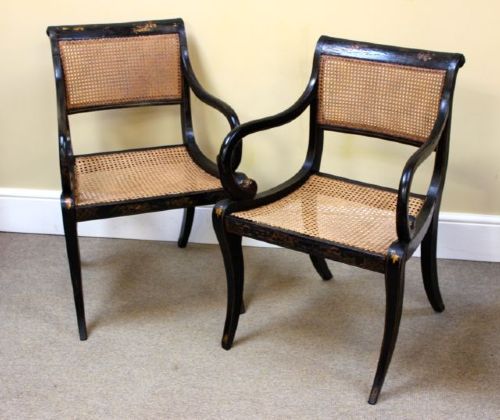
Seating surfaces utilised drop-in upholstery frames, woven cane panels, or padded cushions covered in fabric, leather, or tapestry. Brass hardware and decorative inlay occasionally reinforced the structural elegance of late eighteenth-century and Regency examples.
Current listings feature mahogany, elm, walnut, and cane materials across Georgian, Regency, and Hepplewhite styles.
Assessing craftsmanship and condition
Superior examples display crisp hand-carving along the splats and knuckles, where clean lines indicate skilled execution by the maker. Weaker pieces often show softened decorative details or heavy restoration work that obscures the original timber grain.
The rigidity of the joinery and the survival of original surface finishes dictate the enduring integrity of the frame. Structural stability in the arm joints remains essential, as these high-stress points determine daily utility and long-term preservation.
The Georgian Period Carver Seat Glossary
- Carver
- An armchair designed to match a set of single dining chairs, traditionally placed at the head of the table. These seats feature extended armrests for added distinction.
- Splat
- The vertical wooden strip positioned down the centre of a chair back. Master carvers shaped this element to define specific Georgian and Regency styles.
- Cane
- Woven rattan material utilised for lightweight, resilient seat panels. This technique appears frequently in Regency and revival dining furniture.
- Shield back
- A chair back contouring outward in the shape of a shield, popularised during the Hepplewhite aesthetic. This design showcases symmetrical pierced woodwork.
- Elbow chair
- An alternative historical term for an armchair with open wooden supports. These seats provided comfortable resting places in morning rooms and studies.
Georgian Period Carver Seat: Frequently Asked Questions
Can I mix styles at my table?
Mixing different periods or regional styles remains a long-standing tradition in historic interiors, provided scale and timber tones share a common harmony.
Pairing a prominent armchair with simpler dining seats creates visual depth within a room.
How do I care for cane seats?
Cane seating requires gentle dusting and occasional light moisture to keep the rattan flexible and prevent snapping.
Avoid placing these chairs in direct sunlight or beside intense heat sources which dry out the natural fibres.
What defines a George III armchair?
George III armchairs typically exhibit refined mahogany frames, classical carved splats, and sturdy cabriole or straight legs.
These pieces reflect the transition from heavier early-century proportions to lighter, more neoclassical ornamentation.