
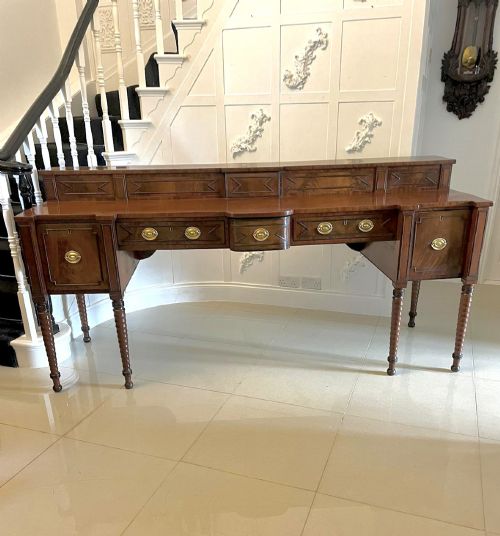
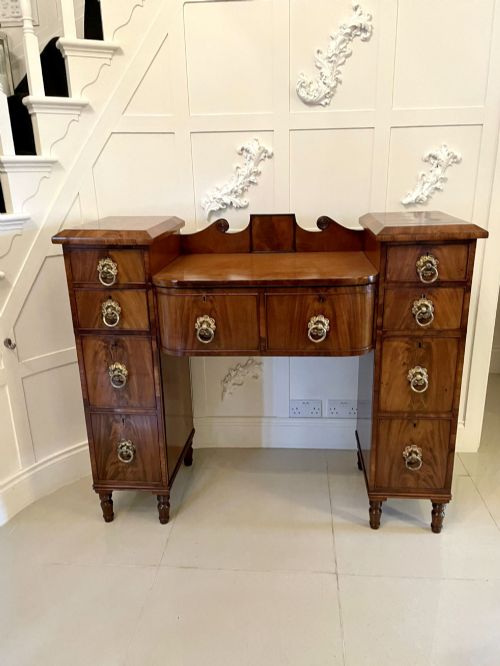
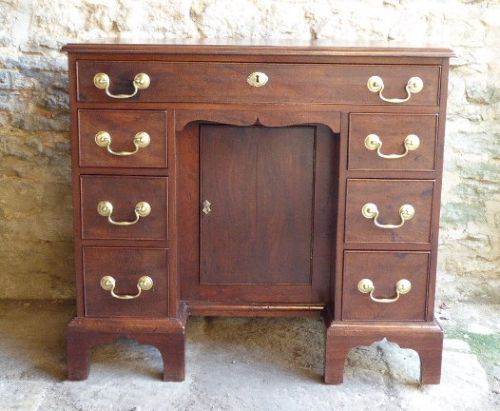
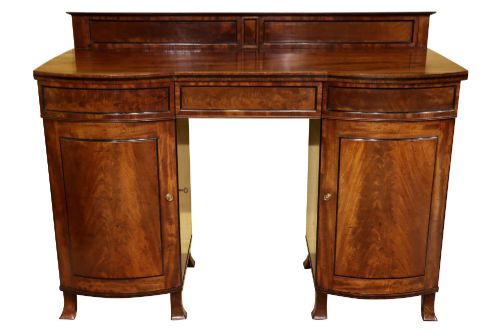
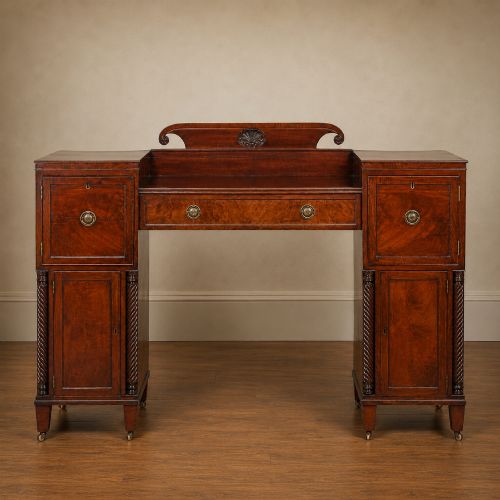
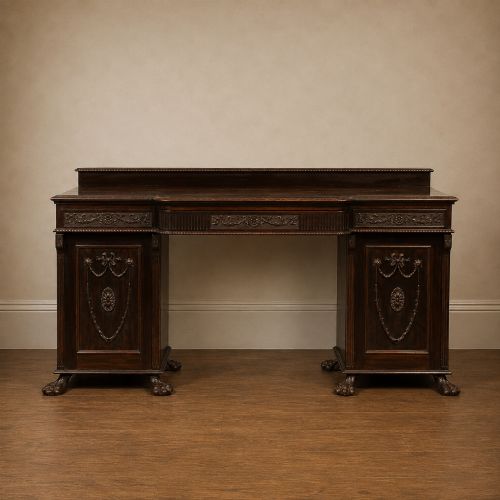

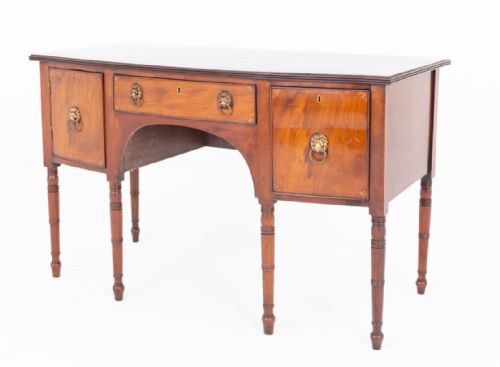
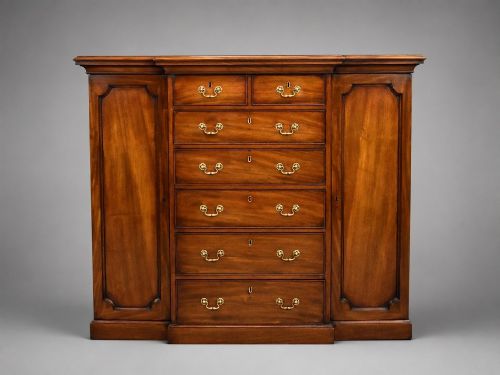
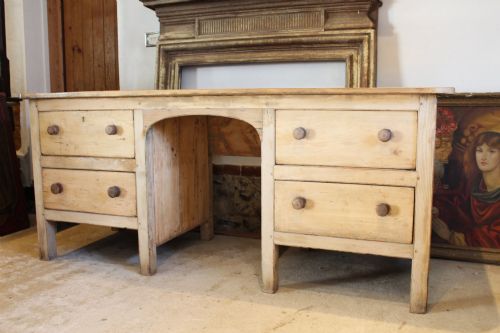
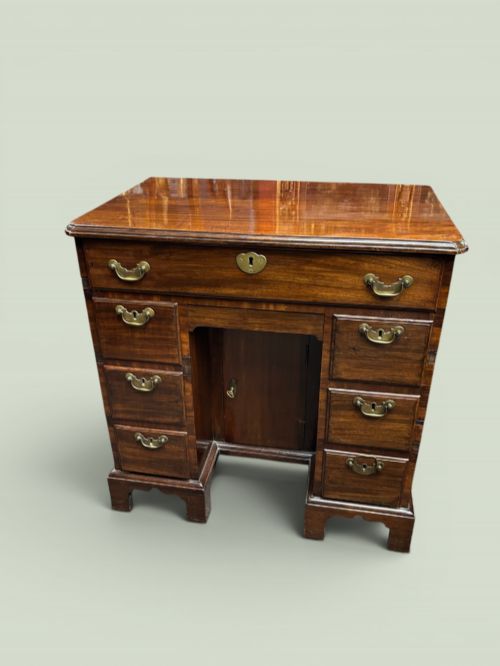

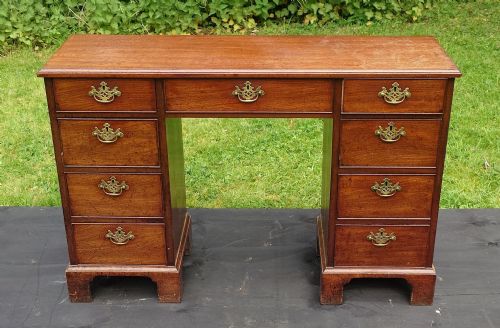
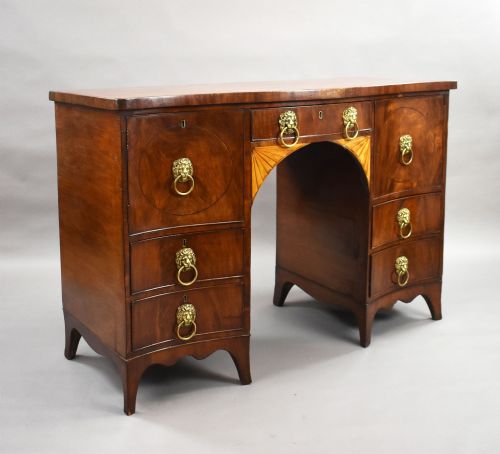
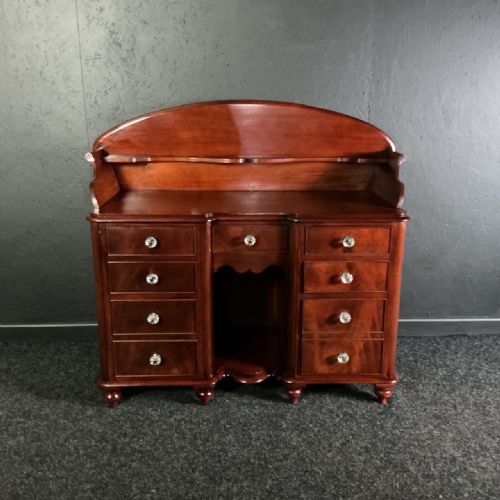
Georgian Pedestal Sideboard
A georgian pedestal sideboard is a grand dining room storage piece designed to anchor formal spaces with architectural presence.
Georgian Pedestal Sideboard
A georgian pedestal sideboard combines a central serving table flanked by distinct flanking pedestals, creating a balanced and imposing silhouette. These forms emerge primarily from the late eighteenth and early nineteenth centuries, representing the height of formal dining room furniture.
Most examples found in daily browsing span the George III, Regency, and William IV periods, often featuring flame mahogany or figured veneers. Makers constructed these impressive items to house plate and wine, sometimes incorporating integrated lead-lined coolers within the pedestals.
Materials and Construction Methods
Craftsmen built these pieces using solid mahogany and applied flame mahogany veneers to large flat surfaces, enhancing the natural grain patterns. Workshops incorporated contrasting timbers such as satinwood, boxwood, and sycamore for delicate stringing and detailed inlay work.
Structural integrity relied on dense secondary timbers like oak and pine for drawer linings and internal framing. Brass hardware, including handles, lion mask rings, and occasionally upper galleries, provided functional mounts that completed the heavy timber construction.
Some pedestals concealed secret lead-lined bins meant to hold melted ice for cooling claret directly beside the dining table.
Factors Determining Quality
Superior examples demonstrate exceptional choice of timber, utilising highly figured flame mahogany veneers that match symmetrically across the front panels. The crispness of inlaid details and the weight of original brass fittings significantly elevate the standing of a piece.
Construction nuance separates standard items from the finest work, visible in the dovetailing of drawers and the survival of original internal divisions or fitted cellarets. Proportions also matter greatly, with narrower or unusually scaled formats commanding attention from discerning collectors.
John Gregory
The Georgian Pedestal Sideboard Glossary
- Pedestal
- A structural cupboard unit positioned at either end of a central sideboard table. These housings frequently contained storage drawers or built-in bins for cooling bottles.
- Flame mahogany
- A veneer cut from timber where the branches join the main trunk, producing a distinctive flickering flame pattern. Cabinet makers prized this wood for its decorative visual impact on principal doors and drawer fronts.
- Stringing
- Thin lines of contrasting lighter wood inlaid into channels cut on the surface of darker timbers. This technique outlines drawers and legs to create geometric definition.
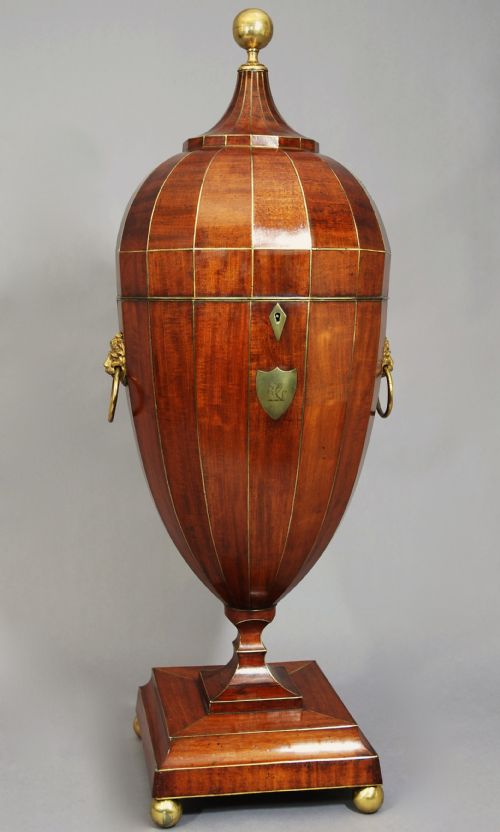
- Cutlery urn
- A tall, vase-shaped wooden vessel placed upon sideboard pedestals to store table knives and spoons. These matching accessories frequently feature fitted internal tiers.
- Gallery
- A low decorative rail mounted along the rear edge or top of a sideboard. These brass or timber barriers prevented serving dishes from sliding off the surface.
Georgian Pedestal Sideboard: Frequently Asked Questions
What is a pedestal sideboard?
A pedestal sideboard is a large dining room furniture form featuring two independent cupboards connected by a central counter or serving surface.
Cabinet makers designed these assemblies to serve formal dining rooms during the Georgian and Regency eras, providing storage for heavy silver and wine.
How were pedestals used?
The flanking cupboards served multiple purposes during large dinner parties, housing warming compartments, storage for plates, and lead-lined bins for chilling wine.
The central section remained clear for serving dishes, while matching urns often sat atop the pedestals to hold cutlery.
How do I spot a reproduction?
Distinguishing period examples involves examining the secondary timbers inside drawers, the ageing of the brass hardware, and the hand-cut dovetailing methods.
Twentieth-century revivals often use machine-cut joints and modern adhesives that differ significantly from eighteenth and nineteenth-century workshop practices.
Where should I place it?
These substantial items require considerable wall space and suit traditional dining rooms or large entrance halls where their proportions can be appreciated.
Ensure adequate clearance around the pedestals to allow cupboard doors to open fully without obstruction from nearby dining chairs.