



Georgian Pedestal Sideboard Table
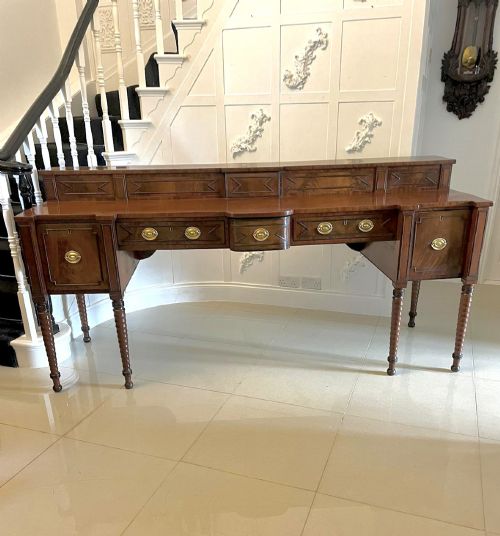
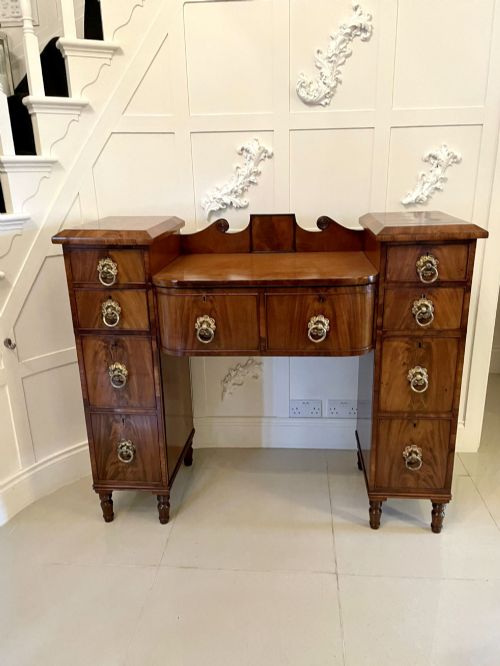
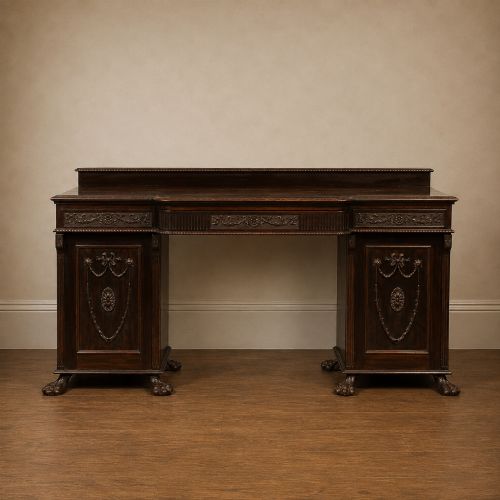
A georgian pedestal sideboard table brings structured dining room service and rich mahogany timber directly into a traditional interior.
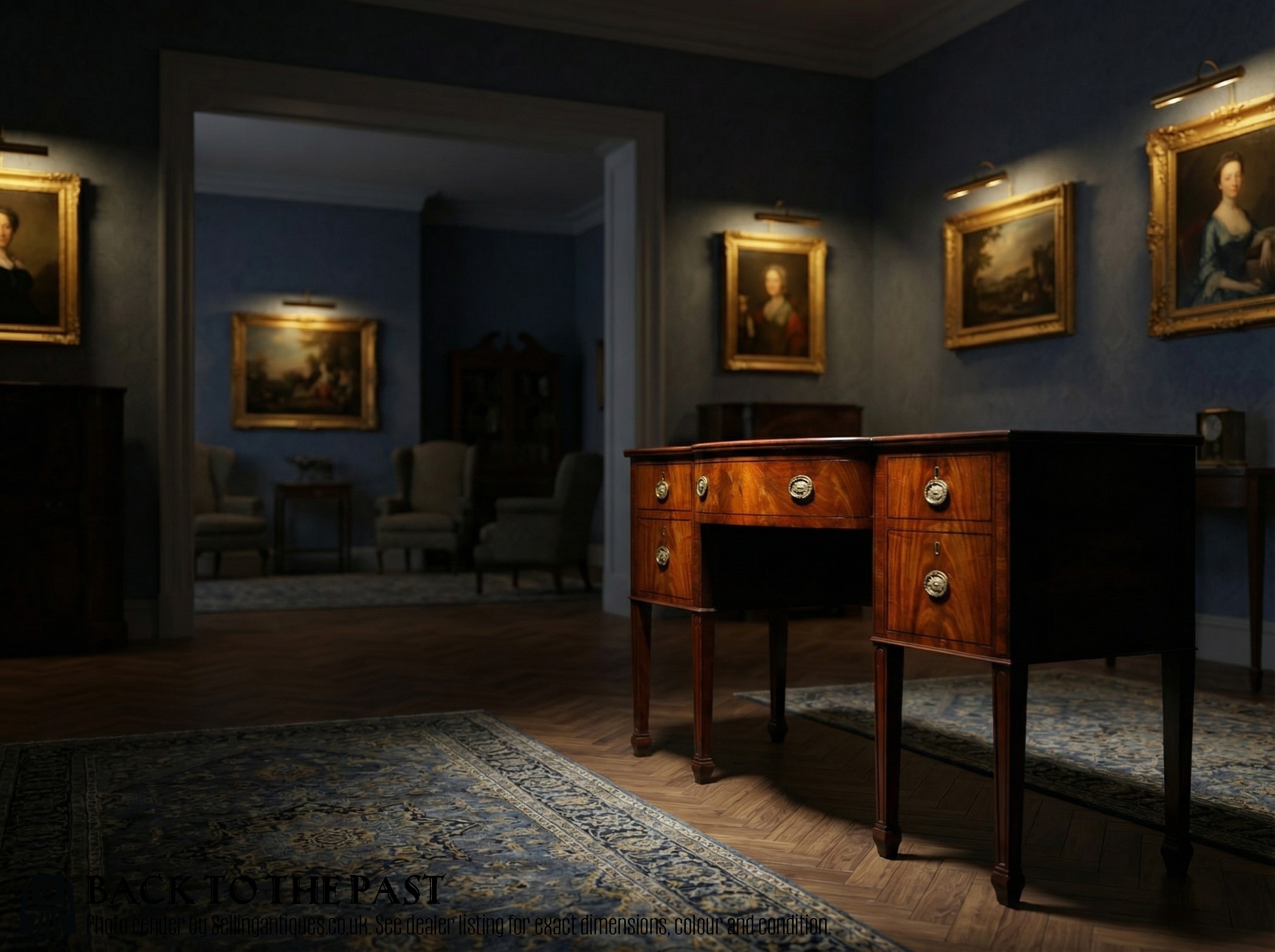
Georgian Pedestal Sideboard Table
When you search for a georgian pedestal sideboard table, you encounter substantial serving furniture built to anchor a formal dining space. The listings here span the Georgian, Regency, and Victorian eras, alongside later revival pieces.
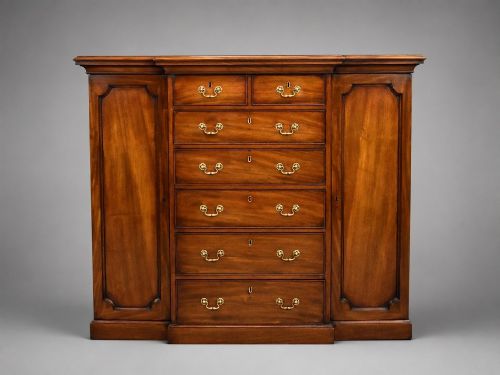
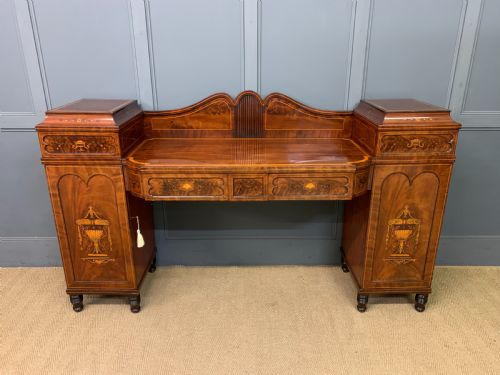
The form typically pairs side pedestals with a central serving section, often enhanced by brass galleries, brass feet, and inlaid details. Mahogany dominates the selection, appearing in plain, figured, and flame veneers.
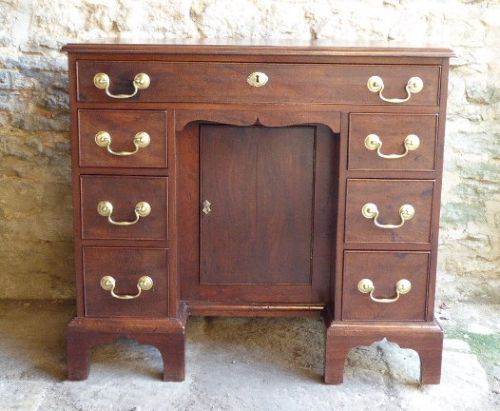
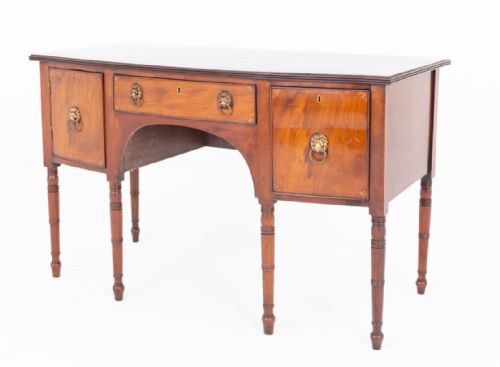
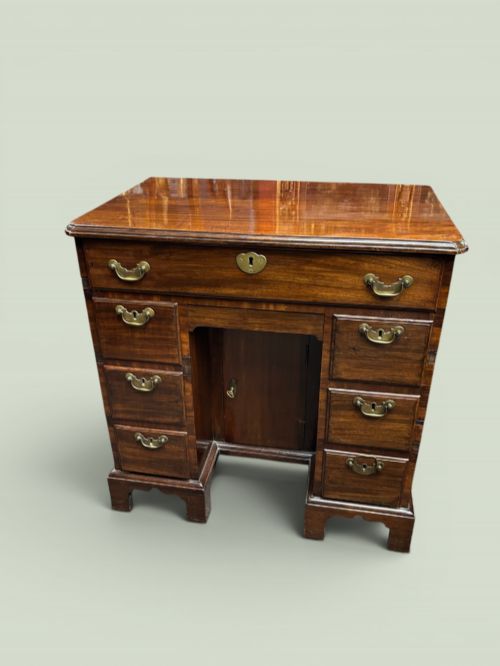
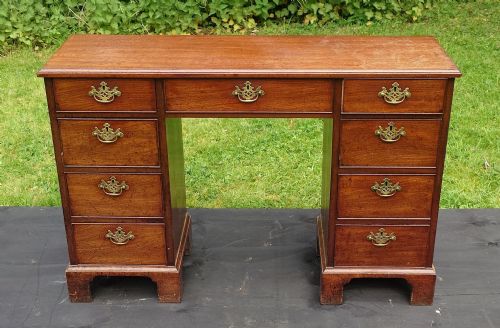
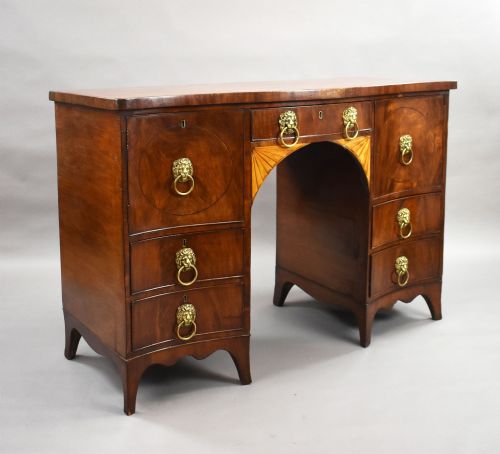
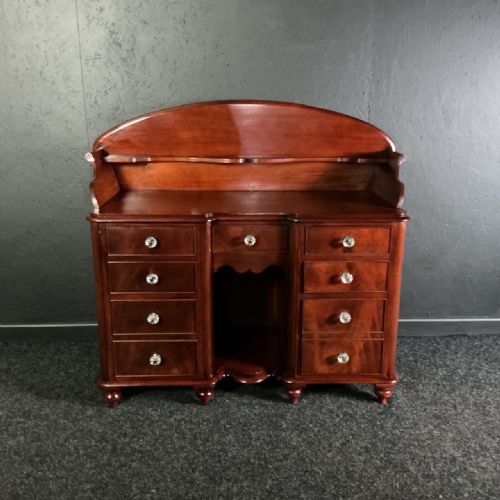
Alongside orthodox pedestal sideboards, the evidence includes related serving tables, desks, and washstands from the eighteenth and nineteenth centuries. These pieces reflect the functional demands of historic dining rooms and libraries.
Distinguishing quality across examples
Quality reveals itself in the selection of the timber grain, particularly the depth and movement found in flame mahogany veneers. Finely figured surfaces and precise boxwood or satinwood stringing elevate a piece above standard utility items.
The integrity of the original brasswork, including galleries and mounts, indicates the original grade of manufacture. Construction details such as drawer linings and the sharpness of carved or turned feet separate exceptional examples from simpler workshop output.
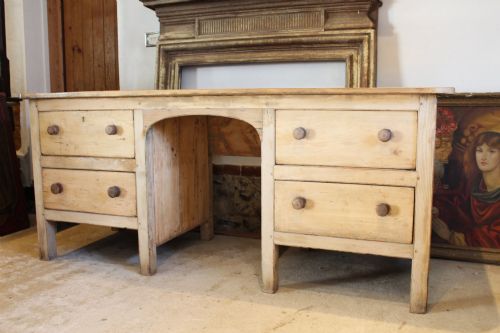
One listed desk doubles as a kitchen island, proving eighteenth-century furniture was just as willing to multitask as we are.
Gillows·John Gregory London·H Mower & Stephenson
The Georgian Pedestal Sideboard Table Glossary
- Pedestal sideboard
- A grand dining room storage unit consisting of two distinct pedestals joined by a lower serving table or recessed board. This format emerged during the late eighteenth century to serve formal meals.
- Flame mahogany
- A highly figured wood veneer derived from the branch junctions of the mahogany tree. The distinctive ripple pattern resembles flickering flames across the surface.
- Brass gallery
- A low metal rail fitted around the upper rear edge of a sideboard or serving table. It originally prevented serving dishes and silverware from sliding off.
- Inlay
- A decorative technique where contrasting woods or metals are inserted into hollowed recesses on the furniture surface. Boxwood and satinwood are common light inserts against dark mahogany.
- Stage-back
- A raised tier at the rear of a sideboard used for displaying plate and serving vessels. This feature appears frequently in Scottish examples from the Georgian period.
Georgian Pedestal Sideboard Table: Frequently Asked Questions
How do I date a pedestal sideboard?
Dating relies on timber selection, handle styles, and construction traits recorded across the Georgian and Regency periods. Cabinetmakers shifted from heavy structural timbers to elaborate flame veneers and brass gallery additions as fashion evolved.
Secondary woods inside drawers and the presence of revival markers help differentiate original eighteenth-century pieces from late nineteenth-century reproductions.
Were these tables used for dining?
These pieces served as central stations for carving meat, holding silver, and staging wine bottles during formal meals. The pedestals often contained plate warmers or cellarets for cooling wine.
Their substantial proportions allowed dining rooms to operate efficiently before fitted kitchen cabinetry became standard in British homes.
What is a stage-back sideboard?
A stage-back sideboard incorporates an elevated tier at the rear surface for displaying silver platters and porcelain. This regional variation, seen in Scottish examples, added vertical presence to the dining room.
The stepped ledge provided extra display space without increasing the overall floor footprint of the furniture.
How do I care for mahogany surfaces?
Mahogany requires stable room humidity and protection from direct sunlight to prevent the timber and veneer from drying out. Regular dusting with a soft cloth maintains the natural lustre of the wax finish.
Harsh chemical cleaners must be avoided to preserve the historic patina developed over centuries of use.
What is the difference between Georgian and revival pieces?
Original Georgian pieces date from the eighteenth and early nineteenth centuries, displaying period-specific construction methods and wear. Revival items, produced during the Victorian and Edwardian eras, copied these earlier styles using contemporary workshop tools.
Both categories utilise mahogany, but internal timber examination often reveals the chronological gap between original production and later interpretations.