

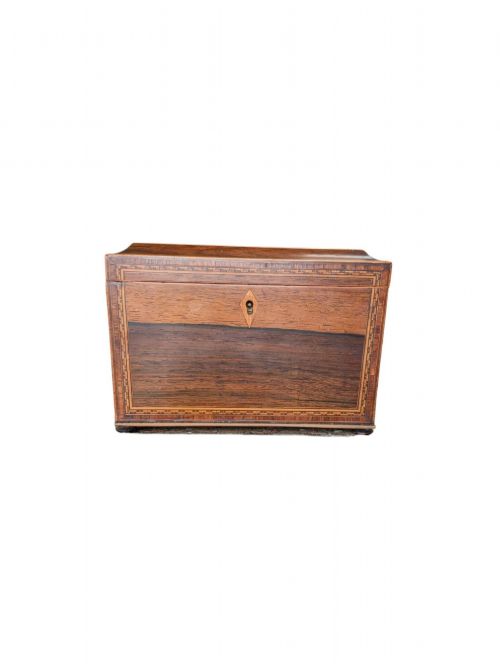


Georgian Parquetry Box
These georgian parquetry box examples combine geometric wood veneers with period utility, offering collectors rich surface patterns in functional forms.
Georgian Parquetry Box
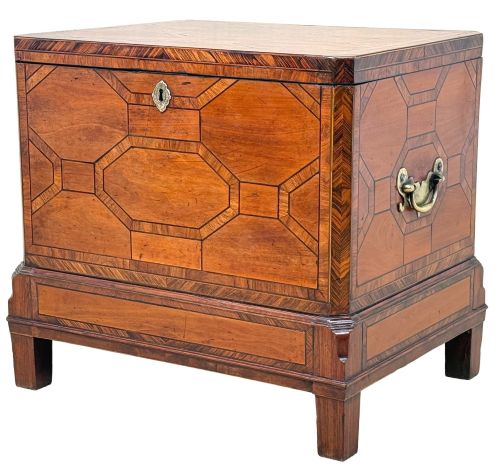
A georgian parquetry box is a container surfaced with geometric wood veneers, spanning tea caddies, writing slopes, snuff boxes, and cellarettes. When you search for a georgian parquetry box, you encounter pieces designed for storage or social rituals, originating from the Georgian, Regency, and Victorian eras. These containers serve specific domestic functions while displaying intricate surface decoration built from contrasting timbers.
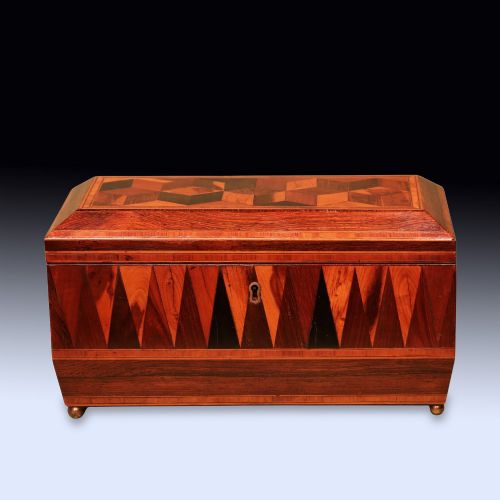
The versions most commonly met on this page include tea caddies and tea chests constructed during the Georgian and Regency periods. Makers also produced games boxes, sewing baskets, and writing boxes using similar veneering techniques. Forms range from simple rectangular caddies to sarcophagus shapes and fitted writing slopes.
Materials and construction
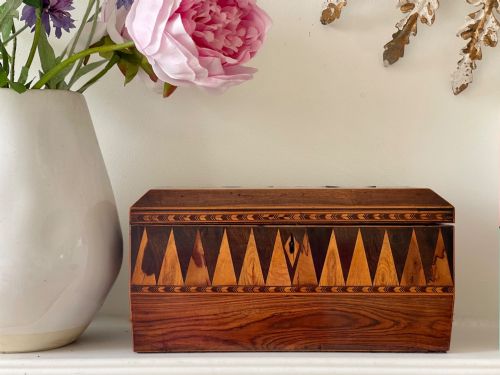
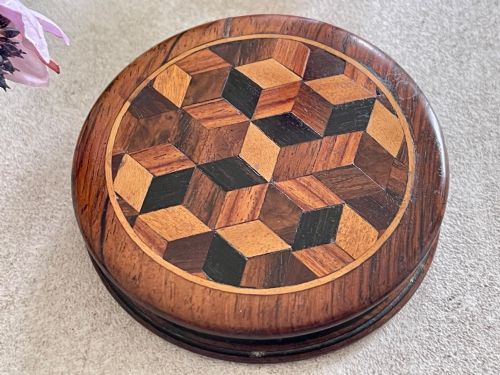
Craftsmen built these containers using a solid wood carcass overlaid with mixed wood veneers, including rosewood, satinwood, kingwood, walnut, and boxwood. Tunbridge Ware inlay frequently appears across the surfaces, creating mosaic-like pictorial or geometric designs from natural specimen woods. Brass elements occasionally supplement the wooden construction on hinges, escutcheons, and handles.
Veneers were sawn by hand and meticulously fitted together to form geometric parquetry patterns across lids and panels. Cabinetmakers selected timbers for their contrasting colours and grain patterns, arranging light and dark woods to create optical depth. Interiors often featured fitted compartments, mixing wood sections with lined storage spaces.
Georgian Parquetry Box Retail Price Guide 2026
Typical asking prices for georgian parquetry box among the pieces listed under this phrase on Sellingantiques today, from the lower quarter to the upper quarter. They describe what is for sale here now, not the wider market.
Object forms on this page include tea caddies, tea chests, snuff boxes, cellarettes, sewing baskets, writing slopes, and games boxes.
Judging quality and execution
Quality in these pieces rests on the precision of the veneer work and the complexity of the geometric layout. Tunbridge Ware elements executed with minute specimen woods demonstrate higher craftsmanship than simpler banding. The choice of primary timbers, such as figured walnut, kingwood, or burr yew, distinguishes finer commissions from standard production.
Structural integrity and the survival of original fitted interiors further separate examples. Boxes retaining their internal compartments, original brassware, and stable veneer surfaces represent superior survival rates. The harmony between exterior parquetry and internal arrangement indicates the skill of the original workshop.
The Georgian Parquetry Box Glossary
- Parquetry
- A geometric mosaic of wood veneers arranged in repeating patterns such as cubes or triangles. This technique decorates box lids and panels.
- Tunbridge Ware
- Woodware decorated with mosaic patterns made from tiny pieces of naturally coloured specimen woods. It often appears on tea caddies and boxes from the Regency and Victorian periods.
- Cellarette
- A lockable container used for storing bottles of wine or spirits. Georgian examples often featured robust timber construction and fitted interiors.
- Sarcophagus form
- A box shape featuring a sloping lid and inverted curve profile, popular during the Regency period. This silhouette enhanced the display of figured veneers.
- Specimen woods
- Natural timbers chosen for their distinct colours and grains, utilised in parquetry and Tunbridge Ware. Examples include boxwood, satinwood, and kingwood.
Georgian Parquetry Box: Frequently Asked Questions
What were these boxes used for?
These boxes served practical domestic functions, primarily holding tea, writing materials, sewing equipment, or tobacco. Tea caddies protected expensive imported leaves, while writing slopes provided a portable desk surface.
Interior compartments kept small items organised and secure. Many featured locking mechanisms to protect valuable contents.
How do I date a parquetry box?
Dating relies on stylistic clues, timber choices, and construction methods. Georgian and Regency pieces often exhibit distinct box shapes and specific veneer combinations like satinwood and rosewood.
Interior fittings and hardware also help determine the period. Examining the carcass construction provides further evidence of the era of manufacture.
What is Tunbridge Ware inlay?
Tunbridge Ware inlay consists of microscopic pieces of naturally coloured woods assembled to form detailed geometric or pictorial motifs. Craftsmen glued these wood blocks together before slicing them thinly to apply to box surfaces.
This meticulous technique created intricate surface designs characteristic of specific 19th-century English workshops.
How should I care for antique wood veneers?
Protect antique veneers by keeping boxes away from direct sunlight and fluctuating humidity. Stable environmental conditions prevent the wood from drying out and the veneers from lifting.
Clean surfaces gently with a dry or barely damp cloth. Avoid harsh chemical polishes that can damage historic finishes.