
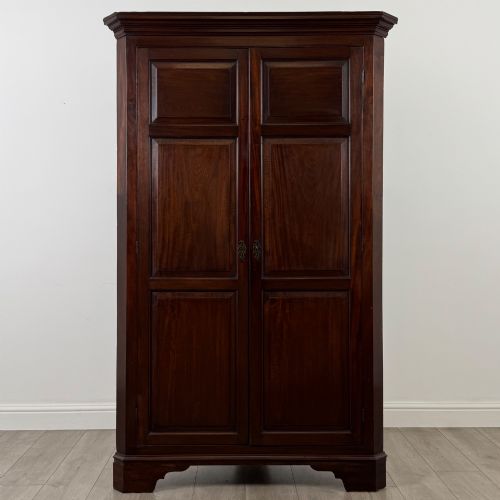
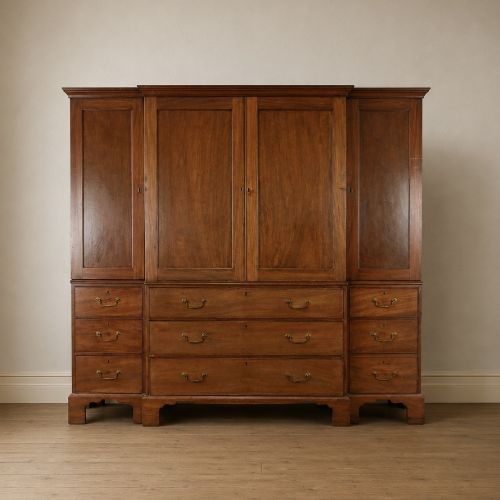
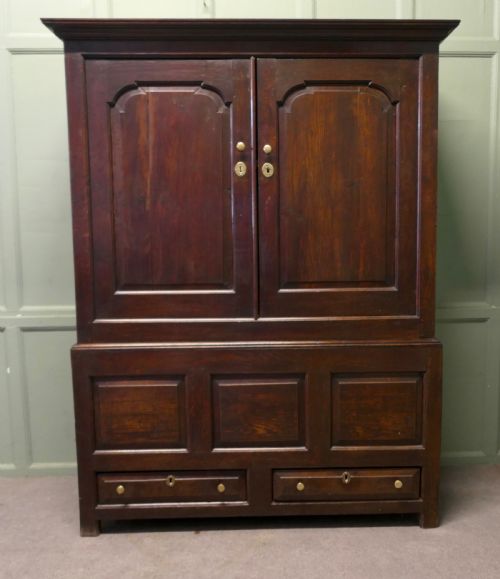
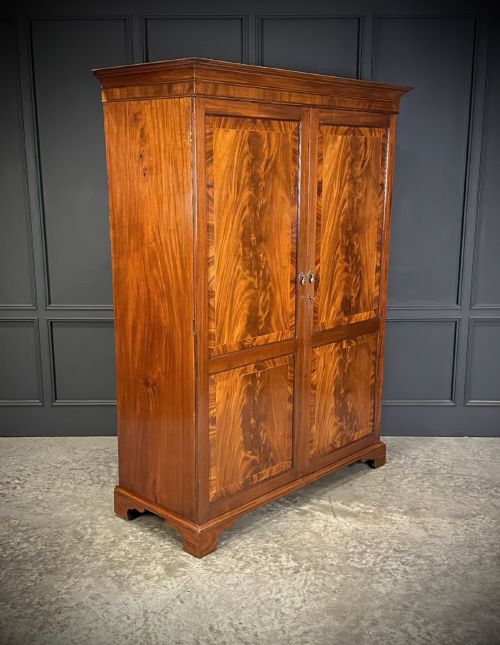
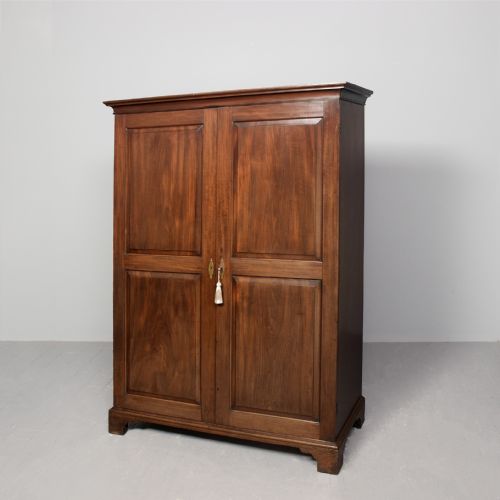


Georgian Panelled Wardrobe
A georgian panelled wardrobe is a sturdy timber storage piece designed to keep garments pressed and linens tidy.
Georgian Panelled Wardrobe
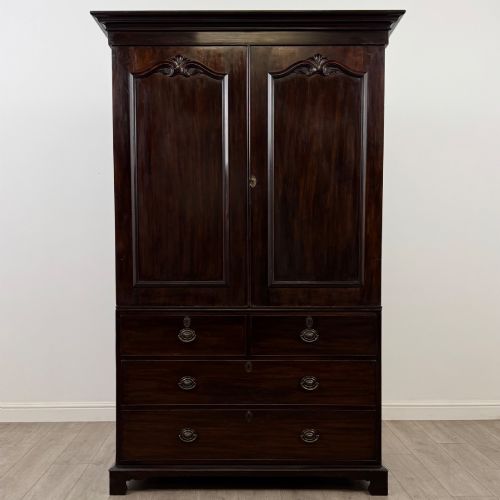
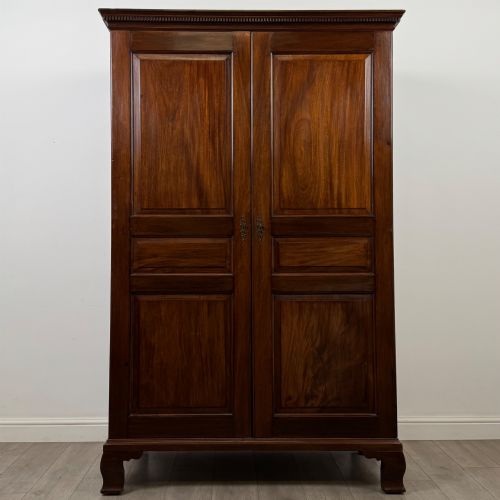
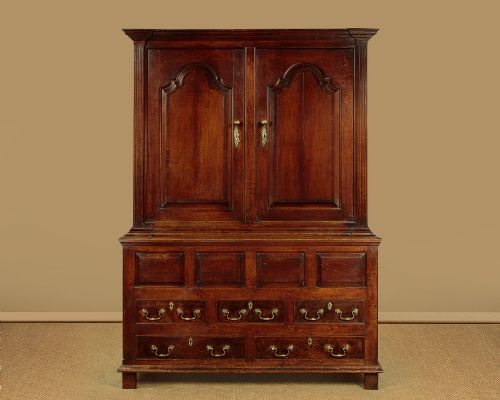
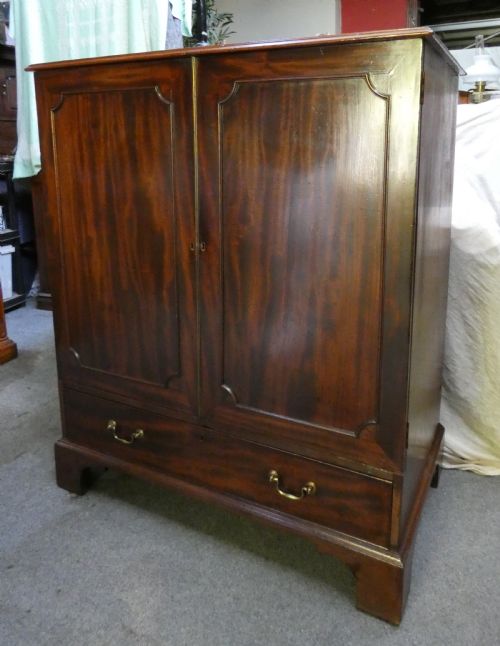
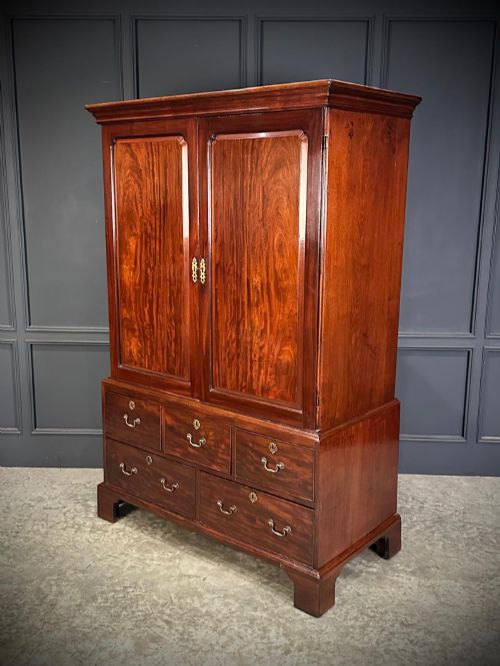
A georgian panelled wardrobe brings substantial architectural presence and deep interior storage to a bedroom or hallway. These pieces appear in various structural formats, including tall hanging cupboards, linen presses with sliding trays, and knockdown pine designs.
The materials span native and imported timbers, with oak and mahogany dominating the selection alongside pine and walnut. Many examples date from the eighteenth century through to the nineteenth century, reflecting regional vernacular traditions across England, Wales, and the Channel Islands.
Construction and timber selection
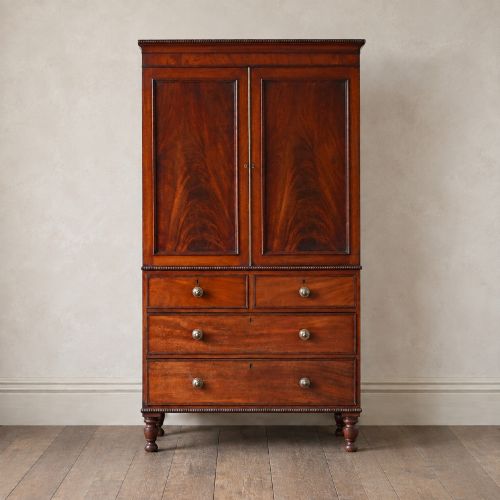
Cabinet makers utilised solid oak and dense mahogany for structural integrity, often incorporating frame and panel construction to allow timber to expand and contract naturally. Flame mahogany veneer and rosewood crossbanding appear on higher status examples to create decorative grain patterns.
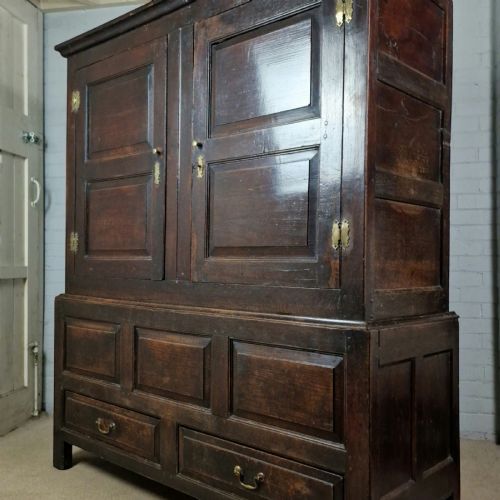
Pine versions employ knockdown construction using wooden pegs or wedges, allowing the carcass to be dismantled easily for transport. Iron and brass hardware, including butterfly hinges and working locks with keys, secure the doors and internal compartments.
Materials range from utilitarian painted pine and raw oak to highly figured flame mahogany veneers enhanced with rosewood crossbanding and brass hardware.
Evaluating proportion and timber grade
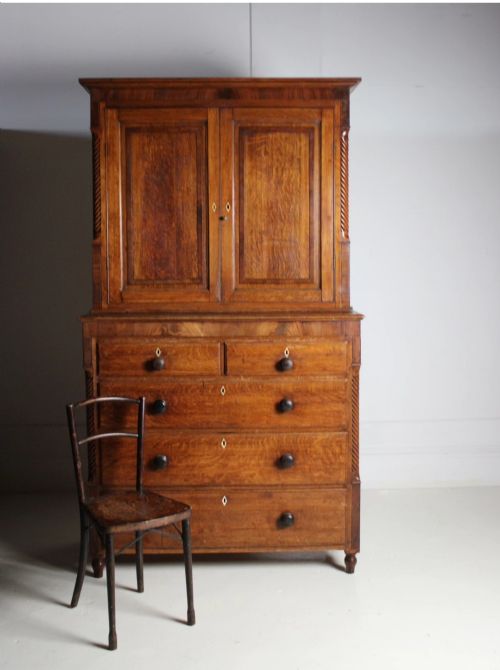
Quality rests upon the selection of timber figures and the crispness of the panel mouldings. Finely figured flame mahogany and richly patinated golden oak demonstrate superior material choice compared to utilitarian painted pine.
Proportion and original internal arrangements dictate desirability, with breakfront facades and unbroken cornice mouldings commanding attention. The survival of original brasses, sliding linen trays, and structural feet elevates an example.
The Georgian Panelled Wardrobe Glossary
- Linen press
- A hybrid storage piece featuring sliding trays or shelves in the upper section above a chest of lower drawers. These cabinets were designed specifically to keep household linens flat.
- Breakfront
- A cabinet design where the central section projects forward from the flanking wings. This architectural arrangement creates depth and shadow across the facade.
- Crossbanding
- A narrow strip of veneer laid perpendicular to the grain of the primary surface. This technique frames the drawer fronts and door panels with a contrasting border.
- Knockdown
- A piece of furniture built to be disassembled into flat panels for ease of movement. These carcasses rely on pegged joints or interior bolts rather than fixed glue.
- Livery cupboard
- A traditional storage carcase originally intended for food or garments. These sturdy units typically feature panelled doors and ventilation piercings.
Georgian Panelled Wardrobe: Frequently Asked Questions
What is a linen press?
A linen press combines a hanging wardrobe or sliding shelf section with drawer storage below. These units held household textiles flat before modern folding methods.
Many examples feature panelled doors enclosing interior trays, while others provide vertical hanging space for garments.
How do I assemble knockdown wardrobes?
Knockdown wardrobes use interlocking panels secured with wooden pegs or internal wedges rather than permanent glue. This allows the heavy timber frame to be dismantled for transport.
Careful alignment of the original numbered or lettered joints ensures the cabinet stands square during reassembly.
Are these wardrobes made of solid wood?
Most carcases utilise solid native timbers like oak and pine for structural strength. Mahogany versions frequently combine solid framing with decorative veneers applied to the panels.
Secondary woods such as deal or cedar often appear on drawer linings and interior divisions.
How do I care for antique pine?
Pine surfaces respond best to traditional beeswax applied sparingly with a soft cloth to nourish the dry timber. Avoid placing these pieces near direct heat sources to prevent timber splitting.
Regular polishing maintains the protective barrier against dust and everyday handling.