
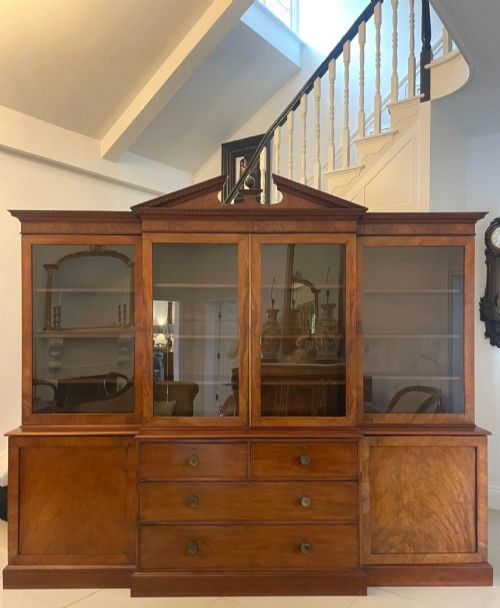
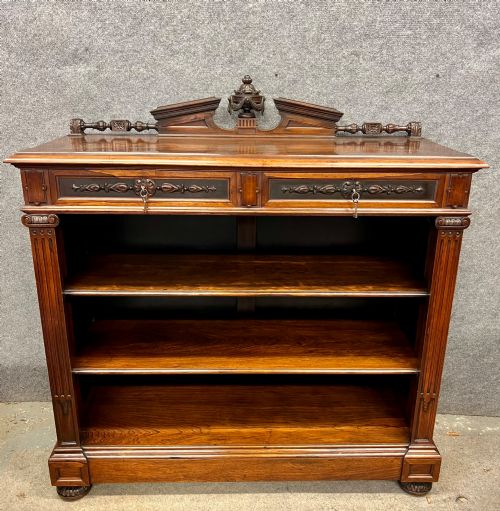
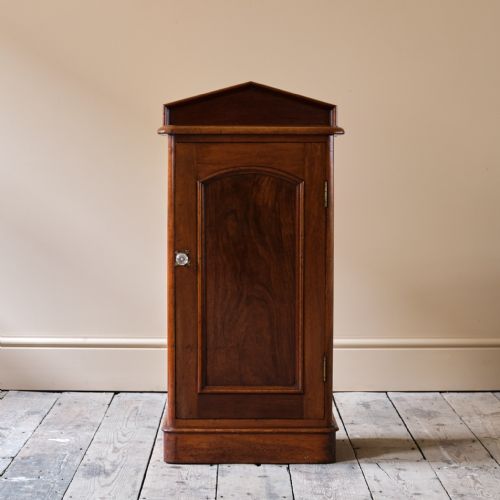
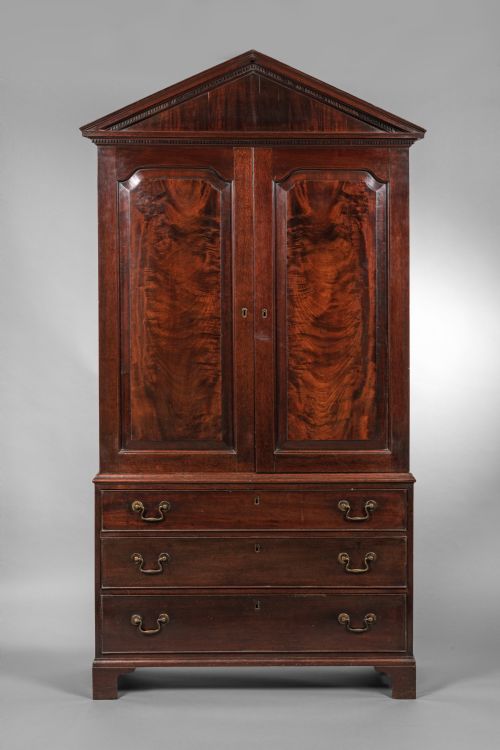


Pediment Top Cabinet
These pediment top cabinet examples are commanding wooden storage pieces built to display and house books or household goods, offering stately architectural presence.
Pediment Top Cabinet
When searching for a pediment top cabinet, you encounter substantial wooden storage furniture spanning the eighteenth and nineteenth centuries, featuring distinct architectural crowns above glazed or panelled doors. The selection includes bureau bookcases, secretaire bookcases, corner cupboards, china cabinets, and tall breakfront bookcases.
Georgian and George III pieces dominate the records, alongside Victorian and Sheraton Revival examples, demonstrating how cabinetmakers adapted classical architectural forms for domestic interiors. Most pieces utilise rich hardwoods like mahogany and walnut, while smaller forms such as pot cupboards and bedside cabinets appear alongside monumental library bookcases.
Construction and materials
Makers relied primarily on solid and veneered mahogany, complemented by walnut, satinwood, and oak for structural integrity and interior elements. These timbers were selected for their durability and grain patterns, providing the foundation for both simple corner cupboards and complex breakfront bookcases.
Brass hardware functioned both as structural reinforcement and decorative accent on doors and drawers, while glazed panels protected collections of books and china. Inlaid decoration in satinwood distinguishes later revival styles, adding contrast to the darker primary cabinet woods.
Every serious book collection deserves a towering architectural crown to look important.
Assessing quality in construction and design
Quality rests upon the architectural proportion of the pediment crown and the selection of timber figures across primary facade surfaces. Superior pieces demonstrate meticulous joinery in the assembly of large breakfronts and fitted bureau interiors.
Refinement in secondary details, such as the crispness of inlaid satinwood or the handling of brass fittings, separates standard utilitarian storage from exceptional cabinet work.
GILES GRENDY
The Pediment Top Cabinet Glossary
- Pediment
- The triangular or arched architectural ornament crowning the top of the cabinet facade. This classical feature draws inspiration from ancient building design.
- Breakfront
- A large cabinet design where the central section projects forward from the flanking wings. This creates depth and visual rhythm across the piece.
- Bureau bookcase
- A dual-purpose piece combining a sloping writing flap above drawers with a shelved bookcase cabinet section above. It provides both workspace and enclosed storage.
- Secretaire bookcase
- A tall cabinet incorporating a pull-down drawer front fitted with internal small drawers and pigeonholes for correspondence. It serves a similar function to the bureau bookcase.
- Satinwood
- A pale, lustrous timber utilised for contrasting stringing and decorative inlay work during the revival periods. It brings brightness to darker mahogany surfaces.
Pediment Top Cabinet: Frequently Asked Questions
How were bureau bookcases used?
Bureau bookcases served as combined workspaces and libraries for homes. The fold-down writing flap provided a surface for correspondence and ledger work.
The upper cabinet securely housed valuable book collections behind glazed doors.
How do I identify Georgian pieces?
Georgian pieces are identified through their traditional proportions, heavy reliance on solid mahogany, and restrained classical detailing. They reflect the furniture design standards of the eighteenth century.
Cabinet construction from this era prioritises functional joinery and architectural pediments.
Where should I place a corner cupboard?
Corner cupboards are designed to fit neatly into domestic room angles, making efficient use of otherwise wasted space. They display china or books while anchoring the room's layout.
Their triangular footprint requires specific wall clearance.