
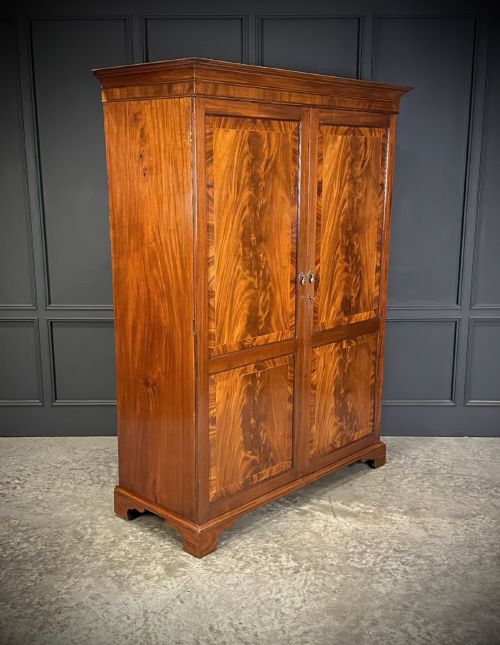
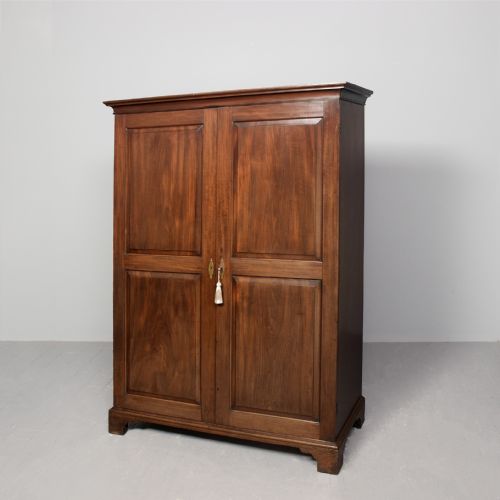

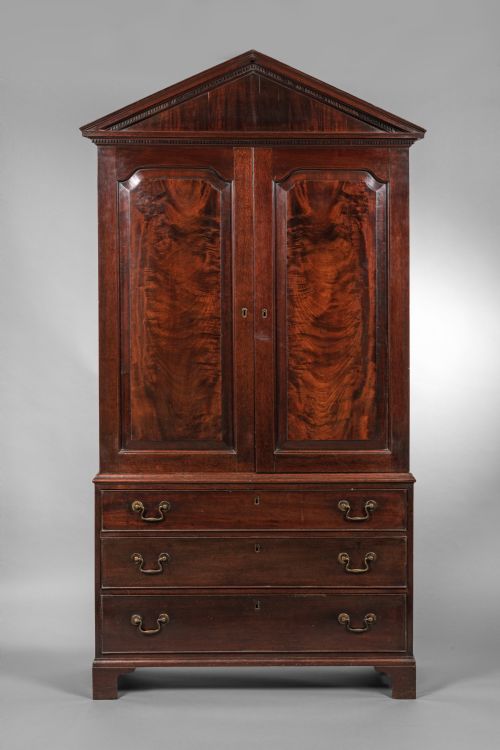
Georgian Panelled Linen Press
A georgian panelled linen press is a substantial storage piece built to hold household textiles, appearing primarily in oak or mahogany.
Georgian Panelled Linen Press
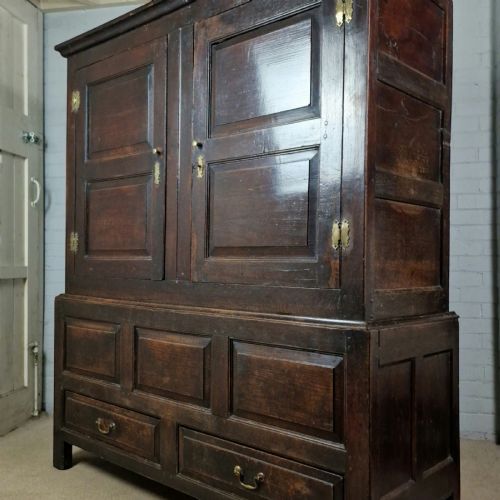
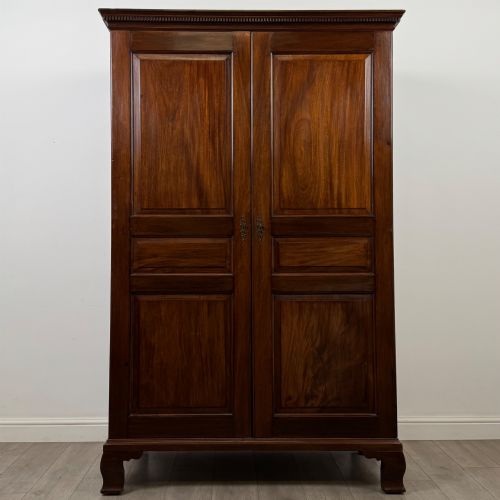
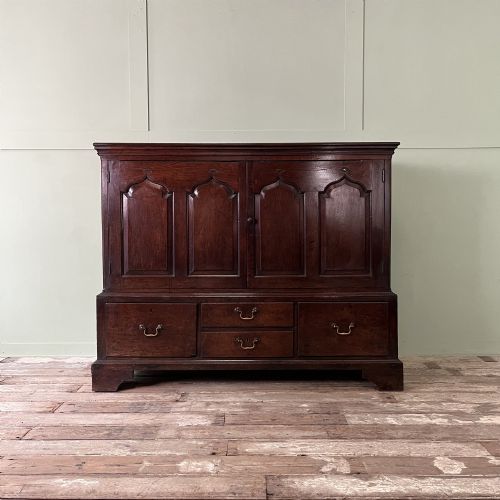
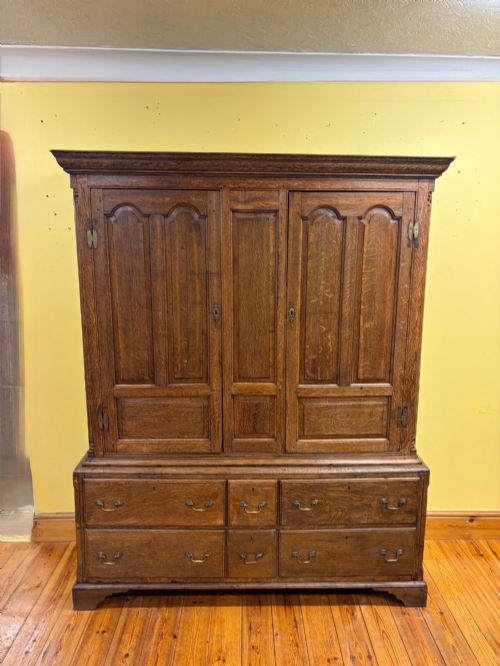
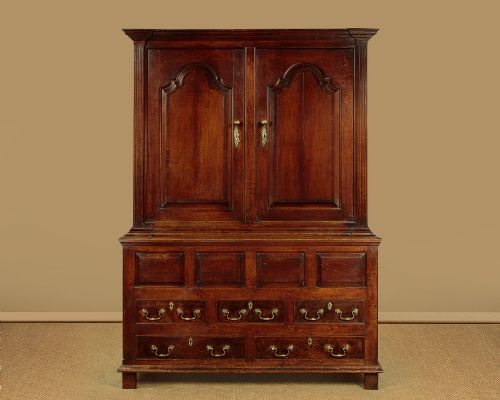
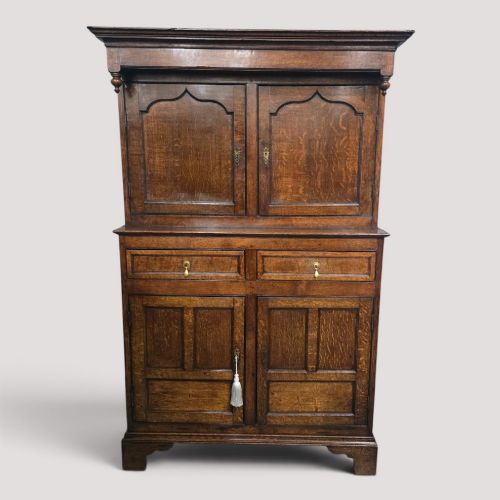
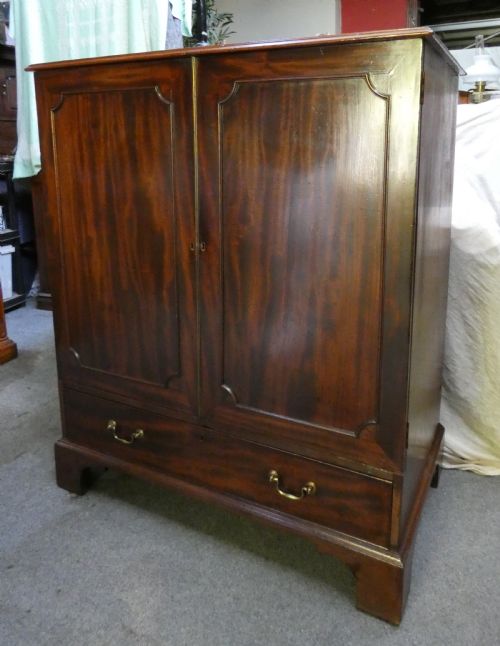
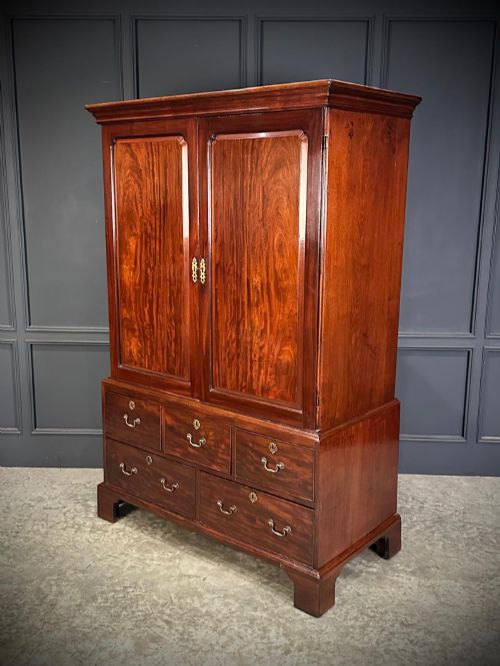
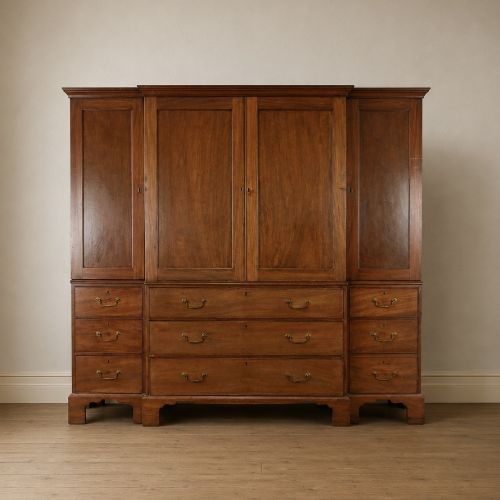
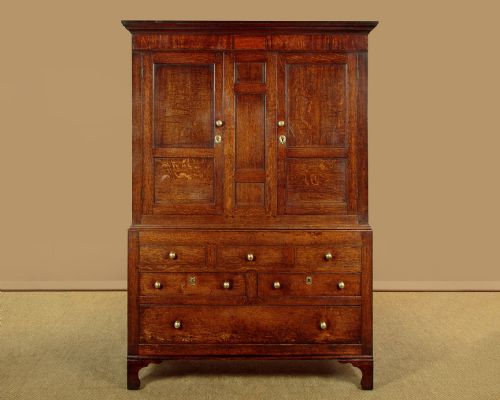
A georgian panelled linen press brings architectural presence to a room, combining upper storage shelves with lower drawer sections. You meet these primarily in oak and mahogany, often dating from the eighteenth century or the George III period.
The form spans regional country workshops and refined urban cabinet makers, including low press cupboards, housekeeper cupboards, and breakfront wardrobe variations.
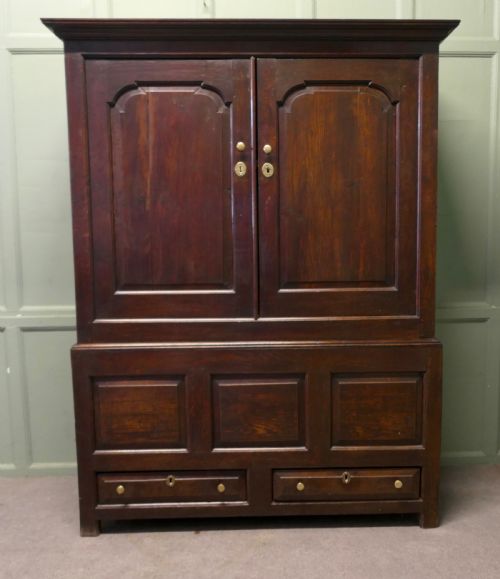
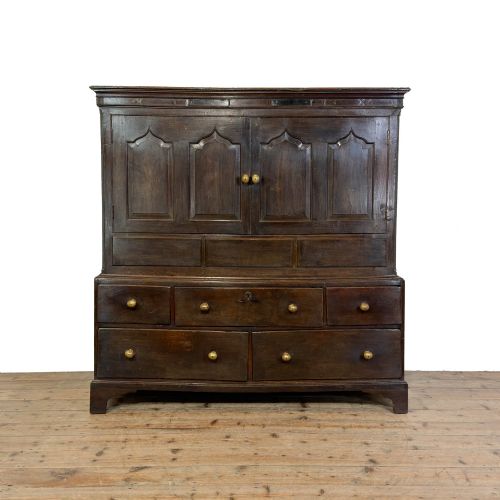
Regional examples display distinct local character, particularly Welsh and English country interpretations alongside traditional eighteenth century craftsmanship.
What varies in quality
The refinement of timber selection dictates overall quality, separating plain utility pieces from those featuring figured flame mahogany veneer or rich golden oak grain. Proportion and the crispness of architectural mouldings also define the better examples.
Original brass hardware, well preserved panel construction, and undisturbed interior tray configurations elevate an example above later alterations.
Some resilient country presses retain traces of old paint or wax applied by generations of housekeepers.
The Georgian Panelled Linen Press Glossary
- Housekeeper cupboard
- A utilitarian storage piece traditionally used in large country houses for domestic supplies and linens. These usually present a taller profile with ample internal shelving.
- Breakfront
- A cabinet design where the central section projects forward from the flanking outer sections. This arrangement adds visual depth and architectural gravitas to large wardrobes.
- Flame mahogany veneer
- A decorative wood veneer sliced from timber where the grain creates a distinctive flickering flame pattern. Cabinet makers applied this to prominent exterior surfaces for visual impact.
Georgian Panelled Linen Press: Frequently Asked Questions
What is a georgian panelled linen press used for?
These pieces provide substantial storage capacity for contemporary clothing, bed linen, and household items. The interior sliding trays and lower drawers keep garments organised.
Their impressive scale also makes them a strong focal point in a bedroom or hallway.
How do I date a georgian linen press?
Dating relies on timber choice, construction methods, and hardware styles. Eighteenth century pieces typically show hand-cut dovetails and pegged frame construction.
Regional country pieces often display simpler lines, while urban examples utilise refined mahogany veneers and classical mouldings.
Are these cupboards easy to dismantle?
Certain regional country variations were constructed as knockdown wardrobes intended for transport between rooms. Standard urban presses generally remain fixed solid structures.
Checking the construction reveals whether the carcase separates into manageable sections for moving.
What is the difference between an oak and a mahogany press?
Oak examples usually date from earlier eighteenth century country workshops and display robust grain patterns. Mahogany versions frequently reflect later George III urban cabinet making.
Both timbers offer durability, but mahogany allows for finer carved details and decorative veneer work.