
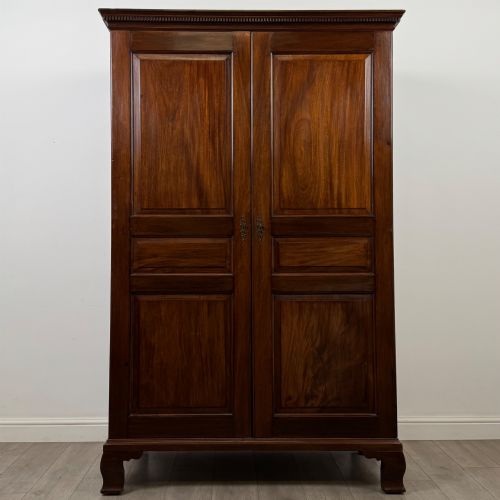

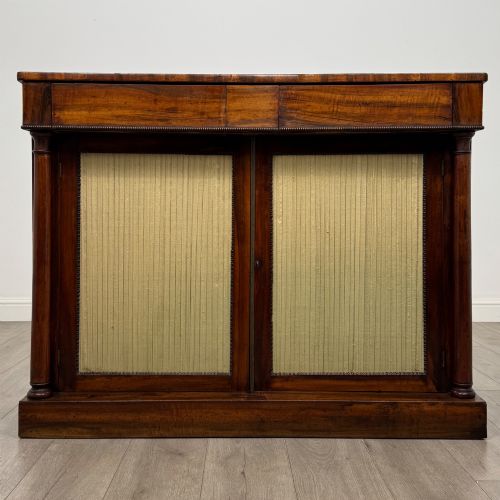
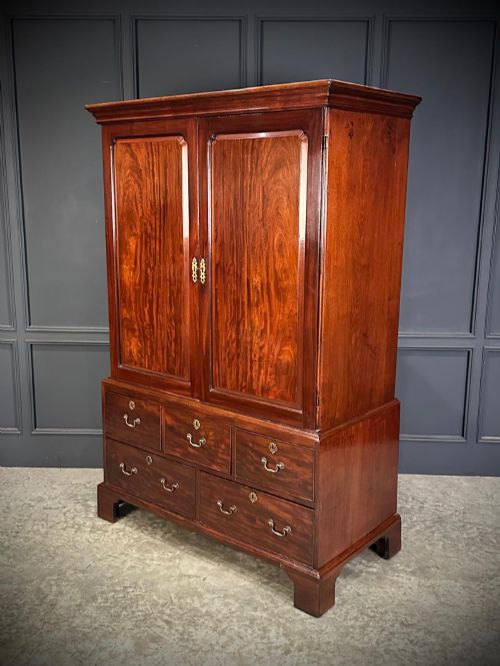
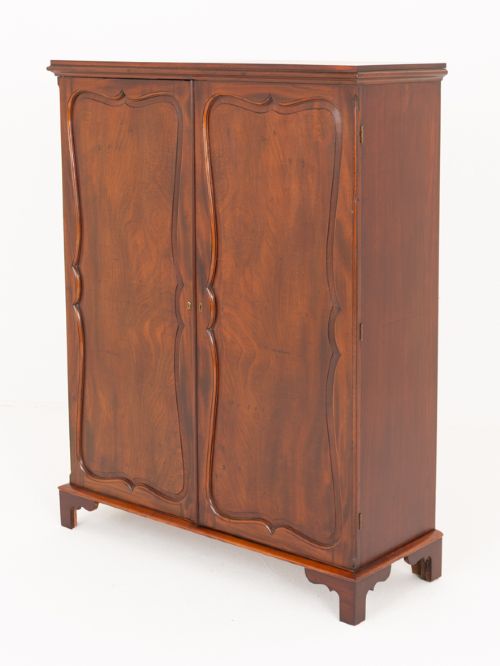
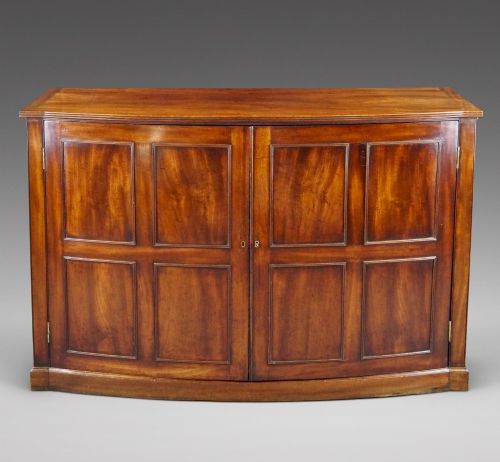
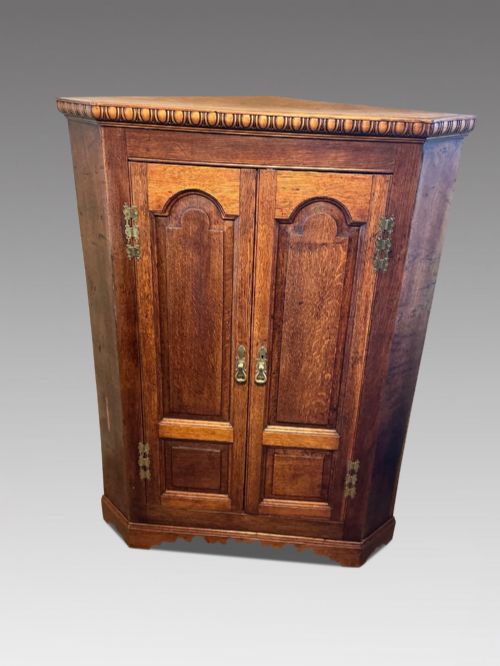

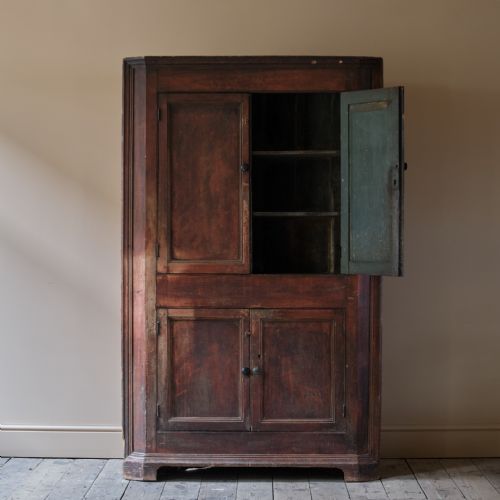
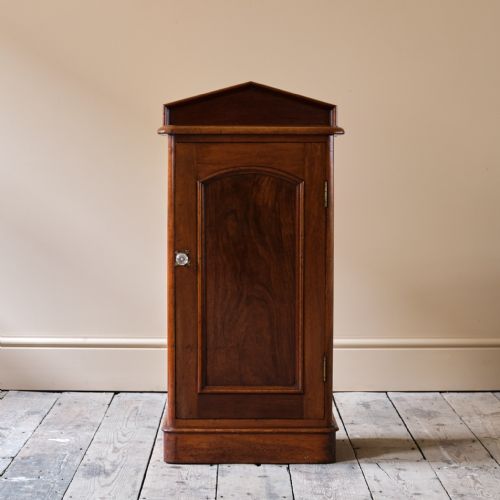
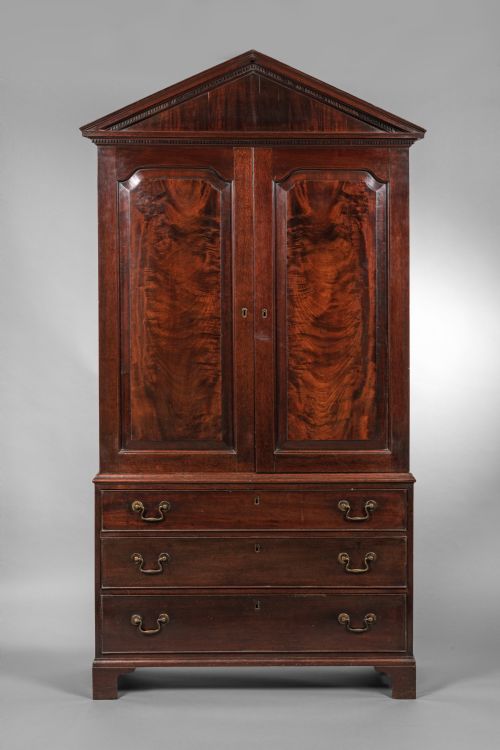
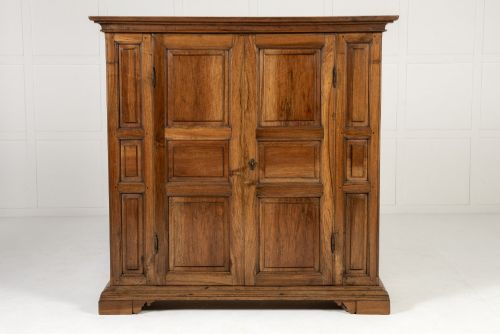
Georgian Panelled Door Cabinet
A georgian panelled door cabinet brings solid timber architecture into a room, offering deep shelving and period joinery.
Georgian Panelled Door Cabinet
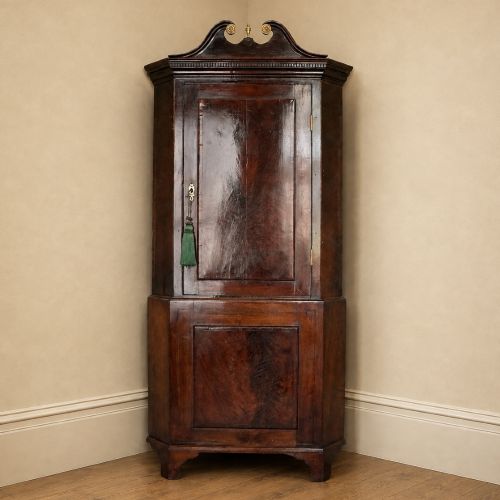
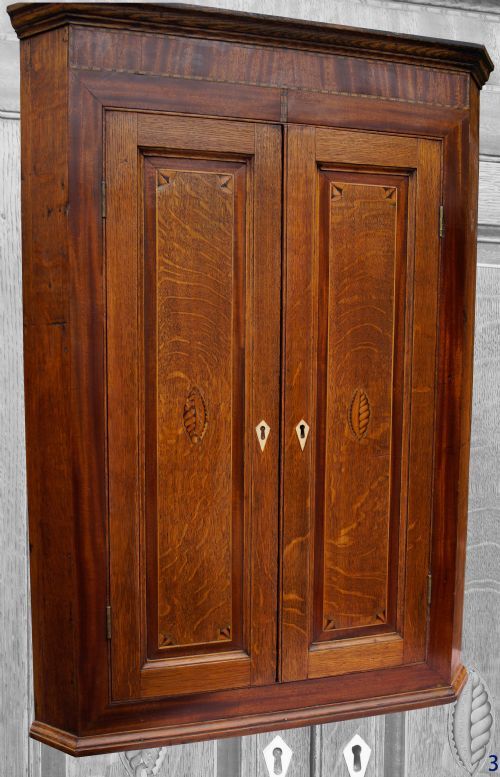
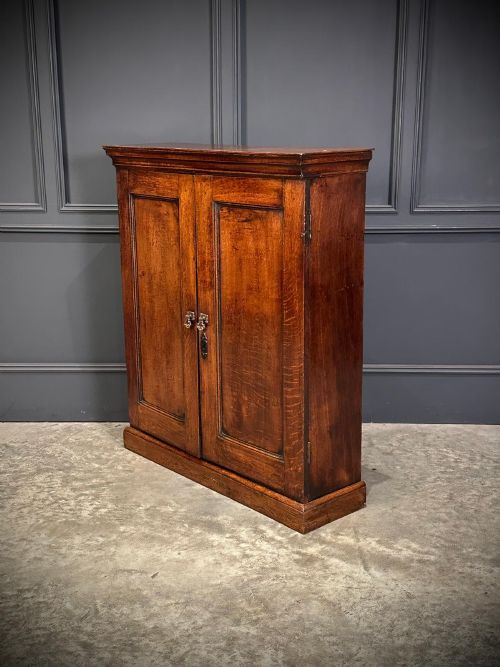
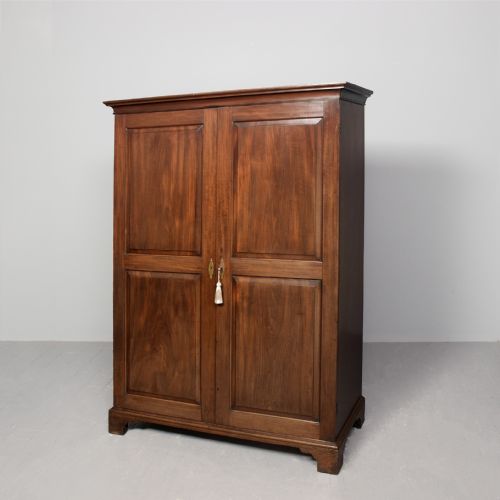
A georgian panelled door cabinet encompasses standing corner cupboards, side cabinets, and linen presses from the eighteenth and nineteenth centuries. Buyers searching for a georgian panelled door cabinet encounter timber storage furniture built for domestic interiors.
The pieces on this page span the Georgian, Regency, and Victorian periods, with oak and mahogany appearing most frequently. Corner cupboards and two-door side cabinets dominate the selection, alongside wardrobes, bookcases, and occasional painted pine items.
Originating in English country houses and town dwellings, these cabinets served to store provisions, linens, and books. Their construction reflects the practical needs of period households, combining sturdy timber frames with recessed panel doors.
How they were made
Cabinet makers built these pieces using solid oak, mahogany, pine, and walnut, often applying brass hardware for hinges and key escutcheons. The timber was seasoned and joined using traditional techniques to form sturdy carcases and framed panel doors.
Surfaces were finished with wax, polish, or historic paint layers, preserving the natural grain of the wood. Glass panels, iron fittings, and fabric linings appear on specific display and bookcase variants.
Listings feature oak, mahogany, pine, and walnut items across Georgian, Regency, and Victorian periods.
What varies in quality
The standard of timber selection and the crispness of the panel mouldings distinguish finer examples from utilitarian pieces. Dense grain figures in mahogany and well-figured quarter-sawn oak elevate the visual weight of a cabinet.
Original brass hardware, sound structural joints, and untouched surface patination determine the integrity of a piece. Altered plinths, replaced cornices, and stripped timber surfaces shift a cabinet away from its original state.
The Georgian Panelled Door Cabinet Glossary
- George III
- A stylistic period spanning the reign of George the Third from seventeen sixty to eighteen twenty, noted for refined proportions and classical cabinetwork details.
- Linen Press
- A tall two-piece storage item with upper sliding trays for textiles and lower drawers for bulkier items.
- Standing Corner Cupboard
- A floor-standing storage unit designed to fit squarely into a ninety-degree room corner, often featuring panelled lower doors and glazed upper shelves.
- Parquetry
- A geometric mosaic of wood pieces used for decorative surface inlay on fine cabinetry.
- Escutcheon
- A flat plate of brass surrounding a keyhole to protect the surrounding timber from wear.
Georgian Panelled Door Cabinet: Frequently Asked Questions
Where should I place a corner cabinet?
These cabinets fit neatly into unused room angles, making them practical for smaller spaces where a flat-wall piece would jut out too far.
Ensure the door swing has enough clearance from surrounding furniture before positioning the unit.
How do I maintain the timber surface?
Apply a natural beeswax periodically and buff gently with a soft cloth to nourish the dry wood fibres.
Keep these cabinets away from direct sunlight and modern radiators to prevent the timber from splitting.
Can these cabinets hold books and heavy items?
The sturdy oak and mahogany internal shelving easily supports heavy volumes, pantry goods, and dinner services.
Check the stability of fixed or adjustable shelf supports before loading them with dense collections.
How do I distinguish Georgian from Victorian pieces?
Georgian furniture generally exhibits restrained classical proportions and simpler cabinet profiles dating from the eighteenth century.
Victorian pieces often incorporate heavier mouldings, darker finishes, and distinct nineteenth-century construction traits.