


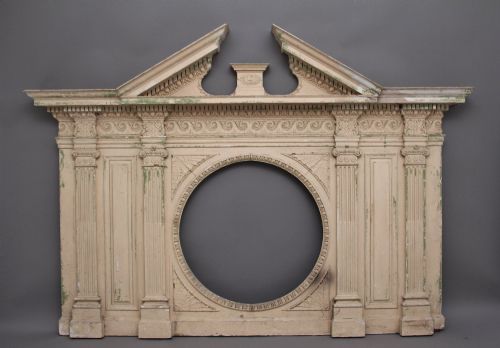


Georgian Painted Wall Mirror
A georgian painted wall mirror brings depth and colour to a room through centuries of hand-applied pigment and silvered glass.
Georgian Painted Wall Mirror
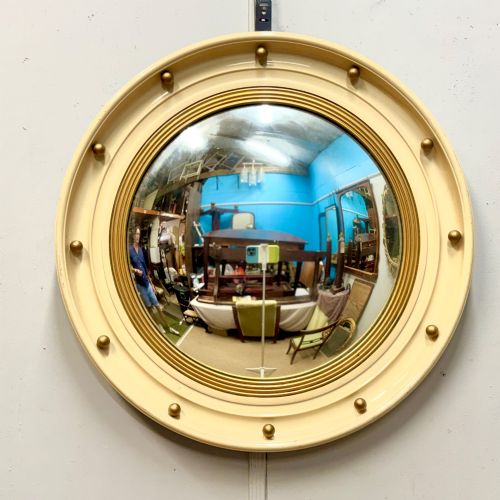
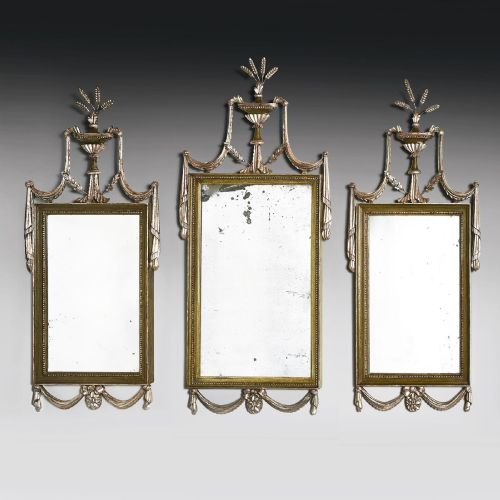
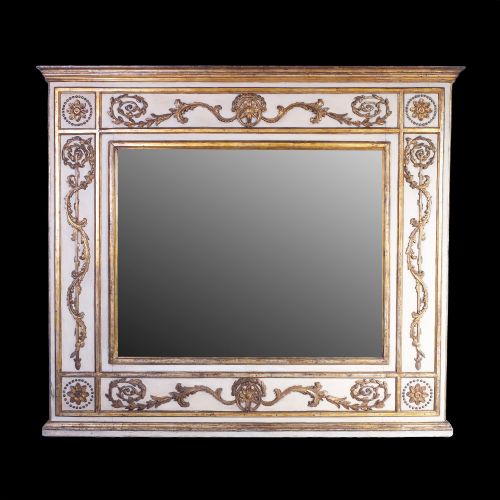
A georgian painted wall mirror encompasses wall mirrors, overmantels, and pier mirrors originating primarily from the eighteenth and nineteenth centuries, along with later revival interpretations. These pieces take various physical formats, from grand scale overmantels intended for chimney breasts to smaller round convex glass formats and tall dressing mirrors.
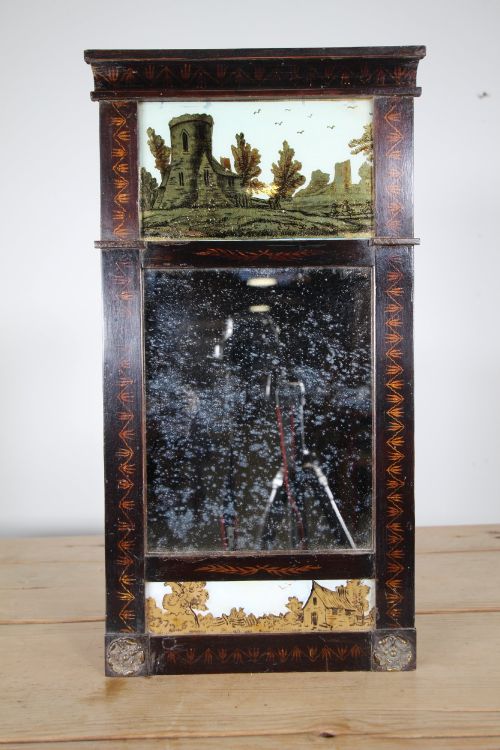
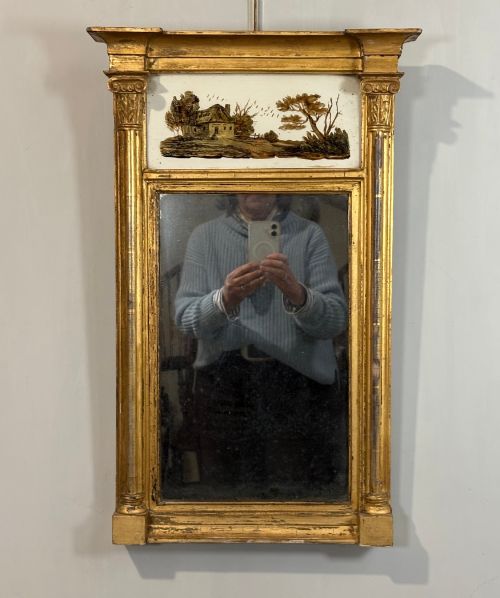
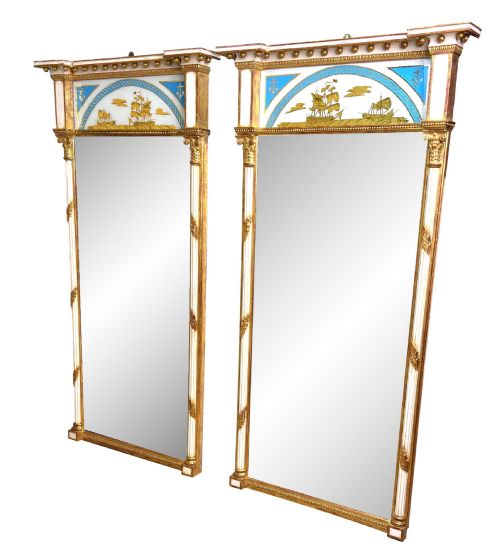
Buyers meet examples spanning the Georgian era, Regency period, and later revivals, executed in forms such as trumeau mirrors with painted panels or verre eglomise sections above the glass. The selection includes architectural frames, column-framed overmantels, and distinct regional iterations from English and continental workshops.
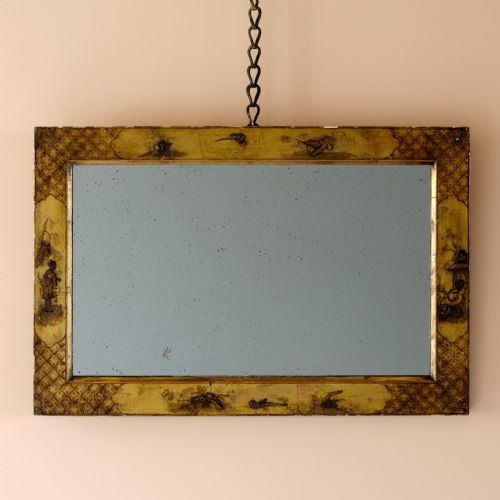
Chinoiserie and japanned finishes appear frequently, bringing black, cream, or red painted grounds decorated with hand-painted foliate or figurative scenes. These variations offer both formal pier glass designs and decorative wall formats suited to period and eclectic interiors alike.
Materials and construction
Makers built these frames using woods such as pine, maple, and walnut, often applying a layer of gesso over the timber base to receive intricate carved details and smooth painted surfaces. Gilding in gold leaf or silvered finish frequently highlights mouldings, scrollwork, and raised motifs alongside the primary paint layer.
Glass plates, including convex and divided sections, sit within frames secured by backing boards and maker labels, occasionally paired with reverse-painted glass or silk inserts. The marriage of paint, gesso, and giltwood defines the physical structure of these wall and pier mirrors.
Georgian Painted Wall Mirror Retail Price Guide 2026
Typical asking prices for georgian painted wall mirror among the pieces listed under this phrase on Sellingantiques today, from the lower quarter to the upper quarter. They describe what is for sale here now, not the wider market.
One notable maple-framed mirror preserves a reverse glass print recording an obscure naval engagement between British and American forces.
Evaluating quality and execution
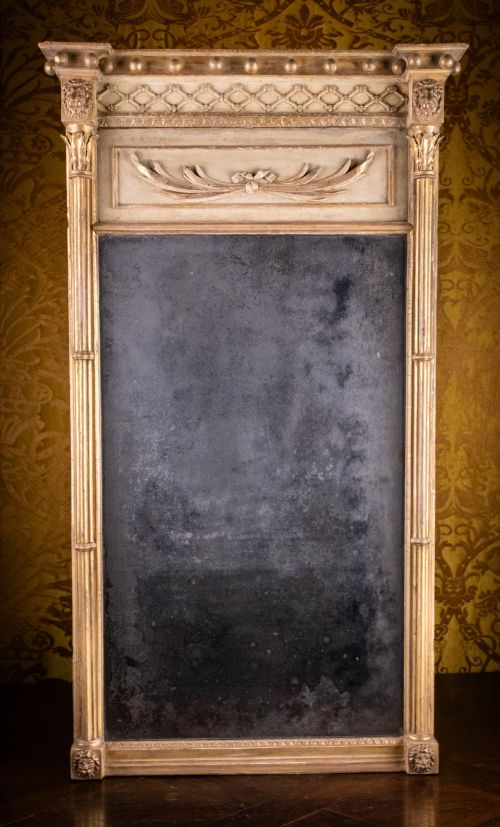
Quality rests in the crispness of the carved wood and gesso beneath the paint, where hand-tooled depth outperforms machine-moulded uniformity. Superior pieces display thoughtful proportions, balanced ornamentation such as lion masks or vitruvian scrolls, and coherent integration between the frame and the decorative glass panels.
The sophistication of the painted or japanned surface distinguishes finer examples, particularly where hand-painted Chinoiserie scenes or parcel-gilt details retain their original tone and registration. Original mirror plates and intact makers labels add significant weight to the historical integrity of the piece.
Gillows Of Lancaster
The Georgian Painted Wall Mirror Glossary
- Verre eglomise
- A process of cold painting and gilding on the reverse side of glass to produce a mirror or decorative panel. This technique often appears in the upper sections of Regency pier mirrors.
- Trumeau
- A decorative wall mirror combined with a painted panel or oil painting above the glass plate. These architectural pieces often sit directly above mantelpieces.
- Pier glass
- A tall mirror designed specifically to hang on the narrow wall space between windows. They frequently coordinate with console tables placed underneath.
- Japanned
- European imitation of East Asian lacquerwork, created by applying layered resin varnishes and painted designs on a wooden ground. Red and black japanned grounds appear on eighteenth-century style frames.
- Gesso
- A mixture of gypsum and binder applied to wood frames to create a smooth surface for gilding and painting. It allows carvers to achieve sharp relief details.
Georgian Painted Wall Mirror: Frequently Asked Questions
How do I hang a heavy antique overmantel mirror?
Heavy overmantel mirrors require professional wall anchoring directly into masonry or secure timber studs using appropriate brackets to bear the considerable weight safely.
Position the mirror at a height that reflects natural light from windows or balances the proportions of the fireplace below.
What is the difference between a pier mirror and an overmantel?
Pier mirrors were traditionally designed for the narrow wall space between windows, often standing tall and narrow to maximise light reflection.
Overmantels, by contrast, feature wider horizontal proportions built specifically to sit across the mantelpiece above a fireplace.
Are these mirrors suitable for modern interiors?
These pieces function effectively in contemporary spaces by adding historical contrast, texture, and reflected light to minimalist rooms.
Placing a painted wall mirror opposite a window opens up smaller rooms while introducing traditional craftsmanship into the scheme.