
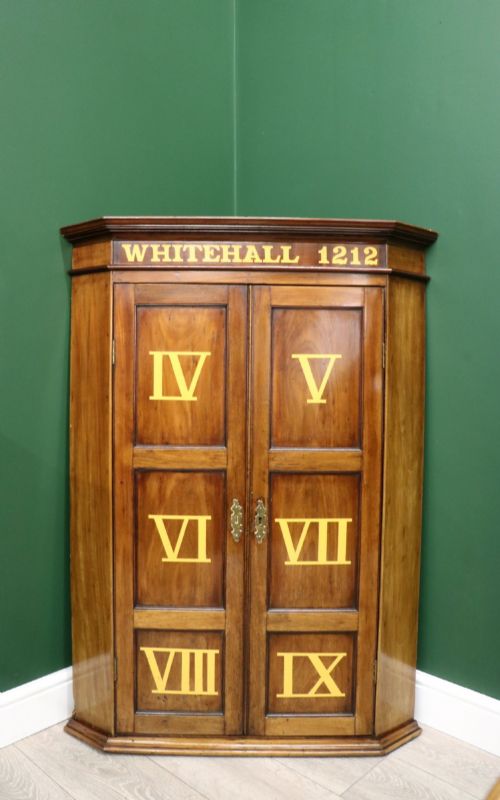
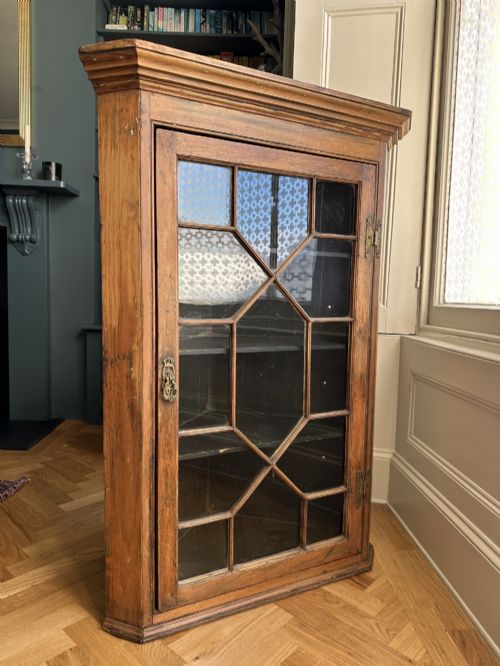
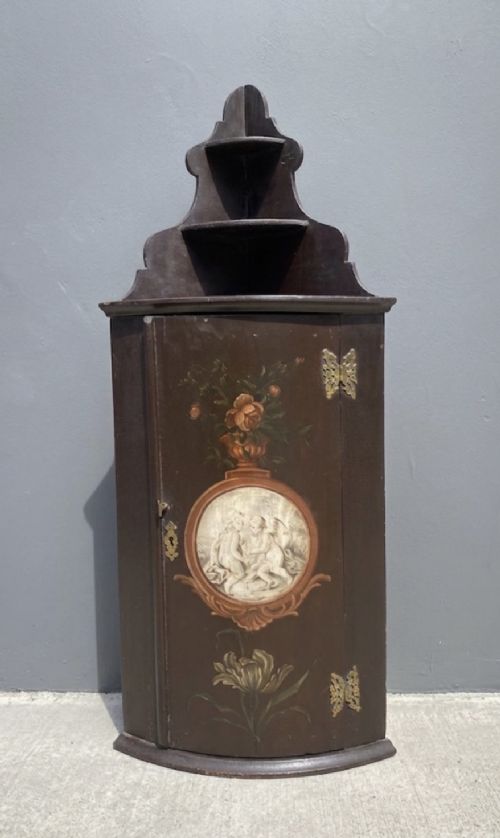

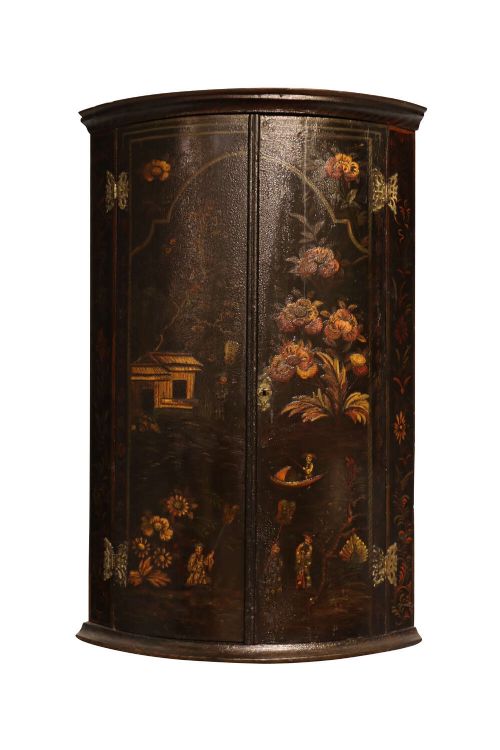


Georgian Painted Hanging Cupboard
A georgian painted hanging cupboard brings colour and utility to a room, offering wall-mounted storage shaped by eighteenth and nineteenth-century hands.
Georgian Painted Hanging Cupboard
When you search for a georgian painted hanging cupboard, you are looking at wall-mounted storage designed to fit cleanly into a room, most commonly found as corner cabinets or corner cupboards from the eighteenth and nineteenth centuries.
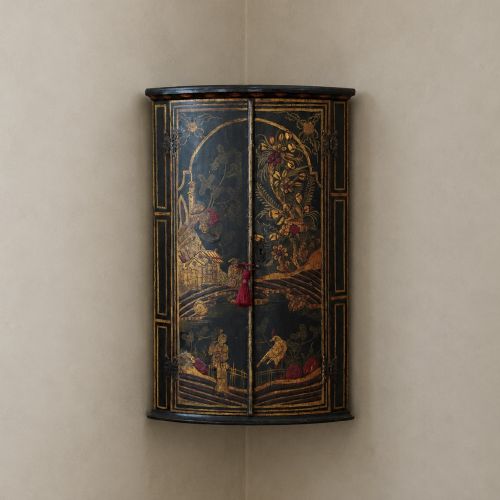
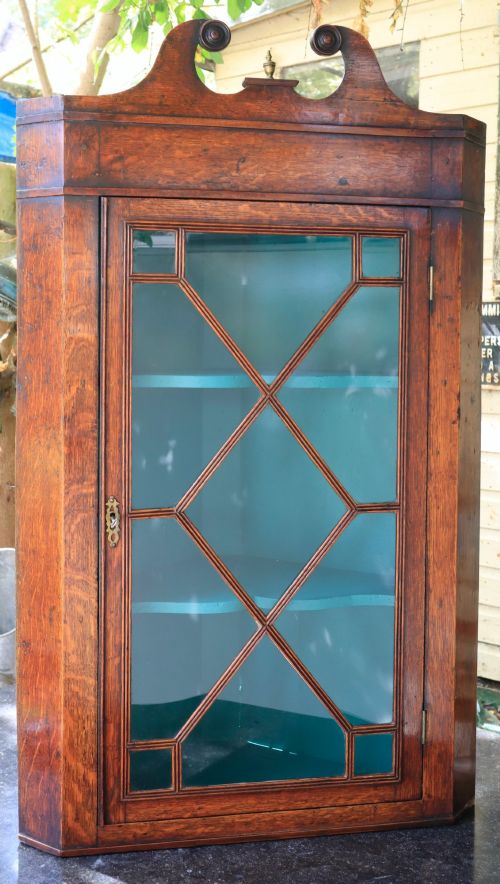
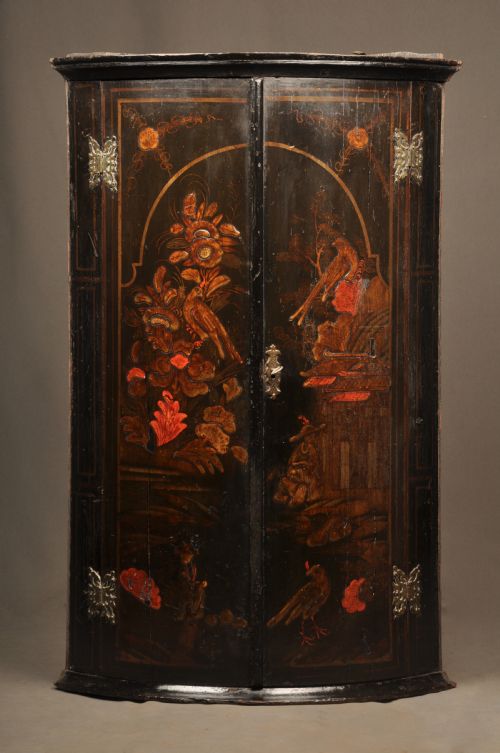
The pieces on this page span the Georgian period alongside later nineteenth-century interpretations, taking forms such as bow front japanned cabinets, wall-mounted cupboards with glazed doors, and rustic farmhouse examples.
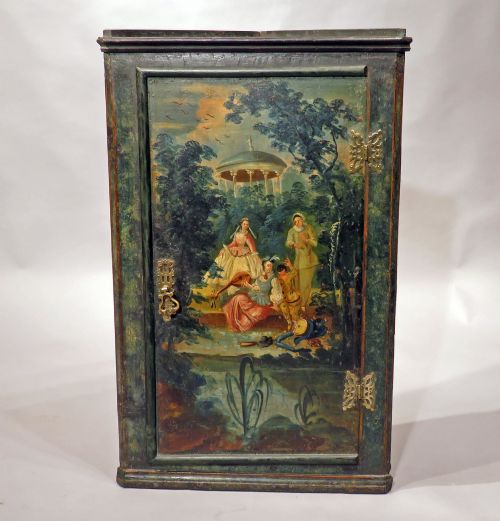
You will encounter regional variations too, including Welsh vernacular pieces alongside sophisticated lacquerwork and simpler painted pine carcasses fitted with interior shelves.
Materials and construction
Makers built these carcases primarily from pine and oak, often utilising softwood for the body while applying specialised surface treatments like paint, black lacquer, and gilt decoration.
Many examples feature japanned finishes in the Chinoiserie taste, whilst others rely on brass hardware and glass door panels to secure and display the interior.
Surfaces frequently carry traces of original paint or stripped pine finishes, recording the working methods of eighteenth and nineteenth-century joiners and decorators.
Listings span the eighteenth and nineteenth centuries, incorporating oak, pine, brass, glass, and lacquer.
What separates the finer examples
Quality rests in the survival of original decorative surfaces, where genuine early japanning and untouched painted interiors command attention above later or heavily restored coatings.
The integrity of the structural joinery dictates durability, distinguishing robustly constructed corner cabinets from pieces compromised by alterations to their hanging points or shelving.
The Georgian Painted Hanging Cupboard Glossary
- Chinoiserie
- The European interpretation of Chinese and East Asian artistic traditions, popular in furniture decoration during the Georgian era. It displays fanciful figures, pavilions, and landscapes.
- Bow front
- A convex curved cabinet front that projects outward from the wall. This shape softens the angular geometry typical of corner furniture.
- Vernacular
- Everyday furniture made by local regional craftsmen using regional materials rather than following high-style metropolitan fashions. Welsh vernacular pieces are a prime example.
Georgian Painted Hanging Cupboard: Frequently Asked Questions
Where do I hang a corner cupboard?
These cupboards mount directly onto the intersection of two walls, making use of unused corner space in reception rooms, halls, or bedrooms.
Ensure the wall construction can bear the weight of the timber carcass, particularly when loaded with heavy contents on the interior shelves.
How do I spot original paint?
Original painted surfaces show natural craquelure, subtle wear patterns, and layered pigmentation that accumulate over centuries of exposure and cleaning.
Later repainting often sits uniformly over the wood without the depth and integrated patination found on genuine period finishes.
What is the difference between japanned and painted?
Japanning involves a specific multi-layered lacquering technique designed to mimic Asian export wares, typically finished with raised gilt motifs on a dark ground.
Standard painted furniture utilises oil or water-based pigments directly on pine or oak without the resinous build-up characteristic of lacquerwork.
How were these cupboards used?
Georgian households utilised these wall-mounted pieces to store porcelain, glassware, and small valuables safely out of the way of daily traffic.
The corner placement kept floor space open while keeping prized domestic items visible and accessible at eye level.