
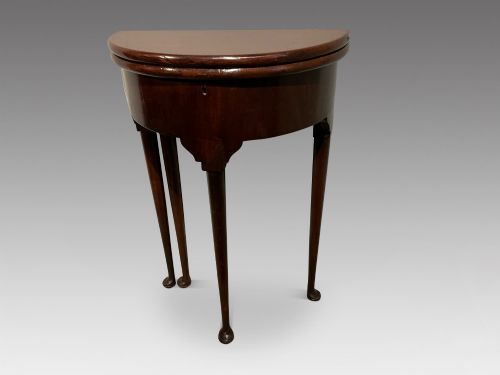
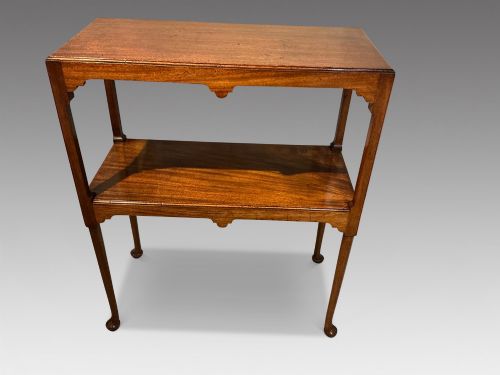
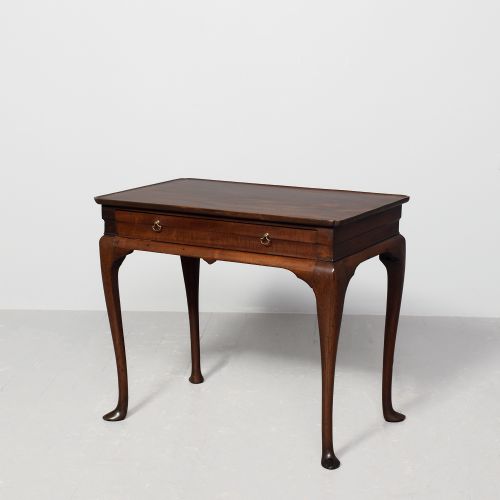
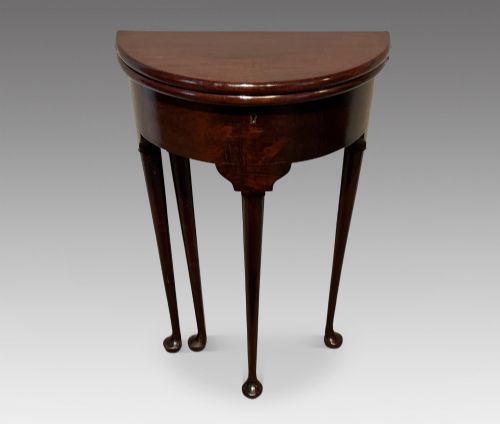
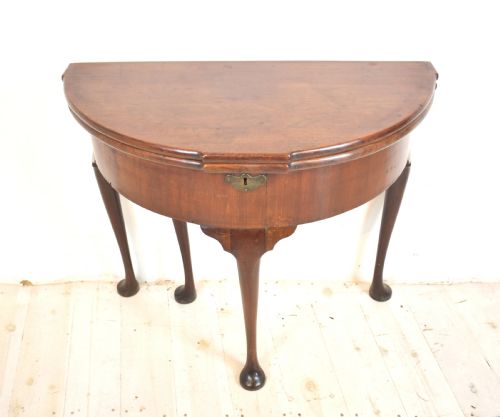
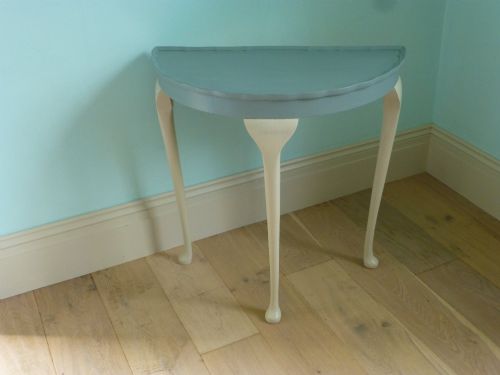
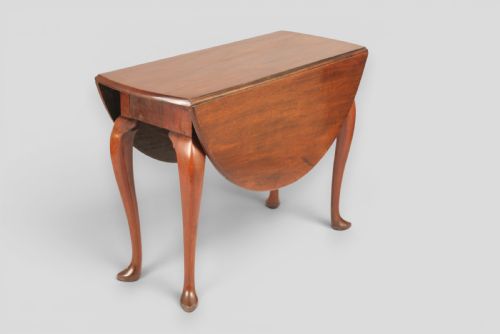
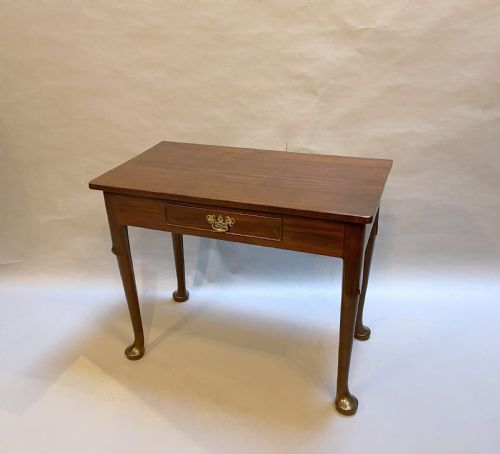

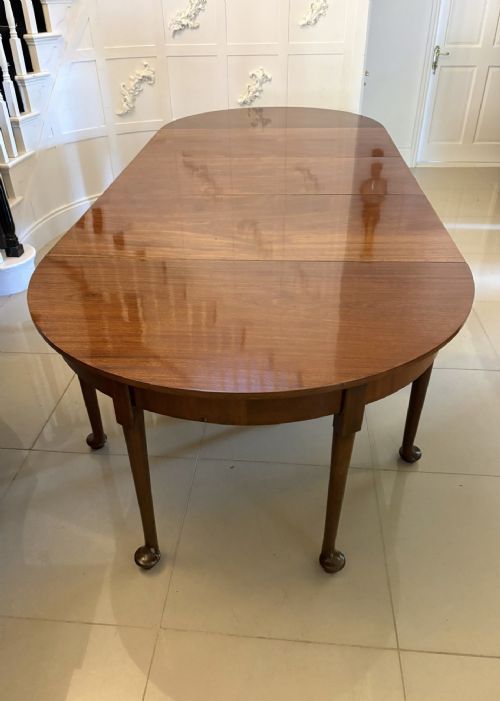
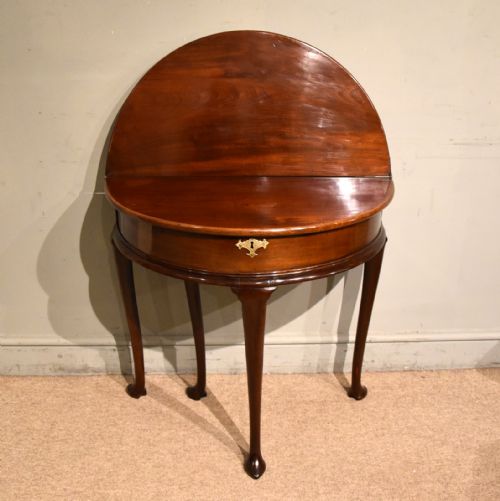
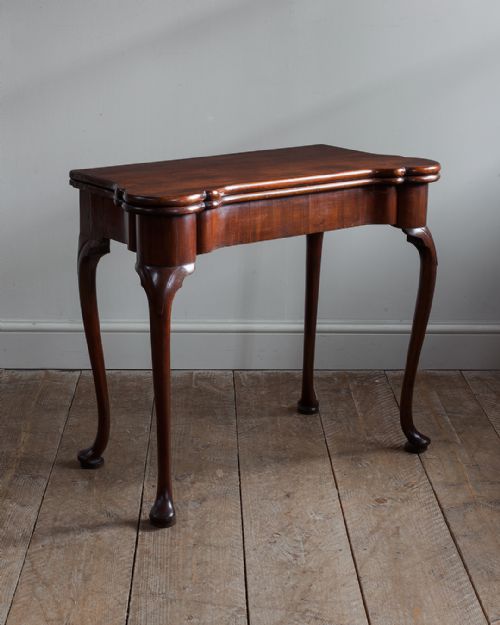
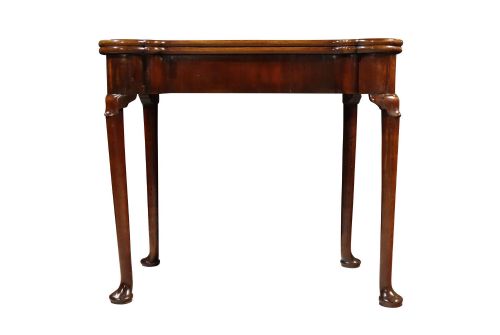


Georgian Padded Foot Console Table
A georgian padded foot console table brings eighteenth-century form and rich timber into a room, offering both surface and presence.
Georgian Padded Foot Console Table
When you examine a georgian padded foot console table, you are looking at domestic furniture shaped by eighteenth-century cabinet-makers, primarily spanning the Georgian periods and related reigns like George II and George III. The forms appearing alongside this phrase encompass side tables, console tables, lowboys, and various folding games and tea tables. These pieces served practical household functions in reception rooms, providing surfaces for tea, cards, or display.
The material record on this page shows a heavy reliance on timber, dominated by mahogany, red walnut, figured mahogany, oak, and cherrywood, sometimes accented with brass. Styles stretch from early Georgian and Queen Anne through to Irish Georgian examples, alongside occasional nineteenth-century adaptations and later twentieth-century painted pieces. Buyers searching this phrase will most commonly encounter mahogany card, tea, and side tables dating from the eighteenth century.
How they were made
Cabinet-makers of the period constructed these tables using dense hardwoods, predominantly mahogany and walnut, chosen for their stability and capacity to take a fine polish. Surfaces often display figured mahogany veneers or solid timber construction, supported by frames joined with traditional techniques.
Listings span the seventeenth century through to the twentieth century, with mahogany and oak as the predominant materials.
What varies in quality
Quality in these tables is evident in the selection of the timber, particularly where figured mahogany or rich red walnut exhibits lively grain patterns across the top and sides. The crispness of carved details on legs and aprons further separates standard production from superior examples.
The sophistication of internal mechanisms also defines the upper tier, seen in smooth concertina actions for card tables and neatly fitted gaming wells. Overall proportion and the integrity of the original timber surface dictate the standing of any given piece.
The Georgian Padded Foot Console Table Glossary
- Card Table
- A specialised table with a fold-over top designed for playing card games. Many examples include internal wells for counters or coins.
- Lowboy
- A small table with one or more drawers, commonly standing on cabriole legs. These served as dressing tables or side tables.
- Concertina Action
- An extending frame mechanism used on card tables that allows the rear legs to pull out with the back of the top. This provides stable support for the opened leaf without blocking the players' knees.
- Demi-Lune
- A half-moon shape characteristic of console and tea tables designed to stand flat against a wall. The form gained popularity during the eighteenth century.
- Guinea Well
- A small circular depression carved into the corner of a card table top. These wells held gold coins safely during play.
Georgian Padded Foot Console Table: Frequently Asked Questions
What is a georgian padded foot console table used for?
These tables provide a decorative and functional surface in hallways, living rooms, and reception spaces. Historically, forms associated with this category accommodated dining, social card games, or the serving of tea.
Modern interiors utilise them as display surfaces, hall tables, or compact desks. Their versatile proportions allow them to sit flush against walls or expand when needed.
How do I date a georgian table?
Dating relies on examining construction methods, timber choice, and stylistic markers associated with specific reigns. Pieces from the early eighteenth century often display Queen Anne or George II characteristics like cabriole legs and walnut timber.
Later eighteenth-century examples under George III introduce refined mahogany veneers and sharper geometric lines. Comparing hardware, joinery, and secondary woods helps confirm the period.
What woods were used for these tables?
Cabinet-makers of the eighteenth century primarily worked with imported mahogany and native timbers like oak and walnut. Figured mahogany was particularly prized for its decorative grain on table tops and friezes.
Alternative materials appearing in the record include cherrywood and painted wood on later interpretations. Secondary timbers within frame construction often include oak or pine.
How do I care for antique timber tables?
Protect the surface by keeping tables away from direct heat sources and strong sunlight, which can dry out the timber and fade polish. Use coasters and felt pads to prevent moisture rings and scratches from objects placed on the top.
Apply a traditional beeswax polish sparingly to maintain the sheen and nourish the wood. Avoid modern aerosol sprays that contain silicone and damage historic finishes.