
Georgian Open Standing Bookcase
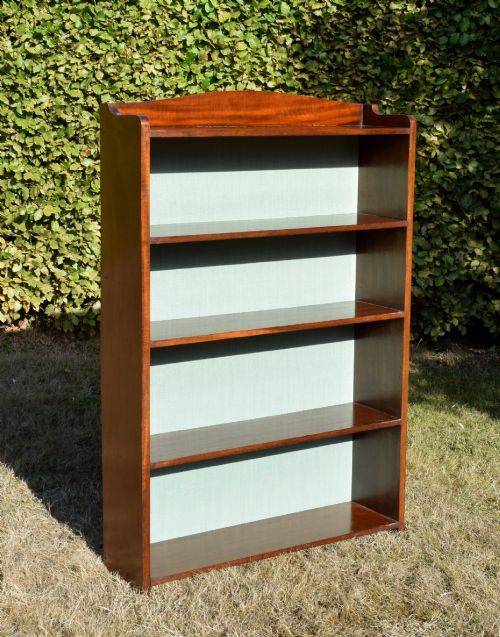
A georgian open standing bookcase offers accessible shelving in rich timber, combining period proportions with functional display space for everyday rooms.
Georgian Open Standing Bookcase
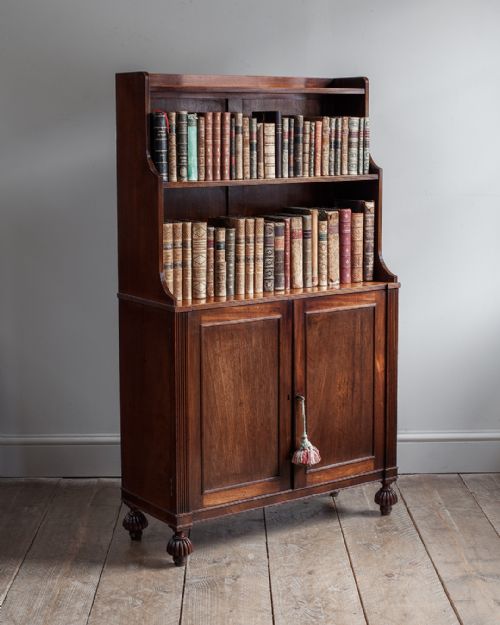
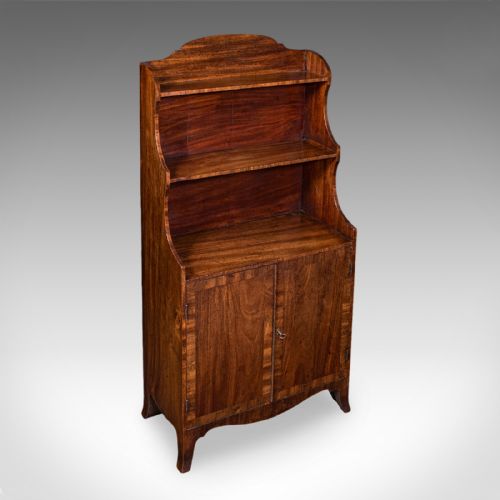
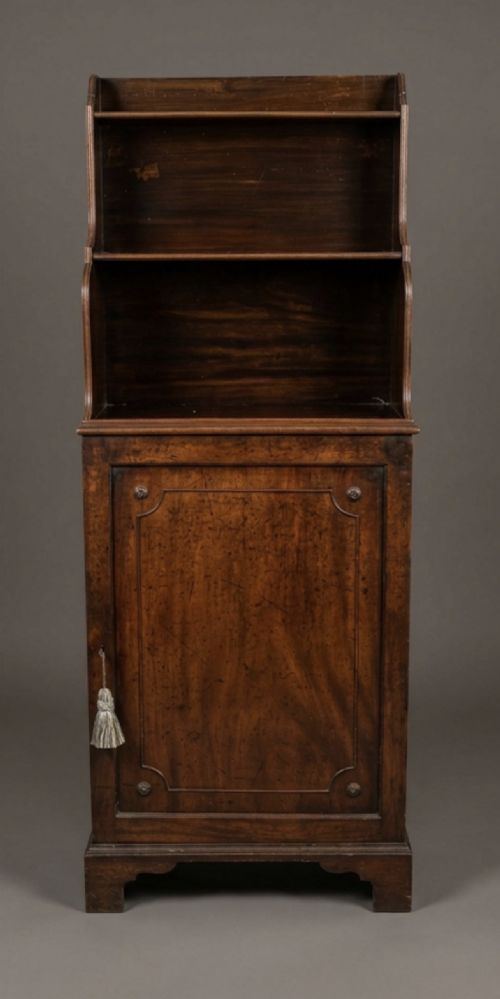
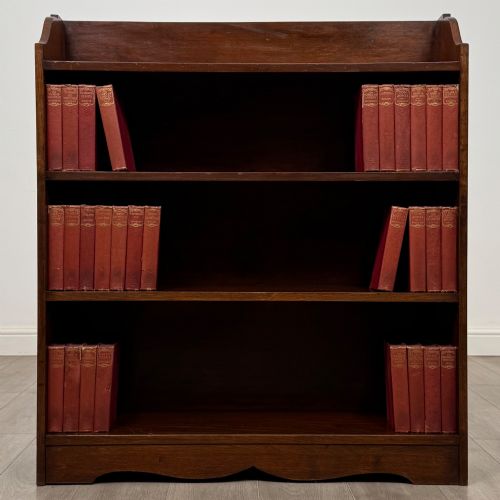
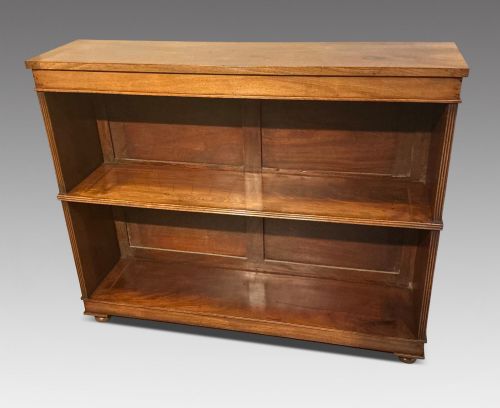
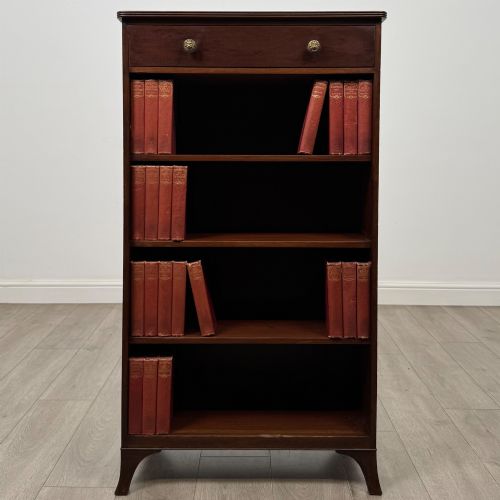
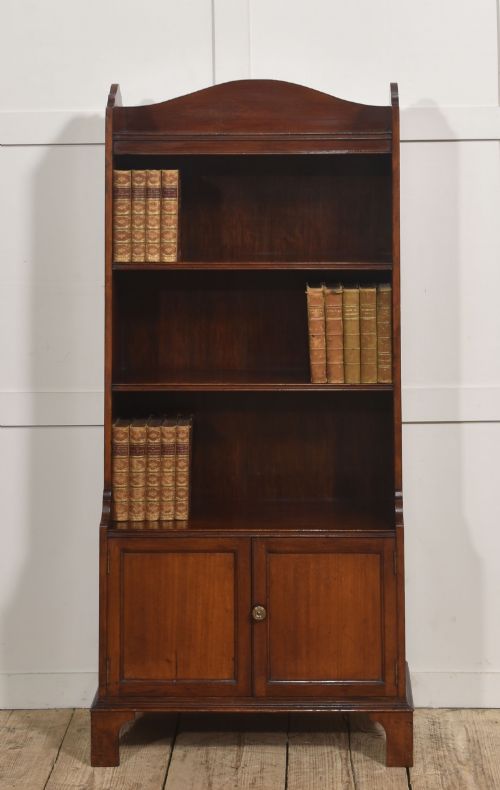
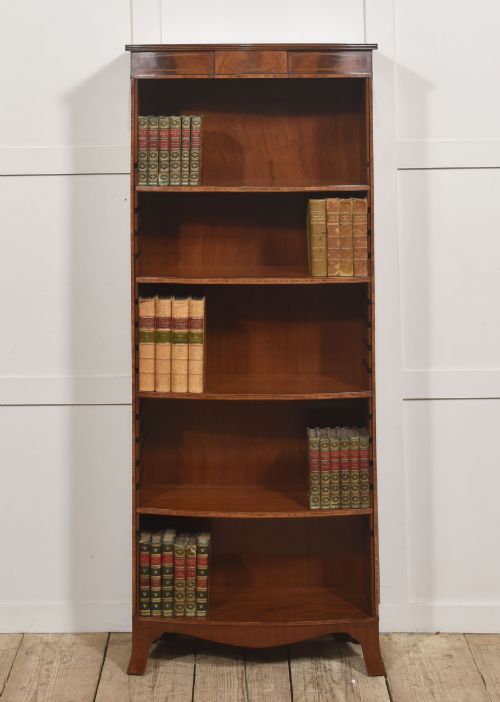
A georgian open standing bookcase presents a commanding vertical presence with multiple tiers of accessible shelving, frequently appearing in forms such as the waterfall bookcase or dwarf low breakfront bookcase. These pieces span periods from the Georgian and Regency eras through to later revivals in the 19th and early 20th centuries, reflecting durable craftsmanship in domestic furniture.
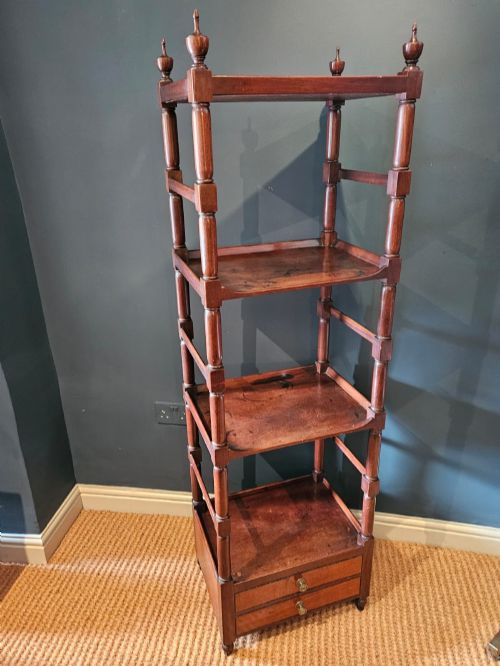
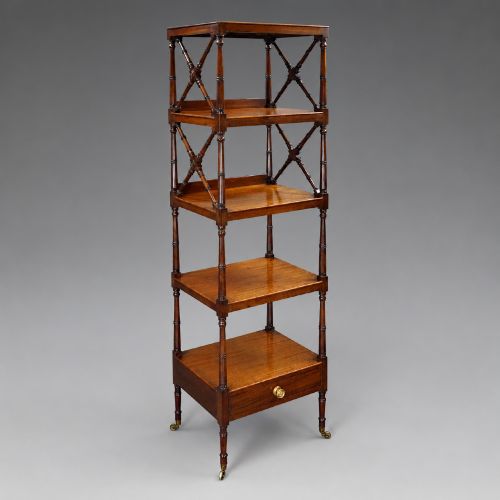
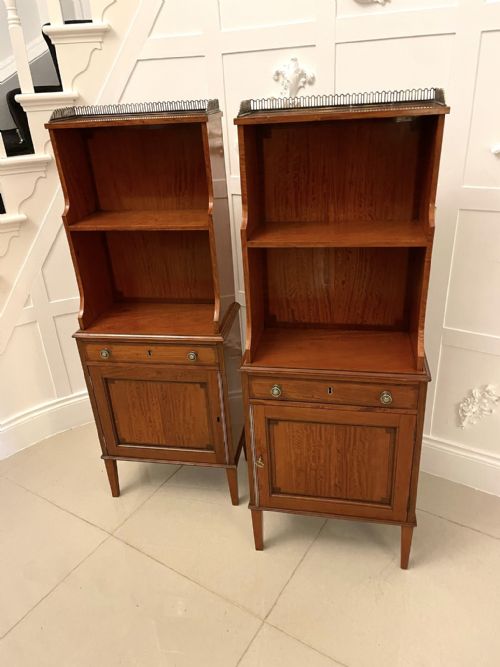
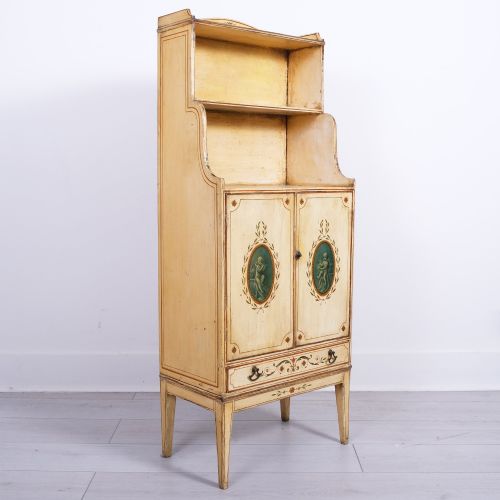
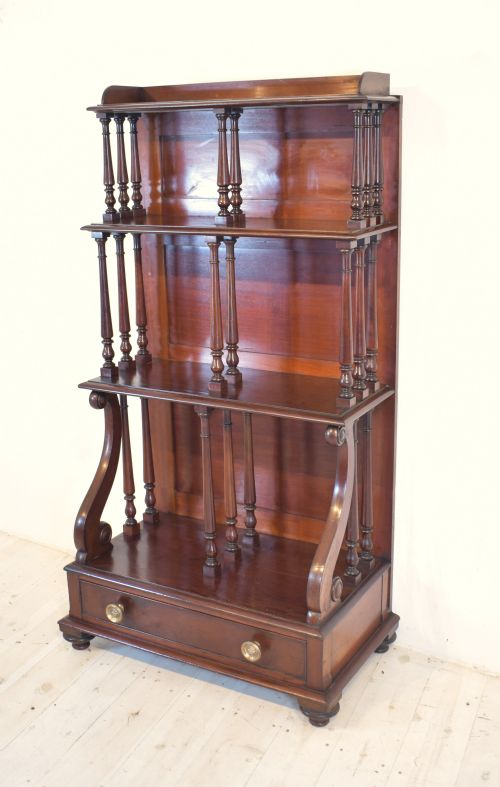
The most common iterations on this page utilise mahogany, rosewood, or oak, often constructed as freestanding items designed to stand against a wall without built-in architectural support. Alongside standard rectangular shelving tiers, variations include whatnots, etageres, and pieces incorporating lower cupboards or drawers beneath the open shelves.
Materials and Construction
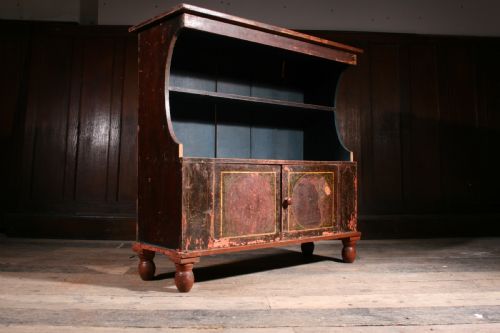
Cabinet makers built these pieces using solid timbers and select veneers, relying primarily on mahogany, rosewood, satinwood, and oak as the foundational structural elements. Decorative detailing often involved contrasting cross-banding, boxwood stringing, and occasional brass fittings or painted surfaces to enhance the visual depth of the timber.
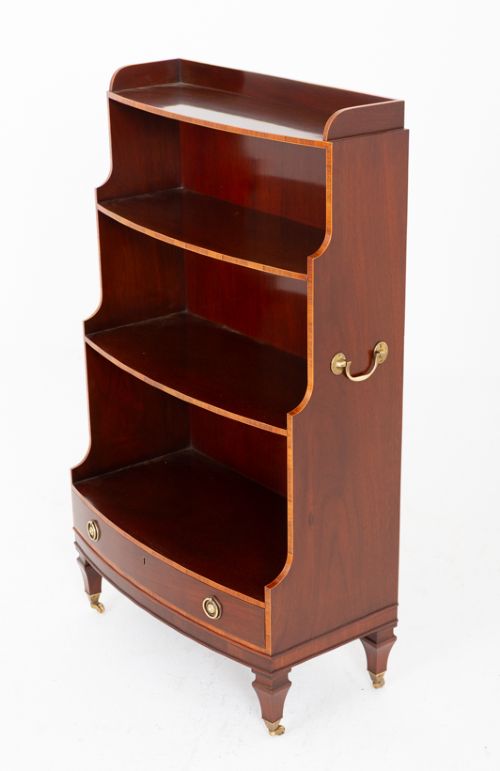
The construction integrates tiered shelving systems, sometimes stepping back in a cascading waterfall formation, secured to upright supports or enclosed lower cabinet bases with internal partitioning. Joinery techniques from the periods represented ensure stable, freestanding frames capable of supporting heavy volumes while maintaining slender proportions.
Several pieces adopt a waterfall silhouette, stepping back tier by tier as if attempting to tumble gracefully onto the floor.
Assessing Craftsmanship
The distinction between standard examples and superior pieces rests on the choice of timber and the precision of decorative inlay, such as fine boxwood stringing and figured grain selection. Finer pieces demonstrate careful attention to proportion, particularly in smaller scale or neat proportions where balance is difficult to achieve.
Original surface patination and integrity of construction further differentiate the range, with untouched timber finishes holding greater visual cohesion than later alterations. The sophistication of subsidiary elements, such as tiered waterfall designs or integrated cupboard bases, marks the transition from utilitarian shelving to high-status cabinet work.
Gillows
The Georgian Open Standing Bookcase Glossary
- Waterfall bookcase
- A standing bookcase featuring open shelves that progressively step back in width from bottom to top, creating a tiered profile reminiscent of cascading water. This form gained popularity during the Regency and Georgian periods.
- Breakfront
- A cabinet or bookcase design where the central section projects forward from the flanking outer sections, creating architectural depth. This layout appears in larger freestanding library pieces.
- Cross-banding
- A decorative border technique where thin strips of veneer are laid across the grain of the main timber panel, framing the edges of shelves or tabletops. It provides a crisp visual contrast.
- Stringing
- Very narrow inlay lines of a contrasting wood, such as boxwood, embedded into the surface of a panel or upright to outline geometric shapes. It serves as a subtle linear accent.
- Whatnot
- A piece of freestanding furniture consisting of multiple open shelves supported by slender columns or uprights, used for displaying books or decorative objects. Variants include tiered and corner configurations.
Georgian Open Standing Bookcase: Frequently Asked Questions
What is a georgian open standing bookcase?
A georgian open standing bookcase is a freestanding piece of furniture featuring accessible shelves without doors, designed to hold books and decorative objects in principal rooms. These items typically date from the 18th and 19th centuries, utilising dense hardwoods like mahogany and rosewood.
They serve as prominent architectural focal points in a room, combining practical storage with refined proportions. The open format allows for easy access to volumes while displaying the natural grain of the timber.
How were these bookcases used historically?
Historically, these bookcases stood in libraries, drawing rooms, and studies to keep frequently read volumes close at hand. The open shelving provided immediate visibility for personal libraries before glass-fronted cabinets became standard.
Many examples incorporate lower cupboards or drawers to store papers and smaller items alongside the open shelves above. This dual function made them versatile additions to domestic interiors.
How do I tell a Georgian bookcase from a later copy?
Distinguishing period pieces involves examining the construction methods, timber selection, and wear patterns consistent with 18th or early 19th-century workshop practices. Georgian pieces often display hand-cut joinery and native secondary woods behind primary veneers.
Later revival styles from the Edwardian era or the 1920s tend to use different secondary timbers and standardised machine-cut components. Surface patination built up over generations also separates original period items from later reproductions.