
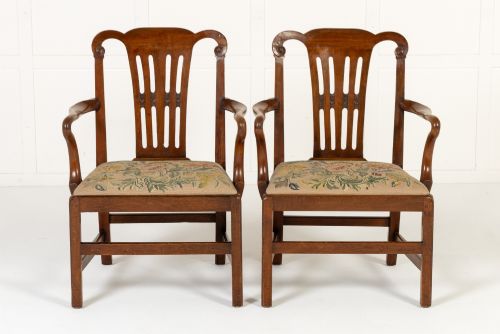
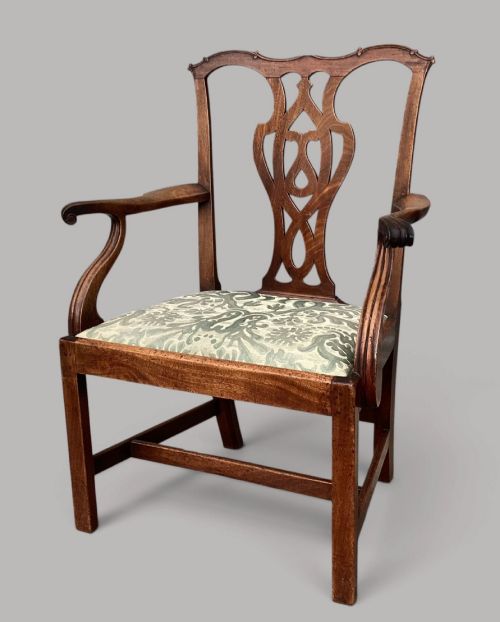
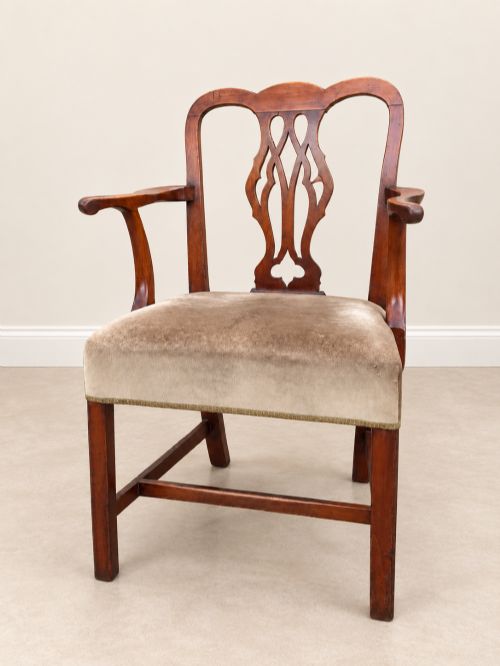
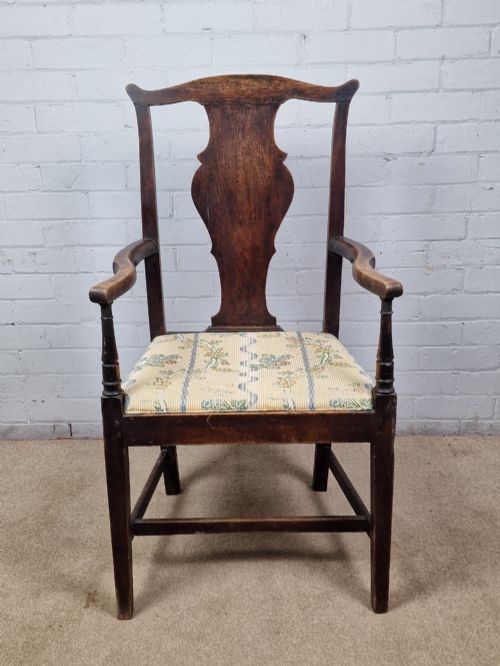
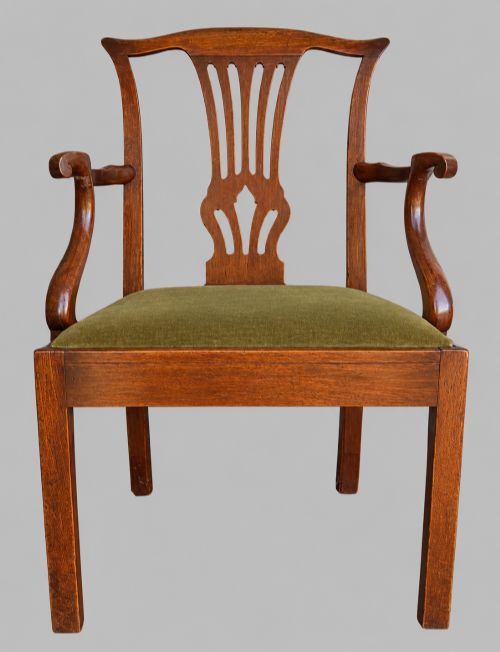
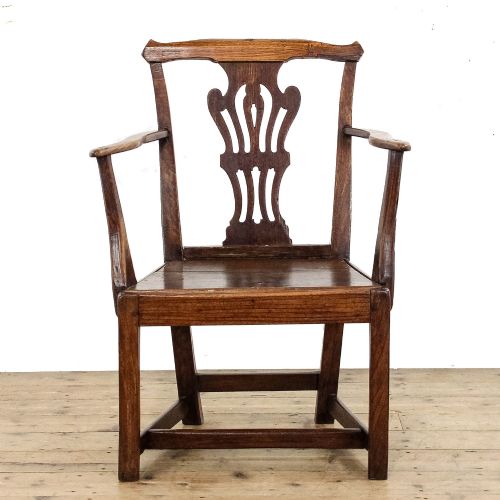
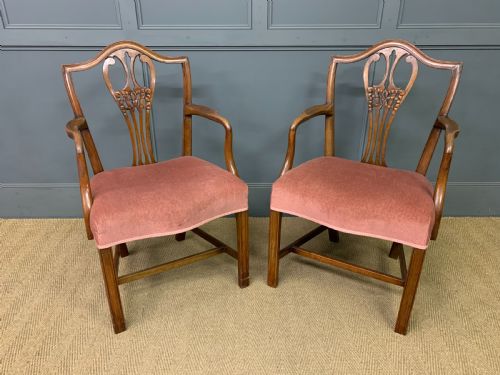
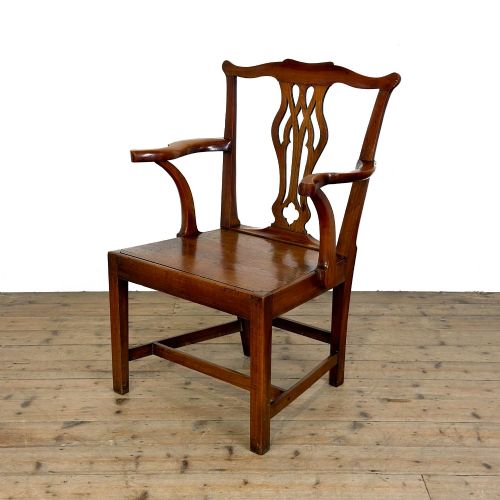
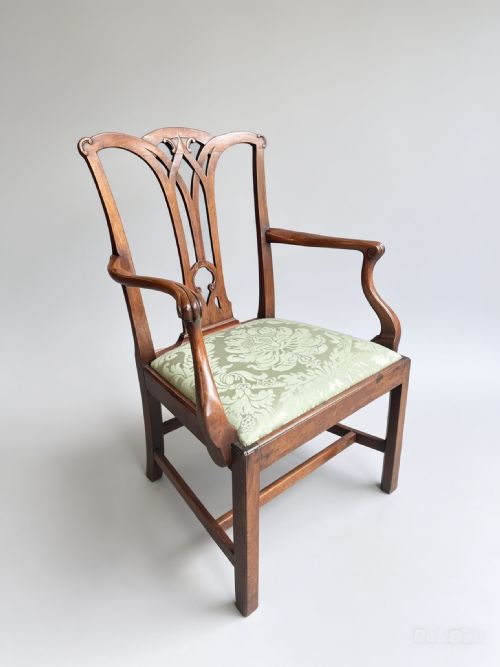
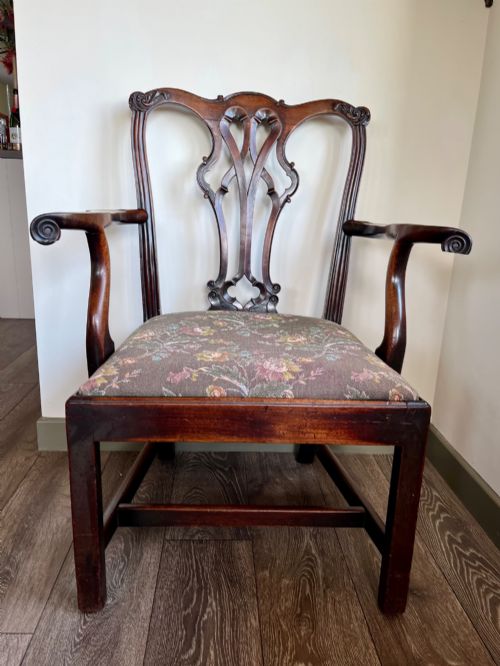
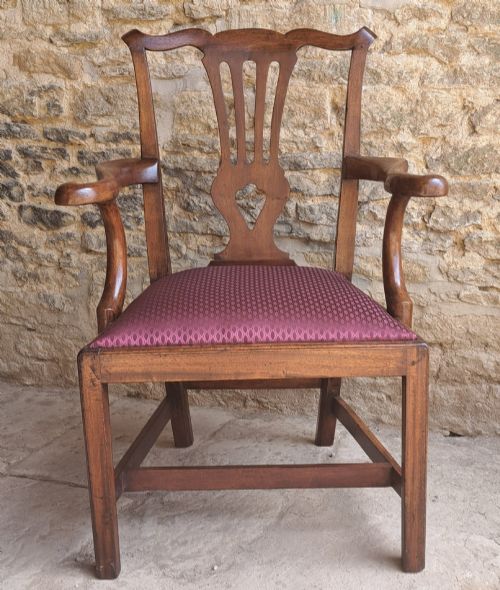
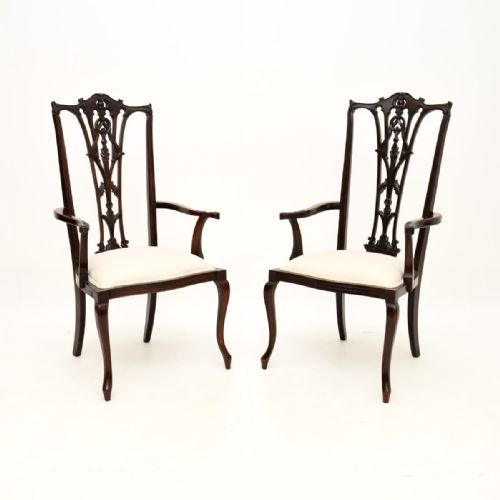
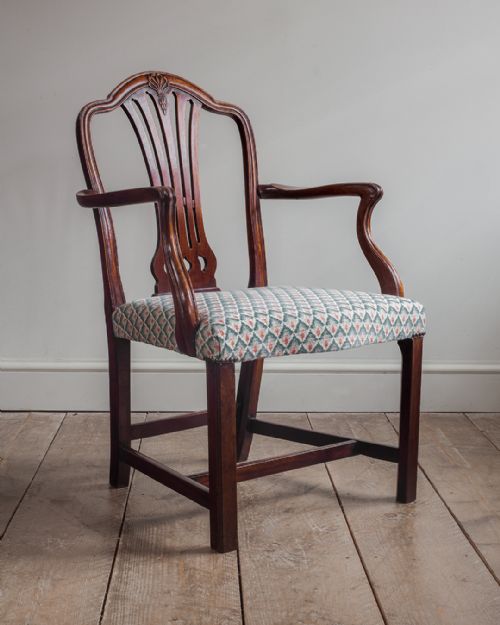
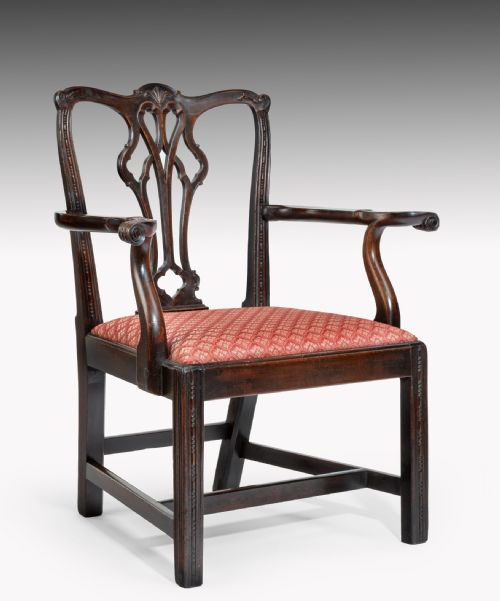
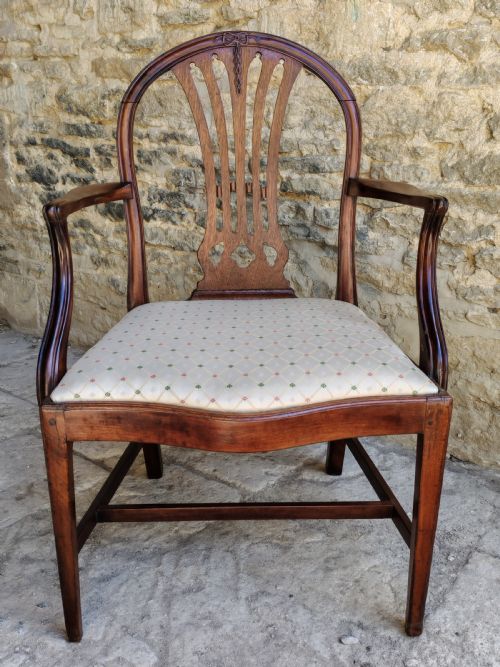
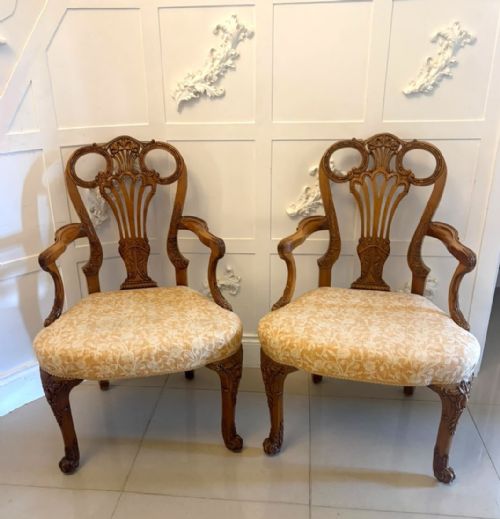
Georgian Open Splat Chairs
Georgian open splat chairs combine robust timber frames with perforated back supports, offering both enduring structural support and refined domestic style.
Georgian Open Splat Chairs
Georgian open splat chairs appear primarily as armchairs, elbow chairs, and carvers designed for dining rooms, desks, and morning rooms. The listings show forms spanning the eighteenth century alongside later nineteenth-century revivals.
Makers of these seats incorporated distinct stylistic influences, notably Chippendale and Hepplewhite designs, expressed through pierced back splats and open arm configurations. Buyers frequently encounter mahogany and walnut constructions dating from the Georgian period and subsequent revival eras.
Standard and Execution
Quality rests upon the depth and crispness of carved ornament applied to the splats, knees, and arm terminals. Superior examples demonstrate fluid joinery lines and well-proportioned framing that retains rigidity.
The choice of timber grain and the integrity of the original construction dictate the distinction between period items and later revival interpretations. Secondary woods and wear patterns reveal the extent of past restoration work.
Listings for georgian open splat chairs span the eighteenth, nineteenth, and early twentieth centuries, featuring mahogany, walnut, and fruitwood.
The Georgian Open Splat Chairs Glossary
- Carver chair
- An armchair, frequently designed with open arms to accommodate formal clothing. These pieces often matched sets of simpler dining chairs.
- Elbow chair
- A term used interchangeably with an armchair or carver, denoting a seat fitted with side supports for the arms. They served primarily in studies, bedrooms, and drawing rooms.
- Claw and ball
- A carved furniture foot depicting a bird's talon gripping a spherical object. This motif appears frequently on eighteenth-century mahogany furniture bases.
Georgian Open Splat Chairs: Frequently Asked Questions
What rooms suit these chairs?
These seats function effectively as desk chairs, library seating, or accent pieces in living spaces.
Their robust timber frames and upholstered pads provide practical support for daily domestic use.
How do I identify a period piece?
Examination of the timber species, joinery methods, and wear patterns helps distinguish eighteenth-century items from later revivals.
Period examples exhibit timber shrinkage and tool marks consistent with hand woodworking techniques of the era.
Are these seats comfortable?
The ergonomic curve of the open splat supports the spine while seated at a desk or dining table.
Upholstered drop-in pads offer cushioned support, though firmness varies according to the stuffing materials utilised.
What maintenance do they need?
Timber surfaces benefit from periodic application of appropriate furniture wax to preserve the polish and prevent drying.
Upholstered sections require gentle vacuuming and protection from direct sunlight to maintain the integrity of the fabric or leather.