
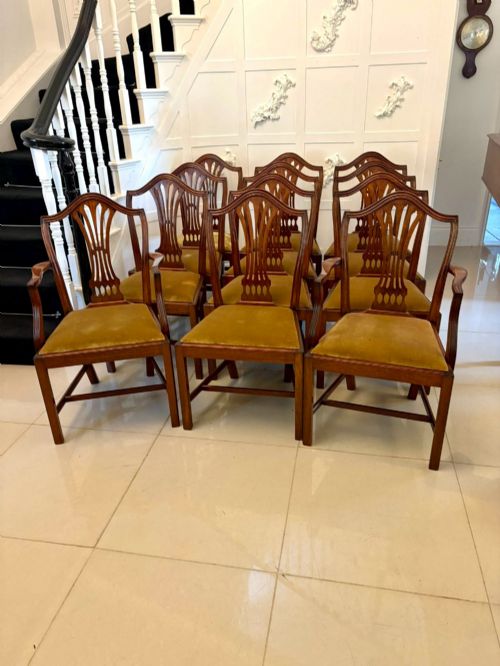
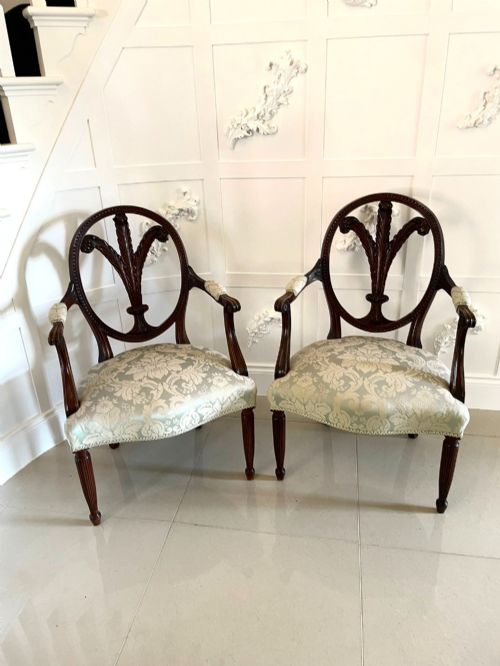
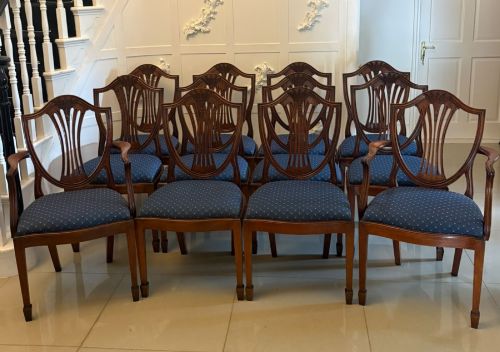
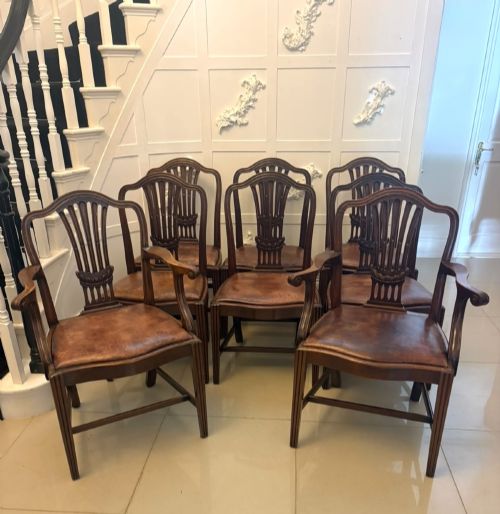
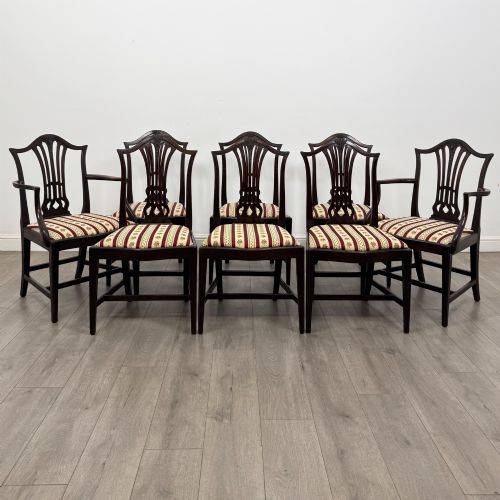
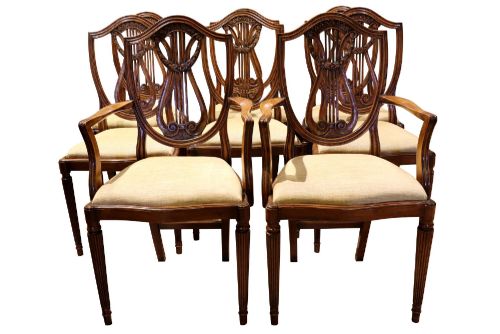
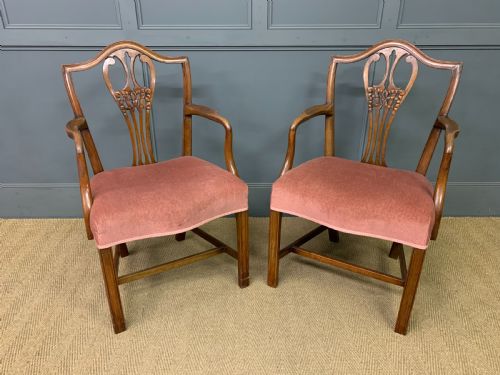
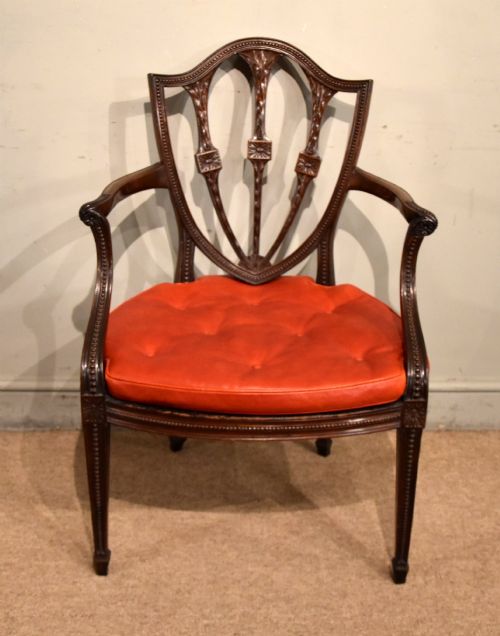
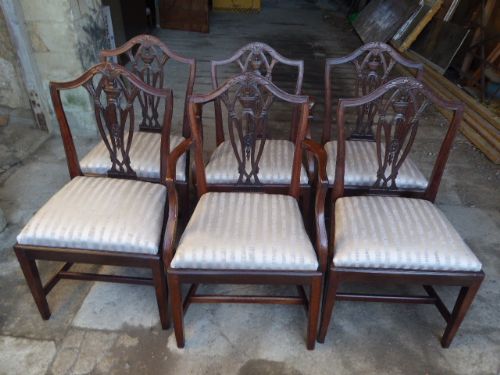
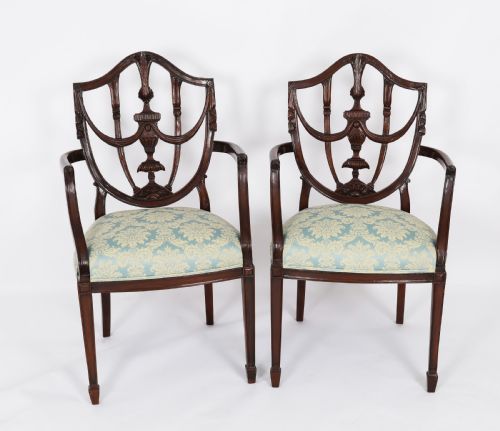
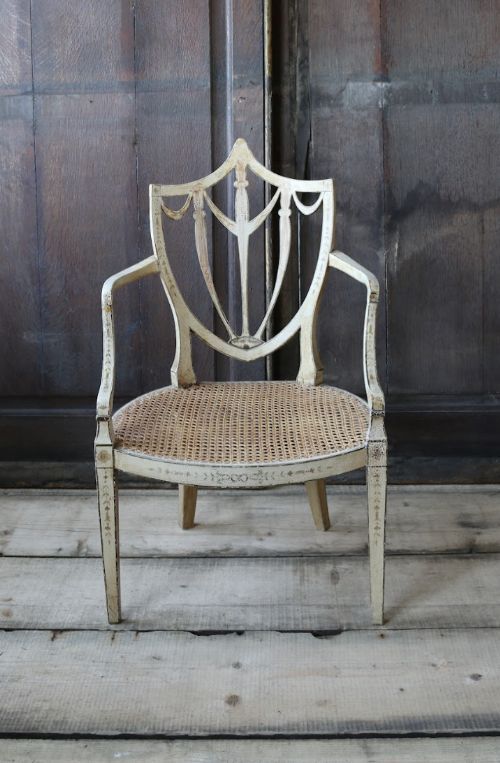
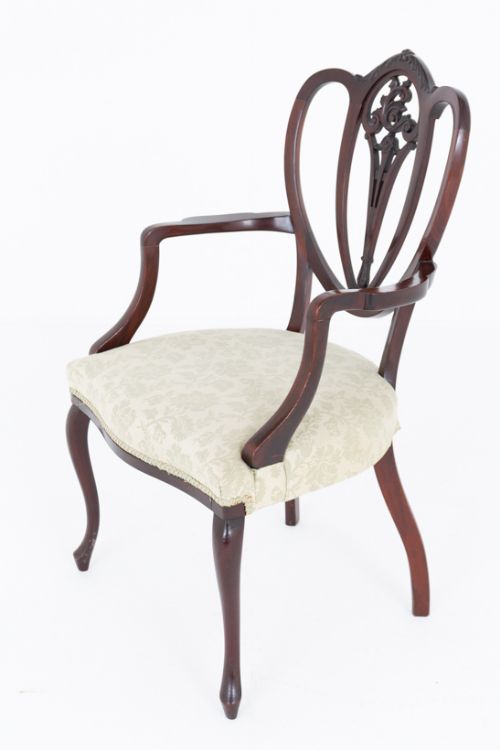
Hepplewhite Carver Armchairs
Hepplewhite carver armchairs are elegant seating pieces defined by shield backs and mahogany frames, offering both grace and stability at the dining table.
Hepplewhite Carver Armchairs
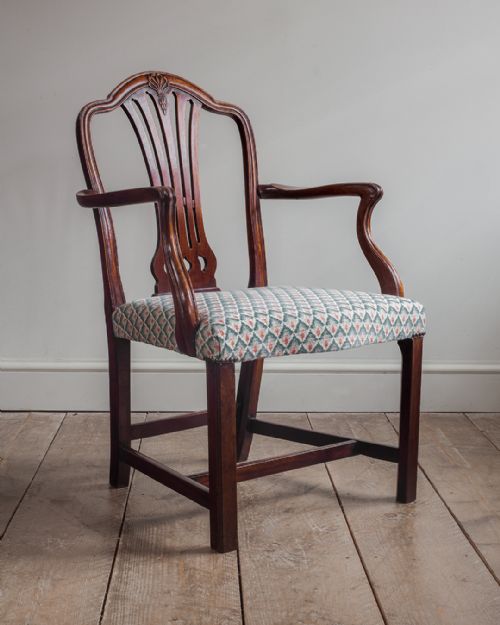
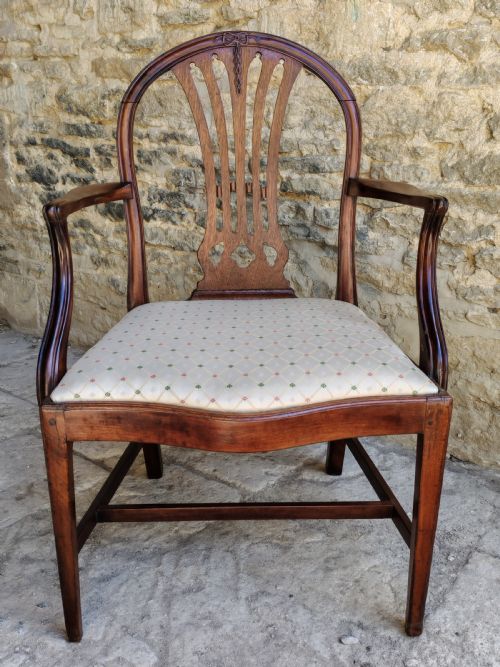
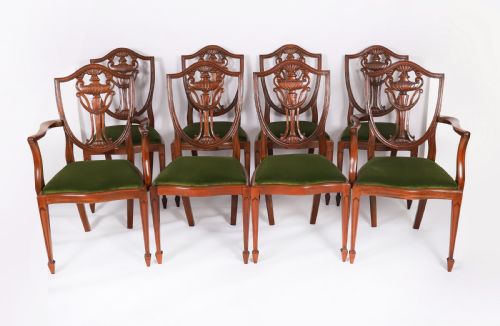
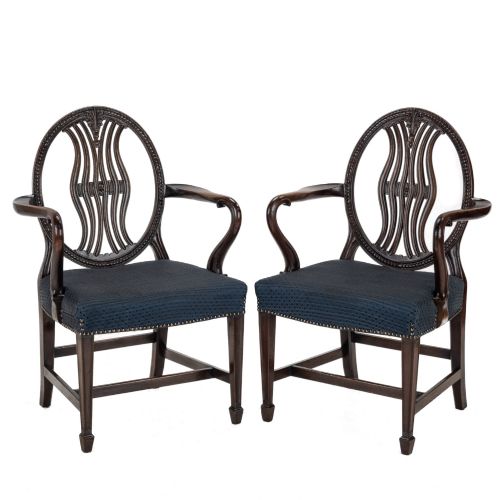
Hepplewhite carver armchairs represent a specific class of seating designed with distinctive shield-shaped backs and open arms, often accompanying larger dining sets or standing as individual elbow chairs. Buyers searching this phrase encounter examples originating from the eighteenth century alongside revival pieces produced during the Victorian, Edwardian, and later periods.
The most common iterations on this page are mahogany armchairs in the Hepplewhite style or Georgian period, frequently found in pairs or matched with side chairs. These pieces span authentic eighteenth-century craftsmanship to later revival interpretations from the nineteenth and twentieth centuries.
How they were made
Makers relied primarily on mahogany timber for the frames, utilising its strength to carve slender uprights, curved arm supports, and intricate shield back splats. Joinery techniques ensured sturdy construction for elbow chairs intended for frequent daily use.
Upholstery materials such as leather, velvet, fabric, and brass upholstery pins completed the drop-in or stuffed seats. Painted or polychrome decorated surfaces also appear on selected eighteenth-century frames.
What varies in quality
The refinement of the carved detail on the shield back and arms separates standard examples from superior pieces. Crisp execution in the woodwork and balanced proportions indicate higher workshop standards.
Originality of the timber and the retention of period upholstery materials influence the standing of an armchair. Later revivals show different standards of cabinetmaking compared to eighteenth-century originals.
Maple and Co
The Hepplewhite Carver Armchairs Glossary
- Carver armchair
- A term used for an armchair, typically one with elbow rests designed to match a set of dining side chairs.
- Shield back
- A chair back shaped in the outline of a heraldic shield, which is the defining visual characteristic of Hepplewhite seating.
- Elbow chair
- An alternative historical term for an armchair, referencing the supportive rests for the arms.
- Hepplewhite style
- A design idiom originating in the eighteenth century and revived in later periods, known for light proportions and classical ornamentation.
- George III
- The British regnal period spanning the latter half of the eighteenth century and the early nineteenth century, associated with classical furniture forms.
Hepplewhite Carver Armchairs: Frequently Asked Questions
Are these armchairs suitable for daily dining use?
Hepplewhite carver armchairs provide sturdy seating when constructed from solid mahogany and sound joinery. Many historical and revival examples continue to serve reliably at dining tables today.
Buyers should consider the seat height and arm clearance to ensure compatibility with modern dining tables. Original antique upholstery may require replacement for regular comfort.
How do I tell an 18th-century piece from a revival?
Eighteenth-century armchairs display period tool marks, timber ageing, and construction methods consistent with eighteenth-century cabinetmaking. Revival pieces from the Victorian and Edwardian eras often show standardised machine cutting and distinct secondary woods.
Examining the underside and joinery reveals clues regarding the manufacturing date. Revivals frequently replicate the shield back form with heavier scantlings of mahogany.
What is the difference between a carver and a side chair?
Carvers feature armrests designed to support the elbows, whereas side chairs lack arms so they can tuck neatly beneath a dining table. Dining sets historically paired a smaller number of carvers with several side chairs.
Armchairs served the host or principal guests at the table. Both forms share matching shield back designs within the same dining suite.
How do I care for mahogany frames and leather seats?
Mahogany frames benefit from gentle dusting and occasional application of appropriate wax polish to maintain the timber finish. Direct sunlight and excessive heat sources should be avoided to prevent wood splitting.
Leather upholstery requires specialised conditioning to keep the hide supple. Fabric seats respond well to careful surface cleaning appropriate to the textile type.