


Georgian Oil Portrait Pair
A georgian oil portrait pair brings dual presence and domestic history into a room, offering matched sitters from the eighteenth or early nineteenth century.
Georgian Oil Portrait Pair
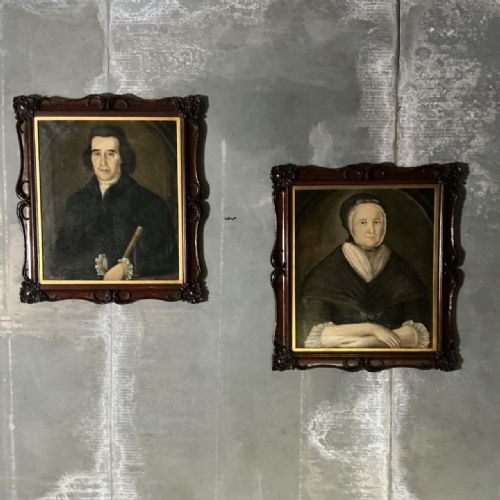
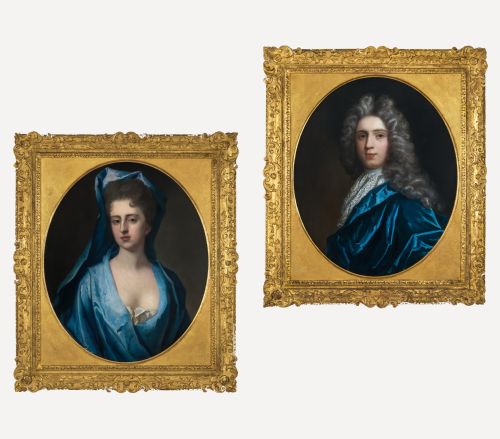
A georgian oil portrait pair consists of matched paintings depicting sitters, most frequently husbands and wives, gentlemen and ladies, or children. These works emerge from the eighteenth century, the Regency period, and around eighteen hundred, capturing likenesses across British schools.
Buyers encounter subjects ranging from aristocratic figures attributed to known portraitists down to anonymous English School studies of children and family members. Most examples present as oil on canvas, often retained within their original giltwood or gold leaf frames.
The pairing creates a deliberate visual balance on a wall, usually executed to hang together as a matched set of two. Format variations include rectangular canvases and oval portrait oil paintings spanning domestic and grander domestic scales.
Materials and construction
These works rely on oil paint applied to stretched canvas supported by wooden frames. Artists built up depth through layered pigment, capturing fabrics, flesh tones, and lighting characteristic of British portraiture.
Frames are constructed from wood and finished with giltwood or gold leaf, providing the decorative border integral to the period aesthetic. The combination of oil on canvas and original timber frames defines the physical survival of these pairs.
Materials recorded across these works include oil paint, canvas, wood, giltwood, and gold leaf.
Distinctions in quality
Quality rests upon the skill of the brushwork and the psychological capture of the sitter, where accomplished portraitists render hands, textiles, and facial expression with conviction. Weaker examples show stiffer posture and formulaic treatment of drapery by provincial hands.
The survival of original frames matching the period adds significantly to the integrity of the pair. Canvas condition, surface cleaning, and the preservation of original stretcher frames also govern the standing of individual works.
Michael Dahl·Thomas Murray
The Georgian Oil Portrait Pair Glossary
- English School
- A designation for paintings produced by British artists working within traditional national styles whose specific individual names remain unrecorded. It helps categorise period works of competent execution without a definitive signature.
- Giltwood
- Wood carved and coated with a thin layer of gold leaf or metallic powder to create a bright decorative surface. These frames house the canvases and often show age through the softening of the underlying gesso.
- Regency
- The period spanning the early nineteenth century defined by neoclassical tastes in British art and furnishings. Portraits from this era often display distinct costume details and softer lighting compared to earlier eighteenth-century works.
- Oil on Canvas
- The primary medium involving pigment suspended in drying oils spread across a woven fabric support. This technique allowed artists to achieve rich tonal gradations and lasting durability.
Georgian Oil Portrait Pair: Frequently Asked Questions
How do I hang a portrait pair?
Pairs should be hung at eye level with the sitters facing inward toward one another rather than outward toward the room edges. This traditional arrangement directs the viewer's attention between the two faces.
Ensure the hanging wire and fixings accommodate the weight of the wood and giltwood frames securely against a solid wall.
Were these always painted together?
Most portrait pairs were commissioned simultaneously to commemorate marriages, family alliances, or companionships. Artists painted them as matched sets using identical palettes and scale.
Some pairings were assembled later in history by collectors seeking symmetrical displays of period sitters.
How do I care for oil portraits?
Keep paintings away from direct sunlight, high humidity, and dramatic temperature fluctuations that can warp canvas and crack oil paint. Dust the surface and frame gently with a dry, soft brush.
Avoid using water, chemical cleaners, or modern cloths on the painted surface or giltwood frames.
How do I identify the period?
Examine the clothing, hair styling, and lace collars of the sitters against known fashion histories of the eighteenth and nineteenth centuries. Canvas stretchers, nails, and framing techniques also offer clues to the age of the object.
Written inscriptions on the reverse of the canvas or frame often record names and dates.