
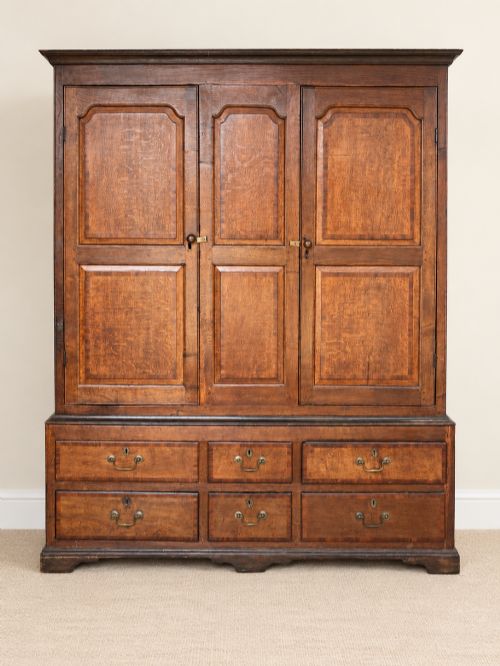
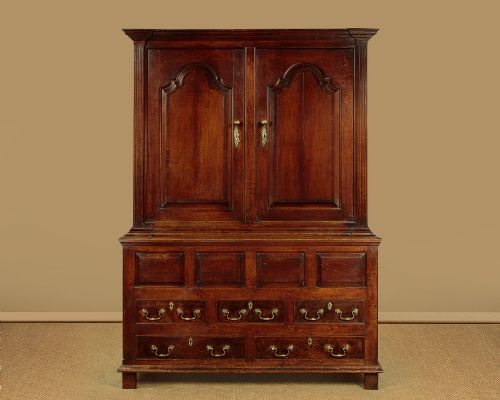
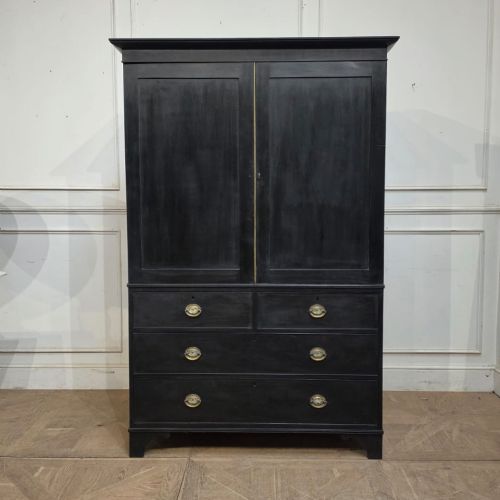
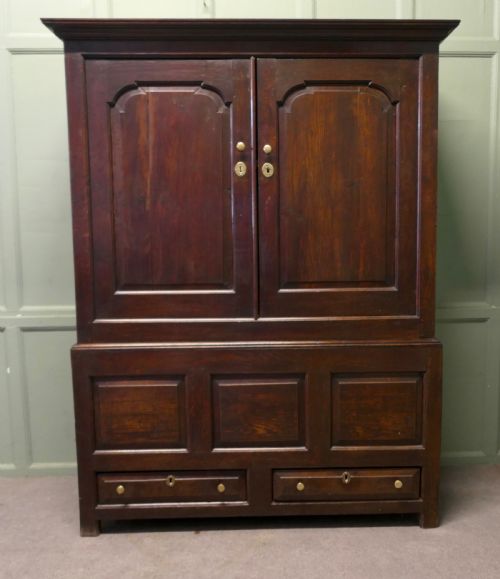






Georgian Oak Wardrobe
A Georgian oak wardrobe brings honest regional character and deep, timber-rich storage to a room.
The Form
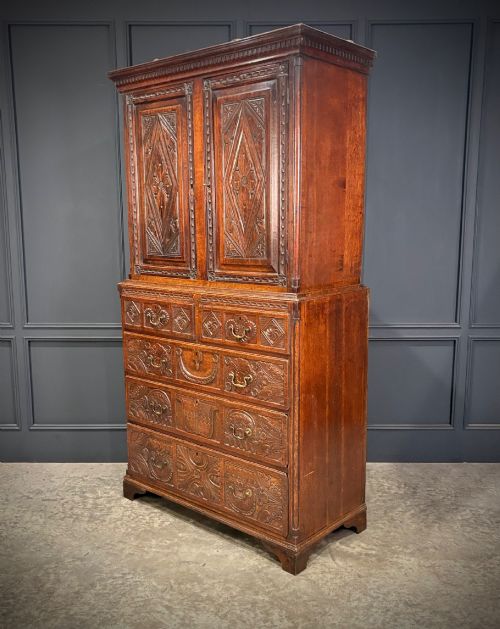
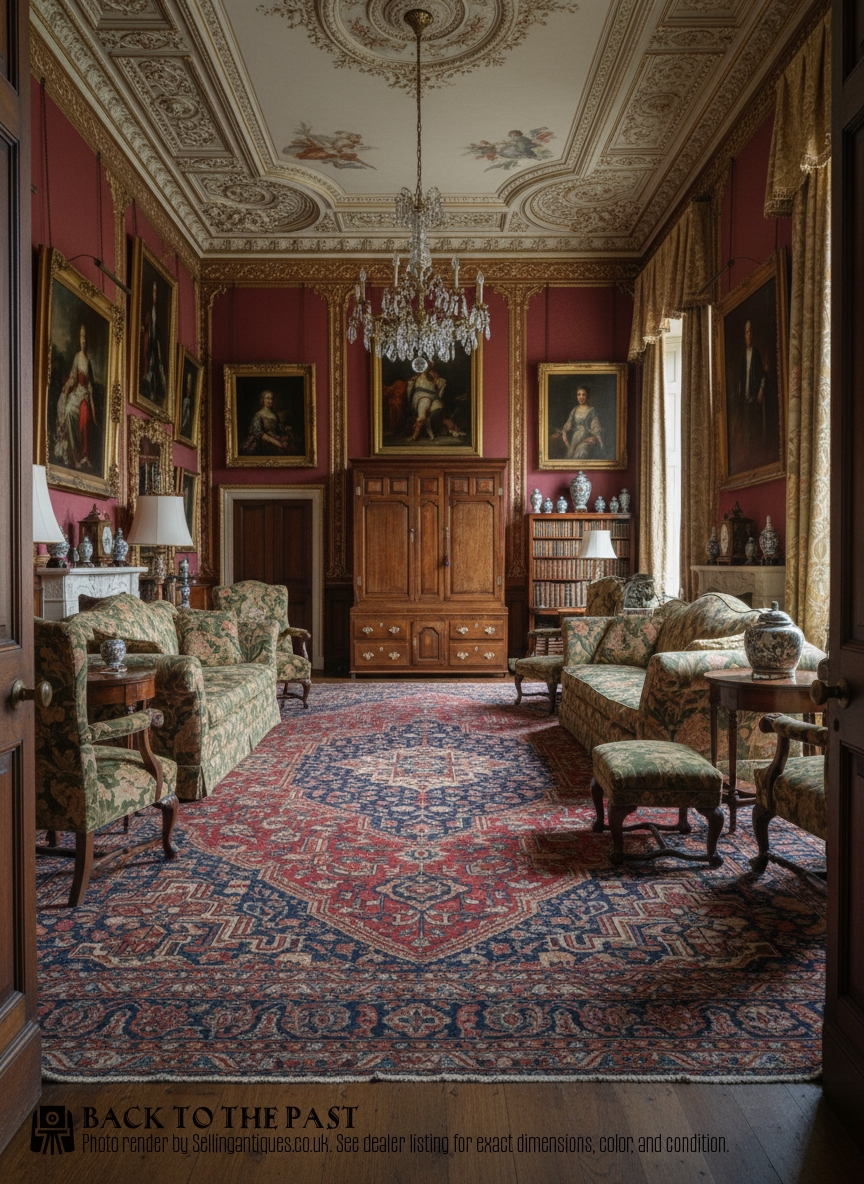
Buyers frequently encounter regional variants such as Welsh vernacular hanging cupboards alongside golden oak press cupboards fitted with sliding trays or interior hanging space. Many examples bridge the divide between tack cupboards, housekeepers' cupboards, and full-length clothes presses.
Materials and Construction
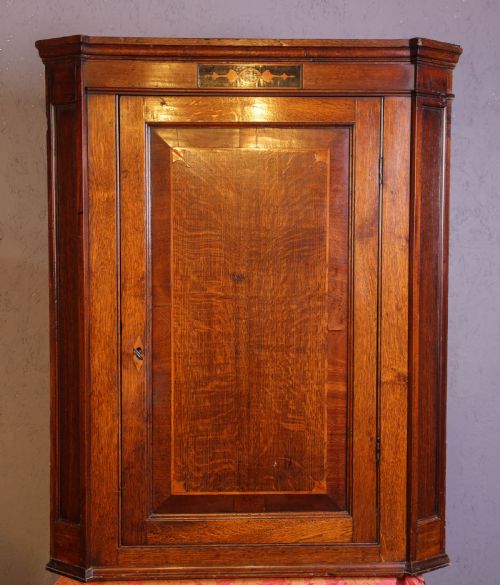
Makers built these pieces using solid oak, frequently augmented with brass hardware and occasional marquetry inlay or contrasting mahogany details. Construction relied on traditional peg joining methods, panelled doors, and heavy timber framing suited to rural workshops.
Surfaces developed a natural patination over centuries of use, preserving the grain and golden brown tones inherent to mature English and Welsh timber.
Retail Price Guide 2026
Typical UK retail prices for georgian oak wardrobe, calculated from the Sellingantiques database of over a million retail prices indexed since 2003. This retail price guide relies exclusively on Sellingantiques data; no external sources or auction records are used, so the figures do not describe the wider market.
The listings on this site combine oak, brass, and marquetry inlay across periods ranging from the seventeenth century to nineteen hundred.
Evaluating Quality
Quality rests upon the proportion of the timber, the depth of the original patination, and the integrity of the peg-joined framework. Finer examples retain their original brass handles, hinges, and working panel doors without excessive timber replacement.
Regional vernacular pieces demonstrate the hand of the local carpenter through clever internal organisation, such as linen slides or harness hooks, whereas grander country house presses display more elaborate panel carving and architectural cornicing.
The Georgian Oak Wardrobe Glossary
- Linen Press
- A tall cupboard featuring upper doors enclosing sliding trays for folded textiles, often sitting above a base of lower drawers. This form evolved to protect household linens from dust and damp before modern wardrobes took over.
- Tack Cupboard
- A utilitarian storage piece originally designed for harness gear or riding equipment, characterised by sturdy oak construction and deep internal hanging depth. These utilitarian items now serve as rugged everyday clothes closets.
- Peg Joined
- A method of timber construction utilising wooden dowels rather than modern iron nails to secure joints. This traditional technique allows the wood to move naturally with seasonal humidity changes.
- Vernacular
- Furniture built by local country craftsmen following regional traditions rather than metropolitan high-style designs. These pieces utilise locally sourced timbers and practical construction methods.
Frequently Asked Questions
How do I use an antique wardrobe for modern clothes?
Many older pieces lack modern hanging depth, so check internal measurements to ensure your coat hangers fit front-to-back.
Alternatively, utilise interior shelves or linen slides for folded garments, jumpers, and bedding.
What is the difference between a press and a wardrobe?
A press traditionally incorporates sliding trays behind upper doors for storing flat linens, whereas a wardrobe focuses primarily on vertical clothes hanging.
Over centuries of domestic use, many pieces underwent internal alterations to convert linen trays into hanging space.
How do I care for antique oak timber?
Keep wooden furniture away from direct heat sources and sudden temperature shifts to prevent the solid panels from splitting.
Apply a traditional beeswax polish occasionally to nourish the grain and maintain the natural lustre.
How do I date an early oak cupboard?
Examine the construction methods, tool marks, and secondary timbers used in the backboards and drawer linings to determine age.
Peg-joined frames and hand-carved panels typically point towards eighteenth-century or earlier country workshops.