

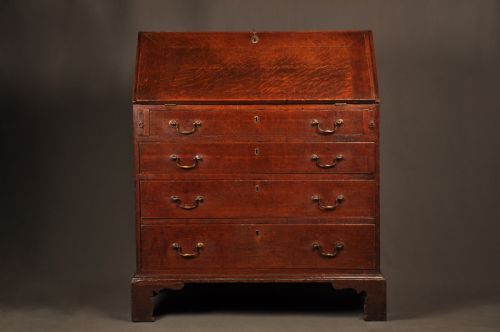

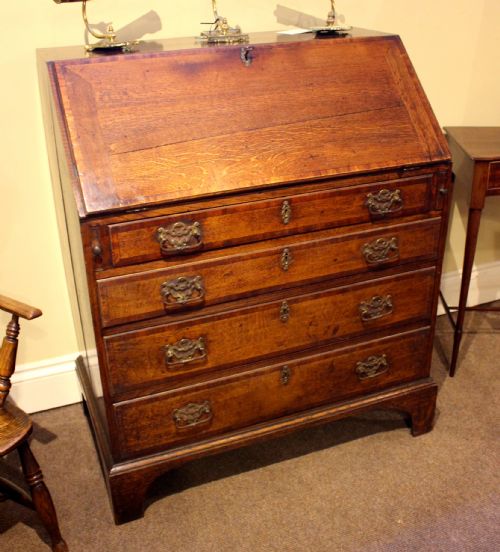


Georgian Oak Slant Front Bureau
A Georgian oak slant front bureau provides a practical writing surface and enclosed storage, shaped by the domestic needs of the eighteenth century.
Georgian Oak Slant Front Bureau
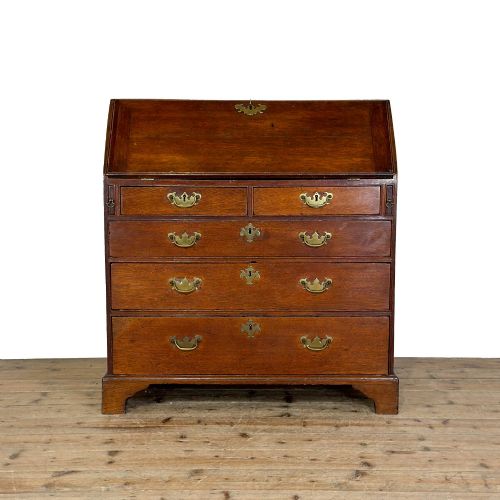
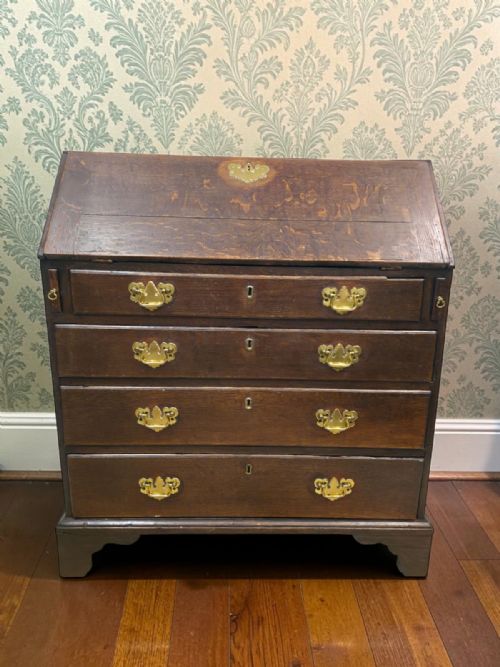
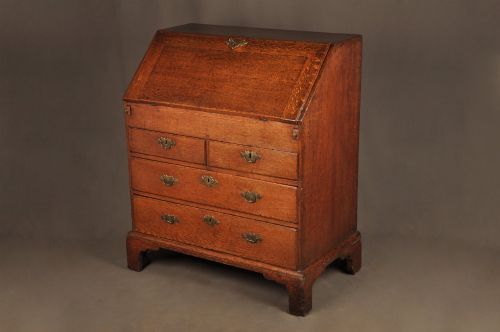
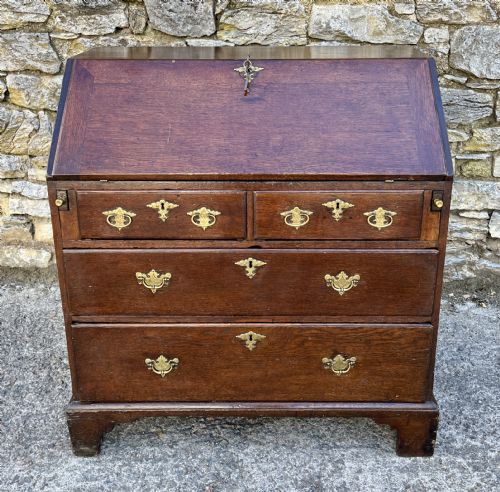
A georgian oak slant front bureau brings together a sloping fall front that opens to reveal a fitted interior of small drawers and pigeonholes above a set of lower drawers for storage. The pieces encountered here span from the early eighteenth century through the George III period, alongside vernacular examples and later revivals.
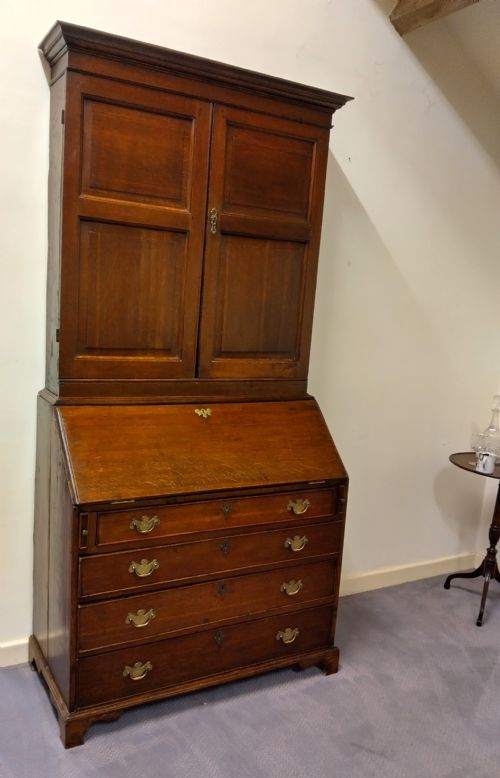
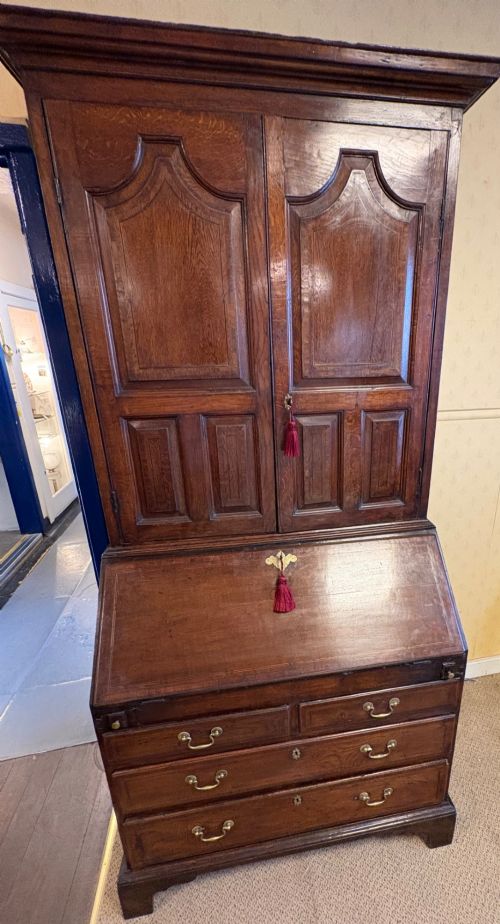
Buyers frequently encounter simpler writing desks alongside larger bureau bookcases that incorporate upper shelving or cabinet doors. Solid timber construction dominates the selection, occasionally enhanced by crossbanding in mahogany or decorative wood inlay.
Materials and construction
Makers relied primarily on native oak, complemented by specialised timbers such as pollard oak and contrasting wood inlays for decorative detail. Brass fittings, including key escutcheons, handles, and hinges, provide functional contrast to the dark wood surfaces.
Cabinetmakers constructed these writing cabinets with dovetailed drawer boxes and paneled falls to accommodate the movement of solid timber over time. Interior compartments often feature stepped tiers, secret drawers, and sliding boards designed to conceal documents.
Listings feature oak alongside brass, glass, leather, iron, pollard oak, and wood inlay across eighteenth-century and Edwardian periods.
Distinguishing quality
Quality rests in the selection of timber figure, the crispness of internal drawer joinery, and the integrity of the writing surface hinges and supports. Pieces featuring secondary woods such as mahogany crossbanding or pollard oak accents typically indicate a higher tier of craftsmanship.
The architectural arrangement of the stepped interior and the inclusion of working secret compartments distinguish finer examples from utilitarian clerks' desks. Proportions also dictate standing, with smaller dimensions commanding particular attention among domestic desks.
The Georgian Oak Slant Front Bureau Glossary
- Slant front
- The angled writing flap that hinges downward to form a desk surface. When closed, it conceals the inner stationery compartments.
- Fall front
- An alternative term for the sloping writing flap of a bureau. It rests upon pull-out wooden lopers when open.
- Bureau bookcase
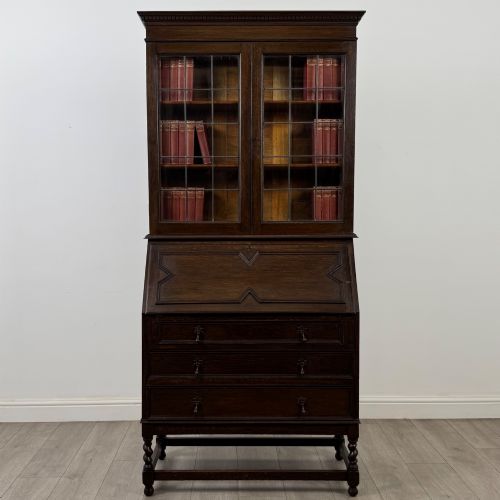
- A taller furniture form combining a writing desk base with an upper glazed or paneled shelving cabinet. These units provide both workspace and library storage.
- Crossbanding
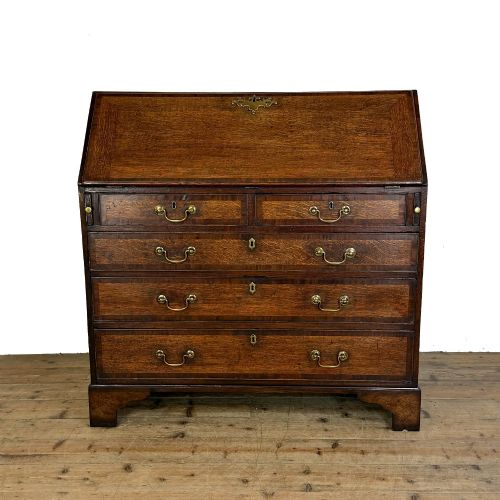
- A narrow strip of veneer applied across the grain of the primary wood to frame a drawer front or flap. It creates a decorative border using contrasting timber.
- Stepped interior
- An arrangement of internal drawers and pigeonholes built in ascending tiers within the bureau desk. This layout organises writing materials.
Georgian Oak Slant Front Bureau: Frequently Asked Questions
How do I use a slant front bureau?
Pull out the wooden support lopers beneath the sloping flap, then lower the fall front to create your writing surface. Inside, you will find compartments for letters and stationery.
Beneath the desk section, use the larger horizontal drawers for linen, papers, or household storage. Close and lock the fall front when not in use to keep documents private.
What is the difference between a bureau and a desk?
Traditional British usage defines a bureau as an enclosed desk featuring a sloping writing flap and internal pigeonholes. Standard writing desks often provide a flat table surface with pedestal drawers beneath.
Many pieces in this selection also include upper bookcase cabinets, combining storage and writing functions into a single tall unit.
How do I date an oak bureau?
Examine the construction methods of the internal drawer boxes, the thickness of the timber, and the style of the brass hardware. Early eighteenth-century examples often display simpler vernacular framing, while George III pieces incorporate more refined crossbanding and cabinetry.
Later Edwardian and reproduction pieces built in the Jacobean or Georgian style usually show more uniform machine-cut elements and modern timber seasoning.
Where should I place a bureau in my home?
Position the piece against a sturdy wall where natural light from a side window falls across the open writing flap. Because these cabinets combine a desk and drawer storage, they function effectively in studies, living rooms, or bedrooms.
Ensure there is sufficient clearance in front of the furniture to pull out the writing flap and the lower storage drawers fully.