

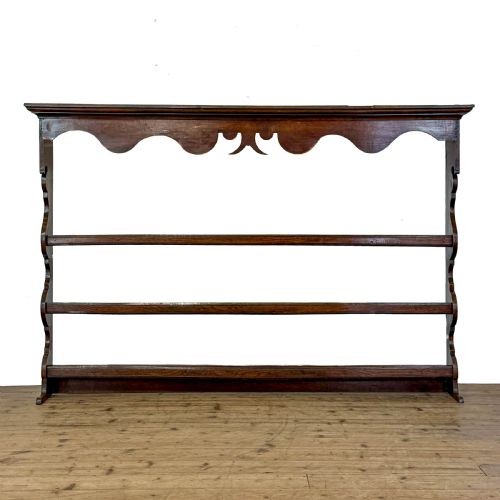


Georgian Oak Open Dresser
A georgian oak open dresser brings the honest grain and functional beauty of eighteenth-century country life directly into a modern home.
Georgian Oak Open Dresser
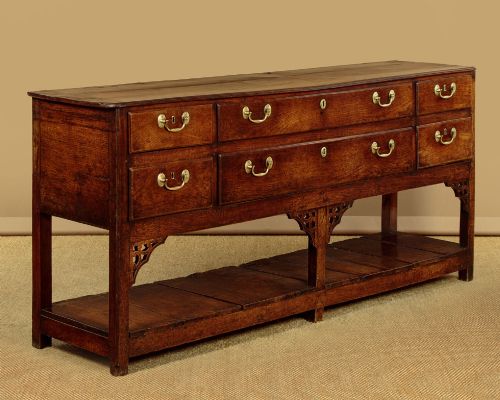
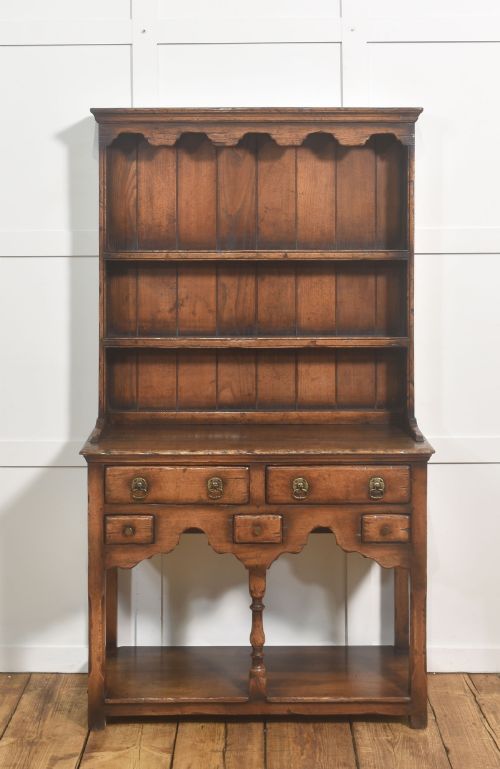
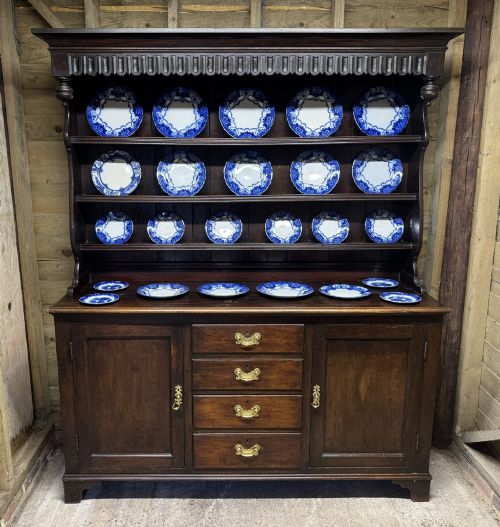
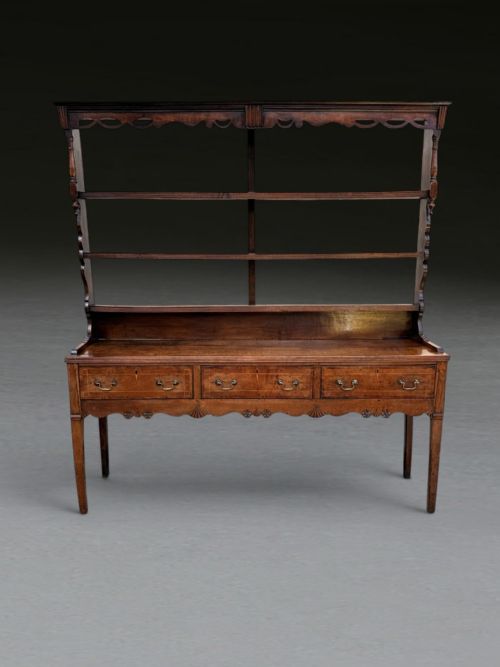
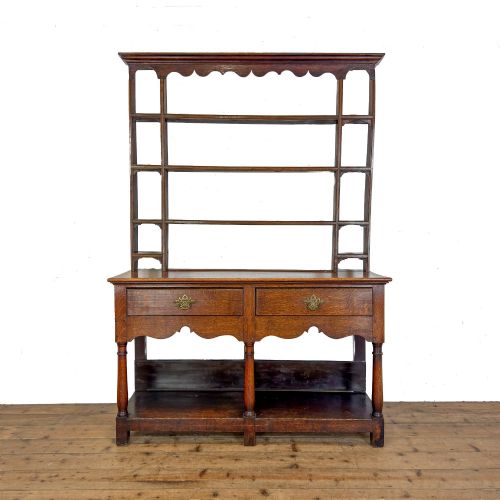
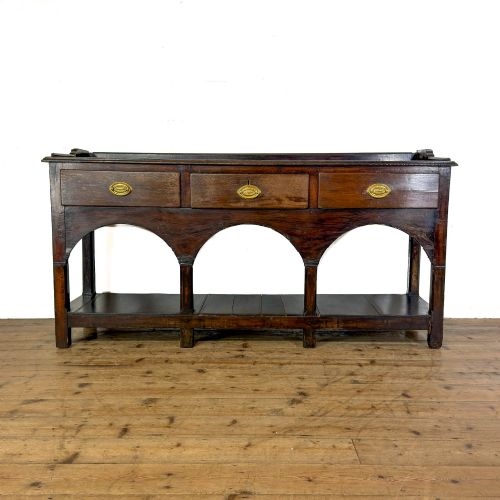
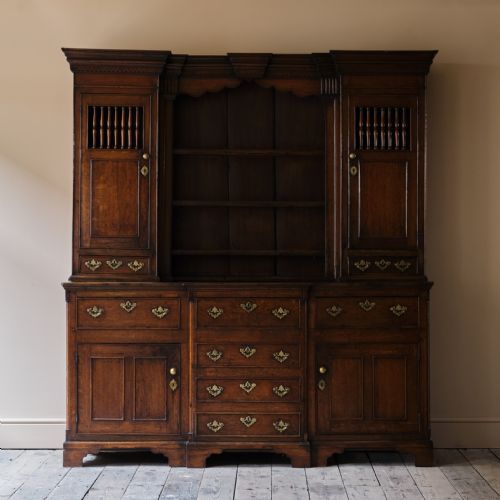
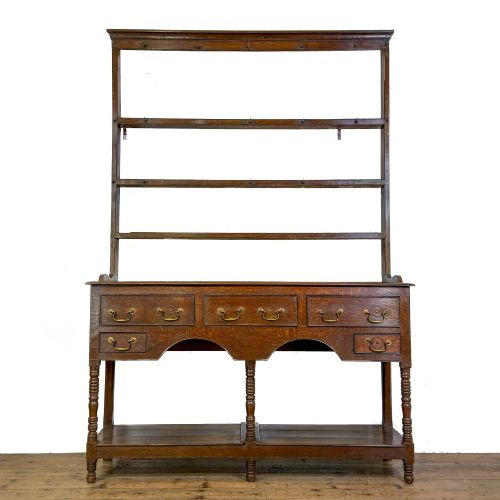
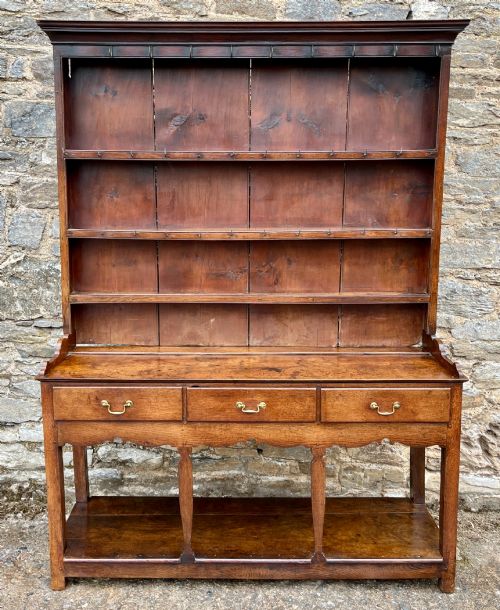
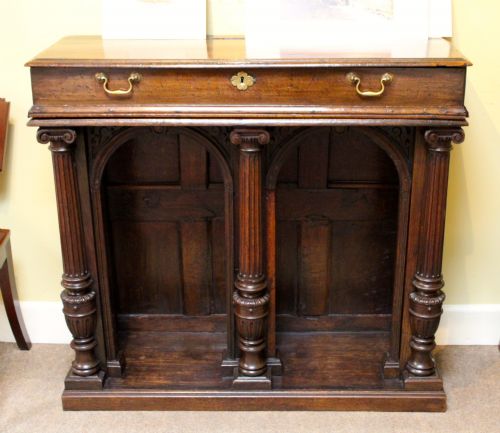
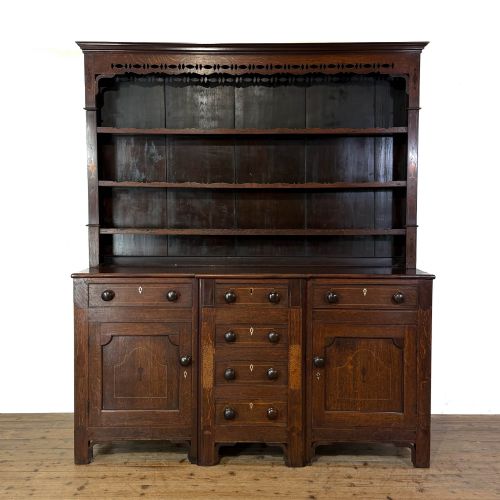
A georgian oak open dresser combines a heavy timber base fitted with drawers and cupboards with an open wooden plate rack mounted on top. These utilitarian storage pieces originate primarily from English and Welsh rural workshops, designed to hold and display domestic tableware.
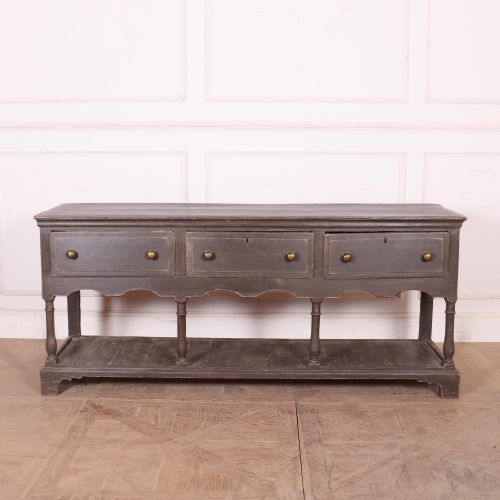
The pieces appearing most frequently span the eighteenth and nineteenth centuries, taking the form of potboard bases with low lower shelves or traditional Welsh formats incorporating side cupboards. Regional variants emerge from areas such as Snowdonia, Llanrwst, and the West Country.
Makers working within the vernacular tradition built these items for daily service in farmhouse kitchens rather than formal reception rooms. Consequently, the surviving examples display robust joinery and practical proportions intended for heavy domestic use.
How they were made
Local cabinet makers constructed the framework predominantly from native oak, occasionally supplemented with secondary timbers such as pine, elm, or mahogany for internal partitions and drawer linings. Joinery relied on pegged mortise and tenon joints to withstand the stress of heavy pots and stacked ceramics.
Potboard variants utilised a low slatted base shelf positioned between the floor-level feet to store heavy earthenware, while drawer fronts often displayed hand-cut dovetails. The open plate racks were joined securely to the rear of the base, using shaped friezes and plate grooves carved directly into the timber shelves.
Listings feature eighteenth and nineteenth-century oak and elm construction with regional styles originating from Welsh and English country workshops.
What varies in quality
Proportion and structural integrity distinguish superior examples from standard vernacular pieces, particularly where timbers have retained their original colour and untouched surface patination. The survival of an original open plate rack paired correctly to its base significantly elevates the integrity of the whole object.
Finer regional variants exhibit thoughtful details like breakfront drawer configurations, shaped friezes, and select burr timber panels. Conversely, extensive timber replacement or unsympathetic stripping diminishes the historical character of the piece.
The Georgian Oak Open Dresser Glossary
- Potboard
- A lower open shelf built into the base of a dresser specifically for storing large pots and pans. This platform sits just above the floor on extended stile feet.
- Plate Rack
- An open wooden shelving superstructure attached to the rear of the dresser base. Vertical slats and horizontal grooved shelves support plates on edge.
- Belly Rack
- A distinctive regional Welsh dresser format featuring a convex or bulging central bank of drawers beneath the main surface. This regional form requires specialised joinery to achieve the curved front.
- Vernacular
- Unpretentious furniture built by local country craftsmen using traditional regional designs and native materials. These items reflect local domestic needs rather than urban London fashions.
- Breakers
- The prominent upper moulding or cornice running along the top of a dresser plate rack. It frames the display area and finishes the architectural silhouette.
Georgian Oak Open Dresser: Frequently Asked Questions
What is a potboard dresser?
A potboard dresser is a traditional storage unit featuring a solid wooden work surface above a bank of drawers, supported by legs that frame an open lower shelf near the floor. This lower shelf was originally built to hold heavy kitchen pots and heavy metal cookware.
Over time, these sturdy bases evolved into display items for domestic interiors. The open design allows air to circulate around stored kitchenware while providing a low platform for bulky items.
Are plate racks original to the base?
Many surviving dressers retain their original plate racks, though some racks were separated, lost, or matched to different bases during their working lives. Examining the fixing points, timber matching, and wear patterns helps determine whether the top and bottom belonged together from the start.
An original pairing shows consistent ageing across both sections of the furniture. Dealers note whether a rack is retained as a primary indicator of historical completeness.
How do I care for oak furniture?
Solid oak furniture requires stable indoor humidity levels and protection from direct heat sources to prevent the timber from splitting or warping. Regular application of traditional beeswax feeds the wood and maintains its natural protective barrier.
Avoid using modern silicone polishes, which build up on the surface and dull the historic patination. Gentle dusting with a dry, soft cloth preserves the centuries-old finish.
Where were these dressers made?
These dressers were constructed in regional workshops across England and Wales, with distinct stylistic variations emerging from specific rural areas. Welsh valleys and West Country counties developed unique architectural details, such as shaped friezes and particular drawer arrangements.
Local craftsmen utilised native timber stocks available in their immediate geographic vicinity. This regional independence gives each piece a distinct character tied to its place of origin.